Let That Sh*t Go

When I walked into my yoga studio this past Monday evening, I saw a woman with the most amazing shirt. Under a simple image of a figure in a pose, were the words:

Let that shit go.

I laughed. I smiled. And I reflected back on my day, the first day back at school after spring break. A day filled with tired, yet nervous kids, as we all prepared for the upcoming standardized testing season.

I felt my shoulders kissing my ears as they still were still struggling to carry the load of the day, recognizing that my mind hadn’t left the school and was still busy tweaking the lesson for the following day. I sensed a current of anxiety coursing through my body, fearful that I would somehow mess up the testing in some critical and unforgivable way. Looking inward, I realized that I was already anticipating what I needed to accomplish after the yoga practice instead of making preparations for my yoga class.

And then I made a decision and with my next exhale, I followed the advice of her shirt and I let that shit go.

As we go through our days, we collect worries and troubles like a young child collects pebbles on a walk through the park. We stuff our pockets, line our shoes and fill our hands with as much as we can carry. Consequently, we become overloaded, burdened, with the weight we carry. We curse it, we complain about it. Yet we rarely follow a form of the advice we would give to the child overloaded with collected treasures on a walk –

Let that shit go.

Mistakes

When I was in kindergarten, I got in trouble for talking in class. My consequence for the misdeed was a missed recess. The talking was a simple mistake, a lapse in judgment rather than a lapse in character, yet I internalized the mistake. Instead of merely sitting along the wall with the other kids who made a mistake that day, I had to be consoled by my teacher because I was so hard on myself.

Mistakes are inevitable. Mistakes are opportunities. Making a mistake doesn’t make you any less of a person.

Let that shit go.


A Bad Day

Have you ever noticed that once you label a day as “bad,” there seems to be no shortage of ever-compiling evidence to justify that moniker? Every slight, no matter how small, is a sign the world is against you. Every stressor becomes a mountain, every trigger detonates an explosion.

Days aren’t good or bad. They’re simply a measurement of time. And what happens in one fraction of a day doesn’t have to impact the remaining parts.

Let that shit go.


Expecting Things to Be Different

I receive questions and pleas for help on a daily basis where the writer inquires how to go about changing their spouse’s or ex’s behaviors. They enumerate the lies and the irresponsibility. They express their frustrations about the lack of accountability and the absence of emotional intelligence. Sometimes, they lament the circumstances rather than the person, begging for a way to alter their current reality.

But reality is as it is. There are circumstances we cannot change and people beyond our influence. To believe otherwise is maddening and self-limiting.

Let that shit go.


Childhood Wrongs

I once heard a psychologist say that our twenties are the time for facing and addressing any childhood traumas and points of contention. After that, it’s time to take responsibility for the direction of your life.

Some people have had horrible childhoods, filled with insults and assaults upon a vulnerable frame. Childhood ends and with it, the lack of choice and agency that comes from being young. At some point, your life becomes your responsibility.

Let that shit go.


Control

Getting pneumonia 6 weeks before my first – and only – marathon was the best thing that could have happened. Until that infection left me bedridden, I was carefully controlling every bite of food and every step run. The pneumonia was a reminder that I couldn’t control the outcome. (It turned out okay; I still “won” the marathon.)

You can control your responses. You have influence over the process. But the outcomes?

Let that shit go.


An Apology That Never Came

I spent years hoping for an apology from my ex husband. I believed I needed it so that I would know that he felt remorse and so that I could receive closure. It was a life on hold. A wish with no action. I put more faith in the apology than I did in my ability to move on.

Never put the responsibility for your well-being in the hands of the one who hurt you.

Let that shit go.


Fixing Everything

Not everything is a problem. Not everything has a solution. Sometimes things are broken beyond repair and sometimes what we see as flawed, someone else views as perfect. And other times, the fixing may need to be done, but it is not our job to do it.

When we act as “fixer,” we are taking on too much and often hurting others in the process.

Let that shit go.


Perfection

I remember erasing my drawings in art class to the point where I rubbed holes through the paper. In an attempt to make them perfect, I inevitably ruined them.

Life is about being present, not perfect.

Let that shit go.


What Ifs

It’s an easy mental game to play – what would have happened if I chose a different path? It can be entertaining and educational, playing around with the options and outcomes.

Yet what ifs can also be a trap, a way of spending time in manipulated past and an imagined future instead of being where you are.

Let that shit go.


The Need to Be Right

When we listen to respond rather than understand, we’re allowing our need to be right to dominate our interactions. When we lead with the ego, we shortchange others their right to be understood and we limit our own ability to grow.

It’s funny. The more we need to right, the more rarely we are.

Let that shit go.


Outrage

I heard an interesting podcast the other day that had an expert in social media discuss how the big players – Google, Facebook and Instagram – manipulate us into spending time on site and interacting with the content. The types of posts that receive the most investment of time and energy are not the feel-good ones, not the informational ones, but the ones that cause a feeling of outrage.

It’s not just the social media big boys that bully us with outrage. Think of others who provoke you, push your buttons and get under your skin. What’s your typical response? We are all prone to reactions. Outrage short circuits our rational minds and prompts irrational responses even while it serves as fuel for the ones prompting it.

Let that shit go.


Occasional Hurt Feelings

Sometimes I wish I had a bad memory, that painful things that had been said to me would blur over time and fade into the backdrop. But that’s not the case. I have to be very deliberate about releasing the hurt that has come from words spoken without thought or said when emotionally flooded.

We all unintentionally hurt others sometimes. We say the wrong thing. Forget an important milestone. Neglect to respond in the right way. And feelings get bruised. And bruises heal.

Let that shit go.


Self-Flagellation

Guilt serves a purpose. Much like the inflatable gutter guards in children’s bowling, it helps to guide us along our intended path. Yet guilt has a propensity for growing outside its allotted space, suffocating us in the process.

When you mess up, own it and then either change it or apologize. And once you learn from it, the guilt and self-punishment serve no further purpose.

Let that shit go.


Excessive Judgment

Some behaviors deserve judgment. Intentionally harm a child or an animal and I’m going to judge you all the way to prison. Yet most behaviors require less judgment and more curiosity.

It’s easy to think that your way is the right way and that when you don’t understand somebody’s beliefs and decisions, it means they’re wrong. Yet different isn’t necessarily wrong, it’s just different. Judgment won’t change their mind, but it will keep you from expanding yours.

Let that shit go.


Comparisons

Have you every felt good about an accomplishment only to feel incompetent and jealous when you measured them against another person’s.

Comparisons are empty. You’re holding your inner life up against somebody else’s outer one. You’re allowing somebody else’s achievements to have an influence on your own. What somebody else has earned has no bearing on what you have attained. Let them be and you do you.

Let that shit go.


Busyness

I struggle with feeling guilty and lazy when I take some for myself. I find it all-too easy to identify with my accomplishments and view my worth through my deeds.

You are not defined by the number of events on your calendar and the number of items crossed off your to-do list. It’s okay to step away from doing and allow yourself to simply be.

Let that shit go.

 

let that shit go

At Some Point, It’s No Longer About the Nail

When is it no longer about what hurt you?


In the beginning, I made it all about him.

What he did.

Why he did it.

How he did it.

Where he was.

Who he was.


It was an escape of a sort. A distraction. If I stayed focused on him, I didn’t have to think about me.


What I was going to do now that my life was washed away.

Why this happened to me.

How I was going to survive and rebuild.

Where I was going to live.

And who I was without him.


But at some point, I had to decide to make it all about me. To turn my energies towards what I could change rather than curse what I could not.

Because no matter how much attention I turned towards him, it wasn’t going to help me feel any better.


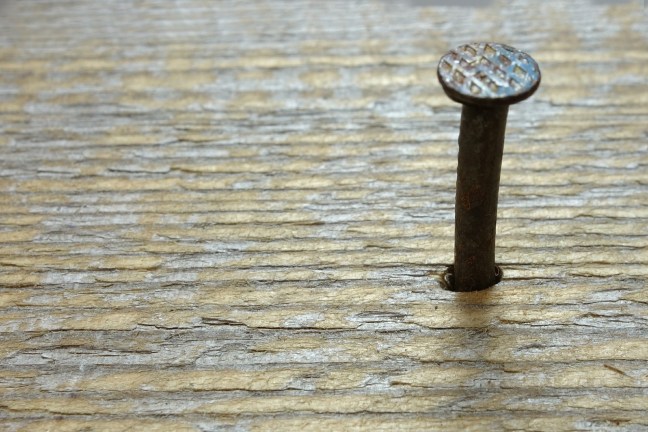
When you first step upon a nail, the sharp steel tearing through tender flesh, it is prudent to focus on the nail. First by removing the offending stake and then by examining it for any signs of rust or fragments left behind.

And then at some point, the nail no longer matters.

Only the wound is of consequence. And your attentions must turn to the ministrations of puncture care, ensuring that it heals fully without infection to poison the blood.


A difficult divorce is much the same. Once the distressing person has been removed, focus on them only leaves your wounds unattended.

Because at some point, the nail no longer matters.

Only you do.


What is a Tsunami Divorce?

English: Tsunami hazard sign

What is a Tsunami Divorce?

A tsunami divorce is one that completely blindsides a spouse, flattening him or her with a wave that was never spotted.  A tsunami divorce is characterized by a normal marriage and a normal life up until the moment of total and utter destruction.  The spouse that embodies the wave may simply disappear, abandoning their significant other with little to no communication or explanation.  Infidelity, substance abuse, and mental illness can all play a role in a tsunami divorce.  The causes of a tsunami divorce are rooted in the past and far away from the marriage.  These contributing factors lay buried beneath the placid sea of the marriage until they burst forth in a great wall of destruction.


What Are the Effects of a Tsunami Divorce?

A tsunami divorce catches the other spouse completely off guard; it is a shock and awe campaign that leaves the survivor stunned and disoriented. One of the more damaging effects of a tsunami divorce is the survivor’s tendency to question him or herself about why no signs were spotted.  Others in their lives may echo this sentiment.  It is difficult to come to terms with the fact that the signs may have been minimal or only visible in the rearview mirror.  The survivor is left devastated by the end of the marriage, confused as to why it occurred, feeling foolish for being “taken,” and angry at the tsunami spouse.


How Does a Tsunami Divorce Differ From Other Divorces?

Most divorces have a long, slow decline or a visible, yet rapidly building disintegration.  This leads to a protracted period where one or both partners are wondering if they should stay or go.  There are nights spent feeling alone while one remains in the marital home.  There are difficult discussions and perhaps heated arguments.  One or both partners may be holding on to hope that things will get better or that he/she will change his/her mind.  This is a painful process that can slow or even stall healing.  On the other hand, it also allows time for pre-grieving of the marriage and it gives both partners a voice in the divorce.

In contrast, a tsunami divorce is sudden.  The marriage is often good up until the point it simply doesn’t exist anymore.  There are no painful discussions.  In fact, there are no discussions at all, which can leave the survivor feeling as though their voice has been stolen.  There is no chance to pre-grieve, but the healing process can be easier as the abrupt amputation leaves no room for false hopes and no hesitation in the correct path to follow.


What Are Some of the Lessons That Can be Learned by the Survivors of a Tsunami Divorce?

1) Understand that the causes of the tsunami are found in the past and far away. Don’t spend too much time there.
2) Examine your own tsunami warning system.  Did your fears and anxieties cause you to look away from some signs of the impending disaster?
3) Realize that, although your devastation was complete, the flattened earth is a clean slate.
4) Don’t be afraid to rebuild.  Statistically speaking, tsunamis are pretty rare.


Struggling to recover after being flattened by your own tsunami? Learn how to surf the overwhelming wave.


You can read the entire story of my tsunami divorce in my book Lessons From the End of a Marriage, available on Amazon.


How to Surf a Tsunami

Restoration after a sudden trauma is not easy, but it is possible. In fact, you can even learn how to surf your tsunami, moving through it with skill and grace.


Many of us will face a personal tsunami at some point in our lives. We will be felled by a great wave bringing with it sudden change and loss. Perhaps your tsunami is in the form of the death of a loved one, maybe it is the loss of a job or a way of life or possibly you have lost the health you took for granted. My own tsunami was in the form of an unexpected divorce after being abandoned via a text message.

Regardless of the nature of your abrupt trauma, tsunamis have some common characteristics. By their nature, tsunamis are difficult to predict and even harder to prepare for. You have to face the realization that you cannot control your surroundings. The world that you knew is gone, swept away in a single move. You feel disoriented as you try to navigate this new realm.

Soon after the trauma, it feels like it will be impossible to rebuild. The odds seem insurmountable. The shock and grief permeate everything and make every move a struggle. Restoration after a sudden trauma is not easy, but it is possible. In fact, you can even learn how to surf your tsunami, moving through it with skill and grace.

The following are my healing tips for anyone who has been flattened by a tsunami.


Breathe

The blow of sudden trauma is physical. The body tenses as if anticipating another blow. The breath is the first to suffer; it becomes shallow and rapid behind a breast wrapped tight in a straightjacket of sorrow. Release it. It won’t be easy and it won’t be automatic, at least in the beginning. Set a reminder on your phone or computer to take several deep breaths at least once an hour. As long as the body is anticipating another blow, the mind will be as well. Sometimes it’s easier to train the body and allow the mind to follow.

Recognize the Moment

Understand that the way you feel right now is the way you feel right now. It is not how you will feel next year. It is not how you will feel tomorrow. In fact, it’s not even how you will feel in five minutes. Everything changes, including suffering. Just the realization that the current feeling is temporary makes it a little easier not to panic and feel as though you are drowning.


Goals

You are in the midst of change you did not ask for and did not want; however, that does not mean that you should simply throw yourself to the mercy of the sea. Take some time to think about what you want in your life. Formulate some goals — long-term or short-term, easy or next-to-impossible. It doesn’t matter; you can always change them. For now, it’s important simply to write them down and post them as a motivator during those difficult moments.


Mentors

After a tsunami, it is so easy to feel alone. It is tempting to curl up and hide in an attempt to protect yourself from further harm. You are not alone. There are others who can relate. Others who have been where you are and have rebuilt. Others who can extend a hand and help you find your way. These mentors may be in your life already or they may take the form of a counselor or pastor or even a group online. Accept their help — a difficult task is always made easier with assistance.


Patience

It’s hard to accept that everything can be destroyed in a blink yet it can take a lifetime to rebuild. Healing cannot be forced. It is not a task suited to lowering one’s head and barreling through. Healing is not linear. A bad day may follow a good one. Be gently persistent with yourself. Keep in mind where you want to be, but accept where you are.


Balm Squad

Assemble your balm squad — people and things that soothe you and bring you comfort. Fill your space with items that bring a sense of peace or joy. Take the time to visit places that make you feel good. Most importantly, seek out others that support you and encourage you. They are your best balm of all.


Restoration vs. Recreation

It’s easy to slip into the dangerous waters of “what if,” replaying the past and trying to find an alternate action that would have averted the tsunami. It’s easy but it’s also a dangerous game. What you had is gone. Healing has to begin with that understanding. Rather than try to recreate what was, focus on restoring a life. Just because it is different does not mean that it cannot be as good. Or even better!


Nourishment

Take care of yourself. Nourish your body with healthy foods and exercise. Make sure you’re sleeping. Nourish your mind with loving thoughts. Don’t be ashamed to ask a doctor for help if you need it. Medications can help to reset eating, sleeping and thought patterns when we cannot yet do it for ourselves. Your basic needs must be met before you will be able to work on healing.


Mindful Escape

When you are facing sudden trauma, it is easy to try to run away and escape your painful reality. You may seek oblivion in alcohol, video games, gambling, dating or media. You will need a break sometimes; it is okay to submerge yourself in distractions occasionally. However, be sure that you escape mindfully. Be present and aware so that you do not allow the distraction to become a habit because when you are in a weakened state, those habits have a way of consuming you.


Spin Doctor

Your trauma has a story, a tale that you most likely have spun again and again with you as the victim of the tsunami. Look at yourself as your own publicist, a spin doctor of your story. How can you rewrite your tragedy so that it is not all suffering? What can you be thankful for? What have you gained as a result of your loss? It will feel strange and even traitorous to find gratitude within your loss, but it can help you move beyond the pain.


Release

Find your outlets for release and restoration. Maybe you feel restored by playing with a baby or dog. Or, perhaps you are called to take a long walk in the fading sun. Maybe it’s a favorite yoga class or a certain sitcom that liberates you from the pain. You can never have too many avenues that provide freedom from the suffering; collect these outlets and apply them generously.


Don’t Wait

Healing from a tsunami is a difficult path. Don’t wait to live until you are healed; it is okay to find happiness along the way.

The trick to surfing a tsunami is not in trying to control the wave but in learning to how to flow through it.