
Ever Been Told, “You Shouldn’t Feel That Way?”

You shouldn’t feel that way.

Get over it.

You’re overreacting.

Have you ever heard any of those statements? Those remarks that leave you angry and confused. Hackles up, yet questioning if the other person is right? Why do people make those remarks? Is it out of ignorance or attack? Are they trying to help or harm? How can we respond those who tell us we do not have the right to feel the way we feel?

I work with middle schoolers – a group that is well recognized for being very emotional and reactive. I have seen a girl become suicidal after a dismissive comment by a friend. I have seen a boy with a shattered face after a fight over a mustard packet. To the outside person, those reactions seem well over the top, like calling the fire department to extinguish a candle. I could have pulled those students aside and told them they were overreacting. I could have said that they should get over it. I could have shared stories of others that had it worse to downplay their feelings.

I think we all realize that such an approach would not be helpful. Simply telling the girl that her despair was stupid or the boy that he shouldn’t be angry would do nothing to dial down their emotions. In fact, it would have made the situation worse because then it would be introducing an element of shame, causing them to question if there is something wrong with them for feeling the way they do.

When we respond with ‘shoulds,’ we are responding only to the surface. If someone appears to be overreacting, there is often much more beneath. That was the case with these two students. The girl’s sister had committed suicide the previous summer. She was feeling abandoned and lost. When her friend slighted her, she felt alone and hopeless. The boy’s family had fallen upon hard times. His only meals were through the school. To him, that packet of mustard was life or death.

So why are we so quick to dismiss the feelings of others? Sometimes, it is from a lack of empathy, an inability or refusal to put yourself in another’s shoes. Sometimes, you may have the empathy but you lack the understanding. Maybe you’re missing key information that explains the reaction. Maybe you want to help, but you’re frustrated and don’t now how.

The truth is that we can never know completely how someone else feels. It’s based on past and perception, two things that are unique to each individual. When it seems that someone’s reaction is over the top, maybe it just means that their brain needs time to catch up with the past pains held in the heart. Rather than berate the brain for not moving faster, try supporting the heart while the brain moves forward. All the heart wants is to be accepted.

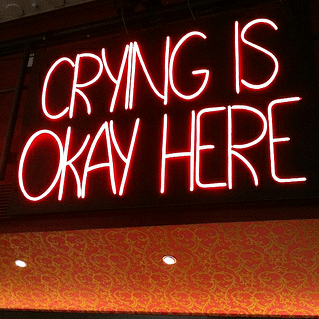
If you are the recipient of the ‘shoulds,’ try not to internalize the statement. It is okay to feel the way you feel. Try to see the motivation behind the statement – is this person trying to help you or are they simply unable to comprehend your pain? Also be open to the idea that your past and your perceptions may be harming your present. It’s okay to feel the way you feel and it is also okay to not want to feel that way and to work to make it better.

As for my two students, we (teachers and counselors) worked to validate their feelings in the moment while helping them to understand why they reacted the way they did and how they can cope better in the future. Rather than telling them how they should feel from a place of judgement, we showed them how they could feel better by coming from a place of love. And that is how we should all feel.

You Shouldn’t Feel That Way

sad

You shouldn’t feel that way.

Get over it.

You’re overreacting.

Have you ever heard any of those statements? Those remarks that leave you angry and confused. Hackles up, yet questioning if the other person is right? Why do people make those remarks? Is it out of ignorance or attack? Are they trying to help or harm? How can we respond those who tell us we do not have the right to feel the way we feel?

I work with middle schoolers – a group that is well recognized for being very emotional and reactive. I have seen a girl become suicidal after a dismissive comment by a friend. I have seen a boy with a shattered face after a fight over a mustard packet. To the outside person, those reactions seem well over the top, like calling the fire department to extinguish a candle. I could have pulled those students aside and told them they were overreacting. I could have said that they should get over it. I could have shared stories of others that had it worse to downplay their feelings.

I think we all realize that such an approach would not be helpful. Simply telling the girl that her despair was stupid or the boy that he shouldn’t be angry would do nothing to dial down their emotions. In fact, it would have made the situation worse because then it would be introducing an element of shame, causing them to question if there is something wrong with them for feeling the way they do.

When we respond with ‘shoulds,’ we are responding only to the surface. If someone appears to be overreacting, there is often much more beneath. That was the case with these two students. The girl’s sister had committed suicide the previous summer. She was feeling abandoned and lost. When her friend slighted her, she felt alone and hopeless. The boy’s family had fallen upon hard times. His only meals were through the school. To him, that packet of mustard was life or death.

So why are we so quick to dismiss the feelings of others? Sometimes, it is from a lack of empathy, an inability or refusal to put yourself in another’s shoes. Sometimes, you may have the empathy but you lack the understanding. Maybe you’re missing key information that explains the reaction. Maybe you want to help, but you’re frustrated and don’t now how.

The truth is that we can never know completely how someone else feels. It’s based on past and perception, two things that are unique to each individual. When it seems that someone’s reaction is over the top, maybe it just means that their brain needs time to catch up with the past pains held in the heart. Rather than berate the brain for not moving faster, try supporting the heart while the brain moves forward. All the heart wants is to be accepted.

If you are the recipient of the ‘shoulds,’ try not to internalize the statement. It is okay to feel the way you feel. Try to see the motivation behind the statement – is this person trying to help you or are they simply unable to comprehend your pain? Also be open to the idea that your past and your perceptions may be harming your present. It’s okay to feel the way you feel and it is also okay to not want to feel that way and to work to make it better.

As for my two students, we (teachers and counselors) worked to validate their feelings in the moment while helping them to understand why they reacted the way they did and how they can cope better in the future. Rather than telling them how they should feel from a place of judgement, we showed them how they could feel better by coming from a place of love. And that is how we should all feel.

PTSD After Divorce

This is one of those links that I’ve pondered in the past but it has really come to a head in the past few days. First, Paulette posted the following review of my book:

Lisa Arends does an effective job in writing about the aftermath, the fallout, of a life-changing shock, on the abrupt desolation of her marriage. The read is a well done walk through all the PTSD and repeating changes that occur, which is depicted in a letter written to her by her exited husband, the commentary on the letter under the umbrella of the devastating changes she experienced, emotionally, physically and logistically are a walk through the fact that PTSD is not just relegated to victims of war, but to any life encounter that uproots your very existence in a shocking manner. She’s a likeable author, an engaging woman, that you take to and feel for, because she portrays the story, the horror she lived, with veracity and integrity, to allow the facts to unfold on the page even if they point a finger back to her (ie: a text from her spouse to his mother-in-law, Lisa’s mother). Devastation upon devastation unravels and what we hold onto dearly is lost, not just in the relationship but also in the family built around it, fury and otherwise. Arends navigates through this debacle with grace and humility, filled with emotions that are painted with strokes that are sure to offer others in similar situations some reflections and ground; she labels as “Lessons” chapter after chapter, ultimately culminating in what she has learned, valuable life lessons, applicable to anyone. But, this is not just a self-help work, or a read for someone in a similar situation, it’s a compelling story of the frailty and misconceptions we all live with, the thin line of trust & betrayal, confidence and fright, love and rejection, all the things that make the paradoxes of life and keep a balance, hopefully the balance stays in some semblance of equilibrium. In Arends case she tilts off the scale and by the Grace of her very nature, the love of her family, and whatever else strength she draws from she journeys through to meet what is most precious to all of us, connecting and opening to trust (applause to Tiger, no spoilers) despite all temptations not to, and in doing so, learning the ultimate, that love does conquer and cannot be soiled by another’s shadow cast upon our soul.

In the book, I never name PTSD. I only describe the events and my reactions. Yet, here was a third party who deemed that to be an accurate label.

Then, yesterday, a post from Out of the Chrysalis (Does PTSD After Divorce Exist? You Better Believe It)  showed up in my inbox. I totally related to her description of her experience.

And I do believe it. PTSD happens when your mind cannot process the extent of the trauma. It’s like a short circuit in your nervous system, where you have trouble distinguishing between real and perceived threats. We tend to think of PTSD as occurring only in life-threatening situations, but it occur anytime there is an acute or prolonged trauma. Not all divorces lead to PTSD, but if it is sudden or abusive, the trauma can be severe and sudden enough to lead to PTSD-like symptoms.

According to the Mayo Clinic, the following are the symptoms of PTSD:

Symptoms of intrusive memories may include:

  • Flashbacks, or reliving the traumatic event for minutes or even days at a time
  • Upsetting dreams about the traumatic event

Symptoms of avoidance and emotional numbing may include:

  • Trying to avoid thinking or talking about the traumatic event
  • Feeling emotionally numb
  • Avoiding activities you once enjoyed
  • Hopelessness about the future
  • Memory problems
  • Trouble concentrating
  • Difficulty maintaining close relationships

Symptoms of anxiety and increased emotional arousal may include:

  • Irritability or anger
  • Overwhelming guilt or shame
  • Self-destructive behavior, such as drinking too much
  • Trouble sleeping
  • Being easily startled or frightened
  • Hearing or seeing things that aren’t there

From Mayoclinic.com.

After I received the text that ended my marriage, I experienced many of these symptoms. I had the flashbacks and the dreams. I had trouble thinking and remembering. I couldn’t sleep and I frightened easily. But, most of all I trembled constantly, my autonomic nervous system was on high alert, waiting for the next assault.

At first, the triggers were everywhere. Driving along the road that passed by my old house felt like traversing a field with buried landmines. I fully expected an explosion at any moment. I responded as though every mention of his name was literally a threat to my life. At any moment, I could be catapulted back to instant where I received the text. It was as though the phone was always in my hand.

My psychiatrist that I saw that first year stopped short of a full PTSD diagnosis, but she mentioned the disorder and selected medications that are used to treat it. I honestly don’t think I would have made it through without the medications. They allowed me to sleep and eat – two things I could not yet accomplish on my own.

Over time, the triggers decreased. I learned how to sleep and eat without assistance. I stopped the medications and was able to use meditation and exercise to reduce any symptoms. I can still feel the shadows of the trauma when I feel like I’m being abandoned again but, for the most part, my mind and body no longer confuse real and perceived threats.

After my divorce, I learned that most people assumed that depression would be the disorder de jour after a break up. They expected me to be sad and withdrawn. Instead, I was hyperalert,  shaking and always on the lookout for the next blow. It’s important to realize that all divorces are not the same and we all respond differently. There is no ‘right’ way to be after a divorce. The labels can be helpful but even they only tell part of the story. Be gentle and understanding with yourself and others. Seek the help you need and know that it does get better.

I wrote more about PTSD after divorce on The Huffington Post.

Are you struggling to find your center again after divorce? My complete, 12-part coaching course can help you leave the trauma behind and find your way back to happy. Learn more!

5 Benefits Of Bawling Your Eyes Out

All too often, we focus on being strong, remaining stalwart.  This unyielding shell may not reveal the pain inside, yet still it lingers.  Give yourself permission to feel.  Let the armor fall and allow the tears to fall with it.  True strength comes when you embrace the pain prior to its release.  Give yourself permission to cry when you need to and you’ll find that the smiles come much easier.

5 Benefits Of Bawling Your Eyes Out.

Anger Deflation

My biggest stumbling block was (and at times, continues to be) anger.  I could not get past the deliberate nature of what he had done.  Holding me, telling me how much he loved me and would miss me while his bride’s ring sat in his car, ready to be placed on her finger within the week.  The years of lies and manipulations that covered the hemorrhaging accounts.  And, worst of all, he went on the attack with the divorce, blaming me for everything.  How could I not be angry? Livid?

I spent much of the last two and half years wrestling with the “how.”  How could he do this?  How could he seek to destroy the one he claimed to love (and seemed to show love to up until the last text)?  How could he kiss me, be intimate with me, knowing that he was orchestrating this symphony of destruction?  Try as I might, I just couldn’t make those actions, those lies,  match the man I knew.

So, I thought of him as a boy.

I thought about what would cause a child to lie.  Children generally lie out of fear.  They want to please, and when they now they have disappointed, they seek to hide their actions by spinning tales.  Looking over the last few years of my marriage, I saw a path (relating to a failed business attempt) that could have led him down the path of telling lies to hide his shortcomings, to protect me from the truth.  As with a child, if these lies are not caught, they eventually become habit.

I thought about what would cause a child to lash out against loved ones.  Children often lash out when they feel trapped and threatened.  When  he lashed out, he had been caught.  The carefully crafted facade that he wanted the world to see had been stripped away, his deceptions, his failures bared for the world to see.  He saw me as threatening his core, his very self, so he lashed out in a desperate  attempt to shield.

I may be wrong in these motivations. Perhaps he is simply a sociopath,  immune to other’s  pain.  Maybe he is evil, enjoying the suffering of others.  But that doesn’t fit the man I knew, and so it does not bring me peace.  However, by looking at his actions as I would a child’s, I have found that I see him as scared, unsure, and lost.  That helps  to deflate some of the anger, releasing the pressure and allowing me to move forward.