How to Surf a Tsunami

Restoration after a sudden trauma is not easy, but it is possible. In fact, you can even learn how to surf your tsunami, moving through it with skill and grace.


Many of us will face a personal tsunami at some point in our lives. We will be felled by a great wave bringing with it sudden change and loss. Perhaps your tsunami is in the form of the death of a loved one, maybe it is the loss of a job or a way of life or possibly you have lost the health you took for granted. My own tsunami was in the form of an unexpected divorce after being abandoned via a text message.

Regardless of the nature of your abrupt trauma, tsunamis have some common characteristics. By their nature, tsunamis are difficult to predict and even harder to prepare for. You have to face the realization that you cannot control your surroundings. The world that you knew is gone, swept away in a single move. You feel disoriented as you try to navigate this new realm.

Soon after the trauma, it feels like it will be impossible to rebuild. The odds seem insurmountable. The shock and grief permeate everything and make every move a struggle. Restoration after a sudden trauma is not easy, but it is possible. In fact, you can even learn how to surf your tsunami, moving through it with skill and grace.

The following are my healing tips for anyone who has been flattened by a tsunami.


Breathe

The blow of sudden trauma is physical. The body tenses as if anticipating another blow. The breath is the first to suffer; it becomes shallow and rapid behind a breast wrapped tight in a straightjacket of sorrow. Release it. It won’t be easy and it won’t be automatic, at least in the beginning. Set a reminder on your phone or computer to take several deep breaths at least once an hour. As long as the body is anticipating another blow, the mind will be as well. Sometimes it’s easier to train the body and allow the mind to follow.

Recognize the Moment

Understand that the way you feel right now is the way you feel right now. It is not how you will feel next year. It is not how you will feel tomorrow. In fact, it’s not even how you will feel in five minutes. Everything changes, including suffering. Just the realization that the current feeling is temporary makes it a little easier not to panic and feel as though you are drowning.


Goals

You are in the midst of change you did not ask for and did not want; however, that does not mean that you should simply throw yourself to the mercy of the sea. Take some time to think about what you want in your life. Formulate some goals — long-term or short-term, easy or next-to-impossible. It doesn’t matter; you can always change them. For now, it’s important simply to write them down and post them as a motivator during those difficult moments.


Mentors

After a tsunami, it is so easy to feel alone. It is tempting to curl up and hide in an attempt to protect yourself from further harm. You are not alone. There are others who can relate. Others who have been where you are and have rebuilt. Others who can extend a hand and help you find your way. These mentors may be in your life already or they may take the form of a counselor or pastor or even a group online. Accept their help — a difficult task is always made easier with assistance.


Patience

It’s hard to accept that everything can be destroyed in a blink yet it can take a lifetime to rebuild. Healing cannot be forced. It is not a task suited to lowering one’s head and barreling through. Healing is not linear. A bad day may follow a good one. Be gently persistent with yourself. Keep in mind where you want to be, but accept where you are.


Balm Squad

Assemble your balm squad — people and things that soothe you and bring you comfort. Fill your space with items that bring a sense of peace or joy. Take the time to visit places that make you feel good. Most importantly, seek out others that support you and encourage you. They are your best balm of all.


Restoration vs. Recreation

It’s easy to slip into the dangerous waters of “what if,” replaying the past and trying to find an alternate action that would have averted the tsunami. It’s easy but it’s also a dangerous game. What you had is gone. Healing has to begin with that understanding. Rather than try to recreate what was, focus on restoring a life. Just because it is different does not mean that it cannot be as good. Or even better!


Nourishment

Take care of yourself. Nourish your body with healthy foods and exercise. Make sure you’re sleeping. Nourish your mind with loving thoughts. Don’t be ashamed to ask a doctor for help if you need it. Medications can help to reset eating, sleeping and thought patterns when we cannot yet do it for ourselves. Your basic needs must be met before you will be able to work on healing.


Mindful Escape

When you are facing sudden trauma, it is easy to try to run away and escape your painful reality. You may seek oblivion in alcohol, video games, gambling, dating or media. You will need a break sometimes; it is okay to submerge yourself in distractions occasionally. However, be sure that you escape mindfully. Be present and aware so that you do not allow the distraction to become a habit because when you are in a weakened state, those habits have a way of consuming you.


Spin Doctor

Your trauma has a story, a tale that you most likely have spun again and again with you as the victim of the tsunami. Look at yourself as your own publicist, a spin doctor of your story. How can you rewrite your tragedy so that it is not all suffering? What can you be thankful for? What have you gained as a result of your loss? It will feel strange and even traitorous to find gratitude within your loss, but it can help you move beyond the pain.


Release

Find your outlets for release and restoration. Maybe you feel restored by playing with a baby or dog. Or, perhaps you are called to take a long walk in the fading sun. Maybe it’s a favorite yoga class or a certain sitcom that liberates you from the pain. You can never have too many avenues that provide freedom from the suffering; collect these outlets and apply them generously.


Don’t Wait

Healing from a tsunami is a difficult path. Don’t wait to live until you are healed; it is okay to find happiness along the way.

The trick to surfing a tsunami is not in trying to control the wave but in learning to how to flow through it.


PTSD After Divorce

PTSD divorce

Can you develop PTSD after divorce?

When my husband left, I trembled for a year. That’s not just some figurative language used to convey emotion; I literally shook. For a year. My body quaked from the aftershocks of the sudden trauma, my legs constantly kicking and my hands quivering. Those weren’t my only symptoms, either. I had flashbacks and nightmares that took me back to the to the day where I received the text that ended my marriage. The 21-word incoming message read: “I am sorry to be such a coward leaving you this way but I am leaving you and leaving the state.” From then on, the sound of an incoming message would actually send me to the floor, where I braced myself for another digital attack. I felt numb and had trouble remembering aspects of my marriage or my husband. I avoided sights and sounds that were associated with my marriage, often driving well out of my way to steer clear of my old neighborhood. I couldn’t sleep; I was hyper alert, always scanning every room and ready to fight or flee at any moment. I could not eat and my weight fell to dangerous levels.

As far as I know, my life was never in actual danger. But apparently my mind and body never received that message. In an instant, the person I trusted the most became someone whom I feared. I felt threatened and unsafe.

I didn’t know what was real and who to trust.

My husband never forced himself upon me, but I felt as though I had been violated when I learned I had been sleeping with the enemy. He never physically hit me, but the psychological blows left scars just the same. I’ve never been to war, yet every interaction with his lawyer was a battle that left me paralyzed with fear for my ability to survive.

I by no means intend to trivialize the horrors endured by those who have been the victims of abuse or those have been through war. Those are traumas on a scale well above what I have endured. What I have come to realize, however, is that trauma can come in many forms and in many degrees. The psychiatrist I saw that first year after my divorce stopped short of diagnosing me with Post Traumatic Stress Disorder (PTSD), but the term came up as I described my symptoms, and the medications she prescribed are frequently used in the treatment of PTSD. Another therapist I saw also mentioned the disorder and used complimentary strategies.

PTSD happens when your mind cannot process the extent of the trauma.

It’s like a short circuit in your nervous system, where you have trouble distinguishing between real and perceived threats. We tend to think of PTSD as occurring only in life-threatening situations, but it can occur anytime there is an acute or prolonged trauma. Not all divorces lead to PTSD, but if it is sudden or abusive, the trauma can be severe and sudden enough to lead to PTSD-like symptoms.

According to The National Institute of Mental Health, PTSD includes flashbacks, bad dreams, staying away from triggers, feeling emotionally numb, feeling guilty, having trouble with memory, being easily startled, feeling tense and angry. Additionally, the diagnosis of PTSD requires that the symptoms persist beyond 30 days and that they interfere with daily life. There is a difference between normal grief, shock and anxiety and the pathology of PTSD.

PTSD occurs when a perfect storm of conditions are met. First, prior traumas can “prime” someone for PTSD as the stress can actually cause epigenetic changes, rewiring the body to be extra sensitive to further trauma. Women are also more likely to experience PTSD, possibly due to heightened fear conditioning. PTSD is also more likely to occur when traumas accumulate. When someone who has some of these risk factors undergoes a divorce, particularly one that is sudden or especially toxic, PTSD-like symptoms can occur. Sudden abandonment or attack by a loved one can trigger panic and disorientation as real as any physical threat.

The trauma is stored in the body as well as the mind.

During my divorce, I learned that most people assumed that depression would be the disorder de jour after a break up. They expected me to be sad and withdrawn, curled up on my bed with a box of tissues and endless pints of ice cream. Instead, I was hyper vigilant and always on the lookout for the next blow. It’s important to realize that all divorces are not the same and we all respond differently. There is no “right” way to be after a divorce. I was embarrassed for a time to reveal the true nature of my symptoms. I felt like I wasn’t permitted to feel that way since I didn’t have a knife to my throat. I felt ashamed that I couldn’t cope with the basics of eating and sleeping. I felt weak every time I over-reacted to a stimulus. Once I admitted my struggles, I was able to actively seek help to overcome them. I also learned that I was not alone in my reaction to the divorce.

There is help for those who are experiencing PTSD-like symptoms after a divorce. First, communicate your symptoms to your doctor or therapist. A checklist can be a useful tool, especially if you are having trouble putting words to your feelings. Be firm. I found that some therapists and doctors didn’t really listen to me, rather they projected how they thought I should be feeling. Different therapies, including EMDR, have been shown to be effective against PTSD. There are medications that can be useful to limit the anxiety and to calm the mind and body. Additionally, mindfulness practices, including yoga and meditation, can also help to reset the sympathetic nervous system and regulate the release of stress hormones.

Allow the body to teach the mind how to relax.

In my case, medication helped me survive the first year while a combination of mindfulness training, yoga and exercise has alleviated most of the symptoms permanently. I still have moments of unexplained panic where a slight trigger causes an extreme reaction, but those moments are thankfully few and far between. I no longer feel like I’m a prisoner to my anxieties, trapped in a purgatory where I’m forced to relive those awful moments time and time again. I am now able to visit those memories without panic and live my life without waiting for the next blow.

I never formally acquired the label of PTSD, but it served to be a valuable framework for me to understand and communicate my symptoms and to eventually overcome them. Labels, such as PTSD, can be helpful as we try to understand a complex situation, but even they only tell part of the story. Be gentle and understanding with yourself and others. Don’t be quick to judge or make assumptions. Don’t be ashamed to ask for assistance and admit when you cannot do it alone. Seek the help you need and know that it does get better.


A review of Lessons From the End of a Marriage, the book that details my experience:

Lisa Arends does an effective job in writing about the aftermath, the fallout, of a life-changing shock, on the abrupt desolation of her marriage. The read is a well done walk through all the PTSD and repeating changes that occur, which is depicted in a letter written to her by her exited husband, the commentary on the letter under the umbrella of the devastating changes she experienced, emotionally, physically and logistically are a walk through the fact that PTSD is not just relegated to victims of war, but to any life encounter that uproots your very existence in a shocking manner. She’s a likeable author, an engaging woman, that you take to and feel for, because she portrays the story, the horror she lived, with veracity and integrity, to allow the facts to unfold on the page even if they point a finger back to her (ie: a text from her spouse to his mother-in-law, Lisa’s mother). Devastation upon devastation unravels and what we hold onto dearly is lost, not just in the relationship but also in the family built around it, fury and otherwise. Arends navigates through this debacle with grace and humility, filled with emotions that are painted with strokes that are sure to offer others in similar situations some reflections and ground; she labels as “Lessons” chapter after chapter, ultimately culminating in what she has learned, valuable life lessons, applicable to anyone. But, this is not just a self-help work, or a read for someone in a similar situation, it’s a compelling story of the frailty and misconceptions we all live with, the thin line of trust & betrayal, confidence and fright, love and rejection, all the things that make the paradoxes of life and keep a balance, hopefully the balance stays in some semblance of equilibrium. In Arends case she tilts off the scale and by the Grace of her very nature, the love of her family, and whatever else strength she draws from she journeys through to meet what is most precious to all of us, connecting and opening to trust (applause to Tiger, no spoilers) despite all temptations not to, and in doing so, learning the ultimate, that love does conquer and cannot be soiled by another’s shadow cast upon our soul.

In the book, I never name PTSD. I only describe the events and my reactions. Yet, here was a third party who deemed that to be an accurate label.


According to the Mayo Clinic, the following are the symptoms of PTSD:

Symptoms of intrusive memories may include:

  • Flashbacks, or reliving the traumatic event for minutes or even days at a time
  • Upsetting dreams about the traumatic event

Symptoms of avoidance and emotional numbing may include:

  • Trying to avoid thinking or talking about the traumatic event
  • Feeling emotionally numb
  • Avoiding activities you once enjoyed
  • Hopelessness about the future
  • Memory problems
  • Trouble concentrating
  • Difficulty maintaining close relationships

Symptoms of anxiety and increased emotional arousal may include:

  • Irritability or anger
  • Overwhelming guilt or shame
  • Self-destructive behavior, such as drinking too much
  • Trouble sleeping
  • Being easily startled or frightened
  • Hearing or seeing things that aren’t there

From Mayoclinic.com.

After I received the text that ended my marriage, I experienced many of these symptoms. I had the flashbacks and the dreams. I had trouble thinking and remembering. I couldn’t sleep and I frightened easily. But, most of all I trembled constantly, my autonomic nervous system was on high alert, waiting for the next assault.

At first, the triggers were everywhere. Driving along the road that passed by my old house felt like traversing a field with buried landmines. I fully expected an explosion at any moment. I responded as though every mention of his name was literally a threat to my life. At any moment, I could be catapulted back to instant where I received the text. It was as though the phone was always in my hand.

My psychiatrist that I saw that first year stopped short of a full PTSD diagnosis, but she mentioned the disorder and selected medications that are used to treat it. I honestly don’t think I would have made it through without the medications. They allowed me to sleep and eat – two things I could not yet accomplish on my own.

Over time, the triggers decreased. I learned how to sleep and eat without assistance. I stopped the medications and was able to use meditation and exercise to reduce any symptoms. I can still feel the shadows of the trauma when I feel like I’m being abandoned again but, for the most part, my mind and body no longer confuse real and perceived threats.

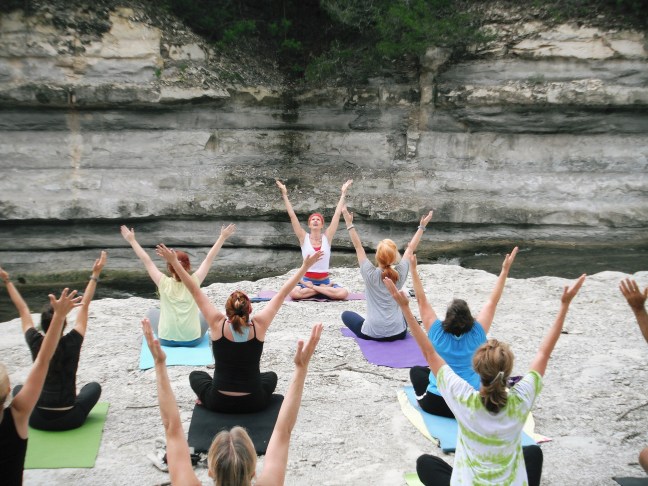
Why Yoga Is the Answer to Your Post-Divorce Woes

yoga

I rarely give the advice that people should do a certain thing. After all, we are all different with unique needs and situations.

But today I’m making an exception.

Because this one thing is really that transformative.

If you give it a chance.

Before I explain all of the reasons why yoga will improve your life, I’m going to first dispel some of the myths I frequently hear:

Yoga is not something you have to be flexible to do. In a purely physical sense, yoga is something you do to become flexible. A good teacher can work with you no matter your body type or limitations.

Yoga is not only physical exercise. Yoga is as much in the mind as in the body. In fact, it’s about connecting mind and body. Yes, you get a tight booty but even more importantly, you’ll get a balanced mind.

Yoga is not about wearing the latest tight yoga pants (although you certainly can) or rocking the latest lululemon mat. It’s about connecting breath and movement and as long as your bits are covered, nobody really cares what you’re wearing.

Yoga is not about being trendy. That is IF you find the right studio. Take the time to find the space and the people that fit your needs. Yoga is about connecting with yourself on the mat and experiencing the energy of the group.

Yoga is not one size fits all. You can find everything from super-intense and fast-pasted hot classes to yin classes that often find people falling asleep.

Yoga is not always spiritual. But it can be. Again, look for what meets your needs. Most classes will have some sort of centering and intention-setting at the beginning and some sort of guided meditation/ reading at the end.

Yoga is not necessarily expensive. You can find it taught in churches, community centers and the YMCA. Many communities even offer free classes. And even though it’s not the same as a live class, there are even free videos on YouTube.

Yoga is not just for women. Or skinny people. Or young people. Or [fill in the blank] people.

Do you have a body? Do you have a mind?

Then yoga is for you:)

With me so far? Cool. Now, here’s why yoga is so incredibly powerful for those going through divorce:

Are you feeling sad?

The movement of yoga releases endorphins that help to improve your mood. I recommend a moderate to fast paced movement class (usually called vinyasa) here because it helps to get you out of your head and the pace challenges the body some. If you’re really struggling, try hot yoga, the sweat hides any tears 🙂

Are you feeling anxious or struggling with PTSD-like symptoms?

This was my primary issue and yoga was my biggest ally. I know it seems crazy, but some of the poses cause the mind to panic (especially if it’s a hot class). In life, we’re used to avoiding discomfort. Yoga teaches you to be with it, soften to it and let your breath calm the mind (literally taming the amygdala). Learn those lessons on the mat and you’re better able to handle triggers in the world beyond the studio. Also, it’s worth looking for a teacher who is trained in trauma yoga – they do some incredible work.

Are you angry?

I’m always amazed as the emotions that arise on the mat. And anger is a common one (and not just when the instructor has you doing too much core work!). Good teachers recognize this and even structure classes to elicit certain feelings. And then they carefully guide you to slow your breathing and find your intention again. And that’s a good skill to have.

Are you lonely?

Much of loneliness comes from being disconnected from yourself. And yoga has a way of bringing you home. Apart from that, when you practice in a group, there is an amazing sense of energy that comes from hearing the breath and sensing the movements around you. If you want to chat before or after class, no problem. And if you just want to be left alone, you’ll probably find that people will respect that as well. And if you’re looking for new friends, search out a studio that does day or longer trips (I may go to Costa Rica with my studio this fall!!!).


Are you struggling with comparison?

Is Facebook bringing you down with its endless supply of happy families? Is the news that your ex is getting married hitting you hard? Yoga is a great teacher about the danger of comparing ourselves to others. Just the other day, I nailed crow pose (3 times!!!) for the first time ever. I was stoked. The next day, I started to enter the pose, caught sight of the women next to me doing a harder version, and immediately fell. Yoga is a reminder to keep your mind on your mat and disregard what others think of you and what is going on around you. I love when the teacher says something like, “Don’t worry how xyz pose looks on your neighbor. Your body is unique and the poses will look different for you.” YES!!!

Are you engaging in negative self talk?

Try this little experiment – stand in a one-legged balance pose while you’re focused on your breathing. Now, start engaging in your preferred negative self-banter. Did you fall? That’s the usual response. Yoga teaches you to be loving and accepting of yourself exactly where you are. And when you falter, you often get a physical reminder.

Are you worried about finding your sexual self again?

I just read a study recently that practitioners of yoga have better sex lives. It makes sense. You become more comfortable with your body, more in tune with your physical senses and better able to pay attention to details. And you don’t need a partner to get started.

Are you feeling hopeless?

Yoga does a great job of teaching acceptance in the now and faith in the future. It breaks everything down to the tiniest steps and encourages you to always focus on this breath. And then this one. And before you know it, a full hour has passed. You made it. And you can keep making it!

Are you scared and struggling with fear?

One of the ways I learned to trust again was on the yoga mat. You learn that one leg really is enough to hold you and all that trembling is just noise that can safely ignored. You learn that you can lean back in a twist beyond your self-imposed limits. You learn to let go rather than grasp. And you know what? It’s okay. Strangely enough, the slower classes often trigger this panic (and teach you how to handle it) better than the faster ones. In life, we often keep ourselves busy so that we don’t have to feel. This time to slow down is a gift to yourself.

Are you experiencing a lack of control in your life?

Yoga is more about learning to use the muscles you have than building new ones. When you’re feeling shaky and unstable in a pose, all you need is a simple verbal instruction or well-placed hand to guide you and you activate all those little stabilizing muscles you didn’t know you had. You gain a sense of control (and some soreness the next day!).

Are you having a hard time letting go of expectations?

There is a reason that yoga is always called practice. Because it’s never perfected. Yoga teachers coach you not to worry about where you were last week or even the previous pose. Be where you are in the moment at that moment. You’ll learn that the best practices are those that you approach with an open mind.

Are you feeling overwhelmed?

I folded into a half-moon the other day with my hand to the floor (as I usually do). My balance was off for some reason. Instead of giving up, I reached for the block next me and slid it under my hand before resuming the pose. Yoga is full of modifications and props to use when you become overwhelmed. And learning to ask for and receive help is a valuable life skill at any time.

Are you struggling with confidence?

Yoga is accessible to anyone on their first day. Yet there’s always room to improve. And that feeling of accomplishment and confidence when you finally nail that crow pose? Priceless! (Just don’t look over at your neighbor.)

Are you looking for love again?

Okay, I can’t promise that yoga can do this for you. But it can’t hurt:)

Have you tried yoga? What benefits has it given you? 

Are you thinking about trying it? What questions or concerns do you have?

You know my thoughts – Let’s hear yours!


How Yoga Can Help You Through Divorce

I rarely give the advice that people should do a certain thing. After all, we are all different with unique needs and situations.

But today I’m making an exception.

Because this one thing is really that transformative.

If you give it a chance.

Before I explain all of the reasons why yoga will improve your life, I’m going to first dispel some of the myths I frequently hear:

Yoga is not something you have to be flexible to do. In a purely physical sense, yoga is something you do to become flexible. A good teacher can work with you no matter your body type or limitations.

Yoga is not only physical exercise. Yoga is as much in the mind as in the body. In fact, it’s about connecting mind and body. Yes, you get a tight booty but even more importantly, you’ll get a balanced mind.

Yoga is not about wearing the latest tight yoga pants (although you certainly can) or rocking the latest lululemon mat. It’s about connecting breath and movement and as long as your bits are covered, nobody really cares what you’re wearing.

Yoga is not about being trendy. That is IF you find the right studio. Take the time to find the space and the people that fit your needs. Yoga is about connecting with yourself on the mat and experiencing the energy of the group.

Yoga is not one size fits all. You can find everything from super-intense and fast-pasted hot classes to yin classes that often find people falling asleep.

Yoga is not always spiritual. But it can be. Again, look for what meets your needs. Most classes will have some sort of centering and intention-setting at the beginning and some sort of guided meditation/ reading at the end.

Yoga is not necessarily expensive. You can find it taught in churches, community centers and the YMCA. Many communities even offer free classes. And even though it’s not the same as a live class, there are even free videos on YouTube.

Yoga is not just for women. Or skinny people. Or young people. Or [fill in the blank] people.

Do you have a body? Do you have a mind?

Then yoga is for you:)

With me so far? Cool. Now, here’s why yoga is so incredibly powerful for those going through divorce:

Are you feeling sad?

The movement of yoga releases endorphins that help to improve your mood. I recommend a moderate to fast paced movement class (usually called vinyasa) here because it helps to get you out of your head and the pace challenges the body some. If you’re really struggling, try hot yoga, the sweat hides any tears 🙂

Are you feeling anxious or struggling with PTSD-like symptoms?

This was my primary issue and yoga was my biggest ally. I know it seems crazy, but some of the poses cause the mind to panic (especially if it’s a hot class). In life, we’re used to avoiding discomfort. Yoga teaches you to be with it, soften to it and let your breath calm the mind (literally taming the amygdala). Learn those lessons on the mat and you’re better able to handle triggers in the world beyond the studio. Also, it’s worth looking for a teacher who is trained in trauma yoga – they do some incredible work.

Are you angry?

I’m always amazed as the emotions that arise on the mat. And anger is a common one (and not just when the instructor has you doing too much core work!). Good teachers recognize this and even structure classes to elicit certain feelings. And then they carefully guide you to slow your breathing and find your intention again. And that’s a good skill to have.

Are you lonely?

Much of loneliness comes from being disconnected from yourself. And yoga has a way of bringing you home. Apart from that, when you practice in a group, there is an amazing sense of energy that comes from hearing the breath and sensing the movements around you. If you want to chat before or after class, no problem. And if you just want to be left alone, you’ll probably find that people will respect that as well. And if you’re looking for new friends, search out a studio that does day or longer trips (I may go to Costa Rica with my studio this fall!!!).


Are you struggling with comparison?

Is Facebook bringing you down with its endless supply of happy families? Is the news that your ex is getting married hitting you hard? Yoga is a great teacher about the danger of comparing ourselves to others. Just the other day, I nailed crow pose (3 times!!!) for the first time ever. I was stoked. The next day, I started to enter the pose, caught sight of the women next to me doing a harder version, and immediately fell. Yoga is a reminder to keep your mind on your mat and disregard what others think of you and what is going on around you. I love when the teacher says something like, “Don’t worry how xyz pose looks on your neighbor. Your body is unique and the poses will look different for you.” YES!!!

Are you engaging in negative self talk?

Try this little experiment – stand in a one-legged balance pose while you’re focused on your breathing. Now, start engaging in your preferred negative self-banter. Did you fall? That’s the usual response. Yoga teaches you to be loving and accepting of yourself exactly where you are. And when you falter, you often get a physical reminder.

Are you worried about finding your sexual self again?

I just read a study recently that practitioners of yoga have better sex lives. It makes sense. You become more comfortable with your body, more in tune with your physical senses and better able to pay attention to details. And you don’t need a partner to get started.

Are you feeling hopeless?

Yoga does a great job of teaching acceptance in the now and faith in the future. It breaks everything down to the tiniest steps and encourages you to always focus on this breath. And then this one. And before you know it, a full hour has passed. You made it. And you can keep making it!

Are you scared and struggling with fear?

One of the ways I learned to trust again was on the yoga mat. You learn that one leg really is enough to hold you and all that trembling is just noise that can safely ignored. You learn that you can lean back in a twist beyond your self-imposed limits. You learn to let go rather than grasp. And you know what? It’s okay. Strangely enough, the slower classes often trigger this panic (and teach you how to handle it) better than the faster ones. In life, we often keep ourselves busy so that we don’t have to feel. This time to slow down is a gift to yourself.

Are you experiencing a lack of control in your life?

Yoga is more about learning to use the muscles you have than building new ones. When you’re feeling shaky and unstable in a pose, all you need is a simple verbal instruction or well-placed hand to guide you and you activate all those little stabilizing muscles you didn’t know you had. You gain a sense of control (and some soreness the next day!).

Are you having a hard time letting go of expectations?

There is a reason that yoga is always called practice. Because it’s never perfected. Yoga teachers coach you not to worry about where you were last week or even the previous pose. Be where you are in the moment at that moment. You’ll learn that the best practices are those that you approach with an open mind.

Are you feeling overwhelmed?

I folded into a half-moon the other day with my hand to the floor (as I usually do). My balance was off for some reason. Instead of giving up, I reached for the block next me and slid it under my hand before resuming the pose. Yoga is full of modifications and props to use when you become overwhelmed. And learning to ask for and receive help is a valuable life skill at any time.

Are you struggling with confidence?

Yoga is accessible to anyone on their first day. Yet there’s always room to improve. And that feeling of accomplishment and confidence when you finally nail that crow pose? Priceless! (Just don’t look over at your neighbor.)

Are you looking for love again?

Okay, I can’t promise that yoga can do this for you. But it can’t hurt:)

Have you tried yoga? What benefits has it given you? 

Are you thinking about trying it? What questions or concerns do you have?

You know my thoughts – Let’s hear yours!


The Judgement of Pain – Enough Already!

They’re dropping like flies. The daily bombardment of death and destruction as the bombs render flesh and landscape into unrecognizable rubble is too much to bear and the drone operators are leaving the job behind to retain their sanity. The intimate, up-close view brings the carnage into reality, even when the one operating the drone is safely occupying a padded chair in a cubicle back in the U.S.

And compounding the anguish?

Many of these pilots are shamed for their feelings, since they are not “real” soldiers and their bodies are not facing physical harm. Their healthy-looking bodies belie their broken minds.

And yes, if you had to put human suffering on a continuum, being physically present in a war zone would certainly seem to be worse than viewing it through a television screen.

But here’s the important part.

We don’t have to put pain on a continuum.

We don’t have to adjudicate and rank hardships.

Better or worse is not only relative, it’s inconsequential.

All that matters for that person is how they feel.

And that they receive compassion, support and encouragement (from themselves and others) to feel better.

Because when we judge suffering, we only add to it.


I read a Twitter exchange the other day between two people who had stumbled across my piece on The Huffington Post about PTSD after divorce:

photo 4

photo 3-4

photo 2-4

photo 1-1I know nothing about these two people and what they have endured. I did not attempt to engage them in conversation. But the exchange made me sad. Not for me, but for the many people who find my site by entering in some combination of “PTSD” and “divorce” into their search engine. Those people are in real pain and they are looking for real validation that their feelings are okay. And probably hope that they will again be okay.

And by telling them that they are not allowed to feel that way, all it does is add shame to the mix. Because if they are not “supposed” to feel that way, then something must be wrong with them.

The first step to resolving suffering is to accept it.

Only then can you begin to address it.


I have to be careful myself with judging pain. Every day, I deal with teenagers who are inconsolable because of some issue that, from my adult perspective, seems petty.

Because they are not seeing it from an adult perspective.

They can’t.

All they know is that based upon what they have experienced, this situation hurts.

And my job is to listen, acknowledge the distress and help them move beyond it.


The takeaways –

  • It doesn’t matter where someone’s experience falls on the continuum of human suffering. All that matters is where it falls on his or her personal continuum.
  • Just because someone’s situation was worse, doesn’t mean their pain was. Don’t assume.
  • When we judge pain, we are saying that we understand their pain. And we can’t. Because we haven’t lived his or her life.
  • Judgement does not alleviate pain; it compounds it. Acknowledgement and compassion are the first steps to ease the suffering.
  • By focusing on the similarities in the responses rather than fixating on the differences that caused the pain, together we can learn how to heal.

And, just so you know, the response was not accepted on the Huffington piece because comments are closed due to the age of the article, not because of any censorship of alternative viewpoints. It’s always interesting how we all make assumptions based upon our beliefs and experiences. Myself included.