Exercises in Vulnerability

After divorce, we often enter a protective state, curled inward and walled off to the outside world. And without practice, we soon forget the critical skill of being able to be fully seen by another. And so that which was advantageous at first, eventually becomes limiting as new relationships cannot fully form when you are wrapped in your emotional armor.

Not only is it scary to immediately open up to others when your heart has been shredded, it can also be risky. Sadly, there are those that look for wounded souls and advantage of your weakened state. Yet if you remain hardened to all encounters, you risk losing the ability to be vulnerable as you become accustomed to your “Nothing can touch me” state.

There is a middle ground. Places where you can practice being open while at the same time ensuring your emotional safety. The following are exercises in vulnerability that maintain your strength and flexibility for when you’re ready to put it in action in a new relationship.


Therapy

This is one of the key benefits of therapy. In many ways, the relationship you have with your therapist within the safety of their four walls gives you an opportunity to practice with a trained professional before you bumble through it on your own in the world. They know when to push you to open a little more and sense when you’re flooded and need a breather. In contrast with the other strategies, this one directly addresses vulnerability and allows for an outsider’s help and perspective.


Massage

This was a key part of my healing from my own divorce. Abandonment had left me traumatized and fearful. I scheduled a monthly massage with a trusted therapist for those first several months. The safe, nonsexual touch helped me learn to relax in front of another person, which I knew was going to be critical for my future wellbeing. We NEED touch and when you’re having trouble trusting people in your life, massage can be a safe way to meet that need.


Time With Kids

Kids have a way of worming through our emotional defenses. Willing to say it like it is, they call us out on our stuff and their own openness and honest curiosity helps to make us feel at ease. Now obviously, they are not the ones to divulge all of your thoughts to, but you can learn how to relax and let yourself feel without passing judgement.


Online Groups

Whether a structured support group or an anonymous account on Twitter, the internet offers myriad opportunities for you to flex your vulnerability muscle. This is an environment where you can be completely open, yet also feel protected behind your screen. Be cautious if you’re not in the relative safety of a private group and you’re still feeling pretty fragile, as here there be trolls.


Book Clubs

Book club discussions often allow ways for us to talk about how we relate to the literature, which can be a way of talking about your feelings and your experiences through the book. This round-a-bout arrival can often feel more comfortable than a direct approach. Plus, you also have the opportunity to learn that you’re not alone with these feelings.
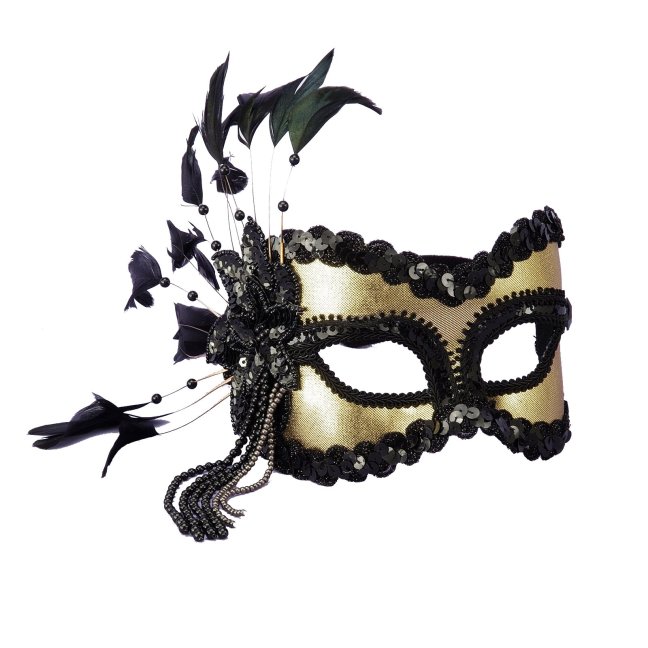
 

The Masks We Wear

I read this response to Robin Williams’ death this morning and it struck a nerve.

The author, also in the comedy business, discloses the dark underbelly that is often present beneath the laughs. He describes how childhood trauma or a sense of unworthiness leads to the development of an alter ago – a front man who entertains the crowd while distracting from the scared and broken child beneath.

He spoke of the yin and yang of depression and comedy. The pull of the audience and the isolation inherent in the belief that the performer is only loved for the performance.

Not for the child within who only wants to be loved.


The piece struck a nerve this morning. Caused my coffee to cool as I read.

I don’t fit that personality profile, although I have seen many in my personal and professional lives over the years (some of whom also tragically took their lives).

I don’t fit that profile.

But I fit another that I recognized as I read.


The performer is driven from a need to be loved.

I’m driven by a need to not be abandoned.

The performer learns how to entertain and draw a crowd.

I’ve learned how to be needed.

The performer struggles with depression.

I struggle with anxiety.

But we both hide behind masks.


In fact, to some extent, we all do.


The following are some of the masks and underlying causes I’ve seen. I see them in adults and I see them in my students – 13 and 14 years old. We all have the same basic needs and the same basic fears. We all try to hide them from the world and we begin to develop our own masks in childhood as we encounter stresses and learn from other’s responses to us.

These are caricatures of people. Oversimplifications. We are much more than the fears that drive us and the costumes we select to shield us.

But even though these are but a brief sketch, there is power in recognizing your own mask of choice and why you may have decided to wear it.


Mask – Performer or Funny Man

Behind the Mask – A sense of being unlovable

This may have the fat kid in school. Or the one who suffered abuse or neglect at the hands of his or her parents. This child felt alone and wanted nothing more than to loved and accepted. The performer found a love of sorts through making others smile. Even though inside he may have crying.

If I make you laugh, you’ll love me.


Mask – Worker Bee or Caregiver

Behind the Mask – A fear of being abandoned

This mask is usually picked up after a childhood event – death, divorce, desertion, or  neglect- leaves behind a fear of being abandoned at an age when adult support is needed. In order to temper the anxiety of being left again, the worker bee becomes an efficient taskmaster and the caregiver becomes a necessary nursemaid.

If you need me, you won’t leave me. 


Mask – Strongman or Overachiever

Behind the Mask – An insecurity of being unworthy

These are the people that grew up always being compared to others and found wanting. They internalize the message and feel that they will never measure up. They learn to overcompensate in a visible way to try to prove their worth and lessen their insecurities. Although often envied by others, they still never feel they will never make the grade.

If I work harder, I’ll meet your approval.


Mask – Professor or Distancer

Behind the Mask – A fear of being vulnerable

This is the person who refuses to show emotion. Who either responds with analytical perspective or indifference to any situation, even those that are emotionally charged. They are often read as cold, uncaring. But often they are soft and sensitive on the inside. So sensitive that they have learned to hide it well.

If I don’t show myself, you can’t wound me.


Most of us wear our masks when we feel threatened – a new situation, a large crowd, a demanding client. But most of us also feel comfortable enough to slip them off around our loved ones, revealing the fears and drives beneath.

It’s lonely living behind a mask for too long. You’re not alone yet you feel no one values you for the real you.

Only for the character you play.

It’s okay to shield your inner child sometimes.

But it’s also okay to let him out to play.

And teach him to trust that he can be loved and accepted as he is.

Fears and all.


Passionate Protection

One of the most common complaints in a relationship that has gone the distance is the lack of excitement. Of passion.

The spark fades and is replaced by a sense of comfort.

Of predictability.

It’s natural to look for stability in our relationships. We want to feel safe. We want to limit that oh-so-scary feeling of vulnerability. We may be willing to trade some of that early excitement for the comfort of knowing that our partner will be there and that we will be safe. We exchange passion for security.

The problem with this transaction is that security is merely an illusion. There is no such thing as a relationship that is divorce-proof. There are no guarantees. We are trading real goods for the promise of a return that may never come.

It makes sense to take certain precautions. Much like most pay their rent on time so they don’t have to live with the daily fear of being evicted, it makes sense to be cautious in love. But not so cautious that you trade all excitement for the false promise of invulnerability. Even perfect rent payments do not protect your home from burning down around you.

There are problems inherent with assuming too much security. You become complacent. Bored, even. You may begin to seek excitement and novelty outside of the the relationship. Eventually, your internal narrative regarding your spouse changes to match your perceptions, reinforcing the idea that the lack of passion is par for the course with him or her. The very assumption of stability can erode away the foundations of a relationship.

You can maintain passion. You can draw out excitement. But it does mean letting go of the illusion of security. It means protecting your passion even when it can be scary.

Try listening to your partner with an open mind rather than leading with assumptions. He or she will surprise you if you allow it. When you believe you know all there is to know about someone, you begin to fill in the gaps automatically. But if you listen, really listen, you may discover something you didn’t know. Of course, that something may also be against your preferences. There’s the trade-off.

Look at your partner as an individual. Watch them in their element. See the best side of them come alive. It may or may not be a characteristic that you normally witness in them. See it. Appreciate it. Recognize that you are a team but not a single entity. Your partner is his or her own person. As you are yours. Maintain some separation, some mystery. In that way, you always leave room for discovery.

Be proactive about maintaining experiences as a couple outside of routine. Routines allow us to function but they also become suffocating if you never deviate. Try new things. The excitement will transfer to the relationship. Embrace a certain amount of unpredictability. Don’t restrain laughter. Be willing to try and look foolish.

Don’t depend upon your partner to create passion. Find it yourself.  Explore the things that bring you joy, that give you purpose and allow you to create. Your partner may not share your interest in gardening or ju-jitsu, but you can share the energy that  it brings you. Take responsibility for your joy. Passion has a way of being contagious. Pass it on.

Amusement parks have created an entire industry around the balance of security and excitement. They know how to give you the feeling of vulnerability, with its associated joy when you emerge unscathed,  without too much of the risk. You can find that balance in a relationship as well.  Let go of the illusion of security. Actively seek excitement and novelty within the relationship. Protect your passion as diligently as you protect your heart.

Related: Of Teddy Bears and Security Systems

Beneath the Uniform

Last Sunday found me curled up on the sofa next to Brock, my trusty laptop in my hands, watching the Braves lose to Detroit while I Googled, “Naked baseball players.”

Perhaps an explanation is needed here. I didn’t really want to see naked baseball players; I was looking for baseball players in their underwear.

Stay with me:)

I am relatively new to world of sports; I only started watching when Brock and I began dating three years ago. Since I have an interest in health and fitness, I was immediately drawn to learn about the training programs for the various sports and teams. I was already familiar with football training, thanks to my teenage subscription to Muscle and Fitness. I also knew the effect of that training on their bodies – not only did M&F prominently feature these men, but their nearly bare bodies can be seen in national ads.

But not so with baseball players. They are much more secretive.

My search began with curiosity about  their butts. At my first Braves game, I immediately noticed that the read ends of the players were quite prominent. I wondered if that was a result of selection bias or training. Not surprisingly, it is a bit of both. Scouts look for big butts and thighs because that is where the power comes from. Then, training focuses on developing that explosive force which leads to greater muscular development.

But I still wasn’t satisfied. I was curious about what lay beneath the uniforms, as many of these men appeared to be rather chunky, especially for pro athletes. I made an assumption based upon their thick lower bodies and blousy tucked-in shirts.

Eventually, my curiosity got the best of me and I turned to the all-knowing Google for answers. My first queries were tamer – “baseball player physiques”, “baseball players shirtless” and “baseball players in underwear”. No luck. Apparently, baseball players like to hide their bodies as much as football players like to display theirs.

I summoned my courage and typed, “Naked baseball players.”

Not a search I would necessarily recommend. But it was enlightening.

Not surprisingly, my assumptions were wrong. Some of the players are certainly carrying some extra weight but many others hide six-pack abs under their voluminous shirts. The uniforms may be identical yet the players they cover are unique and resist stereotypes.

It was a reminder about the uniforms that we all wear in our lives. The outward presentation that does not always match the inside.

It takes courage to remove your uniform and reveal the vulnerable self beneath. To show the world who you are without the socially-approved costume disguising your form.

People make assumptions based upon what we show them. Those labels can persist, even though they may not be accurate or inclusive. We can feel comfortable behind the uniform, fearing that to remove it would be to stand out too much from the crowd, perhaps painting us as the weak gazelle at the back of the pack.

The trick to being comfortable revealing what hides behind your outward attire is to accept our naked, authentic selves. To understand that that the seemingly perfect facades worn by others are hiding their own vulnerable  selves.

I learned a parallel lesson as a child who frequented campgrounds with their not-so-private showers and hippie-friendly festivals. I grew up observing all types of bodies – young and old, fat and thin, smooth and wrinkled with age. Those experiences did more for me developing a healthy self-image and attitude about my body than any after school special could ever have achieved. I saw the “perfect” bodies marred by scars that were only visible out of clothes. I grew to appreciate the tales of children born upon the abdomens of the women and the sagging skin over once-filled biceps on the men. Under the clothes, people were at once more unique and more similar than they could ever be when shielded by their attire.

Our internal selves are no different. We shield them from public view.  The men I met while dating who appeared to be the toughest were wearing their tattoos, leather and muscles to hide their insecurities. The women I know who are super polished and put together are often afraid of losing control. I, myself, can hide behind my analytical attire, hiding my more emotional self with the fear that it will not be accepted.

I’m trying to use my lessons from childhood to shed this uniform, this comfortable shield.

It’s scary at first, revealing who you are, but the freedom that comes from shedding the uniform is unbelievable. We are more alike underneath than we often realize and yet we each have our own unique beauty. Don’t hide yourself – you have much to offer as you are.

But I still caution you against Googling “Naked baseball players.”

Vulnerable

Vulnerable

I’ve been feeling very vulnerable lately. Why? Who knows, but it doesn’t really matter, does it?

What matters is that I need to learn to be here when my body is screaming for to hide and bury my head beneath the covers and my mind is begging for to re-erect the barriers that once surrounded it.

I’m scared. For the first time in my entire journey, I’m truly scared of being abandoned. Again.

The feeling isn’t based on any reality. But that doesn’t matter. I was blindsided by a text after 16 years. I don’t have much faith in my view of reality.

I know I’m primed for these reactions: my dad moved across the country when I was 11, I had 13 friends die by my freshman year of college, and then there’s my ex-husband. Yeah, I’m no stranger to being left.

Early in my relationship with my fiance, I thought I worked through these issues. Adapted from the book:

It hasn’t been easy to be vulnerable again or to learn how to trust after my faith had been betrayed. It took me many months to open up again and I still find myself erecting a shield at times. My biggest challenge was not giving into to the fear of being abandoned again. This became clear about four months into my new relationship when I saw my boyfriend’s car pull up to the curb outside the airport where he was picking me up after a trip.

Relieved to see him, I reached up to give him a hug, “It’s great to see you.”

Hugging me back, “I missed you,” he replied.

Once inside the car, I admitted, “I halfway expected you not to show.”

He looked shocked, hurt. “Why would you think that?” he said, a hard edge sliding into his voice. “I told you I’d come get you.”

“I know,” I replied softly, feeling ashamed. “It’s just that last year…” I trailed off.

“I’m not him.”

Of course, I knew that on a rational level; I never consciously compared them. It was a matter of memories coursing through my bloodstream, igniting stress hormones that, in turn, sent false signals of impending doom. I also knew that this was dangerous territory; if I expected others to behave like my ex, eventually they would.

The truth? I had only worked through that because I wasn’t fully vulnerable. I don’t expect to be left anymore, but now it scares me. I’ve allowed it to scare me. I’m not holding back anything anymore and I’m only now realizing I still was. I knew that the upcoming marriage had that effect on my fiance. Now I’m realizing that it is having the same effect on me, only a few months later. I am allowing myself to fully feel the love I have for him. And, damn, that’s scary.

I’m realizing that I trust him now but that I might not yet fully trust myself. That’s a strange feeling.

So now here I am. Open and bleeding. No walls, no buried head. I need to learn to be here, to stay vulnerable, without allowing myself to panic and either hide or grasp too tightly. It’s not easy. It doesn’t feel safe.

I want reassurances. Promises. But the truth? That’s only a bandaid. I need to relax and breathe through my fear. I know I’ll be okay, I just need to do a better job of convincing myself. After all, the only true abandonment is when we abandon our true selves. And that’s one I can control.

Breathe in. Breathe out.

It will be okay.

Fear


Related posts:

Fear in the Driver’s Seat

Love After Divorce: A Reflection on a Journey

Static Cling