Exercises in Vulnerability

After divorce, we often enter a protective state, curled inward and walled off to the outside world. And without practice, we soon forget the critical skill of being able to be fully seen by another. And so that which was advantageous at first, eventually becomes limiting as new relationships cannot fully form when you are wrapped in your emotional armor.

Not only is it scary to immediately open up to others when your heart has been shredded, it can also be risky. Sadly, there are those that look for wounded souls and advantage of your weakened state. Yet if you remain hardened to all encounters, you risk losing the ability to be vulnerable as you become accustomed to your “Nothing can touch me” state.

There is a middle ground. Places where you can practice being open while at the same time ensuring your emotional safety. The following are exercises in vulnerability that maintain your strength and flexibility for when you’re ready to put it in action in a new relationship.


Therapy

This is one of the key benefits of therapy. In many ways, the relationship you have with your therapist within the safety of their four walls gives you an opportunity to practice with a trained professional before you bumble through it on your own in the world. They know when to push you to open a little more and sense when you’re flooded and need a breather. In contrast with the other strategies, this one directly addresses vulnerability and allows for an outsider’s help and perspective.


Massage

This was a key part of my healing from my own divorce. Abandonment had left me traumatized and fearful. I scheduled a monthly massage with a trusted therapist for those first several months. The safe, nonsexual touch helped me learn to relax in front of another person, which I knew was going to be critical for my future wellbeing. We NEED touch and when you’re having trouble trusting people in your life, massage can be a safe way to meet that need.


Time With Kids

Kids have a way of worming through our emotional defenses. Willing to say it like it is, they call us out on our stuff and their own openness and honest curiosity helps to make us feel at ease. Now obviously, they are not the ones to divulge all of your thoughts to, but you can learn how to relax and let yourself feel without passing judgement.


Online Groups

Whether a structured support group or an anonymous account on Twitter, the internet offers myriad opportunities for you to flex your vulnerability muscle. This is an environment where you can be completely open, yet also feel protected behind your screen. Be cautious if you’re not in the relative safety of a private group and you’re still feeling pretty fragile, as here there be trolls.


Book Clubs

Book club discussions often allow ways for us to talk about how we relate to the literature, which can be a way of talking about your feelings and your experiences through the book. This round-a-bout arrival can often feel more comfortable than a direct approach. Plus, you also have the opportunity to learn that you’re not alone with these feelings.


Are You Setting Healthy Boundaries or Hiding Behind Walls?

healthy boundaries

I thought I was setting boundaries.

But in reality I was also building walls.

It’s easy to do. To get so carried away with a line in the sand that it becomes the beginning of a foundation of a fortress. A stronghold intended to keep you safe. But that really holds you prisoner.

Do you know the difference between setting healthy boundaries and constructing isolating walls?

Boundaries

tennis-court-443267_1280Boundaries are rational and deliberate lines that define what is and is not allowed to be done to you. They are communicated and consistent and are less about keeping others out than keeping yourself intact.

Boundaries allow others to see you. Be with you. But they don’t allow others to use you.

Boundaries say, “I’m not letting anyone abuse me” and “You can come in as long as you abide by the rules.”

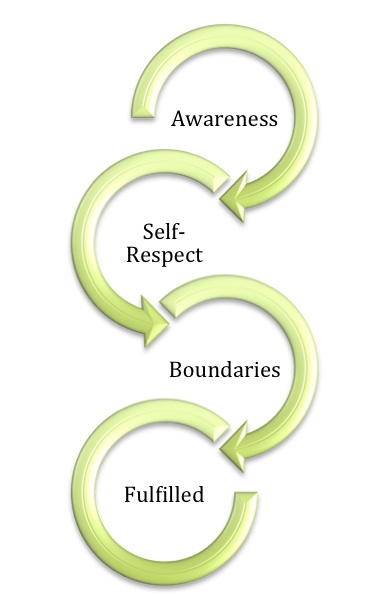
Healthy boundaries are anchored in awareness and self-respect. When in place by both partners, boundaries allow for a deeper connection because both people don’t feel as though they are threatened by an increase in vulnerability.  Although you may be hurt, your self will remain intact.

Examples of boundaries include not tolerating abusive actions or language, refusing to accept the responsibility for another’s happiness or choices and not acting in opposition to your own values and ethics.

boundaries

Walls

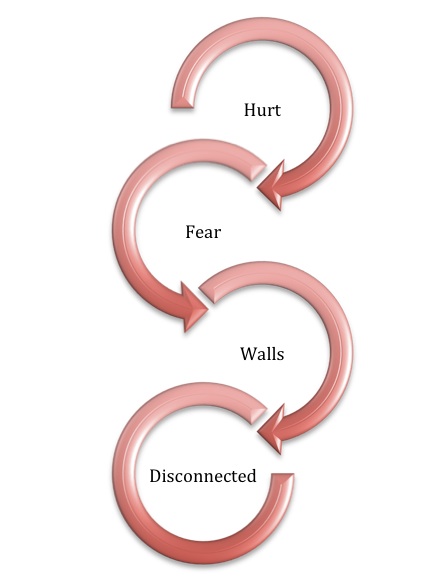
brick-293507_1280Emotional walls are bricks of self-protection mortared with fear. They are erected as a result of being wounded. They are rarely acknowledged and their existence is often only discovered when somebody runs head-first into one. Unlike boundaries, which only keep out those who misbehave, walls do not discriminate – they hold everyone back.

Walls say, “I will never allow myself to be hurt again” and “I’m not letting anyone get close to me.”

Walls are built upon fear. When one or both partners in a relationship is hiding behind walls, a deeper connection forged through vulnerability is impossible. As a result, the partner(s) hiding behind the walls may feel safe, but he or she will also feel empty and disconnected because the true self is not being seen. The wall keeps others out. And it also holds you prisoner.

Examples of walls include never letting your emotions show, deliberately withholding important information from a potential partner and isolating out of a fear of being hurt again.

wallsWhich are you building? Walls? Or boundaries?

Vulnerable

Vulnerable

I’ve been feeling very vulnerable lately. Why? Who knows, but it doesn’t really matter, does it?

What matters is that I need to learn to be here when my body is screaming for to hide and bury my head beneath the covers and my mind is begging for to re-erect the barriers that once surrounded it.

I’m scared. For the first time in my entire journey, I’m truly scared of being abandoned. Again.

The feeling isn’t based on any reality. But that doesn’t matter. I was blindsided by a text after 16 years. I don’t have much faith in my view of reality.

I know I’m primed for these reactions: my dad moved across the country when I was 11, I had 13 friends die by my freshman year of college, and then there’s my ex-husband. Yeah, I’m no stranger to being left.

Early in my relationship with my fiance, I thought I worked through these issues. Adapted from the book:

It hasn’t been easy to be vulnerable again or to learn how to trust after my faith had been betrayed. It took me many months to open up again and I still find myself erecting a shield at times. My biggest challenge was not giving into to the fear of being abandoned again. This became clear about four months into my new relationship when I saw my boyfriend’s car pull up to the curb outside the airport where he was picking me up after a trip.

Relieved to see him, I reached up to give him a hug, “It’s great to see you.”

Hugging me back, “I missed you,” he replied.

Once inside the car, I admitted, “I halfway expected you not to show.”

He looked shocked, hurt. “Why would you think that?” he said, a hard edge sliding into his voice. “I told you I’d come get you.”

“I know,” I replied softly, feeling ashamed. “It’s just that last year…” I trailed off.

“I’m not him.”

Of course, I knew that on a rational level; I never consciously compared them. It was a matter of memories coursing through my bloodstream, igniting stress hormones that, in turn, sent false signals of impending doom. I also knew that this was dangerous territory; if I expected others to behave like my ex, eventually they would.

The truth? I had only worked through that because I wasn’t fully vulnerable. I don’t expect to be left anymore, but now it scares me. I’ve allowed it to scare me. I’m not holding back anything anymore and I’m only now realizing I still was. I knew that the upcoming marriage had that effect on my fiance. Now I’m realizing that it is having the same effect on me, only a few months later. I am allowing myself to fully feel the love I have for him. And, damn, that’s scary.

I’m realizing that I trust him now but that I might not yet fully trust myself. That’s a strange feeling.

So now here I am. Open and bleeding. No walls, no buried head. I need to learn to be here, to stay vulnerable, without allowing myself to panic and either hide or grasp too tightly. It’s not easy. It doesn’t feel safe.

I want reassurances. Promises. But the truth? That’s only a bandaid. I need to relax and breathe through my fear. I know I’ll be okay, I just need to do a better job of convincing myself. After all, the only true abandonment is when we abandon our true selves. And that’s one I can control.

Breathe in. Breathe out.

It will be okay.

Fear


Related posts:

Fear in the Driver’s Seat

Love After Divorce: A Reflection on a Journey

Static Cling

Fear in the Driver’s Seat

When tragedies happen, we seek understanding. We want to diagnose and cure. We often try to control our surroundings and the actions of others.

We want to feel safe. It’s a basic need. That desire for security is so primal, so strong, that it can cause us to behave irrationally. I experienced this myself in my teenage years. From my softmore year in high school to my freshman year in college, I had 13 friends or mentors die. I will never forget receiving the news of the final  two. I was in Austin for college when I called a friend back home in San Antonio to see about getting together on an upcoming break. She told me the news about the latest two deaths.

I broke. I simply couldn’t handle any more loss. My reaction? I shrunk my world. I no longer stayed in contact with high school friends. I built walls to keep out new friends. My then-boyfriend (now ex-husband) was the only one that I allowed to stay close. It worked. By shrinking my world, I eliminated the potential for hearing about or being affected by tragedy. The odds were stacked in my favor. After all, I only had one person in my inner circle.

And then there were none. My greatest fear came true; I lost him as well. Surprisingly, I was okay. I realized that my old ways of living in my walled-off world simply guaranteed less happiness at the time and yet provided no guarantee against loss in the future. I grew less afraid. More willing to take risks. I let people get close. Some have stayed, others have moved on. That’s okay. I am figuring out how to live with the natural cycles of growth and decay rather than try to fight against them.

It’s natural to examine your surroundings after a tragedy. To evaluate the weaknesses around you and to shore up any breaches in the hull. That increased security always has a tradeoff, however. It’s up to you to decide if that particular exchange is worth it.

More than a million people die in traffic accidents worldwide each year. We take precautions to keep this from happening. We gladly pay extra for cars with added safety measures, we sacrifice some comfort when we pull the seatbelt around our chests, and we write and enforce laws that limit who can drive and under what conditions they can operate a vehicle. I think we can all agree that these are reasonable measures; they balance security and freedom. Yet, how many of us look at the statistics for traffic fatalities and decide to never enter a car again? Very few. The tradeoff simply isn’t worth it.

It can be scary out there. Recent events have shown us that we cannot assume safety in our theaters, malls, or schools. There can be a temptation to scale back, pull into a shell and seal it shut. Like with me after the deaths, it does tilt the odds in your favor, but it doesn’t eliminate the risk. And, speaking from experience, life behind walls is no way to live.

Fear is an important feeling. It tells us to run when we are being chased. It tells us to seek shelter when we are under attack. It tells us to avoid high and unstable cliffs or dangerous stunts. However, fear also tells us not to love. It whispers avoidance of risk even when those chances can lead to something great. Fear tells you to hunker down and wait rather than live. Listen to your fears. But you don’t have to believe everything they say.

So continue to wear your seatbelt, but don’t neglect to drive your life.

drive