I Used to Judge

I used to judge.

I’m not proud of it.

But I used to judge those who stayed in abusive relationships.

I criticized the victim for staying put while exclaiming that, were I ever to find myself in a similar situation, I would leave immediately.

It always seemed so clear to me. So cut and dry.

If the victim wasn’t choosing to leave, then they were choosing to be hit.

But that was before I was judged myself.

I wasn’t in an abusive relationship*. But I was played. And I played along. Played the fool. People hear of my situation and wonder how I didn’t know about the marital embezzlement or the double life. I’m criticized for staying unaware.

And you know my first response when I hear those words?

You weren’t there.

You don’t know.

The same words spoken by those that have been in abusive relationships.

It’s so easy to declare a solution to a problem when you’re viewing it from the outside. But it’s a false clarity, born of perspective and ignorance. When you only see a piece, it’s easy to play judge. But life isn’t that simple.

People stay in abusive relationships because the abuse comes in slowly and “normal” is changed over time.

People stay in abusive relationships because they learned in childhood that abuse is love.

People stay in abusive relationships because they believe they are not worth more.

People stay in abusive relationships because they fear the repercussions of leaving more than those of staying.

People stay in abusive relationships because they love their partner. Except when they fear him/her.

People stay in abusive relationships because the abuser is a skilled trapper, limiting resources and escape routes.

People stay in abusive relationships because their partner is a wonderful parent.

People stay in abusive relationships because they are hopeful that he/she will return to the way it was.

People stay in abusive relationships because depression keeps them stuck.

People stay in abusive relationships because “one more time” is always repeated once more.

People stay in abusive relationships because of fear. And love. And shame. And hope.

I judged for the same reason people have judged me.

I wanted to believe that I was too strong, too smart, too brave for it to ever happen to me. I wanted to believe that I was safe.

And since then, I’ve made friends with many people who have opened up to me about the abuse they’ve endured. And these friends are all strong and smart and brave.

I’ve learned not to judge. To be willing to accept that I am not immune. That I cannot truly understand a situation unless I have lived it. And that in any case, it is better to listen with compassion that speak with judgement.

*My ex husband never was physically abusive. He was never openly controlling. However, he was manipulative and secretive. And I was physically afraid of him once he left; I realized that he was capable of things I never imagined. It was a type of covert abuse.

If you are on Twitter, check out the hashtags #WhyILeft and #WhyIStayed. Powerful.

How NOT to Be a Victim

“Let me introduce you to the victim advocate,” offered the policeman who had arrested my husband the day before.

I stopped short. That was the first time that word – victim – had ever been applied to me. I certainly felt victimized. My partner of sixteen years had just abandoned me with a text message, stolen all of my money and then committed bigamy. Yet even though I was still in the acute phase of suffering, I startled at the application of the word “victim.”

Because even though I had been hurt, I did not want to see myself as a victim. Although it felt good for the pain and unfairness to be recognized, the term also made me feel minimized. Read the rest of the post here and learn how NOT to be a victim.


Ownership

ownership

The Anti-Victim

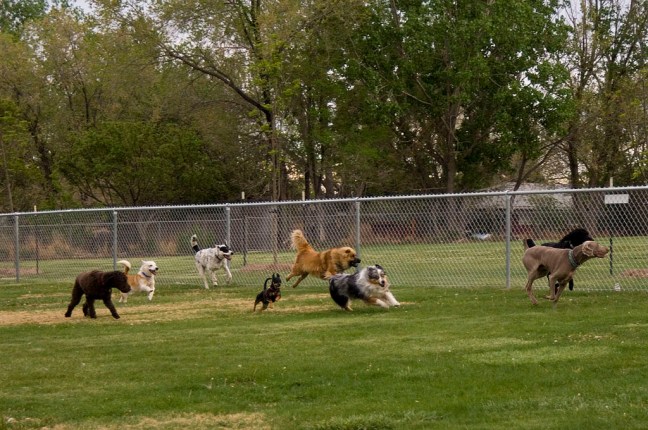
Whenever we take Tiger to the dog park, I like to step back and observe the interactions of the dogs and the owners. On the best days, all are relaxed and a singular, calm and happy energy flows through the park. On other days, the energy is divisive rather than unifying, a sense of unbalance and unease transmitted from creature to creature within the fence. It only takes one anxious and unstable dog (or more often, owner) to create the seeds of chaos.

When an unbalanced dog enters the arena, the other canines are quick to assess. Most of them will seek to avoid the negative energy. While others try to correct or eradicate it through physical means, usually growls and nips. This is when the observations really get interesting. Much of the time I see the owner of the unstable dog step in to rescue his or her dog from the perceived attack followed by a coddling session. This affection given while the dog is anxious only seeks to reinforce the behavior. It is teaching the dog to be a victim. It is also preventing the dog from learning how to solve its own problems as it comes to rely on its owner stepping in and white knighting the situation.

In more successful outcomes, the owners of the involved dogs will watch the interactions, looking carefully for a potentially dangerous situation that requires intervention but remaining hands off as much as possible. When this happens, the unstable dog tends to a minor beating but it also learns. It learns where it stands in the pack, it learns how and when to fight back and stand up for itself and it learns that it can solve its own problems. After a few moments of rough and tumble and vocalizations, all involved usually trot off happily and the energy balance is restored. The instability has been corrected.

Now humans are obviously not dogs. We don’t live in hierarchical packs and we don’t usually teach through teeth and growls. And luckily, our greetings do not usually involve butts and/or noses. But we can learn from observing our canine friends, whose lessons come from a much simpler world than ours.

People perceived as victims in our society tend to face one of two reactions – blame or enable, neither of which help to change the energy balance in the interaction.

I’ve written before about the danger of victim blaming. This perspective is used to justify the attack on the victim, shifting all of the responsibility onto the damaged party. Most recognize the fallacy in this thinking and reject the idea.

But we are much more willing to accept imbalance in the other direction. When the victim is enabled, it nurtures unstable behavior. It shifts all of the responsibility to the other party. It tells the victim that he/she does not have learn how to solve his/her own problems; someone will step in for the rescue. In essence, we are like the dog owner swooping in to pick up the anxious dog before the lesson is learned.

Whatever you nurture, grows.

When we enable victims, we cultivate victims.

So, then, what do we do? How can we support victims while encouraging them to no longer be victims?

Watch Before Intervention

Just like the informed owners at the dog park, watch the interaction before donning your Superman costume. Be ready to intervene if the situation becomes dangerous but give the participants a chance to work it out for themselves first.

Support Rather Than Nurture

When interacting with the victim, especially if he/she is anxious or unstable, provide support and reassurance but do not nurture the anxiety. When someone is anxious, it is better to be clinically kind (think good bedside manner) than motherly.

Encourage Growth and Stability

When the victim is not in crisis, help him/her address the underlying issues. Teach them how to remain calm. Show them how to be centered and in control of themselves. Encourage them to take responsibility for their choices and reactions.

Empower the Person, Not the Behavior

When working with someone who has been victimized, be careful not to permit the behaviors that accompany the victim state as that serves to sanction that behavior. Rather, seek to empower the person behind the behavior so that they can learn to emancipate themselves from victimhood.

Blaming and enabling only serve to create more victims as the power is held unevenly and instability is rewarded. Whereas, if we can learn to cultivate anti-victims through support and encouragement, the great dog park of our lives can be filled with more wagging tails and fewer growls.

This post is Tiger approved.

photo

Forgiveness 101

Forgiveness Mandala by Wayne Stratz
Forgiveness Mandala by Wayne Stratz (Photo credit: Nutmeg Designs)

Forgiveness. That word is often tossed about in hushed and almost reverent tones. It is the holy grail of one betrayed. Have you forgiven yet? We feel pushed to reach that nirvana, yet we are unsure how to navigate the labyrinthine path that leads us there. Nor are we even sure that we would recognize our destination once we have arrived. The trouble is that forgiveness will take on a different facade for every seeker and the path will vary depending upon who is stepping upon it. Even though forgiveness is an individual journey, there are some universal guideposts that can help you navigate your own way.

Understand What it is Not

Someone has wronged you. I get it. I’m not trying to take that away from you. Forgiveness is not a pardon. It is not excusing actions that are immoral or illegal. It is possible to accept the past, acknowledge the wrongs, but not be help prisoner by the actions of the object of your anger.

Blur

Forgiveness has always reminded me of one of those optical pictures where you have to relax your eyes and unfocus in order to see the image hidden in the pattern. If you look too hard and focus too much on absolution, it will remain hidden. Think of forgiveness like a shy kitten. If you lunge towards it and try to grab on, it will run away every time. Relax and soften and let it come to you.

Time

Forgiveness takes time. You can’t schedule it like an event upon a calendar (trust me, I tried).  The time needed to forgive will differ for everyone. It doesn’t mean there is something wrong with you if it takes you longer than it did your friend. Be patient and allow it to unfold on its own schedule. I know, it is easier said than done, but that is the nature of this elusive beast.

Keep Living

Luckily, while you’re waiting for the forgiveness fairy, you can keep living. Don’t put your life on hold. Move forward and move on. Surround yourself with people that bring you joy. Play. Laugh. That ember that still burns inside does not weigh so much that you cannot move despite it. Live as though you have forgiven.

Gratitude

Gratitude and anger are mutually exclusive. Be mindful of what you have and (brace yourself, this is the hard part) what you gained from the person that you need to forgive. I know, your hackles went up. “That ^#%^&? How can I be grateful??  He/She did _______ to me!!” True. I’m not trying to take that away from you. You have a right to be angry. But you also have a right to see the good. Look for it.

Remove the Ego

We all find humor in the self-centered world of the 5 year old, yet we really haven’t evolved that much from kindergarten. When things happen around us, we have a tendency to believe that they happened to us. For example, your child comes home and immediately is defiant and argumentative. Your defences go up and you perceive your progeny’s behaviors as an attack. If you take a moment and breathe and remove yourself from the equation, you most likely realize that the instigation for the behavior is probably something that happened at school minutes or hours before. Spouses are no different. Perhaps you weren’t really a target after all, just collateral damage.

Humanize

We are familiar with the concept of putting someone on a pedestal when we idolize them. We essentially do the same when we demonize a person. It can be easy at those extremes to see a person as two-dimensional, flat. We conveniently remove those characteristics that do not fit our perception. The truth is that we are all human in our messy and sometimes contradictory three dimensionality. Allow yourself to see the human side of the object of your anger. Let your own humanness peek out as well.

Start With Yourself

It is amazing as you take the journey of forgiveness how much changes as your perspective moves. You may be surprised that the target, the object of your wrath has shifted to yourself. We don’t like to be angry at ourselves; it feels traitorous, so we often project it on another. Like with everything, you have to begin with yourself. Soften to your mistakes. We all make them. Be gentle with yourself yet firm in your intentions. Let it go. It’s okay.

How will you know when you have reached your destination? There is no placard that says, “You are here.” No one stands at the gate and hands you a medal. Perhaps forgiveness is best described as peace. I hope you can find your own nirvana. Please leave breadcrumbs for those who follow behind.

You can read about my own journey to forgiveness in Lessons From the End of a Marriage.