A “Safe Space” With a Purpose

One of the most precious gifts I received during my divorce was the gift of safe spaces. I had my dear friend’s kitchen floor, where I could cry and curse without judgment while surrounded by the comforting activities of normal family life. I had my team at work who seemed to know whether I needed a hug, a bite to eat or simply a moment by myself. I had my family, who although spread around the country, would send me emails of support and understanding (liberally peppered with humorous anti-ex sentiments).

Those safe spaces were so treasured because the larger world was anything-but-safe. I had acquaintances question what I must have done to have deserved betrayal and abandonment. I had men at the gym view my fragility and naiveté as an invitation to pursue me long before I was ready to consider a new relationship. And social media? Ugh. It seemed like every message of well-stated support was followed by something well-meaning but clueless (“Don’t worry, honey. There are plenty of other men out there. And you’re still not too old to have babies.”). And then there were those that treated me like a pariah, as though divorce was somehow contagious and by consorting with me, they risked bringing it into their own homes.

There have been many groups that provide a safe space for those undergoing divorce. Each one strives to be a place free from the blaming and shaming that so easily follows the end of a marriage.

Divorce Nation is a little different. It is the safe space, offering virtual community so that those experiencing divorce don’t feel so alone. But unlike most other groups, they don’t just want to help you heal emotionally; they want to help heal your body too. Which from my experience, is a critical component to divorce recovery.

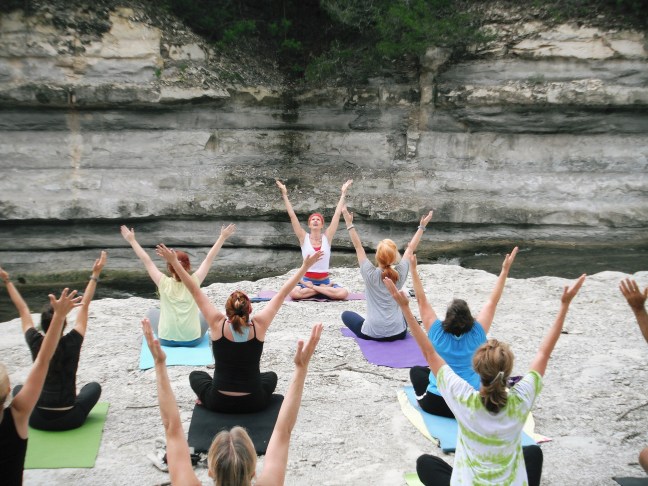
Exercise has been a part of my life as long as I can remember. And so when faced with the enormity of the challenge of coming back from the beat-down of divorce, it was no wonder that it became a significant part of my tool kit. Through fitness, I learned how to release the trauma from my body. The cage erected around my still-bleeding heart began to relax, allowing the lungs to again expand. Running released the excess anxiety while providing a welcomed sense of movement and progress. And yoga, my blessed yoga, continues to teach me that strength can exist alongside vulnerability.

I don’t think I could have made it through the divorce without the benefit of exercise.

Maybe exercise hasn’t been a part of your life. Or perhaps your once-welcoming gym now feels like a danger zone filled with happy-go-lucky youth or predatory singles. Divorce Nation wants to help you bring exercise into your life and teach you how it can help you heal and move forward, stronger in both mind and body.

I’m jealous of those in the Cleveland, Ohio area. A physical gym is in the works that specifically caters to those working through the end of a relationship. The vision is a safe space, a welcoming community with therapeutic support and the opportunity to allow the body to help heal the soul.


Here are the pertinent links for Divorce Nation:

Website

Instagram

M&P Fitness 


How Yoga Can Help You Through Divorce

I rarely give the advice that people should do a certain thing. After all, we are all different with unique needs and situations.

But today I’m making an exception.

Because this one thing is really that transformative.

If you give it a chance.

Before I explain all of the reasons why yoga will improve your life, I’m going to first dispel some of the myths I frequently hear:

Yoga is not something you have to be flexible to do. In a purely physical sense, yoga is something you do to become flexible. A good teacher can work with you no matter your body type or limitations.

Yoga is not only physical exercise. Yoga is as much in the mind as in the body. In fact, it’s about connecting mind and body. Yes, you get a tight booty but even more importantly, you’ll get a balanced mind.

Yoga is not about wearing the latest tight yoga pants (although you certainly can) or rocking the latest lululemon mat. It’s about connecting breath and movement and as long as your bits are covered, nobody really cares what you’re wearing.

Yoga is not about being trendy. That is IF you find the right studio. Take the time to find the space and the people that fit your needs. Yoga is about connecting with yourself on the mat and experiencing the energy of the group.

Yoga is not one size fits all. You can find everything from super-intense and fast-pasted hot classes to yin classes that often find people falling asleep.

Yoga is not always spiritual. But it can be. Again, look for what meets your needs. Most classes will have some sort of centering and intention-setting at the beginning and some sort of guided meditation/ reading at the end.

Yoga is not necessarily expensive. You can find it taught in churches, community centers and the YMCA. Many communities even offer free classes. And even though it’s not the same as a live class, there are even free videos on YouTube.

Yoga is not just for women. Or skinny people. Or young people. Or [fill in the blank] people.

Do you have a body? Do you have a mind?

Then yoga is for you:)

With me so far? Cool. Now, here’s why yoga is so incredibly powerful for those going through divorce:

Are you feeling sad?

The movement of yoga releases endorphins that help to improve your mood. I recommend a moderate to fast paced movement class (usually called vinyasa) here because it helps to get you out of your head and the pace challenges the body some. If you’re really struggling, try hot yoga, the sweat hides any tears 🙂

Are you feeling anxious or struggling with PTSD-like symptoms?

This was my primary issue and yoga was my biggest ally. I know it seems crazy, but some of the poses cause the mind to panic (especially if it’s a hot class). In life, we’re used to avoiding discomfort. Yoga teaches you to be with it, soften to it and let your breath calm the mind (literally taming the amygdala). Learn those lessons on the mat and you’re better able to handle triggers in the world beyond the studio. Also, it’s worth looking for a teacher who is trained in trauma yoga – they do some incredible work.

Are you angry?

I’m always amazed as the emotions that arise on the mat. And anger is a common one (and not just when the instructor has you doing too much core work!). Good teachers recognize this and even structure classes to elicit certain feelings. And then they carefully guide you to slow your breathing and find your intention again. And that’s a good skill to have.

Are you lonely?

Much of loneliness comes from being disconnected from yourself. And yoga has a way of bringing you home. Apart from that, when you practice in a group, there is an amazing sense of energy that comes from hearing the breath and sensing the movements around you. If you want to chat before or after class, no problem. And if you just want to be left alone, you’ll probably find that people will respect that as well. And if you’re looking for new friends, search out a studio that does day or longer trips (I may go to Costa Rica with my studio this fall!!!).


Are you struggling with comparison?

Is Facebook bringing you down with its endless supply of happy families? Is the news that your ex is getting married hitting you hard? Yoga is a great teacher about the danger of comparing ourselves to others. Just the other day, I nailed crow pose (3 times!!!) for the first time ever. I was stoked. The next day, I started to enter the pose, caught sight of the women next to me doing a harder version, and immediately fell. Yoga is a reminder to keep your mind on your mat and disregard what others think of you and what is going on around you. I love when the teacher says something like, “Don’t worry how xyz pose looks on your neighbor. Your body is unique and the poses will look different for you.” YES!!!

Are you engaging in negative self talk?

Try this little experiment – stand in a one-legged balance pose while you’re focused on your breathing. Now, start engaging in your preferred negative self-banter. Did you fall? That’s the usual response. Yoga teaches you to be loving and accepting of yourself exactly where you are. And when you falter, you often get a physical reminder.

Are you worried about finding your sexual self again?

I just read a study recently that practitioners of yoga have better sex lives. It makes sense. You become more comfortable with your body, more in tune with your physical senses and better able to pay attention to details. And you don’t need a partner to get started.

Are you feeling hopeless?

Yoga does a great job of teaching acceptance in the now and faith in the future. It breaks everything down to the tiniest steps and encourages you to always focus on this breath. And then this one. And before you know it, a full hour has passed. You made it. And you can keep making it!

Are you scared and struggling with fear?

One of the ways I learned to trust again was on the yoga mat. You learn that one leg really is enough to hold you and all that trembling is just noise that can safely ignored. You learn that you can lean back in a twist beyond your self-imposed limits. You learn to let go rather than grasp. And you know what? It’s okay. Strangely enough, the slower classes often trigger this panic (and teach you how to handle it) better than the faster ones. In life, we often keep ourselves busy so that we don’t have to feel. This time to slow down is a gift to yourself.

Are you experiencing a lack of control in your life?

Yoga is more about learning to use the muscles you have than building new ones. When you’re feeling shaky and unstable in a pose, all you need is a simple verbal instruction or well-placed hand to guide you and you activate all those little stabilizing muscles you didn’t know you had. You gain a sense of control (and some soreness the next day!).

Are you having a hard time letting go of expectations?

There is a reason that yoga is always called practice. Because it’s never perfected. Yoga teachers coach you not to worry about where you were last week or even the previous pose. Be where you are in the moment at that moment. You’ll learn that the best practices are those that you approach with an open mind.

Are you feeling overwhelmed?

I folded into a half-moon the other day with my hand to the floor (as I usually do). My balance was off for some reason. Instead of giving up, I reached for the block next me and slid it under my hand before resuming the pose. Yoga is full of modifications and props to use when you become overwhelmed. And learning to ask for and receive help is a valuable life skill at any time.

Are you struggling with confidence?

Yoga is accessible to anyone on their first day. Yet there’s always room to improve. And that feeling of accomplishment and confidence when you finally nail that crow pose? Priceless! (Just don’t look over at your neighbor.)

Are you looking for love again?

Okay, I can’t promise that yoga can do this for you. But it can’t hurt:)

Have you tried yoga? What benefits has it given you? 

Are you thinking about trying it? What questions or concerns do you have?

You know my thoughts – Let’s hear yours!


Why Yoga Is the Answer to Your Post-Divorce Woes

yoga

I rarely give the advice that people should do a certain thing. After all, we are all different with unique needs and situations.

But today I’m making an exception.

Because this one thing is really that transformative.

If you give it a chance.

Before I explain all of the reasons why yoga will improve your life, I’m going to first dispel some of the myths I frequently hear:

Yoga is not something you have to be flexible to do. In a purely physical sense, yoga is something you do to become flexible. A good teacher can work with you no matter your body type or limitations.

Yoga is not only physical exercise. Yoga is as much in the mind as in the body. In fact, it’s about connecting mind and body. Yes, you get a tight booty but even more importantly, you’ll get a balanced mind.

Yoga is not about wearing the latest tight yoga pants (although you certainly can) or rocking the latest lululemon mat. It’s about connecting breath and movement and as long as your bits are covered, nobody really cares what you’re wearing.

Yoga is not about being trendy. That is IF you find the right studio. Take the time to find the space and the people that fit your needs. Yoga is about connecting with yourself on the mat and experiencing the energy of the group.

Yoga is not one size fits all. You can find everything from super-intense and fast-pasted hot classes to yin classes that often find people falling asleep.

Yoga is not always spiritual. But it can be. Again, look for what meets your needs. Most classes will have some sort of centering and intention-setting at the beginning and some sort of guided meditation/ reading at the end.

Yoga is not necessarily expensive. You can find it taught in churches, community centers and the YMCA. Many communities even offer free classes. And even though it’s not the same as a live class, there are even free videos on YouTube.

Yoga is not just for women. Or skinny people. Or young people. Or [fill in the blank] people.

Do you have a body? Do you have a mind?

Then yoga is for you:)

With me so far? Cool. Now, here’s why yoga is so incredibly powerful for those going through divorce:

Are you feeling sad?

The movement of yoga releases endorphins that help to improve your mood. I recommend a moderate to fast paced movement class (usually called vinyasa) here because it helps to get you out of your head and the pace challenges the body some. If you’re really struggling, try hot yoga, the sweat hides any tears 🙂

Are you feeling anxious or struggling with PTSD-like symptoms?

This was my primary issue and yoga was my biggest ally. I know it seems crazy, but some of the poses cause the mind to panic (especially if it’s a hot class). In life, we’re used to avoiding discomfort. Yoga teaches you to be with it, soften to it and let your breath calm the mind (literally taming the amygdala). Learn those lessons on the mat and you’re better able to handle triggers in the world beyond the studio. Also, it’s worth looking for a teacher who is trained in trauma yoga – they do some incredible work.

Are you angry?

I’m always amazed as the emotions that arise on the mat. And anger is a common one (and not just when the instructor has you doing too much core work!). Good teachers recognize this and even structure classes to elicit certain feelings. And then they carefully guide you to slow your breathing and find your intention again. And that’s a good skill to have.

Are you lonely?

Much of loneliness comes from being disconnected from yourself. And yoga has a way of bringing you home. Apart from that, when you practice in a group, there is an amazing sense of energy that comes from hearing the breath and sensing the movements around you. If you want to chat before or after class, no problem. And if you just want to be left alone, you’ll probably find that people will respect that as well. And if you’re looking for new friends, search out a studio that does day or longer trips (I may go to Costa Rica with my studio this fall!!!).


Are you struggling with comparison?

Is Facebook bringing you down with its endless supply of happy families? Is the news that your ex is getting married hitting you hard? Yoga is a great teacher about the danger of comparing ourselves to others. Just the other day, I nailed crow pose (3 times!!!) for the first time ever. I was stoked. The next day, I started to enter the pose, caught sight of the women next to me doing a harder version, and immediately fell. Yoga is a reminder to keep your mind on your mat and disregard what others think of you and what is going on around you. I love when the teacher says something like, “Don’t worry how xyz pose looks on your neighbor. Your body is unique and the poses will look different for you.” YES!!!

Are you engaging in negative self talk?

Try this little experiment – stand in a one-legged balance pose while you’re focused on your breathing. Now, start engaging in your preferred negative self-banter. Did you fall? That’s the usual response. Yoga teaches you to be loving and accepting of yourself exactly where you are. And when you falter, you often get a physical reminder.

Are you worried about finding your sexual self again?

I just read a study recently that practitioners of yoga have better sex lives. It makes sense. You become more comfortable with your body, more in tune with your physical senses and better able to pay attention to details. And you don’t need a partner to get started.

Are you feeling hopeless?

Yoga does a great job of teaching acceptance in the now and faith in the future. It breaks everything down to the tiniest steps and encourages you to always focus on this breath. And then this one. And before you know it, a full hour has passed. You made it. And you can keep making it!

Are you scared and struggling with fear?

One of the ways I learned to trust again was on the yoga mat. You learn that one leg really is enough to hold you and all that trembling is just noise that can safely ignored. You learn that you can lean back in a twist beyond your self-imposed limits. You learn to let go rather than grasp. And you know what? It’s okay. Strangely enough, the slower classes often trigger this panic (and teach you how to handle it) better than the faster ones. In life, we often keep ourselves busy so that we don’t have to feel. This time to slow down is a gift to yourself.

Are you experiencing a lack of control in your life?

Yoga is more about learning to use the muscles you have than building new ones. When you’re feeling shaky and unstable in a pose, all you need is a simple verbal instruction or well-placed hand to guide you and you activate all those little stabilizing muscles you didn’t know you had. You gain a sense of control (and some soreness the next day!).

Are you having a hard time letting go of expectations?

There is a reason that yoga is always called practice. Because it’s never perfected. Yoga teachers coach you not to worry about where you were last week or even the previous pose. Be where you are in the moment at that moment. You’ll learn that the best practices are those that you approach with an open mind.

Are you feeling overwhelmed?

I folded into a half-moon the other day with my hand to the floor (as I usually do). My balance was off for some reason. Instead of giving up, I reached for the block next me and slid it under my hand before resuming the pose. Yoga is full of modifications and props to use when you become overwhelmed. And learning to ask for and receive help is a valuable life skill at any time.

Are you struggling with confidence?

Yoga is accessible to anyone on their first day. Yet there’s always room to improve. And that feeling of accomplishment and confidence when you finally nail that crow pose? Priceless! (Just don’t look over at your neighbor.)

Are you looking for love again?

Okay, I can’t promise that yoga can do this for you. But it can’t hurt:)

Have you tried yoga? What benefits has it given you? 

Are you thinking about trying it? What questions or concerns do you have?

You know my thoughts – Let’s hear yours!


How to Create Lasting Change

Transformation requires change both in thoughts and in actions. And change is difficult to initiate and often even more difficult to sustain. The following are some tips and suggestions for creating lasting change in any area of your life:

  • Make your goals specific, actionable and measurable. For example, saying. “I want to be happier,” is vague and impossible to measure. If your goal is be happier, begin by breaking that down into smaller pieces. Perhaps part of being happy for you is to spend social time with friends, specifically having at least two hours a week of adult friend contact. That is now something you can recognize and word towards.
  • Focus on your most important goals. A shotgun approach rarely works; select one to three areas to focus on at a time. Once a goal is attained or becomes obsolete, replace it with a new intention.
  • Visualize success. What will you feel like when you have attained your goal? Look like? See yourself reaching your intentions and paint every detail in your mind.
  • Be realistic. If you hate fish, don’t set a goal of eating salmon at least once a week. If you are afraid of public speaking, don’t make your first goal a TEDtalk. Start where you are and use what you have.
  • Write your goals down. Writing down your goals helps in two ways: First, it helps you clarify exactly what you are working towards. Secondly, if you post your goals in a prominent location, it serves as a reminder of what you want to achieve.
  • Track your progress. When progress is incremental, it can be difficult to gain perspective on how far you have come. And, when you don’t have a sense of the bigger picture, small setbacks can be very discouraging. Find a way to record your progress. This can be as simple as re-reading earlier journal entries to see how your perspective has changed or it can take the form of measureable data. The “how” isn’t important; the acknowledgement of overall progress is.
  • Tell somebody. Most people feel more accountable when others know of their intentions. If you are the only aware of your goal to run a 5K in eight weeks, it’s pretty easy to skip your training runs and retire to the sofa. If, however, your friends and family know of your goal, you’ll be more encouraged to make sure you don’t end up backing out of the race. If you don’t want to involve your social group in your goals, you can start an anonymous blog or Twitter account. Even if you have few readers, just the act of making your intentions public creates accountability.
  • Join a group. When you’re surround by like-minded people that are trying to achieve a similar change, it makes it easier to make those changes and make them stick.
  • Utilize technology. Put goals and plans on your calendar. Set reminders and alerts. Change your home screen to a reminder of your goals. Download an app that helps you implement or track your goals. It’s easy to neglect your own well-being while you’re taking care of others. Make sure you clamor for own attention too.
  • Tie new habits with established ones. If you already brush your teeth each day and you want to start a daily meditation practice, make a habit of meditating every day after you brush your teeth. It’s easier to start something new when it’s paired with something familiar.
  • Pair a desired action with something desirable. Want to go to the gym every morning? Splurge on your favorite shower gel and keep it in your gym bag to be used after that early workout. Need an incentive to journal every week? Head to your favorite coffee shop to get your writing done. No journaling, no coffee shop.
  • Create a challenge. If you are competitive by nature and you enjoy making a game out of things, join a challenge group or create your own contest. One way to do this is through a streak where you have to complete a certain activity for a specified amount of time for a certain number of consecutive days. For example, you may challenge yourself to walk at least a mile every day for a month. You can also ramp up the challenge – a mile a day at the beginning that slowly increases to three miles a day at the end. If you miss a day, the challenge starts over. That’s a great incentive to stick with it!

During Divorce: Make New Friends but Keep the Old

Taste The Rainbow

It is normal for your marriage to be at the center of your social life. You have a built-in activity partner. You share friends. The “plus one” is expected when you receive an invitation.

And then the marriage dies.

Your go-to is gone. The mutual friends may be divvied up like a bag of Skittles, or they may simply scatter as though the bag of candy was dropped to the floor.

It is tempting to hide. To hibernate. You may want to pull the covers over your head and not come out until the debris field has been cleared. It’s tempting, but it won’t help you heal. Think of the skin under a bandage that has been left on too long. Is that what you want your heart to look like?

Hopefully you have some stalwart friends who stick by your side. These are the ones who don’t run from your tears or hide from your rants. Treasure these friends. They are true.

Eventually, you will tire of being seen as the “divorcing one.” You will want to try on new guises and play with new personas. This is a wonderful opportunity to try new things and meet new people. Surround yourself with others who have a zest for life, even if they only flit in and out of your life for a moment. Let them teach you. It is a time to win friends and be influenced by people. Practice saying “yes” to experiences you would have avoided before. Celebrate. Laugh. Live. Then go home and cry if you need to.

Your world will stabilize again. Friendships will build. You will learn to navigate without the “plus one.” Until that time, reach out and make some new friends even if only for a day.

Some ideas on where to meet new friends:

  • Meetup.com This was my choice. This is a free site that lets you join groups that partake in activities in your area that interest you. You can then choose to participate when you wish. Some events are free while others require payment of some sort. While I was active in Meetup, I hiked part of the Appalachian Trail with a group of women, I went sailing on a small sailboat, I enjoyed a gluten free dinner at a Cuban restaurant, and I went ice skating. I met people of all ages and backgrounds. I could tell them as much or as little of my story as I wished.
  • A Class Sign up for a class through your local library, university,  or parks and recreation service. The beauty of a class format is that you don’t face pressure of trying to make friends. Just relax and enjoy learning. But don’t forget to smile at those around you.
  • Church Many larger churches have groups that are designated for singles or for those in transition. They often schedule outings and activities. You can even venture outside your normal church to find new people.
  • Group Exercise This option can help you get or stay in shape, manage anxiety, and make friends! Consider Crossfit, bootcamps, running/walking groups, indoor cycling, or yoga. Invite someone out for coffee after the sweat session.

Get out there. Keep living. Keep learning. You never know, you may just find another “plus one.”