How I Recovered From Spousal Abandonment and Betrayal

Are you struggling with recovery from abandonment or betrayal?

I wish there was a recipe for healing after the demise of a marriage – add these ingredients, sift out these elements, let the concoction rest for a specified period of time and then apply heat to set it in place. But divorce is not so simple. Not only do cooking times vary, but the ingredients are as diverse as the stories.

So, don’t look at this as a specified and exacting recipe that has to be followed to the letter to create a favorable outcome. Rather, consider these suggestions and feel free to add, subtract or manipulate ingredients to suit your taste and your resources.

These are the steps and strategies I used to find peace with my past, happiness in my present and excitement for my future:

I Believed I Would Be Okay

The reality hit like a cannonball to the gut. My body slid to the floor as my brain attempted to make sense of it all. Even in those early moments, when I had to face the truth that the man I adored had been systematically destroying everything I loved, I believed I would be okay again. I had no idea how I would get there; the future was one big question mark after another, but I held fast to the idea that there would be an “other side” of the hell I was thrust into.

I Asked For and Accepted Help

I was beyond fortunate that my dad was with me when I received the news and that the rest of the family soon rallied to render aid. I composed an email to them that let them know how best they could help.  I set aside my stubborn independence to move in with a friend when she offered her spare room. After declaring that I did not want medication, I listened when others advised it was needed. I went from a leader at school to the cared-for one. And I accepted every offer of help.

accept help divorce

I Surrounded Myself With the Right People

Until I experienced it, I was unaware that sudden spousal abandonment was even a thing. In the early days, I desperately turned to Google for answers and to assure myself that I wasn’t alone. I stumbled upon message boards where shocked and grieving spouses shared their stories of the awful and traumatic ends. After posting my own story, I logged off for good. Although I felt comfort at knowing this had happened to others besides me, I didn’t want to focus on the pain. Instead, I intentionally surrounded myself with the right people – compassionate even though they didn’t understand and positive even though they would bitch along with me.

I Wrote, Posted and Tracked Goals

There was so much I could not control. I couldn’t go back in time and change my choices. I could not alter my ex’s actions. I couldn’t speed up or steer the legal process. So I grabbed on to what I could influence. I wrote and posted twelve goals for the year ahead: everything from running a race (my first) to making two new friends. Some of the goals were multi-faceted and overwhelming (find a new job), whereas others were simple and direct (learn to cook one gluten free meal to excellence). Those goals were all written with healing in mind; they were my stepping stones to happiness and gave me some much-needed control when everything else was insanity.


I Embraced Dark Humor

I started making jokes about the situation mere days after it happened. It wasn’t funny. Not really. But it was absurd. And whenever I could choose between laughter and tears, I opted for the former. Of course, they often commingled. Humor was an outlet to vent that was more uplifting than simply complaining or bemoaning. It served as a unifying factor as others joined in on the jokes. Perhaps most importantly, humor was a reminder that you cannot always change a situation, but you can always change the lens you view it through.

I Used Anger as Repellent and Propellent

The primary emotion I felt in those months was rage. I harnessed that anger and used it as fuel. I allowed the anger towards my ex to help me disengage from the man I had entrusted half my life to. I filled the void he left with wrath and I used that anger to keep me moving forward. The anger was ugly, yet without it, I still would have been a crumpled mess on the floor. Eventually, I had to learn how to release the anger once its purpose had been served. That was the difficult part.

I Accepted Responsibility For My Own Well-Being

In the beginning, I wanted my ex to accept the responsibility for his actions and for the fallout. He never did. And eventually I realized that it didn’t matter. I could wait around forever for him to change, or I could take my own happiness by the reigns and accept the responsibility for my own well-being. I shifted my focus from what happened to what I was going to do with it. The abandonment and betrayal were not my fault, but it was my responsibility to ensure that they didn’t capsize me.

I Did What Felt Right Rather Than What I Was “Supposed” to Do

Join a support group. Swear off of men for a year. Move back home. I heard it all. But I did what felt right to me at the time. My decisions may not have always been the best; there are a lot of missteps as you’re learning to navigate a new world, but they were steps of my own choosing. Part of the reason I ended up in that situation was from not listening to my gut. I was determined to not make that mistake again. So I followed my instincts even when they went against the conventional wisdom.

I Replaced Pity With Purpose

It was easy to feel sorry for myself. Easy, but useless. Much like people who have found lasting sobriety through AA, I used writing and sharing to create purpose from the pain. I needed to find a way to balance out the bad with the good. I see it like taken the molten remains and channeling them into a mold to create something new. It didn’t relieve the pain, but it kept it from drowning me.

I Made Fun a Priority

I said “yes” to every invitation. I sought out new experiences. I pared down my “have-tos” to give more precedence to the “want tos.” I filled my calendar with scheduled smiles, intentionally book-ending every upcoming “bad” day with fun days. I didn’t always feel like having fun; I would cry on the way there, but I would rarely cry on the way home. The fun took me out of my head for a few blessed hours. It was a needed reminder that life goes on and that I didn’t have to wait until I was healed to enjoy it.

I Experimented Until I Found the Tools That Worked For Me

I identified my needs – namely, reducing anxiety, finding acceptance and limiting overthinking, and tried different strategies until I found ones that worked for me. After some trial and error, I settled on running for reducing the anxious energy, journaling for processing, meditation for getting out of my head and yoga for finding acceptance. As my needs changed, the tools changes as well.

I Learned to See the Good

At first glance, there was nothing good about the ordeal. So I looked again. And again until I could see the benefits. And then I embraced them. To the point where I am now happy that my life didn’t go as planned.

Grow divorce

I Approached Healing With Laser Focus

I looked at finding peace, acceptance and happiness as the most important job I would ever have. I knew that if I didn’t find a way to heal, not only would it limit me, but the negative energy would also seep into those around me. I set my sights on where I wanted to be and worked to align every thought and action with that goal.

It starts with hope. And it happens with baby steps towards that intention.

 

Not Every Day Is a Good Day. Show Up Anyway.

bad day

Having a bad day?

My hairdresser is usually an upbeat and positive woman. Her energy pulls me into the moment and her “bright side” approach helps me forget the fact that I seem to have a little more grey to cover every time.

Yesterday was different. Tears teased the corners of her eyes as she detailed all that had happened to her recently. She was valiantly trying to hold it together, but it was like her emotions were winning at tug-of-war, pulling her over the edge.

Finally, as she applied the last of my color, she wiped the corner of her left eye, picked up a curling iron and exclaimed,

“Damn it. I am going to be beautiful today.” 

And she was. I watched as her hair – and her face – transformed while we waited for my color to set. As each new ringlet was formed, her eyes became a little more determined and her expression became a little more hopeful.


It is a fact of life for all of us – bad days will happen.

Some bad days are of the, “I overslept and my car was rear ended on the way to work.” Other bad days fall into the, “I just buried my best friend” category. And in between those, there will be plenty of the, “I’m just not feeling it today” variety.

On those bad days, there is the temptation to crawl back under the covers and wait for the next sunrise to signal a do-over. Our minds feel pulled towards what’s not going right, thinking about it even past the point where thinking is needed. The plummet of our emotions seems as inevitable as a raft in whitewater poised at the top of a waterfall. We yearn to avoid the discomfort and so we try to distract with food, a drink or busyness. And the idea that things can be better is nothing but a distant possibility, so hazy that it seems like the false hope of a mirage.

Not every day is a good day.

Yet even if the chips are down and the tears are frequent, it is still YOUR day.

You can make the decision to show up anyway.

To proclaim, “Damn it. I am going to be present. I am going to persist. I am going to be positive.”

My husband likes to say that loyalty isn’t about being there when things are good; it is about being there when things are bad.

Be faithful to yourself.

Even on the bad days, show up.

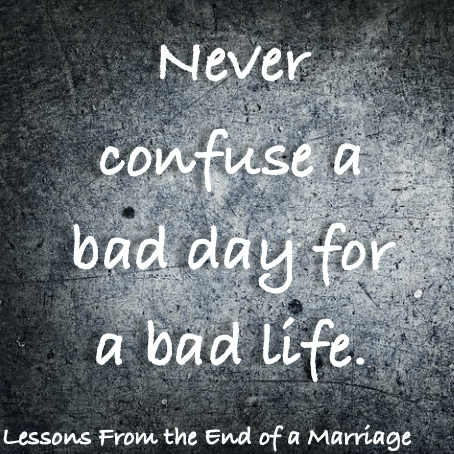
And never confuse a bad day for a bad life.


Let That Sh*t Go

When I walked into my yoga studio this past Monday evening, I saw a woman with the most amazing shirt. Under a simple image of a figure in a pose, were the words:

Let that shit go.

I laughed. I smiled. And I reflected back on my day, the first day back at school after spring break. A day filled with tired, yet nervous kids, as we all prepared for the upcoming standardized testing season.

I felt my shoulders kissing my ears as they still were still struggling to carry the load of the day, recognizing that my mind hadn’t left the school and was still busy tweaking the lesson for the following day. I sensed a current of anxiety coursing through my body, fearful that I would somehow mess up the testing in some critical and unforgivable way. Looking inward, I realized that I was already anticipating what I needed to accomplish after the yoga practice instead of making preparations for my yoga class.

And then I made a decision and with my next exhale, I followed the advice of her shirt and I let that shit go.

As we go through our days, we collect worries and troubles like a young child collects pebbles on a walk through the park. We stuff our pockets, line our shoes and fill our hands with as much as we can carry. Consequently, we become overloaded, burdened, with the weight we carry. We curse it, we complain about it. Yet we rarely follow a form of the advice we would give to the child overloaded with collected treasures on a walk –

Let that shit go.

Mistakes

When I was in kindergarten, I got in trouble for talking in class. My consequence for the misdeed was a missed recess. The talking was a simple mistake, a lapse in judgment rather than a lapse in character, yet I internalized the mistake. Instead of merely sitting along the wall with the other kids who made a mistake that day, I had to be consoled by my teacher because I was so hard on myself.

Mistakes are inevitable. Mistakes are opportunities. Making a mistake doesn’t make you any less of a person.

Let that shit go.


A Bad Day

Have you ever noticed that once you label a day as “bad,” there seems to be no shortage of ever-compiling evidence to justify that moniker? Every slight, no matter how small, is a sign the world is against you. Every stressor becomes a mountain, every trigger detonates an explosion.

Days aren’t good or bad. They’re simply a measurement of time. And what happens in one fraction of a day doesn’t have to impact the remaining parts.

Let that shit go.


Expecting Things to Be Different

I receive questions and pleas for help on a daily basis where the writer inquires how to go about changing their spouse’s or ex’s behaviors. They enumerate the lies and the irresponsibility. They express their frustrations about the lack of accountability and the absence of emotional intelligence. Sometimes, they lament the circumstances rather than the person, begging for a way to alter their current reality.

But reality is as it is. There are circumstances we cannot change and people beyond our influence. To believe otherwise is maddening and self-limiting.

Let that shit go.


Childhood Wrongs

I once heard a psychologist say that our twenties are the time for facing and addressing any childhood traumas and points of contention. After that, it’s time to take responsibility for the direction of your life.

Some people have had horrible childhoods, filled with insults and assaults upon a vulnerable frame. Childhood ends and with it, the lack of choice and agency that comes from being young. At some point, your life becomes your responsibility.

Let that shit go.


Control

Getting pneumonia 6 weeks before my first – and only – marathon was the best thing that could have happened. Until that infection left me bedridden, I was carefully controlling every bite of food and every step run. The pneumonia was a reminder that I couldn’t control the outcome. (It turned out okay; I still “won” the marathon.)

You can control your responses. You have influence over the process. But the outcomes?

Let that shit go.


An Apology That Never Came

I spent years hoping for an apology from my ex husband. I believed I needed it so that I would know that he felt remorse and so that I could receive closure. It was a life on hold. A wish with no action. I put more faith in the apology than I did in my ability to move on.

Never put the responsibility for your well-being in the hands of the one who hurt you.

Let that shit go.


Fixing Everything

Not everything is a problem. Not everything has a solution. Sometimes things are broken beyond repair and sometimes what we see as flawed, someone else views as perfect. And other times, the fixing may need to be done, but it is not our job to do it.

When we act as “fixer,” we are taking on too much and often hurting others in the process.

Let that shit go.


Perfection

I remember erasing my drawings in art class to the point where I rubbed holes through the paper. In an attempt to make them perfect, I inevitably ruined them.

Life is about being present, not perfect.

Let that shit go.


What Ifs

It’s an easy mental game to play – what would have happened if I chose a different path? It can be entertaining and educational, playing around with the options and outcomes.

Yet what ifs can also be a trap, a way of spending time in manipulated past and an imagined future instead of being where you are.

Let that shit go.


The Need to Be Right

When we listen to respond rather than understand, we’re allowing our need to be right to dominate our interactions. When we lead with the ego, we shortchange others their right to be understood and we limit our own ability to grow.

It’s funny. The more we need to right, the more rarely we are.

Let that shit go.


Outrage

I heard an interesting podcast the other day that had an expert in social media discuss how the big players – Google, Facebook and Instagram – manipulate us into spending time on site and interacting with the content. The types of posts that receive the most investment of time and energy are not the feel-good ones, not the informational ones, but the ones that cause a feeling of outrage.

It’s not just the social media big boys that bully us with outrage. Think of others who provoke you, push your buttons and get under your skin. What’s your typical response? We are all prone to reactions. Outrage short circuits our rational minds and prompts irrational responses even while it serves as fuel for the ones prompting it.

Let that shit go.


Occasional Hurt Feelings

Sometimes I wish I had a bad memory, that painful things that had been said to me would blur over time and fade into the backdrop. But that’s not the case. I have to be very deliberate about releasing the hurt that has come from words spoken without thought or said when emotionally flooded.

We all unintentionally hurt others sometimes. We say the wrong thing. Forget an important milestone. Neglect to respond in the right way. And feelings get bruised. And bruises heal.

Let that shit go.


Self-Flagellation

Guilt serves a purpose. Much like the inflatable gutter guards in children’s bowling, it helps to guide us along our intended path. Yet guilt has a propensity for growing outside its allotted space, suffocating us in the process.

When you mess up, own it and then either change it or apologize. And once you learn from it, the guilt and self-punishment serve no further purpose.

Let that shit go.


Excessive Judgment

Some behaviors deserve judgment. Intentionally harm a child or an animal and I’m going to judge you all the way to prison. Yet most behaviors require less judgment and more curiosity.

It’s easy to think that your way is the right way and that when you don’t understand somebody’s beliefs and decisions, it means they’re wrong. Yet different isn’t necessarily wrong, it’s just different. Judgment won’t change their mind, but it will keep you from expanding yours.

Let that shit go.


Comparisons

Have you every felt good about an accomplishment only to feel incompetent and jealous when you measured them against another person’s.

Comparisons are empty. You’re holding your inner life up against somebody else’s outer one. You’re allowing somebody else’s achievements to have an influence on your own. What somebody else has earned has no bearing on what you have attained. Let them be and you do you.

Let that shit go.


Busyness

I struggle with feeling guilty and lazy when I take some for myself. I find it all-too easy to identify with my accomplishments and view my worth through my deeds.

You are not defined by the number of events on your calendar and the number of items crossed off your to-do list. It’s okay to step away from doing and allow yourself to simply be.

Let that shit go.


let that shit go

At Some Point, It’s No Longer About the Nail

When is it no longer about what hurt you?


In the beginning, I made it all about him.

What he did.

Why he did it.

How he did it.

Where he was.

Who he was.


It was an escape of a sort. A distraction. If I stayed focused on him, I didn’t have to think about me.


What I was going to do now that my life was washed away.

Why this happened to me.

How I was going to survive and rebuild.

Where I was going to live.

And who I was without him.


But at some point, I had to decide to make it all about me. To turn my energies towards what I could change rather than curse what I could not.

Because no matter how much attention I turned towards him, it wasn’t going to help me feel any better.


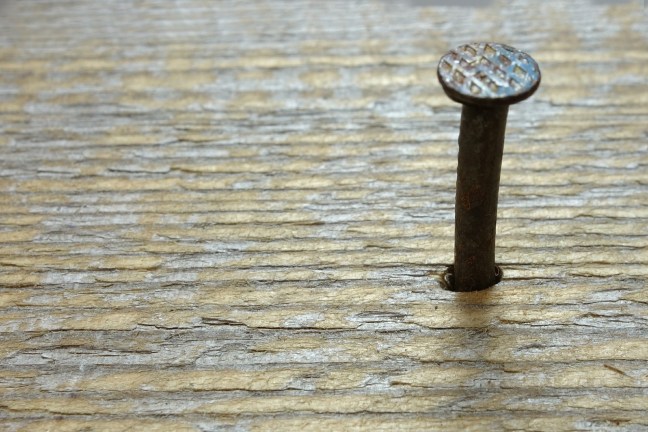
When you first step upon a nail, the sharp steel tearing through tender flesh, it is prudent to focus on the nail. First by removing the offending stake and then by examining it for any signs of rust or fragments left behind.

And then at some point, the nail no longer matters.

Only the wound is of consequence. And your attentions must turn to the ministrations of puncture care, ensuring that it heals fully without infection to poison the blood.


A difficult divorce is much the same. Once the distressing person has been removed, focus on them only leaves your wounds unattended.

Because at some point, the nail no longer matters.

Only you do.


What is a Tsunami Divorce?

English: Tsunami hazard sign

What is a Tsunami Divorce?

A tsunami divorce is one that completely blindsides a spouse, flattening him or her with a wave that was never spotted.  A tsunami divorce is characterized by a normal marriage and a normal life up until the moment of total and utter destruction.  The spouse that embodies the wave may simply disappear, abandoning their significant other with little to no communication or explanation.  Infidelity, substance abuse, and mental illness can all play a role in a tsunami divorce.  The causes of a tsunami divorce are rooted in the past and far away from the marriage.  These contributing factors lay buried beneath the placid sea of the marriage until they burst forth in a great wall of destruction.


What Are the Effects of a Tsunami Divorce?

A tsunami divorce catches the other spouse completely off guard; it is a shock and awe campaign that leaves the survivor stunned and disoriented. One of the more damaging effects of a tsunami divorce is the survivor’s tendency to question him or herself about why no signs were spotted.  Others in their lives may echo this sentiment.  It is difficult to come to terms with the fact that the signs may have been minimal or only visible in the rearview mirror.  The survivor is left devastated by the end of the marriage, confused as to why it occurred, feeling foolish for being “taken,” and angry at the tsunami spouse.


How Does a Tsunami Divorce Differ From Other Divorces?

Most divorces have a long, slow decline or a visible, yet rapidly building disintegration.  This leads to a protracted period where one or both partners are wondering if they should stay or go.  There are nights spent feeling alone while one remains in the marital home.  There are difficult discussions and perhaps heated arguments.  One or both partners may be holding on to hope that things will get better or that he/she will change his/her mind.  This is a painful process that can slow or even stall healing.  On the other hand, it also allows time for pre-grieving of the marriage and it gives both partners a voice in the divorce.

In contrast, a tsunami divorce is sudden.  The marriage is often good up until the point it simply doesn’t exist anymore.  There are no painful discussions.  In fact, there are no discussions at all, which can leave the survivor feeling as though their voice has been stolen.  There is no chance to pre-grieve, but the healing process can be easier as the abrupt amputation leaves no room for false hopes and no hesitation in the correct path to follow.


What Are Some of the Lessons That Can be Learned by the Survivors of a Tsunami Divorce?

1) Understand that the causes of the tsunami are found in the past and far away. Don’t spend too much time there.
2) Examine your own tsunami warning system.  Did your fears and anxieties cause you to look away from some signs of the impending disaster?
3) Realize that, although your devastation was complete, the flattened earth is a clean slate.
4) Don’t be afraid to rebuild.  Statistically speaking, tsunamis are pretty rare.


Struggling to recover after being flattened by your own tsunami? Learn how to surf the overwhelming wave.


You can read the entire story of my tsunami divorce in my book Lessons From the End of a Marriage, available on Amazon.