Trying to Think in a Time of Stress

I wrote a blog post over the weekend. Then, after it was published, I went back and reread it. And I noticed something startling. In half a dozen cases, I left out whole words. Not typos. Not the wrong word. Or even a missing letter. Simply no word at all.

And that’s not the all of it.

I’ve spent the last three months teaching myself to code. I’m at the point where I have a reasonable grasp on the basics and now need to put the isolated skills together in longer – and more difficult – projects.

And I just can’t do it.

The languages, which were starting to feel familiar, are now just swirling letters and punctuation on the screen.

I’ve had to take a step back and work on more bite-sized challenges, which luckily my brain seems able to digest. It’s pretty much the equivalent of baby rice cereal for the brain.

It’s been awhile since my brain has felt like this. Ten years to be exact.

My ex left in July 2009. We started school a couple weeks later.

It had been years since I had felt the need to work out problems ahead of time before giving them to the class. So it caught me off guard when I was trying to explain how to decode a word problem at the board and I got stuck.

My brain simply couldn’t handle a multi-step problem. There was limited retention. No attention span. Instead of problem-solving, my brain was simply returning the cognitive equivalent of the “spinning wheel of death.”

For the better part of a year, I had to make accommodations. I made notes to take to the board with me during lessons. Answer keys were prepared well in advance. I went back and re-taught myself things that I had known but was struggling to apply. Instead of reading my normal books, I gravitated towards young adult fiction with its easier-to-understand writing.

I was worried, afraid that this cognitive decline would be permanent.

But it wasn’t. In time, it returned to its original level.

And so I’m currently holding onto hope that the world – and my brain – will return to sanity again.


All over Twitter this week, I’ve seen people timidly admit that they’re struggling to focus. To think. To problem-solve.

They’re worried. That their reaction is abnormal. That they may never be able to think again. That something is wrong with them.

There’s nothing wrong with struggling to think while your brain is busy attending to other (and often scary) things.

Here’s a way to think about it. For the sake of argument, pretend that you’re a skilled knitter. In fact, you can normally knit a scarf automatically and you don’t struggle to follow a complex new pattern.

But now is not a normal time.

Because now, at least as far as your brain is concerned, you’re treading water in an attempt to stay afloat. And knitting has suddenly become a whole lot more difficult.

So if you’re struggling to think right now, know that you are having a perfectly normal response to an abnormal situation.


While you’re waiting for your stress to decline and your cognitive to ramp back up, here are a few tips:


  • Adjust your expectations. Don’t base them on what you can “normally” do. Remember, your brain is treading water right now.
  • Your attention span is shorter. Schedule breaks.
  • Chunk information into smaller pieces.
  • Provide support for your lack of retention. Get used to writing more things down than you had to before.
  • Give yourself opportunities to feel successful. Otherwise, frustration can easily get the best of you.
  • Intentionally reteach yourself things. It may feel silly to go back to 101 when you’re a professor in it, but that sequential feeding of information will help your brain learn how to function again.
  • Pay attention to the basics – sleeping, nutrition, exercise. They’re important.
  • And finally, be patient. You can’t force this.


You’re not broken.

You’re human.


5 Reasons You’re Still Thinking About Your Ex (and What You Can Do About It)

lever-3090764__480-2

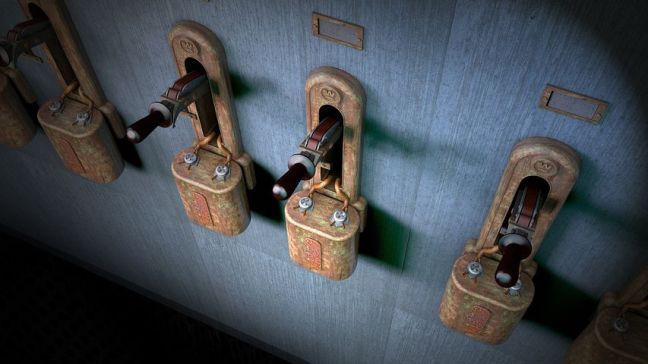
I have this image of the brain after a breakup. It’s laid out like the room that manages all of the electricity for a large building. Huge levers line the walls where the power can be controlled to each section of the building. One by one, you shut down each breaker that sends energy to any thoughts about your ex until your mind is dark and peaceful.

Of course, it’s not really that simple.

No matter how much we try, thoughts of our exes find their way in, both through brute force and devious sneakery. The thoughts can range from disturbing to amusing, but no matter their particular flavor, they are often unwanted, displacing more welcome thoughts and dreams.

So why is it that even though they are out of our lives, they refuse to vacate our minds?


You’re Wanting Things to Be Different

Maybe you’re berating yourself for mistakes you made that led to the demise of the marriage. Thinking that if you only did or said something differently, that you would still be together. Or maybe you’re holding onto the idea that you can still become the person your ex wants and you’re entertaining the illusion that somehow you can still be together.

This desire keeps your ex in the forefront of your mind because you’re turning your thoughts around like puzzle pieces, trying to get them just so in the hopes of bringing everything together. And just like a puzzle, it’s hard to walk away when it feels unfinished.

What you can do…

This is a time for some tough self-love. What you’re doing is a type of magical thinking. Wanting something to be true is not enough to make it true. You cannot change the past no matter how much you allow it to occupy your present. Pay attention to when your thoughts venture into this territory and repeatedly remind yourself, “That is past. I cannot change it.”

These thoughts are often at their most intrusive when we are dissatisfied with our present lives. Are there areas in your life that need filling? Turn your attentions that way.

fullsizeoutput_1747.jpeg


You Miss Them (or You Miss the Idea of Them)

Obviously, at some point, you were attracted to your ex. You liked them as a person and found them interesting and desirable. And then as the relationship grew, their presence in your life grew as well until they occupied one of the more prominent positions. So it’s no wonder that you miss them. That the bed feels empty and you find yourself seeking out their smell or the particular sound their footsteps made on the stairs when they came home.

And of course, when you miss them, you’re thinking about them. And probably with rose-colored glasses too. You’re remembering the person you fell in love with, not the person you divorced.

What you can do…

This can be a time to counteract each of those positive memories with a negative fact. Although this isn’t a great strategy for the long term, it can help when you’re struggling to let go. If you need more ideas, read about how to fall out of love.


You’re Feeling Lonely

I equate a breakup with the cold void felt by the remaining person in a bathtub when the other person steps out. There seems to be too much time and too much emptiness, and that’s a difficult combination. It’s natural to want to fill that void with thoughts of the last person to occupy it. You equate their absence with your loneliness and so you fill your loneliness with their imagined presence.

The problem is that believing what loneliness tells you is a bit like trusting yourself to make wise decisions when you show up to the grocery store starving. Until you address the loneliness, your brain will be feeding you nonsense.

fullsizeoutput_117b.jpeg

What you can do…

Keep busy. Nurture connections with other people. Engage in meaningful work. Give back. Need more ideas? Read 52 Things to Do When You’re Feeling Lonely.


It Hurts to Think of Them Moving On

There’s a reason that the most common search that leads to my site is some version of, “My ex is getting married and it hurts.”

Because it does.

No matter how much we like to deny it, it can be painful to see them moving on, especially when we still feel flattened by the divorce. We wonder if they’re happy. Happier, even. We compare ourselves to their new partner and we judge our life by their curated one.

What you can do…

Block them on all social media. You do not need to see the pictures of them with their new partner. You crave the information, yet at the same time, you feel worse whenever you consume. So go cold turkey. Need more? This video offers more support and points to think about.


You’re Curious

You used to know almost everything about them. And now they’re almost a stranger. It starts innocuously enough, “I wonder if…” But then it spirals as you keep wondering.

Even though this reason doesn’t carry the weight of the others, taken too far, it can still interfere with your ability to move on.

What you can do…

The brain abhors a vacuum. If you don’t know something, the mind will fixate until it has answers. So give it answers. Not by social media stalking or constantly asking your kids, but by telling yourself some version of, “Their life is no longer part of mine. I don’t need to know what they are doing because it does not impact me.” If you have no contact, it’s okay to tell yourself a story (ideally a boring one) about what they have going on. And then go get your drama elsewhere.


Snip20190907_12


Thoughts Overdone

I’m starting to get nervous. Sleep has become a little more difficult. I’m reverting to my safe place in my head where I rehearse and try on various if…then scenarios. I’m making lists (Yes, plural. I’m just cool like that:) )and planning food because it keeps my mind off the imminent reality.

No, I’m not having surgery or facing some difficult exam. I’m not preparing for some intercontinental voyage or training for some intense race.

I’m going skiing.

Baby-level skiing. And not even for the first time.

(For a great laugh, read about my first time – and see my patented baby giraffe learning to walk pose – here.)

But I’m good great at overthinking. Trusting my analytical brain over the natural wisdom of instinct and body.

And sometimes well-done thoughts are appropriate.

Skiing is not one of those times.

I’m always fascinated by books that address how we think. In Blink, Malcolm Gladwell explores “thin-slicing,” demonstrating how we can often make better decisions with less information and time and that extra information simply tends to muck up the cognitive gears. He uses marriage expert John Gottman as one of his subjects, describing how Gottman can predict with a 95% accuracy rate if a couple will still be married in 15 years simply be observing them together for an hour.

Daniel Kahneman, in his book Thinking Fast and Slow, divides cognitive processes into two systems: one that is fast, intuitive and emotional (as detailed in Blink) and the other that is slower, more logical and deliberate. He shows that the faster system, although critical to our functioning, is also subject to error (like the sunk cost fallacy and confirmation bias). However, the more analytical system is also not without problems as too much information can lead to paralysis and this system requires more energy and attention.  And, as I am now facing with skiing, this system is not always appropriate for the situation. Sometimes, you have to go with your instincts.

Most of us have a tendency to either act too impulsively or to spend too much time overthinking before we take action. Rarely does someone walk a balanced line between the two systems.

Which for some strange reason, always reminds me of steak.

Stay with me:)

Even though I was not officially a vegetarian until my teenage years, I always had…issues with meat. I distinctly remember one summer evening at my grandparent’s house on Washington Island, WI when I was around ten. My grandfather grilled steaks for dinner, sliding them onto to the plates when they were probably about medium well. I cut into my portion and immediately asked if it could be put back on the grill. It sat over the coals while everyone else finished their dinners and the plates were almost completely cleared. By the time I deemed the meat ready to eat, it was more rawhide than shoe leather, certainly everything that would qualify it as a “good” steak had long since been cooked out. Too much time on the grill didn’t make it better (although to me, it made the texture less “meaty” and therefore easier to eat).

My ex was the opposite when it came to steak; he used to ask for his blue. As in still cold in the middle. Even the thought still makes me shudder. Obviously to him, the taste was preferable to cooked meat, but I know most people would agree that at least a little heat improves the flavor and texture of a steak. Not to mention the safety.

My thoughts can all too easily become like my steak on that night. When I find myself spending too much time thinking and not enough time trusting my instincts, I remind myself to take my thoughts off the grill before they become too dense and overdone.

On the flipside, when I sense myself acting too impulsively (rare, but it does happen), I remind myself to let the ideas cook a little longer. Much like raw meat, underdone thoughts can be dangerous and bloody.

In fact, most thoughts are best when they’re served medium.

If you find that you have a tendency to overthink, try some of the following:

-Set a limit for yourself (time or resources) before you act on your decision.

-Do something that takes you out of your head (dance, play, etc.).

-Make a pro/con list and then go with your gut once it’s done. In fact, write it and destroy it if you’re concerned you’ll spend too much time weighing the options.

-Trust that you handle the results of whatever decision you implement.

-If you have to wait to act (like me at the moment with skiing), distract your brain and give it other things to do.

-Mediate and soften the thoughts.

-Write it out. It helps to untangle your thoughts.

-Make sure that any resources you gather don’t simply support your decision; for better decisions, listen to the other side.

-And don’t forget to laugh. It puts it all into perspective:)

Now, just to take my own advice and relax and trust my instincts so that I can enjoy the mountain!

Thought Patterns

The way we pattern our thoughts has an enormous impact on our mental health and happiness. Thought patterns can be divided into two main categories. I’m going to call these recursive and input-output. A note to those who are math-phobic: I am going to use some math concepts to explain these thinking patterns. Stay with me; I promise I’ll make it simple:)

Recursive Thinking

In math, we can look at functions (think of these like a rule or pattern) recursively by only considering the output. The rule ignores the input completely and only considers the starting output and the pattern to get from one term to the next. For example, in the table below, the rule would say, “Start with 12 and add 3 each time.” Recursive rules feed upon themselves, with each output based on the one before. They are like a chain, with each term linked to the one before and the one after.

InputIn recursive thinking, your thought pattern is initiated by something: a memory, a trauma, a comment. Your thoughts then feed upon themselves with no regard for any external input. This type of thinking can lead to depression or anxiety as the brain simply continues the emotionally equivalent of “plus 3” with no end in sight. When you feel stuck emotionally, this is the type of pattern you are experiencing. When your reaction builds well beyond the initial stimulus, you are thinking recursively. When you feel sad or angry or anxious even in the face of calm, you are allowing the chain of thought to continue unbroken.

Input-Output Thinking

An input-output rule in math relates the output to the input. For example, in the (identical) table below, the input-output rule would say, “Multiply the input by 3 and add 9.” The output is dependent upon the input. Change the input, and you alter the output.

In input-output thinking, your reactions are based upon the external stimulus rather than your previous thoughts. You may be sad, but the emotion and associated thought patterns are due to your situation. You may respond in anger or feel fear but these are due to the inputs you experience. If you change the input, the associated thoughts will change with it.

Recursion is easy, effortless – which is why it is so valuable in computer programming. Its endless loops create the self-similarity needed for programs to run unaltered. Recursive thinking can be beneficial when it is positive in nature, but all too often it is the negative thoughts that pull us into its pattern.

Recursion has a weakness. Since each output is dependent upon the one before, if you break the chain, you break the pattern. If you catch yourself in this cycling thought pattern, find a way to interrupt the flow. Do something differently to break the cycle. Whatever you normally do or say, don’t. Recursion requires a hands-off approach to survive. So get your hands dirty and change it.

Then, consciously shift your thinking to input-output and deliberately choose positive inputs to encourage positive outputs. Surround yourself with nature, connect with friends, do something that feels good. Change the input and your thoughts will follow.

Input

Thoughts