6 Reasons People Lie in Relationships

People lie in relationships for myriad reasons, some of which are more egregious than others. By understanding the motivation behind their mistruths, you have some insight into their thought process and a sense of the likelihood that they will continue their deceptions.

6 Reasons People Lie in Relationships:


1 – They Are Ashamed of the Truth

I find this motivation to lie quite sad. As a former teacher, this is one of the more common types of lies I saw in my classroom. Kids lied because they were ashamed of their financial situations, their home lives or their performance on an assignment. The lie was an act of self-preservation, projecting the person they wanted to be.

This is the type of lie that I believe got my ex in trouble. As his professional life began to fall apart and he began to struggle with addiction, instead of being vulnerable and admitting to his internal battles, he instead pretended to be ever more successful. And the problem with these type of lies is that the more they are told, the more the person moves away from themselves and sometimes they are lost forever.

With this type of fiction, if it is caught early, more is to be gained from a gentle approach rather than a punitive one. They need to feel safe before the fallout from the lie can be addressed. Shame can wreak havoc on relationships; it’s important not to ignore its impact.


2 – In Misguided Attempt to Protect Others

It’s such an unexpected response when you discover that you’ve been lied to –  “I just wanted to protect you.” The impulse is good, but the horrible execution has had the opposite effect, hurting you instead of protecting you. This type of lie has two layers to work through – first, the realization that they have not been honest with you and second, the sense that they do not trust that you can handle the truth.

There’s a lack of respect inherent in this kind of lie as they believe that they know what is best for you. In fact, you may realize that this power dynamic is even more concerning than the lie itself. In order for a relationship to function as a team, BOTH partners need to have access to the same information. If one is acting as gatekeeper, the other is inevitably a prisoner.

If you find yourself in this type of dynamic, it’s important for you to examine your own responses. Maybe you have a tendency to overreact to difficult information (raising my hand here), you are inadvertently telling your partner that you can’t handle the truth. Work to manage your own emotions and responses so that they feel comfortable having those hard conversations.


3 – So That They Can Continue Their Behavior

This is the classic selfish lie – they want to continue doing whatever it is they’re doing and they know that telling you the truth would prevent them from being able to do it. They are not directly trying to hurt you, but the impact on you is less important to them than their own happiness in the moment. As long as the lies benefit them, they are unlikely to change their ways.

One of the ways to identify this sort of dishonesty is by their reaction when they are caught. The selfish liar will be angry rather than contrite, painting all of this as your fault. After all, before the fabrication was revealed, everything was perfectly fine in their world.


4 – They Enjoy the Thrill of Getting Away With It

These are the scary ones, the people that lie because they enjoy manipulating and controlling others. They have no consideration for the impact of their deceptions. In fact, they may enjoy looking back at the destruction left in their wake.

You will often first see this when your partner pulls a fast one on someone else and can’t help but share their “victory” with you. I remember my ex delighting that he convinced some guy running a survey at the mall that he had diabetes and therefore couldn’t participate in the study. The interaction was minor and of no consequence, but I should have paid more attention to his reaction at his lie being believed. If they will lie to others, it’s only a matter of time until they lie to you. Furthermore, these lies will continue to escalate, as a bigger and bigger “hit” is required in order to get a rush.


5 – They Believe Their Own B.S.

If someone lies often enough, they begin to confuse their fabrications with the truth. It’s a snowball effect, as one lie begets many more downstream. At some point, the lies and the half-truths become so entangled with reality that it becomes impossible to sort them out again. As a result, these lies are not only told externally, but also believed.

What is so wild about these types of people is that on some level, they are aware that they are lying. Yet they have spent so much time living in the fiction section, they no longer know how to navigate reality.


6 – Their Lives Are Compartmentalized

This is another situation where they may truly believe that they are not lying. They convince themselves that one aspect of their life has no consequence whatsoever in other areas. A classic example of this type of liar is the person who only cheats when they are traveling for business. It doesn’t happen at home, so they believe that it has no impact at home.

Confronting this type of liar can be crazy-making, as they will seem legitimately confused about why you are so upset. Asking them to understand requires for them to confront their own cognitive dissonance head on, which is unlikely to happen.


Is It Love? 10 Things We Confuse For Love

is it love

When we feel it, it seems so clear – this must be love! Yet in hindsight, sometimes the glossy coating starts to chip away and we realize that those intense and very real feelings weren’t love, but actually something else.


Is it love? Or, is it…


Limerence

The year was 1991. Even though my history teacher was delivering important information for the upcoming exam, my mind was focused elsewhere. Or, actually I guess I could say elsewho. Because I was completely obsessed with the boy I had recently started dating. The thoughts and feelings were all-consuming, obsessive even. Based on intensity alone, I just knew that this had to something something special – true love. It was only once the relationship ended a couple months later (as high school romances often do), that I realized how little I actually knew this boy that I had professed to love. What I was actually in love with was the fantasy that I had created within my own mind.

Limerence is basically the rom-com of the romantic realm. It starts with some element of truth and then surrounds it with layer upon layer of sugary-sweet fantasy. It feels like love because of its overwhelming intensity, as our neurotransmitters are played like Chopin on the keys. Yet, because limerence is not strongly rooted in reality, it lacks the vulnerability, sacrifice and authenticity that characterizes mature love.


Chemistry (AKA Lust)

I think most of can relate to this experience. You meet someone. Maybe they’re conventially attractive, maybe not. It doesn’t matter. Because when their fingertips brush against you arm, sparks fly. Things are amazing for a time because everything is focused on the physical. And in that realm, you make the perfect pairing. But then something happens that feels like being on a train that has abruptly slammed to a halt. In communication outside of the bedroom, you realize that not only do you not really know this person, you may not even like them all that much.

Biology doesn’t care if we love someone; it simply needs for us to get it on to keep the species on. Lust can be quite powerful and can be a driving force in a relationship for quite some time. However, lust is at its most intense when the experience is new. And new can only last so long. Lust can be a precursor to love, as the relationship transitions and deepens, or it can simply be an enjoyable stopping point along the way.


Feeling Wanted

I was mere months out from being suddenly abandoned by my husband of sixteen years. My self-esteem was at rock bottom and the fear of being alone forever vibrated through me with the constant hum of a ceiling fan on a summer night. And then I was approached by a man at the gym. A good-looking man, who expressed interest in me. And, damn, did that feel good on that day. I went out with him, even though my still-shattered heart had absolutely no business dating. I got sucked in, too far and too fast, not because it was love, but because it made me feel like I was lovable.

We all want to feel wanted, chosen. And when we’re in particularly vulnerable spots in our lives, we can end up falling for people not because we want them, but because they want us. This is exactly why the advice is that you have to love yourself first before you can find love. Otherwise, you may find yourself committing to the first person who picks you.


Mirroring

is it love

I thought we had the perfect marriage. We never argued. We had the same likes and dislikes. And we even had similar views on pretty much everything.

Too bad none of that was real. 

I wasn’t seeing him; I was seeing a reflection of myself. And it felt good. “He really gets me”, I thought, as his sentiments echoed my own. But that’s not love. After all, you cannot love something that you cannot fully see.

Sometimes mirroring is done by those who are afraid of being alone, as they morph into what we want them to be. Other times, mirroring is more nefarious when it is one of the tools used to lovebomb a partner or prospective partner.

Real love doesn’t ask for two people to blur into one; it allows – and even celebrates – the differences that each person brings to the union.


Relief From Discomfort

When is a sip of water most refreshing – when you’re sitting at your desk drinking water throughout the day or after two grueling hours spent mowing the lawn on a hot summer day? When do you think attraction is at its most powerful – when your life is full and happy or when you’re experiencing scarcity or hardship?

Sometimes, it is less about loving the person and more about loving some discomfort they have alleviated for us. Maybe great aunt Sally has finally stopped pestering you now that you’re in a relationship. Or, your financial worries have been replaced with nice dinners out. Your life is better, but it may be more about what the person brings with them and less about who the person is. A quick test to determine the difference – which thought causes you more distress? Losing them, but keeping everything else that has changed in your life once they entered or keeping them, but without the ancillary benefits?

When our lives are in a drought, any romance becomes the best thing on earth. It is only when our lives are already lush than we can truly discern what we truly love.


Flattery From Partner

“You are the best thing that has ever happened to me.”

“I’ve never met anyone like you before.”

“I’ve never felt this way with anyone else.”

In real love, each person helps the other grow and become better. Excess flattery is like a shortcut of this process. Instead of engaging in the messy and difficult worth of growth, it jumps straight to the “you’re the best thing ever!” Of course, that praise comes with a price. You must stay that way in order to keep those feelings flowing.

There is a difference between being adored and being loved. Although they both feel good to receive, only the latter allows you the freedom to be yourself and to grow.


Approval From Others

“I like her,” your mom says after meeting your new girlfriend, followed by a list of all your date’s desirable qualities. Immediately, your interest in your partner increases. After all, she got the mom stamp of approval, which is something you’ve sought yourself your whole life.

We care what others think about our romantic choices. We want validation for attracting and selecting a good mate. Sometimes, especially if we are insecure in ourselves, we can put too much emphasis on this external approval and believe that we love someone solely because the others in our life seem to love them.


Security

I received a letter from one of my students recently. In it, she detailed how my classroom always made her feel safe. And for most of us, when we think back to the most important people in our childhood, part of what made them so influential was their ability to make us feel protected. And when we’re young and vulnerable, protection is one of the most important signs of love.

Most of us struggle with feelings of uncertainty. We want to know how things are going to unfold. And relationships often bring with them some sense of security. After all, we are more accepting of risk when we have that safety net beneath us.

In a loving partnership, a sense of security is built over time by continually showing up for each other and working to solve problems as a team. The love comes first, and the sense of dependability comes after. If instead that security comes from one side or precedes the teamwork, it is easy to confuse that sense of safety with being loved.

Control

My friend came from an abusive household, where her alcoholic and controlling father ruled the roost. In her first serious relationship, she described her new fiancé as, “Wonderful. He cares so much for me that he won’t let me work. He just wants to take care of me.” Alarm bells went off in my head, but her childhood had taught her that control = love.

This can go the other way as well, as some people confuse a sense of possession as love. If the person is malleable and submissive, that must mean that they truly adore you, right?

The irony here is that for the deepest love, you have to learn to release all control.


Narrative Matching

“I’m going to be married by the time I’m 30,” you declared in your youth. So then, with the end of your 20s rapidly approaching, you convince yourself that you love this person so that your life will match the story you’ve been telling yourself.

This is basically like reading a book backwards – you are beginning with the conclusion of love at a certain time or in a certain way and then you’re working backwards to make it happen.

Sometimes this works. After all, look at arranged marriages where the betrothed find a loving and meaningful connection. But if the love cannot be created, there is a human tendency to allow confirmation bias to convince us that our conclusion is correct.


We push people away because we are afraid of letting them in and being hurt when they leave.

We grasp on to people that are not good for us because we are afraid of being alone and someone is better than no one.

Pushing and pulling are fear, not love.

Love is holding.

Loosely enough so that each person has the freedom to grow and change.

And firmly enough so that each person knows they are supported.

It is trusting the other person enough that they want to stay even if they have the ability to leave.

And trusting yourself that you will be okay if they do.


How Could They Move On So Quickly?

move on ex

My ex-husband certainly wasted no time. He didn’t even bother filing for divorce before he married his second (I’m assuming here; there could have been others) wife.

Among all of the myriad thoughts that crashed around my mind in the aftermath of the discovery, one kept popping back up to the surface,

“How could he move on so quickly?”

I just couldn’t understand how he could go from sixteen years with the same person to seemingly head-over-heels within weeks of meeting this new woman. Here he was celebrating his newfound love while I was still struggling to sleep through the night.

Of course, it was apples to oranges trying to equate my mental state at the time with his. For so many reasons, we were at different places when it came to our readiness for moving on.

The following are some of the reasons that your ex may have moved on (or appeared to move on) soon after your breakup:


They have pre-grieved the breakup.

In some situations, one person has known (or at least suspected) that the relationship is over long before it is pronounced terminal. In these cases, the one with the prior knowledge often begins grieving the end of the relationship months or even years before it is truly over. They may begin to withdraw, they might start to expand their social circle and hobbies to fill anticipated gaps and they have time to process the loss. They will be ready to move on before you are because they have been attending to the breakup for a longer period of time.


They want you to think they’ve moved on.

Sometimes moving on is an illusion, a play put on social media or spread through mutual acquaintances in an attempt to make you jealous or regretful. The urge is understandable, although childlike. It can be driven by a, “I’ll show them that I am desirable” attitude. Others try to appear moved on soon after the end of the relationship because they don’t want to be seen as “weak” by appearing affected by the breakup. These people are motivated by a need to be seen as strong.


They are afraid of being alone.

Some people hop from relationship to relationship like life is a rocky river crossing. They cannot stomach the thought of being alone and so they waste no time in lining up the next partner as soon as a relationship implodes. This is less “moving on” and more “grasping on;” they’ll hold onto anyone like a life raft. Learn more about the underlying issues that lead to a fear of being alone.


They are able to compartmentalize your relationship and the new one.

For many us, we cannot enter into a new relationship before we have fully dissected and processed the previous one. Others are able to keep those two processes more separate. It may be that your ex seems to be moving quickly because they are doing the often- invisible internal work concurrent with reentry to the dating scene.


They are using dating as a distraction.

Let’s face it, divorce sucks. And while you’re going through it, you’d rather think about anything else. For some, this distraction comes in the form of dating. Although this can look like they’re moved on, they’re are really using others as a bandaid to temporarily stop the pain. Early dating can also be motivated by the blow to confidence that often accompanies divorce; it’s good to feel wanted.


They started seeing this person before your relationship ended.

If your ex seems to have moved on quickly, it may be that they were having an affair during your relationship and now that your partnership has ended, the love interest is brought to the surface. Of course, this revelation brings with it it’s own set of problems. Betrayal is a uniquely piercing pain with long-ranging repercussions.


They met somebody who is a good fit for them at this point in their lives.

And here’s the hard one – maybe they have met somebody that is a good match for them. I know that can be difficult to stomach when you still might be wishing/hoping/believing that you’re that person. It’s important here to remember that not being the right person for them does not mean that you’re a bad person and it certainly does not mean that you’re not the right person for someone else. It simply means that your ex found a better match for them and now you have an opportunity to look for somebody better for you.


In my ex’s case, he knew that the end was approaching and so had time to process the divorce long before it happened. He was having affairs and so his other wife was lined up and ready to go. And, from what I learned, she was a good fit for him at the time – trusting, nomadic and in possession of a decent credit score.

In time, I no longer questioned how he could move on so quickly. Instead, I got busy with moving on myself with a sense of gratitude that she helped to take him out of my life and far away.


At Some Point, It’s No Longer About the Nail

When is it no longer about what hurt you?


In the beginning, I made it all about him.

What he did.

Why he did it.

How he did it.

Where he was.

Who he was.


It was an escape of a sort. A distraction. If I stayed focused on him, I didn’t have to think about me.


What I was going to do now that my life was washed away.

Why this happened to me.

How I was going to survive and rebuild.

Where I was going to live.

And who I was without him.


But at some point, I had to decide to make it all about me. To turn my energies towards what I could change rather than curse what I could not.

Because no matter how much attention I turned towards him, it wasn’t going to help me feel any better.


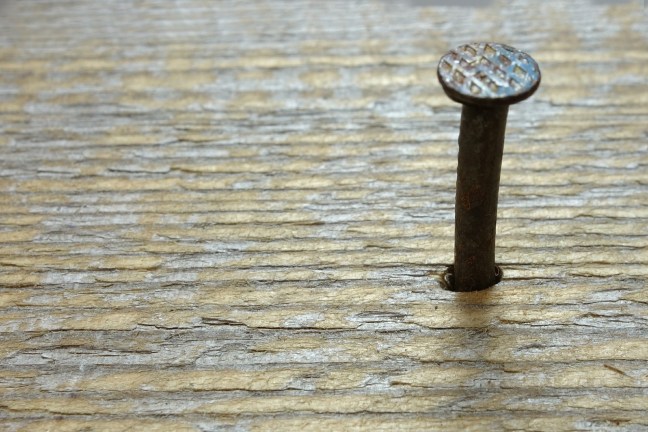
When you first step upon a nail, the sharp steel tearing through tender flesh, it is prudent to focus on the nail. First by removing the offending stake and then by examining it for any signs of rust or fragments left behind.

And then at some point, the nail no longer matters.

Only the wound is of consequence. And your attentions must turn to the ministrations of puncture care, ensuring that it heals fully without infection to poison the blood.


A difficult divorce is much the same. Once the distressing person has been removed, focus on them only leaves your wounds unattended.

Because at some point, the nail no longer matters.

Only you do.


What is a Tsunami Divorce?

English: Tsunami hazard sign

What is a Tsunami Divorce?

A tsunami divorce is one that completely blindsides a spouse, flattening him or her with a wave that was never spotted.  A tsunami divorce is characterized by a normal marriage and a normal life up until the moment of total and utter destruction.  The spouse that embodies the wave may simply disappear, abandoning their significant other with little to no communication or explanation.  Infidelity, substance abuse, and mental illness can all play a role in a tsunami divorce.  The causes of a tsunami divorce are rooted in the past and far away from the marriage.  These contributing factors lay buried beneath the placid sea of the marriage until they burst forth in a great wall of destruction.


What Are the Effects of a Tsunami Divorce?

A tsunami divorce catches the other spouse completely off guard; it is a shock and awe campaign that leaves the survivor stunned and disoriented. One of the more damaging effects of a tsunami divorce is the survivor’s tendency to question him or herself about why no signs were spotted.  Others in their lives may echo this sentiment.  It is difficult to come to terms with the fact that the signs may have been minimal or only visible in the rearview mirror.  The survivor is left devastated by the end of the marriage, confused as to why it occurred, feeling foolish for being “taken,” and angry at the tsunami spouse.


How Does a Tsunami Divorce Differ From Other Divorces?

Most divorces have a long, slow decline or a visible, yet rapidly building disintegration.  This leads to a protracted period where one or both partners are wondering if they should stay or go.  There are nights spent feeling alone while one remains in the marital home.  There are difficult discussions and perhaps heated arguments.  One or both partners may be holding on to hope that things will get better or that he/she will change his/her mind.  This is a painful process that can slow or even stall healing.  On the other hand, it also allows time for pre-grieving of the marriage and it gives both partners a voice in the divorce.

In contrast, a tsunami divorce is sudden.  The marriage is often good up until the point it simply doesn’t exist anymore.  There are no painful discussions.  In fact, there are no discussions at all, which can leave the survivor feeling as though their voice has been stolen.  There is no chance to pre-grieve, but the healing process can be easier as the abrupt amputation leaves no room for false hopes and no hesitation in the correct path to follow.


What Are Some of the Lessons That Can be Learned by the Survivors of a Tsunami Divorce?

1) Understand that the causes of the tsunami are found in the past and far away. Don’t spend too much time there.
2) Examine your own tsunami warning system.  Did your fears and anxieties cause you to look away from some signs of the impending disaster?
3) Realize that, although your devastation was complete, the flattened earth is a clean slate.
4) Don’t be afraid to rebuild.  Statistically speaking, tsunamis are pretty rare.


Struggling to recover after being flattened by your own tsunami? Learn how to surf the overwhelming wave.


You can read the entire story of my tsunami divorce in my book Lessons From the End of a Marriage, available on Amazon.