Many of us will face a personal tsunami at some point in our lives. We will be felled by a great wave bringing with it sudden change and loss. Perhaps your tsunami is in the form of the death of a loved one, maybe it is the loss of a job or a way of life or possibly you have lost the health you took for granted. My own tsunami was in the form of an unexpected divorce after being abandoned via a text message.
Regardless of the nature of your abrupt trauma, tsunamis have some common characteristics. By their nature, tsunamis are difficult to predict and even harder to prepare for. You have to face the realization that you cannot control your surroundings. The world that you knew is gone, swept away in a single move. You feel disoriented as you try to navigate this new realm.
Soon after the trauma, it feels like it will be impossible to rebuild. The odds seem insurmountable. The shock and grief permeate everything and make every move a struggle. Restoration after a sudden trauma is not easy, but it is possible. In fact, you can even learn how to surf your tsunami, moving through it with skill and grace.
The following are my healing tips for anyone who has been flattened by a tsunami.
Breathe
The blow of sudden trauma is physical. The body tenses as if anticipating another blow. The breath is the first to suffer; it becomes shallow and rapid behind a breast wrapped tight in a straightjacket of sorrow. Release it. It won’t be easy and it won’t be automatic, at least in the beginning. Set a reminder on your phone or computer to take several deep breaths at least once an hour. As long as the body is anticipating another blow, the mind will be as well. Sometimes it’s easier to train the body and allow the mind to follow.
Regrettably, this is a metaphorical slaying only. No dragons (or ex husbands, as the case is here) were harmed in the making of this post.
Unfortunately.
It’s been a rough 24 hours after seeing my ex husband for the first time in over 3 years. I almost wish that I had called in sick to work today so that I could have taken care of myself sooner. As it was, I ended up crying at my desk for the first time since the divorce was in progress. Not exactly a good way to start the work week. Luckily, I pretty much had the tears (but not the shakes) under control by the time the kids got there.
I’m finally getting back to normal now after employing my favorite dragon-slaying strategies:
1) Ask
I can have a tendency to be stoic. “Oh, I’m fine,” when I’m not. Yesterday, I didn’t pretend. I told Brock exactly what I needed. I let appropriate friends know so that I could have support. I blogged about it, baring all. The messages of support that have been pouring in all day have been amazing. Strengthening. I was afraid that I would be laughed at for reacting so strongly. So far, nothing could be further from the truth. You guys are amazing.
2) Eat
I’m bad about this one. When I’m stressed, my body locks down and I lose all appetite. Once I don’t eat, it becomes easier to not eat. There was no way my body could tolerate food yesterday, but I made healthy, filling food a priority today. This kind of tension and anxiety burns a lot of fuel and I have to eat to stay sharp.
3) Laugh
I’ve always used humor to deal with difficulties. In the case of my ex, most of it is dark, revolving around revenge-type fantasies. In hypothetical retrospect, here’s what I could have done yesterday:
-Posted a crowd picture (with him in it) of the festival on my website and let my readers play “Where’s Dumbo.”
He is actually just out of the frame on this one.
-Hacked into the computer that was hooked up to a huge screen at the festival and play my Jeff Probst episode.
-Redecorate the cornhole (probably a regional name for the game, basically lawn beanbags) boards with his mugshot.
-Give the woman that was with him one of my Lessons From the End of a Marriage business cards. If it was my former wife-in-law, she’s obviously a slow learner and could use a refresher. If it was another woman, she could the head’s up.
-Give him one of my Action Potential Wellness business cards. He sure looked like he could use it. I’m embarrassed by this, but I do have to giggle at his girth. Shallow? Yes. Cliche? Yes. But still funny. He is now only a few pounds shy of the belly that his father sported that was a favorite roost for the dogs.
-The festival is in a very liberal, hipster area of town. I could have located his car and plastered it with Romney, Confederate flag and anti-gay stickers. Tee hee.
-One of my friends that was there is a CPA. He could have offered his services to my ex, as I’m sure he has not paid off the IRS from the innocent spouse relief.
-I could have waited until he entered a porta potty and “accidentally” sealed the door and perhaps even tipped it over. By day 3 of a brewery-sponsered festival, they were fairly ripe.
4) Run
8+ miles of hard-pavement pounding through a beautiful neighborhood by the river. Running is so perfect for these times – it drains the energy from the body and lets the mind process. I feel restored. And sweaty.
5) Bang
Get your mind out of the gutter! I’m not talking about that kind of banging (not that it isn’t a critical component of dragon-slaying:) ). I’m talking here about head banging – AKA heavy metal. I can just hear my mom on this this one, “Oh Lisa,” shaking her head, “You should listen to calming music. Metal will only make you more anxious.” Nope, sorry mom. You’re wrong. I find when I am ramped up, trying to force calm just backfires (my morning meditation today would have been more at home on the heavy bag). Instead, I need to feed the energy so that I can bleed the energy. Pantera and Disturbed fit the bill nicely today.
6) Rest
And now for the final stage in slaying the dragon. I’ve released the energy, fueled the body and relaxed the mind. Now it’s time to rest and lay the dragon to rest. Hopefully for good.
I hate this physical reaction. At least now, it’s purely physical. Seeing him felt more like facing an attacker than a lover. No emotion. Just a punch to the gut and an adrenaline shot straight to the heart.
I’ve always wondered what it would be like to see him again. Now I know.
Not that I want to do again. Once is enough, thank you.
But now I know he’s in the city. And I don’t like that feeling. I liked it better when he was in Uganda. Would it be wrong to send him fictitious job offers from Africa?
My throat is raw from the pollen.
My anxiety is raw from the vision.
My body is raw from the stress.
I feel debrided.
In a way, he has been a character to me. Other than in court, the last time I saw him, he was my husband. The man who did these things has not been present in my life in flesh and blood. Yesterday, that character became embodied.
It was jarring, the way that people who have had an out of body experience talk about being slammed back into their now-unfamiliar flesh.
In the early months, I used to stare at his mug shot, looking for any signs of the man I knew. Although the man yesterday was so familiar to me, he is not the man I knew. He never will be.
Brock has been great. And so was the friend I was with when I saw my ex. The friend, who had to leave to teach a class, stayed with me until Brock and our other friends showed up. He refused to leave me alone. Of the others, I only told Brock about the situation. As much as possible, I just wanted to enjoy the day. I told Brock that I didn’t want to walk anywhere alone (out of character for me) and he was great about staying with me when I needed the bathroom or a refill.
As soon as I got home, I took a shower. I wanted to scrub away the vision along with the dirt. Brock joined me and held me as I let out the sobs that I had been holding in. Just now, as I awoke and left the bedroom, he made sure I was okay. He and Tiger continue to protect the second floor while I release my energy downstairs.
It’s strange to have this familiar feeling in my now-home. I spent many nights like this 4 years ago during the transition out of one life and into another. It feels like a violation of this life.
I learned before that the best way to drain this anxiety is to run. I guess I know my plans for after work today:) I wish I didn’t have to wait so long. I expect to be reset after 10 miles or so. Less raw. Less shaky. Hopefully hungry.
As I sat on that hill yesterday, watching my old life walk by, I was thankful to be in my life now. I was surrounded by people that have only come into my life when he walked out and now I cannot imagine life without them.
For now, I’ll enjoy one of the few positive side effects of an inability to sleep and I’ll finish the book I started yesterday, Bill Bryson’s A Walk in the Woods. Perhaps his walk will help to soothe me to slumber.
And I’ll feel safe knowing that Brock and Tiger are protecting the second floor.
As a teacher, I am quite familiar with the application of labels. Each summer, prior to ever meeting my new students, I study the rosters. Many of the names have associated labels next to them: ADHD, learning disability, autistic, ESOL, etc. These labels are helpful when these children are nothing more than a list of names. It is a starting point.
When I learn that hypothetical Johnny has ADHD, I use that information when I create my first seating chart. I know that he might be a good choice to run an errand to the front office or to help me hand out papers. I won’t be surprised at an off-topic outburst and I’ll have strategies at hand for how to handle one if it occurs. Before ever meeting Johnny, I can have an idea of some of his characteristics and I can plan ahead to meet his needs. However, it would be completely inappropriate for me to stop there. Johnny may have ADHD but he is not his label. As I get to know him, the label loses its importance. The diagnosis tells me nothing of Johnny’s strengths and weaknesses, his adaptive behaviors, his likes and dislikes or especially his personality.
A label should be an anchor, not a limitation.
Whenever I plan a lesson that introduces a new math concept, I start by anchoring the new material to prior knowledge. When I tell students that the new concept is like something they have seen before, it gives them a place to start. Then, as they learn the new material, they can adjust the expectations laid out by the early comparison.
Labels work that same way – they initiate expectations that should be tempered with experience.
When I tell you I am a teacher, you have a starting point for understanding me. You know that I’ve been to college. You can assume that I’m a people person. Maybe you think of a particular teacher in your past. Then, I tell you I grew up in the 1980s. Maybe that causes a revision of your earlier expectations or maybe it just allows you to flesh things out, as you make decisions about what music I may listen to or how I wear my hair. We can continue that process, with each label adding more information and more clarification. Eventually, you would know me and those labels would be inconsequential. Until you were trying to describe me to someone else, that is.
Labels can help us find understanding.
When I went through my divorce, I grasped at labels to describe my husband. I realized that he was not all of the things I thought he was. He was a stranger. So, like we all do when first getting to know someone, I turned to labels to try to develop a framework to anchor new understanding. My favorite designation for him was sociopath. It explained the callousness and extreme nature of the betrayal. It was a starting point. But not the end. As with all labels, some parts fit and others didn’t. As I worked to get to “know” him again, I revised my views, adding some terms and removing others, until the labels no longer mattered.
I use labels when I write about my story. I temper the word ‘divorce’ with ‘tsunami’ to capture the suddenness of my experience. I use the label ‘trauma’ to convey the overwhelming loss. I recently introduced the term ‘PTSD,’ not as a diagnosis, but as a framework to discuss the anxiety and flashbacks that permeated my existence. Those single words hold pages of information. It is a kind of shorthand – a broad strokes sketch of the entire story.
Labels are like Cliff Notes. We use them as shortcuts as we develop our own understanding or to help someone else develop theirs. Just like Cliff Notes, they are not the entire story, full of detail and nuance. If we stop at labels, we are limiting ourselves and others. We may be blinded by assumptions as we fill in the gaps in our knowledge automatically.
Don’t be afraid to use labels but also be careful not to apply them with superglue. They should be used to anchor understanding, not to limit understanding.




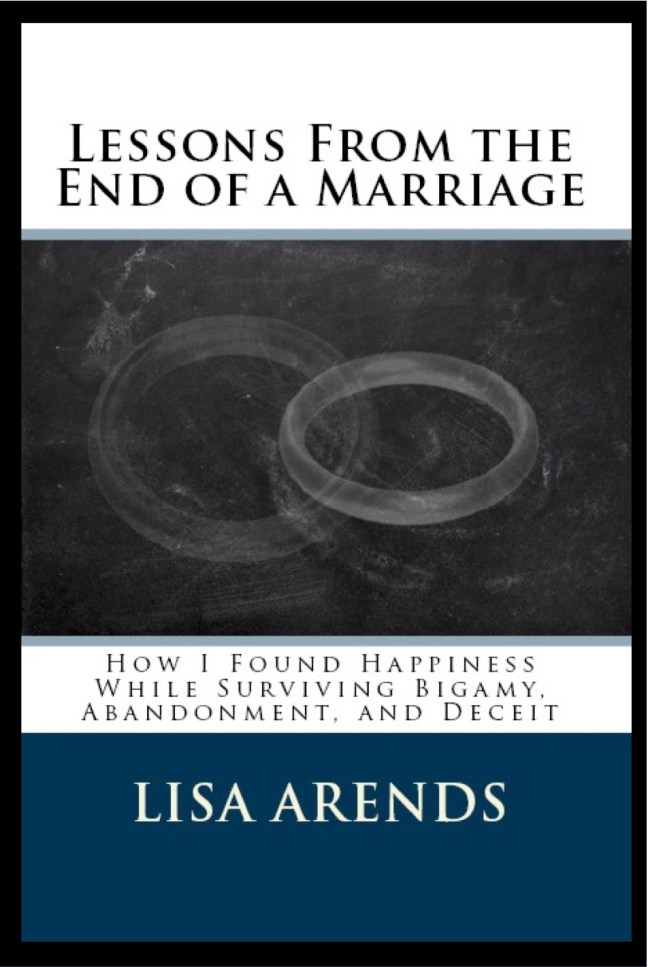
 Lessons From the End of a Marriage