Four Things You DON’T Need to Move On After Divorce

We often get in our own way after divorce, desperately wanting a way out from the pain while at the same time telling ourselves stories that only serve to hold us in the flames. I convinced myself myself that I needed everything from a jail sentence for him to an apology for me, all while ignoring the power that I held within myself.


In Order to Move On, You DON’T Need –


Justice

Justice looks differently for all of us. It may center on a certain ruling from the court or a visit from karma, putting your ex in a position similar to the one you’ve faced. Regardless of the specifics, a desire for justice is really a need for fairness. We’ve been knocked down and we want the fulcrum to shift the other way.

Chasing fairness is a form of chasing the dragon; no matter what you score, it will never be enough to meet the need. No consequence will undo the pain you feel and no repercussions will satisfy. And here’s the brutal truth – if they escape without a scratch, it does not prevent you from moving forward. But if you fixate on waiting for them to pay, you’re tethering your future happiness to their circumstances.

Instead of wishing them ill, shift your focus to being the best you. After all, there is no better revenge than living well. And if your ex happens to notice how awesome you’ve become and regrets their decision? Even better:)


An Apology

Those of us that have been cheated on or abandoned without so much as an insincere “sorry” casually tossed out over a departing shoulder have a tendency to give apologies almost a mythical standing. They become the holy grail of divorce, convincing us that once secured, we will find everlasting life.

I used to feel this way. And then I talked to a woman who got an apology. Several, in fact. And they were insightful and sincere, as her ex took full responsibility for hurting her and expressed true remorse for his actions. And you know what? She was still stuck. She got what she thought she needed and then when it didn’t work to relieve the pain, she became even more distraught.

It gave me pause. And then it made me angry. At myself. Why was I still allowing him to have this much power over me? I made up my mind in that moment to learn how to accept the apology I never received. 


Understanding

One of the most powerful realizations I had when healing from divorce – I’ll never be able to understand what my ex did because it is not something I could ever do. That single thought released months of anguished questioning and searching for answers that remained elusive.

Divorce is not a class in university. There is no final exam where you have to correctly identify the motivations behind your ex’s actions before you’re allowed to move on with your life. It’s okay to say, “I have no idea” and close the book on that chapter.


Closure

There’s no finish line. No “done” stamp. No graduation ceremony. We have this image of there being a defined end to the pain once we collect all of the missing pieces. As though divorce is some sort of video game quest where the end credits roll once you have located the last of the items.

Spoiler alert – it isn’t.

Closure isn’t a destination. It’s more of a choice. A choice that has to be made every day when you decide where you’re going to put your energy. Whatever you nurture, grows.

Here’s What You ACTUALLY Need to Move On –


Belief in Yourself

If you believe you can’t, you’re right. It all starts with your belief that you can be happy again. That there is more meaningful life ahead and, this is the most important part, that you have what you need to make that happen. You are not responsible for what happened to you, but where you go from here is up to you.


Time

You can’t force healing. It will take time for you to stand up again, much less take those first steps as am independent person. Give yourself the time and space needed. Divorce is a major loss of the past that is now in question, the present that has become unfamiliar and the future which is now erased. Be patient with yourself.


Processing

Time isn’t enough on its own. If you avoid your emotions, you are simply delaying the healing. In order to move on, you have to first move through. Face your pain. Become familiar with your feelings. Work through any unhealthy responses and beliefs you’ve developed and put in the effort to learn how to do better. To have a better life, you have to first understand and accept yourself.


Determination

One of the reasons that we tell ourselves that we need these things from others is because the work to heal after divorce is so. damn. hard. It feels impossible and so we assume that we must be missing some critical piece to make it happen. And that’s where the determination comes in. You have to want it. And you have to be willing to work for it. And if you are, nothing can stop you.


8 Strategies to Better Handle Relationship Conflict

Raise your hand if you feel like you could do better when it comes to managing conflict in your relationship.

I have both hands up.

One of the lovely lasting effects of emerging from a marriage with a covert abuser who morphed and manipulated instead of speaking his mind was that after 16 years of partnership, I was still a newbie at managing conflict. And I’ve had plenty of falls down that steep learning curve.

Here’s some of what I’ve learned (okay, what I’m still learning) –


1 – Understand You and Your Partner’s Processing Styles

As an introvert, I tend to think for a long time before I speak. I can easily spend days letting an idea fully form before I release it to the world. My husband is the opposite. A classic extrovert, he processes his thoughts out loud, releasing them before they have any form at all.

Neither style is better than the other, but it’s important to recognize which one best fits you and your partner. The trouble comes when the introvert is pressed to speak immediately or the extrovert’s words are assumed to be well thought out gospel.


2 – Don’t Become too Attached to the Initial Words Spoken

We all can choose the wrong words or say something more harshly than we mean it. Whether coming from a place of impulsivity and emotional intensity or from a downward spiral led by our own imagination, we sometimes say things in a hurtful way.

When you’re the recipient of those words, it’s difficult not to react in defensiveness or anger. It feels like an attack and so it’s easy to respond in kind. Strive to take a breath and ask for clarification before you accept those words as truth. Often, you’ll find that those hurtful thoughts were more fears than reality.


3 – Speak Early and Often

We all know what happens when you heat a tightly sealed container in the microwave. Don’t be that container. Instead of letting your grievances build, share your concerns as they arise.

This strategy has two benefits – One, conflicts are easily to manage when they are small and two, we improve at anything with practice. You will learn to navigate conflict better if it is smaller and more frequent than the occasional big blowout.


4 – Pay More Attention to What is Working

We all are prone to something called the negativity bias, where negative interactions have much more prominence in our minds than positive ones (which helped us avoid eating poison berries back in the day but now means that a random comment on social media can send us for a loop). So be cognizant of what you say to your partner. Strive to make at least 5-6 positive comments for every negative one.

Also be aware of your own reaction. You may feel like they are always harping on you, but is that truth or your own bias convincing you that it is real. Pay attention (and maybe even write down) each of the positive words or actions. They may be more numerous than you realize.


5 – Monitor Your Internal Dialog

Have you ever had an entire argument with someone in your head? Or had a dream about someone and been irritated with them when you woke up? Has your brain ever taken a small conflict and ridden it all the way to the most awful and catastrophic conclusion?

It’s easy to make assumptions about how somebody is going to respond and then spiral from those assumptions. Sometimes we spend so much time thinking through a potential conflict that we struggle to separate the real reactions from the imagined ones. Pay attention to how much time you spend mentally rehearsing a conflict and make sure that you give your partner the space to respond before you assume their reaction.


6 – Pay Attention to Your Physical Response

Are you starting to shake? Is your blood pressure increasing? How about your heart rate? When your body becomes too aroused from the conflict, your ability to think rationally decreases. You shift from the thinking brain to the reactionary brain.

Learn how to calm your body’s responses through breathing. It may be cliche, but slow and deep breaths really can help to calm the body and mind (I like a 4 count in, hold for 5 and exhale for 7). In addition, note how your body’s position impacts your physical reactions. I have noticed that I literally feel more grounded when I’m sitting on the floor and so I use that to my advantage when I know that I’m in for an emotionally-charged situation.


7 – Take Purposeful Timeouts

Timeouts can be a great strategy when a conversation becomes too heated. But they need to be done the right way. First, make sure to set a deadline for when the conversation will be continued. Otherwise, timeouts can simply become a strategy for avoidance.

Also, use the timeout wisely. Exercise, meditate, go for a walk or engage in your favorite creative pursuit. If all you do is sit and stew in your emotions, there is really no value to the break.


8 – Engage in Teamwork-Oriented Activities

It’s easy to get confused in the midst of conflict and think that it’s you vs. partner. Where in reality, it’s you AND partner vs. problem. To help reinforce the reminder that you’re on the team, engage in activities that require that you work together to complete some goal.

When doing this, make note (and verbalize) the strengths you see in your partner. Take the time to remember past challenges that you successfully navigated together. Remember what it was that you saw in them in the first place.

Give Yourself Permission

We are often our own harshest critics. We berate ourselves for the same things we respond with compassion to in others. Instead of doing the best we can, we often “should” ourselves into shame and paralysis.


So for today, practice being as kind to yourself as you are to others.

For today, give yourself permission to…


Struggle even when your struggles seem to pale in comparison to those of others.

Sometimes we measure our traumas against those of others. And when they don’t even begin to compare to the magnitude of the horror that some of faced, we believe that we shouldn’t feel the way we do. That somehow we don’t have the right to struggle because our struggles are minor compared to those around us.

Yet one trauma doesn’t negate another. Experiences are measured not by how they compare to others, but by how they compare to what you have been through. You can have a hard time even if it seems minor. Your feelings are real and valid.


Feel okay even when things are falling apart around you.

I attended a tragic funeral recently. And like at all such gatherings, there were moments of shared laughter as people traded stories and memories. Brief periods of respite from the pain, rising through the sadness like bubbles to the surface.

And those moments are precious. It is okay to smile even when you have tears pouring from your eyes. It’s okay to set aside the grief for a period and enjoy life. There is no rule that states that grieving and living are mutually exclusive. You can do them both at once.


Secretly feel relieved even when you’re devastated.

There are times when our hearts and our brains are in opposition. When we know that a loss is needed, but yet we struggle to let go. This is the death after a protracted illness or the divorce after a long period of dysfunction. We grieve outwardly, while secretly also feeling relieved that it is over.

And that’s okay, to both miss something and also be at peace with it ending.


Feel sad just because.

There are days when you’re just not okay. There’s no reason, at least none that you can put your finger on. You’re just sad. Or withdrawn. Or anxious.

And those feelings, whatever they are, are allowed.

When we try to tell ourselves that we shouldn’t feel that way, we tend to only amplify the sensations. Instead, give those feelings permission to be and let them move through freely.


Not be at your best.

Maybe you’re the star employee at work. Or typically a Grade A parent. But not today. Today, you’re struggling to get it together. And then you make it worse by comparing your performance today to your high expectations of yesterday.

It’s okay to have days where you lower the benchmark. So maybe you didn’t prepare the normal healthy breakfast for your kids this morning and you had to rely on a fast food drive through. They still ate. And for today, that’s a success.

Not every day is going to be the best performance. As long as you still show up, you’re doing it right. 


Ask for help.

When it comes to this life thing, we’re all in it together. There is no reason to try to do it all alone.

Asking for help is both the greatest gift we can give ourselves and the biggest sign of courage.

Give yourself permission to feel how you feel and to accept help when those feelings become too much to carry alone.

5 Reasons You’re Still Thinking About Your Ex (and What You Can Do About It)

lever-3090764__480-2

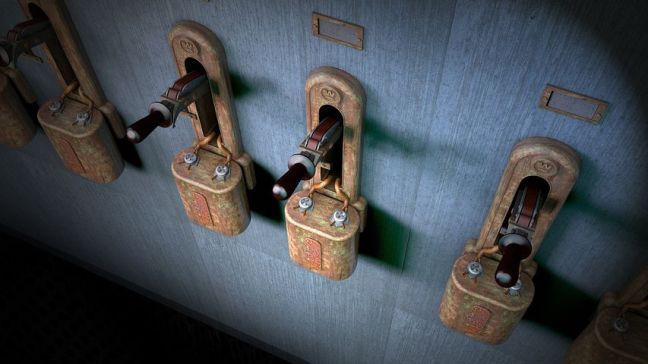
I have this image of the brain after a breakup. It’s laid out like the room that manages all of the electricity for a large building. Huge levers line the walls where the power can be controlled to each section of the building. One by one, you shut down each breaker that sends energy to any thoughts about your ex until your mind is dark and peaceful.

Of course, it’s not really that simple.

No matter how much we try, thoughts of our exes find their way in, both through brute force and devious sneakery. The thoughts can range from disturbing to amusing, but no matter their particular flavor, they are often unwanted, displacing more welcome thoughts and dreams.

So why is it that even though they are out of our lives, they refuse to vacate our minds?


You’re Wanting Things to Be Different

Maybe you’re berating yourself for mistakes you made that led to the demise of the marriage. Thinking that if you only did or said something differently, that you would still be together. Or maybe you’re holding onto the idea that you can still become the person your ex wants and you’re entertaining the illusion that somehow you can still be together.

This desire keeps your ex in the forefront of your mind because you’re turning your thoughts around like puzzle pieces, trying to get them just so in the hopes of bringing everything together. And just like a puzzle, it’s hard to walk away when it feels unfinished.

What you can do…

This is a time for some tough self-love. What you’re doing is a type of magical thinking. Wanting something to be true is not enough to make it true. You cannot change the past no matter how much you allow it to occupy your present. Pay attention to when your thoughts venture into this territory and repeatedly remind yourself, “That is past. I cannot change it.”

These thoughts are often at their most intrusive when we are dissatisfied with our present lives. Are there areas in your life that need filling? Turn your attentions that way.

fullsizeoutput_1747.jpeg


You Miss Them (or You Miss the Idea of Them)

Obviously, at some point, you were attracted to your ex. You liked them as a person and found them interesting and desirable. And then as the relationship grew, their presence in your life grew as well until they occupied one of the more prominent positions. So it’s no wonder that you miss them. That the bed feels empty and you find yourself seeking out their smell or the particular sound their footsteps made on the stairs when they came home.

And of course, when you miss them, you’re thinking about them. And probably with rose-colored glasses too. You’re remembering the person you fell in love with, not the person you divorced.

What you can do…

This can be a time to counteract each of those positive memories with a negative fact. Although this isn’t a great strategy for the long term, it can help when you’re struggling to let go. If you need more ideas, read about how to fall out of love.


You’re Feeling Lonely

I equate a breakup with the cold void felt by the remaining person in a bathtub when the other person steps out. There seems to be too much time and too much emptiness, and that’s a difficult combination. It’s natural to want to fill that void with thoughts of the last person to occupy it. You equate their absence with your loneliness and so you fill your loneliness with their imagined presence.

The problem is that believing what loneliness tells you is a bit like trusting yourself to make wise decisions when you show up to the grocery store starving. Until you address the loneliness, your brain will be feeding you nonsense.

fullsizeoutput_117b.jpeg

What you can do…

Keep busy. Nurture connections with other people. Engage in meaningful work. Give back. Need more ideas? Read 52 Things to Do When You’re Feeling Lonely.


It Hurts to Think of Them Moving On

There’s a reason that the most common search that leads to my site is some version of, “My ex is getting married and it hurts.”

Because it does.

No matter how much we like to deny it, it can be painful to see them moving on, especially when we still feel flattened by the divorce. We wonder if they’re happy. Happier, even. We compare ourselves to their new partner and we judge our life by their curated one.

What you can do…

Block them on all social media. You do not need to see the pictures of them with their new partner. You crave the information, yet at the same time, you feel worse whenever you consume. So go cold turkey. Need more? This video offers more support and points to think about.


You’re Curious

You used to know almost everything about them. And now they’re almost a stranger. It starts innocuously enough, “I wonder if…” But then it spirals as you keep wondering.

Even though this reason doesn’t carry the weight of the others, taken too far, it can still interfere with your ability to move on.

What you can do…

The brain abhors a vacuum. If you don’t know something, the mind will fixate until it has answers. So give it answers. Not by social media stalking or constantly asking your kids, but by telling yourself some version of, “Their life is no longer part of mine. I don’t need to know what they are doing because it does not impact me.” If you have no contact, it’s okay to tell yourself a story (ideally a boring one) about what they have going on. And then go get your drama elsewhere.


Snip20190907_12


The Best Way to Get Over Someone?

It’s common advice –


The best way to get over someone is to get under someone else. 


And in many ways, this suggestion makes sense. After all, what better way to remind yourself that the one you lost is not the only one than to sample what is available? At the same time, like any advice, this strategy may not be right for you and could even compromise your healing process after divorce or a breakup.

Here’s what you may want to consider before following this advice:


The Pros of Getting Under Someone Else:


Reminds You That There is Life After Divorce

Divorce has an impressive talent for being all-consuming. It expands to fill every nook and crevice in your life, displacing many things that once brought you happiness or peace. The excitement and passion of a no-strings-attached encounter can remind you that a whole world of possibility still exists as your numbed and deadened tissues are sparked into life.


Makes You Feel Desirable

Especially if you were rejected, you may be feeling unlovable and undesirable. So when somebody suddenly wants you, it’s intoxicating. The experience can help you begin to see yourself in a new light – not as a broken and hurting person, but as a whole and appealing person.


Provides an Outlet for the Excess Energy

Divorce often results in a period of almost manic energy. It’s a mania frequently characterized by a need for action and compulsive thoughts and actions. A fling offers a welcome outlet for this energy, both physical and mental.


Acts as a Distraction

Much of the divorce process is positively soul-draining. It manages to be both scary and tedious as it drags on while threatening to take what little you have left. And there’s nothing like a little dalliance to take your mind off the latest email from the attorney or the fact that your ex is ignoring the divorce decree.


The Cons of Getting Under Someone Else:


Can Leave You Feeling Emptier and Lonelier

For a split section, all feels right with the world. You’re snuggling up against your fling, relaxed and happy. And then either they say something or you think something that causes you to remember that for all intents and purposes, they are a stranger. And sometimes that realization makes you feel more alone than if you had the entire bed to yourself.


May Lead to Guilt or Shame if Not Aligned to Values

Sometimes the sudden freedom and mania combine after divorce to make people do things they would never do under normal circumstances. Of course, these are not normal circumstances. On its own, this is not a problem. But if your actions do not align with your beliefs or values, you may be setting yourself up for a major guilt case of guilt or shame.


Healing Can Be Delayed or Confused

Healing is hard work. And for the most part, healing is an inside job. When all of your energy is focused outward, you may not have enough energy or willpower to do the real work of healing. Additionally, the initial high of a fling can lead you to believe that the solution to your heartbreak is found with another person. This often leads to a leapfrogging pattern, where you leap from one temporary relief to another.


You May End Up in Awkward or Even Dangerous Situations

After divorce or a breakup, your brain isn’t working very well. You may be more likely to engage in risky behaviors since you feel like you have nothing to lose. Furthermore, you may find that you’re inadvertently attracting people that are looking to use you or that become too attached too quickly. You’re vulnerable right now and that can lead to ending up in situations that get you in over your head.


All of that being said, do what’s right for you. And feel free to change your mind about what’s right at any moment. When it comes to life after divorce, few of us follow a rational and straight path as we leave the marriage and reenter the world. More often, we stumble around and end up making some poor decisions before we find what feels right.

And there’s no shame in those mistakes and missteps. You’re learning.


If you decide that getting under someone else is not the right move for you right now, but you’re still looking for an outlet for that energy that will also help to give your purpose and confidence, here’s my favorite strategy.