4 Lessons From 4 Years of (Re) Marriage


We all have seen that some people manage to make it through even the most horrific of divorces with their hearts and smiles intact, whereas others seem permanently withered by their experience. We all want to be a member of the first group and yet we often find ourselves unwitting members of the second.
Why is it that some people flourish and others atrophy?
This is the advice that I wished I had received while I was still in the depths of my own divorce. I had plenty of people telling me what to do (and I followed the suggestions that fit for me), but nobody really clarified what those that thrive don’t do.
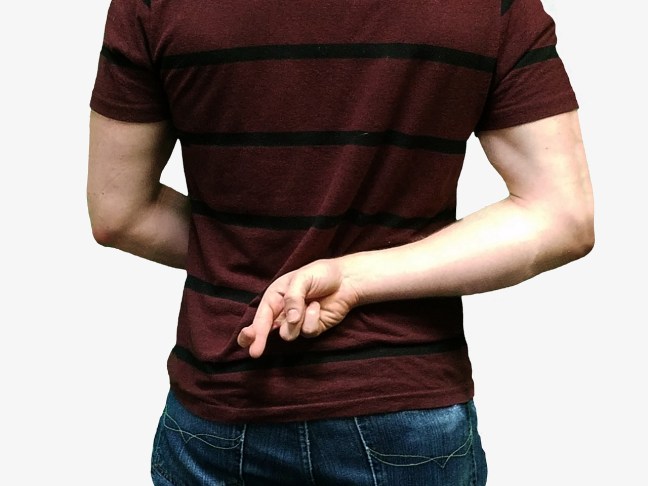
Unless you’ve been there, you simply cannot understand how well a covert abuser can lie. The stories are so cunningly crafted and so expertly delivered that even the professionals can be fooled. It’s one of the harder – and more frustrating – parts of emerging from this type of relationship, as you feel like nobody else gets what you went through or even believes what you are saying.
These manipulators all seem to follow common scripts and utilize similar tactics. These are the ones that I repeatedly see:
My ex knew from the beginning that I’m terrible at lying. In fact, I’m so bad at it that I would make him say “no” to an invite that we weren’t interested in and it was his role to return items to the store because I was too uncomfortable to say that it didn’t fit instead of, “It’s ugly.”
Covert abusers seek out honest people. They look for those with loyalty and integrity. Those positive traits are exactly what the abuser needs because those people will believe the best about their partners and don’t readily assume deceit.
When my ex was in Brazil on his honeymoon, he claimed that he was working a car show. The exact same show that he worked the previous year. It was only later that I discovered that this particular dealer was no longer even a client of his. But I no reason to doubt his claim at the time, as it fit neatly into my expectations.
The best liars stay close to the truth. Not only does this make their stories more plausible, it also makes it more difficult for them to get their storylines mixed up. They may give you partial truths, leaving out critical information. Or they may replace certain facts while keeping the basic tale consistent.
My ex walked into the kitchen with a MacBook box under his arm. And apparently with a story under his belt. For the next thirty minutes, he detailed how there was a raffle at the job fair (yes, he was unemployed) for a computer. He initially didn’t want to enter, because he didn’t think he’d win and he didn’t want to receive the endless ads that accompany such events. Finally, he said, he decided to throw his card in before he left. He was already in his car, three intersections away, when his phone rang and he learned he won. Except, years later, I found the charge for that very computer on a credit card statement.
Good fabricators use details to make their stories more believable and to distract from any implausibility. They use their words to paint a picture and to envelope you in its imagery.
On that same Brazil trip, I received a short voicemail where my husband told me he had been stricken by food poisoning. He sounded terrible and, even more worrying to me, he sounded concerned about his situation. Unable to get through to him, I began to panic. For the next two days, I was so consumed with worry for him that I hardly thought of anything else.
Covert abusers like to make you feel sorry for them. Because as long as you’re sympathetic, you’re not suspicious. Additionally, these manipulators really do often see themselves as the victim and believe that life has not been fair to them.
After my ex’s arrest for bigamy, I found a copy of his car insurance card in the center console of his vehicle. There was only one problem. The space where my name was on the electronic copy of the PDF, was blank on his card. He had Photoshopped my name off my card so as not to arouse the suspicions of his other wife.
Good manipulators do not only rely on words. They will use evidence, either gathered or fabricated, to support their claims. They understand that a little goes a long way here. If you have “proof” of one piece, you’re more likely to go along with the rest.
When interest rates dropped in the mid 2000s, we had agreed to refinance the house. He brought the paperwork to my work and had somebody cover my class so that I could sign the papers. All the while I was signing, he was trying to engage me in a conversation he was having with one of my coworkers. I was so distracted by the environment and the circumstances, that I never realized that the paperwork didn’t specify the terms that we had previously discussed.
It’s an old trick, but an effective one. When you’re busy looking at one thing, you can’t focus on another. Deceivers are experts at this technique and they make sure that you’re always looking exactly where they want you to. And then they take advantage while you’re gaze is turned elsewhere.
Once my ex was arrested, he turned the gaslighting up to “high,” claiming that we had been divorced for years and that I was just having trouble accepting it. He painted me as vindictive and greedy and “impossible to live with.” In other words, he tried to make me look crazy in an attempt to escape from his lies.
Covert abusers are experts at, “You didn’t see that” and “I never said that.” By making you question yourself, you get so lost that you refrain from questioning them. And even when they are caught, they will continue to lie and deny. After all, at some point it became their most fluent language.

When people contact me early in their divorce experience, the edges still rough and the emotions raw, I often find myself saying, “It’s early still. Give it some time.” It’s counsel I hate to give because it suggests that the pain has to be endured before it can be erased. Yet it’s also truth; there are some parts of healing that can only be addressed through the passage of time.
Time is a critical component of healing from loss. Yet it is no panacea, containing all of the answers.
Time Softens I like to think of time as flowing like a river. When you first experience loss, it is a rough and jagged stone, thrust suddenly into the stream. At first, the river is diverted, pausing as it navigates this alien and unwanted intruder. In time, the river wears away at the rock, softening its edges and incorporating it into its topography. The loss is still there, but the serrated edges that sawed through your heart are worn into a blunt edge that provides a constant, yet bearable, pressure.
Time Muddies Memories At first, memories come in great waves, slamming into your gut without notice and stealing your breath away. The images play across your brain in high definition and the current reality pushes in with its ugly disparity. As the calendar advances, these memories lose some of their clarity, the details fading like linen left in the sun.
Time Permits Acclimation When you first experience loss, it’s like the gaping hole left behind by a missing tooth. It demands your attention. You worry at it. Obsess about it. Over a period of weeks and months, the shock and novelty fade. The need to talk about your situation will become less pressing and your mind will begin to make space for other things again.
Time Provides Experience The first time through any difficult experience is always the hardest, as the coping mechanisms and strategies have yet to be developed and you are not sure what to expect. Time gives you ample opportunity to practice breaking down and making it through. Each time you feel the pain, you get a little better at being with it and moving through it.
Time Allows For Opportunity Time supplies you with opportunities to implement the modalities that help with healing – counseling, journaling, mindfulness, movement. All of those strategies require time and repetition in order to be effective. Time also allows for new experiences, reminders that even though you’ve experienced loss, you’re still living and there are smiles to be found amongst the tears. Those moments of respite give you hope that things can be better.
Time Doesn’t Mean You Forget You will never forget. Time does not erase all memories, delete all pain. It’s still there, but there is also space for you to live alongside of it.
Provide Automatic Processing Time doesn’t do the healing. You do. If all you do is wait, you’ll feel much the same, only with more wrinkles. Time simply gives you the space and opportunity to work through it.
Time Doesn’t Provide Understanding Time won’t answer the “why” question for you. It won’t reveal why life is harder for some of us than others and why bad things can happen to good people. What time does give you is some perspective that suggests that maybe understanding why isn’t really that important.
Time may not heal all wounds, but it helps to cushion you from the emotional wound, becoming a sort of insulating layer. And with that distance, you have to space to breathe, to process and to live again.

What feelings come to mind when you think about love?
Is it the overwhelming tenderness you feel for the child nestled in your arms? Or the passion and desire you feel for a lover? Maybe its the quiet comfort of a shared smile or the intimacy and attachment you feel with a lifelong friend.
When we think about love, we focus on the pleasant sensations, the feelings of seen, being understood, being accepted. Love is the warm hug, the kind words, the desiring glance.
And yes, love is all of those things. It is perhaps our most powerful motivator, our greatest need. All that we do ultimately comes down to being done for love or out of a desire for love.
So if a need for love is universal, why do we struggle so much with finding it, feeling it and expressing it?
Because love is not only about the good feelings.
It’s about learning to sit with the uncomfortable ones.
Because that overwhelming affection is paired with the fear of losing the person that brings you such joy. Love lives alongside of loss. Of rejection. Of abandonment.
Just as love says, “I’m with you,” fear whispers, “But you could end up alone.”
When we focus too much on the fears, by pretending that they are not there, playing mind games to mitigate them or allowing their words to limit us, we inadvertently close the door to love.
Because in order to have love, you have to accept its potential loss. In order to have attachment, you have to risk rejection.
We struggle with love, not because we have difficulty with the positive emotions, but because we try to avoid the uncomfortable ones.
But that’s where love is found.
Sitting right next to fear.
And for you to find it, you have to be willing to find your place between them.
 Lessons From the End of a Marriage