The Why Trap (And How to Get Out)

why

There are so many traps post-divorce that can grab hold and keep you stuck –

The anger trap that convinces you that you won’t be okay until he or she pays for his or her misdeeds.

The fairness trap that insists that all of life’s situations should be equitable and balanced.

The sadness trap that keeps you locked in a mental theater replaying the movies of your relationship.

And the why trap that charges that you will be able to move on as soon as you understand why it all happened.


The why trap looks for the reasoning behind your ex’s actions. It seeks to discover a greater purpose for the pain. The why trap attempts to mitigate blinding emotion with the application of rational thought and deliberate thinking. It convinces you that understanding will lead to peace and prompts determined, often frantic, searching for “the truth.”

But it’s a trap for a reason.

The why trap is a sneaky snare. It lures you in with promises of information that will lend sense to the nonsensical. It helps to take you out of the state of overwhelming emotion as you focus on facts rather than feelings. The problem is that there is often no defined end and trying to answer why leads through an endless serpentine labyrinth. And holds you prisoner of your past.


I fell into this trap within the first few days. Since he left me with no information, I obsessively gathered all of the evidence I could, uncovering the planned trip to Uganda, the stolen funds and maxed credit and eventually, the bigamy. It did answer some questions. After all, I could see why he was too cowardly to face me. Can you picture it?

Lisa, we need to talk. You know how I said we were on track financially for what we planned? Well, I sort of spent all of that and more on another life. It was an accident. Oh, and you know how just last night I told you how much I loved you and how I was looking forward to the rest of our lives together? Well, I changed my mind. In fact, I just got married to this awesome girl. Would you like the registry information? We really need a mosquito net since we’re going to Uganda in a couple weeks. Why do you look upset?

Yeah, not exactly. So, the early sleuthing uncovered some answers, but it didn’t provide any peace. So I switched gears towards trying to understand why he would do these things. That’s when I devoured books and websites about personality disorders and entertained the labels of sociopath and narcissist.  Here’s my full description of the results of that search.

And it did help some. Even though I decided to ultimately leave him labelless, I gained understanding of the fact that I had been gaslighted and I realized that he had some major issues.

But all that reading and research started to hold me back. I realized I was expending more energy on trying to understand him then on trying to understand and heal myself. And, as I always caution, whatever you nurture, grows.

If I wanted to heal and move forward, that was where I needed to focus.

So I did.

I still don’t know why it all happened. And I doubt I ever will.

But you don’t need to know why to walk away.


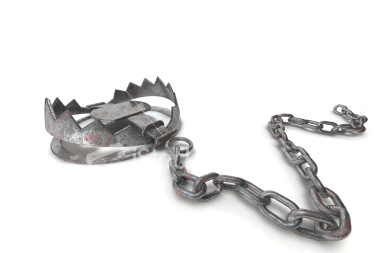
If you are having trouble with the why trap, here are some ideas to help you get out without having to gnaw off your leg:

Enter your search with intention. Decide what you want to discover and make a pact that once you find that information, you stop.

Set a limit – a timer, a number of books or a number of website searches.

Journal. Often we hold understanding within us and writing helps to release it.

When you feel the urge to dig deeper, try exercising first. Often, the need for information is really just restless and anxious energy.

Complete the sentence, “Once I know …, I will feel…” You may be surprised at how little knowledge really impacts emotion.

If your ex was particularly bad, do you really want to understand them? Maybe not understanding says something good about you.

Pray or meditate to find acceptance. There is much in this world we do not understand. And it’s okay to not always have all of the answers.

Maybe it didn’t happen for a reason, but it happened. Now you can create the reason. You can decide how you want this to fit within your bigger story. Create your own why.

I Used to Judge

I used to judge.

I’m not proud of it.

But I used to judge those who stayed in abusive relationships.

I criticized the victim for staying put while exclaiming that, were I ever to find myself in a similar situation, I would leave immediately.

It always seemed so clear to me. So cut and dry.

If the victim wasn’t choosing to leave, then they were choosing to be hit.

But that was before I was judged myself.

I wasn’t in an abusive relationship*. But I was played. And I played along. Played the fool. People hear of my situation and wonder how I didn’t know about the marital embezzlement or the double life. I’m criticized for staying unaware.

And you know my first response when I hear those words?

You weren’t there.

You don’t know.

The same words spoken by those that have been in abusive relationships.

It’s so easy to declare a solution to a problem when you’re viewing it from the outside. But it’s a false clarity, born of perspective and ignorance. When you only see a piece, it’s easy to play judge. But life isn’t that simple.

People stay in abusive relationships because the abuse comes in slowly and “normal” is changed over time.

People stay in abusive relationships because they learned in childhood that abuse is love.

People stay in abusive relationships because they believe they are not worth more.

People stay in abusive relationships because they fear the repercussions of leaving more than those of staying.

People stay in abusive relationships because they love their partner. Except when they fear him/her.

People stay in abusive relationships because the abuser is a skilled trapper, limiting resources and escape routes.

People stay in abusive relationships because their partner is a wonderful parent.

People stay in abusive relationships because they are hopeful that he/she will return to the way it was.

People stay in abusive relationships because depression keeps them stuck.

People stay in abusive relationships because “one more time” is always repeated once more.

People stay in abusive relationships because of fear. And love. And shame. And hope.

I judged for the same reason people have judged me.

I wanted to believe that I was too strong, too smart, too brave for it to ever happen to me. I wanted to believe that I was safe.

And since then, I’ve made friends with many people who have opened up to me about the abuse they’ve endured. And these friends are all strong and smart and brave.

I’ve learned not to judge. To be willing to accept that I am not immune. That I cannot truly understand a situation unless I have lived it. And that in any case, it is better to listen with compassion that speak with judgement.

*My ex husband never was physically abusive. He was never openly controlling. However, he was manipulative and secretive. And I was physically afraid of him once he left; I realized that he was capable of things I never imagined. It was a type of covert abuse.

If you are on Twitter, check out the hashtags #WhyILeft and #WhyIStayed. Powerful.

Character Assassination

character assassination

I didn’t like reading how many of you relate to being gaslighted. It’s one of those areas that I know for me is still tender. There is much un-probed because it hurts too much to counter often-good memories with the knowledge of the duplicity and lies. And I finally realized that the daunting task of separating the strands of truth from the pot of lies is pointless. Even though I now know otherwise, I have chosen to find comfort in the fact that it was real enough to me at the time and that’s all that matters.

But that only works with the personal gaslighting, the stories told to me to keep me placid and distracted.


It doesn’t work with the external assault. The character assassination that carried nefarious seeds far and wide. That requires a different approach.


For much of our time in Atlanta, my then-husband and I were estranged from his parents by his choice. Over the years, we had many families “adopt” us for holidays and get-togethers, but one always stood out. The husband-wife owners of my husband’s company welcomed us into their family. We were at Christmas and birthdays. The kids and grandkids accepted us.  We knew them as friends as well as employers. I loved the time with them and always appreciated the inclusion.

A few months before he left, my then-husband took a job with another company. It made the relationship with the family a little strange but we still kept in touch.

In the immediate aftermath of his abandonment, I did not think of them. Until a few days in when I found a note from the wife on my mailbox with instructions to call.

I picked up the phone expecting to hear shock and horror – the emotions expressed by everyone else I knew when they tried to digest the news. Instead, I got a more distant and guarded message. Condolences mixed with a dash of “well, what did you expect?”

I was shocked. Almost speechless. I asked what she meant. And heard about stories that my then-husband told at work. Tales of my cheating exploits, complete with a vivid story of walking in on me in his office with a man. Claims of staying late at work to avoid me and my wrath.

He painted a picture of a horrible wife, a victimized husband and a marriage in peril.

This from the man that kissed me tenderly every night.

This from the man who knew where I was at all times because I was rarely anywhere but work, school or home.

This from the man that couldn’t keep his hands off me and bemoaned when work kept him away.

For years, I thought this family was my family.

But they never even knew me.

Because my monthly or so visits could never compete with his daily fictions.

I was too confused and surprised on the phone that day to try to defend myself. Defeated and wounded, I simply hung up after muttering something in response to her request to keep her in the loop and ask for help if I needed it.

I never did call her back.

And I never will.


There are so many tears that come from this. I’m horrified that he was intentionally darkening my character for years. It’s hard not to wonder for how long. I’m embarrassed that people thought I was unfaithful and shrewish. And I’m sad that I lost these friends and others, as I chose to simply cut off those he had access to rather than to try to vindicate myself against his stories. Although I was tempted to send them a copy of his mugshot:)

He was telling them stories to cover his tracks. He was creating a fiction in his mind to defend his actions, both past and future. Perhaps he was desperate to see himself as the good guy so that he could temper any guilt. I’ll never know.

Much like I chose to walk away and cut my losses from the financial deception, I made the decision to leave those friendships behind. Some damage is too great to repair.


So, what’s the lesson in all this?

I know I first started to trust Brock when he actually encouraged me to have time around his friends without him there. It made me realize how my ex carefully negotiated my encounters with his friends.

I know I’ve had to let go of the concern of what people may believe about me and focus on what I know about me.

I know that realizing how my ex lived one way with me and another with others helped me realize that he was not the man I loved.

And I know that I’ve made many, many new friends who know me. The real me.

And that in the end, the only character he assassinated was his own.


I Reject Your Reality and Substitute My Own

gaslighting

In my ex husband’s mind, why tell the truth when you can invent it? Why yell when instead you can quietly manipulate through gaslighting?

In all of the pain after my ex husband left, there is one pain that stands out as more acute than the rest. After being arrested for bigamy and bailing out of jail, my ex decided to overdose on sleeping pills. It appeared to be a sincere suicide attempt, but he made sure to cover his bases in case he survived.

He composed and emailed a suicide letter to both his new wife and to my mom. I read that email while sitting outside the DA’s office waiting to meet the victim advocate. He was recovering in the ICU.

I felt reality slipping away as I processed the words that distorted the world I knew. In the letter, he speaks of me being “impossible to live with” and “negative.” He talks about my irresponsible spending habits and how I “just had to have my way” and he “couldn’t tell me no.”  Our last trip together – that he initiated, planned and executed – was recast as my demand for a vacation. He spoke of my insistence on building a deck when he counseled that we couldn’t afford it. He tells my mom that she “would love [the other wife]” and that he hopes they get to meet.

His words hit like a punch to an unguarded gut. I spent hours dissecting them, talking them over with each of my parents in turn. I knew they weren’t true but they still caused me to doubt. I feared that others (including my mom) might think his words were genuine. It felt like a vicious, spiteful attack on my character. And it wasn’t even factual.

He was rejecting reality and substituting his own.

He was gaslighting – using deception and manipulation to cast himself as the sane and balanced one and to make me look unstable and vile.

And it wasn’t his first time.

He was a master at creating and convincing others of his own reality. And, as trusting of him as I was, I was easy to convince. When you’re being gaslighted and you are unaware of the sleight of mind tricks being applied, you feel crazy as you begin to doubt your own perceptions and conclusions. It’s disorienting as the friction between what you see and you’re told you see don’t quite line up, almost like the view through 3D glasses when you turn away from the screen.

For months, I hated that letter. Every reading caused me to feel ill, like I’d swallowed something that needed to be purged. I shared it only with my parents and the close friend I lived with that year, finding comfort in their assurances that his words were mere deflection and trickery.

But still I wondered.

You see, he had trained me well. I still struggled not to believe his words over my own memories.

I struggled, that is, until I rejected his reality and found my own.

I picked apart each of his claims and refuted them one by one with physical evidence:

I spend too much? Then why do I read library books while he spent over a hundred dollars a month on Kindle downloads as evidenced by the checking account registry. And why do I drive the old, paid for car (that I still have!) while he insisted on buying a new one that came complete with a $500 monthly payment. I made a list of his possessions vs mine. It wasn’t even a contest.

I demanded the vacation? I unearthed an email sent to my work address where he proposed the cruise and described its details.

I insisted upon the deck? I found a trail of emails that covered everything from the summer school income I earned being used to pay for the costs to his enthusiastic sharing of his deck designs.

As for me being difficult and negative, that was harder to disprove. But the fact that I had many friends offer to take me in that year told a different story. I bolstered their offers with the hundreds of notes I had received from students over the years, praising my passion and positivity.

And as for my mom wanting to meet the other wife? Well, that was just plain funny.

Eventually, the letter lost its sting as I saw it for what it really was – an attempt to save his image by destroying mine. I wavered over whether to include the letter in the book. I was afraid I would be seen as the hateful woman he described. I decided to include it, even at the risk of his words being believed by people who did not know me. I knew that many of the readers would relate to being controlled by lies and I wanted to share a rare physical manifestation of gaslighting. Because the most painful part of gaslighting and what makes it so effective is that the evidence usually disappears like smoke in the wind, leaving you with only doubts and questions.

Gaslighting is a subtle yet relentless abuse. It’s one person using power and manipulation to control another. The damage is hidden and persistent, the worm of uncertainty taking up residence and calling everything into question. The effects linger as memories collide with new understanding, the deceptions fighting for dominance over the truth.

Gaslighting is often paired with physical abuse or addiction, the repainting of reality used to keep the partner calm and in place. It is a favored tool of narcissists and sociopaths. Those that are adept at its use tend to be charismatic and intelligent, lending a believability to their assertions. It is deliberate and cruel and can be immensely damaging.

Recovering from gaslighting takes time. Even recognizing that you were gaslighted takes time.

No one should have the power to create your reality other than you.

And your trust in another should never be greater than your trust in yourself.

Gaslighting thrives on doubt.

Starve it by believing in yourself.

Why I Refuse to Call My Husband a Narcissist

Character Assassination

Covert Abuse

It’s Nice to Be Important

Not long after we started dating, I accompanied my teenage boyfriend to his grandfather’s funeral. I had never met nor heard anything about the deceased; my first impression came from the pastor’s opening lines:

“It’s important to be nice, but it’s more important to be important.”

Surprised at the mutilation of the common quote, I turned quizzically to my boyfriend.

“He messed up,” he confirmed in a whisper, “But it’s accurate in this case.”

I spent the remainder of the service wondering about the life and priorities of a man who left his family with that impression.

You can read the rest over at The Good Men Project, where I am now a contributing writer:)