Divorce Season

It’s always sad to me how many new readers I gain in late December and early January. From a blogging perspective, sure it’s nice to see an uptick in stats, but from a human perspective, every new reader represents one more person facing a painful (and frequently unexpected) divorce. I often wish I had no readers.

In family law and counseling circles, the period after the holidays is sometimes referred to as “divorce season,” a several week period characterized by an increase in couples filing for divorce and/or revealing their intention to divorce. These decisions are rarely sudden, rather they are a compilation of growing dissatisfaction partnered with the demands of the holiday season. Even in the case of a tsunami divorce, where one partner was blindsided, the other usually had been planning his or her exit for some time.

So what exactly is it about the holidays that leads to an increase in divorce?

Once More For the Kids/Family

For those with kids or traditional family gatherings, the thought of announcing the demise of a marriage shortly before the holidays is fraught with questions and dilemmas. Do you show up at Aunt Dorothy’s asa couple even when you both know you’re not? Do you allow the kids one more Christmas under the family tree before you alter their world? The holidays are often seen as a time for family and togetherness; it can be easier to feign this rather than fracture it right before the season.

Trying to Soften the Blow

If you have made the decision to leave and you want to try to make it as easy on your partner as possible, you may make the decision to wait until after the holidays to hopefully lessen some of the pain of being alone. Or, the exiting spouse may fear the thought of being without the kids or family on the holidays and postpone the announcement until after the festivities. Divorce is rough regardless, but being alone when it seems like everyone else has someone is especially painful.

New Year/ New You

For many, the new year contains a sense of renewal, of promise. If you feel like you’ve been stuck in a marriage that is holding you back, the spirit of the season may be the deciding factor on when to call it quits. Holiday advertising campaigns can compound this drive, as they continually bombard us with messages of “trading up” to a newer and better model.

The Tipping Point of Holiday Stress

You and your spouse may enter the season with no thoughts of divorce but with marital stress already pulling at the seams. In these cases, the added pressure of travel, family and financial stresses can act as a tipping point in the marriage. When a faltering marriage is exposed to outside demands, it is all too easy to take it out on your spouse and allow contempt to take hold.

Expectations and the Media Message

Despite the media portrayal of perfect holiday cheer, the holidays are a difficult time for many, especially those who have experienced family trauma or are prone to depression. The gulf between reality and expectations can grow exponentially during this season, leaving some feeling hopeless and disconnected, withdrawing from the marriage out of pain.

No matter when your marriage ends, divorce is rough. Don’t underestimate its impact and take care of yourself.

Did any of you experience the end of a marriage that coincided with the holiday season? What factors led to your divorce at this time of the year?
The Why Trap (And How to Get Out)

why

There are so many traps post-divorce that can grab hold and keep you stuck –

The anger trap that convinces you that you won’t be okay until he or she pays for his or her misdeeds.

The fairness trap that insists that all of life’s situations should be equitable and balanced.

The sadness trap that keeps you locked in a mental theater replaying the movies of your relationship.

And the why trap that charges that you will be able to move on as soon as you understand why it all happened.


The why trap looks for the reasoning behind your ex’s actions. It seeks to discover a greater purpose for the pain. The why trap attempts to mitigate blinding emotion with the application of rational thought and deliberate thinking. It convinces you that understanding will lead to peace and prompts determined, often frantic, searching for “the truth.”

But it’s a trap for a reason.

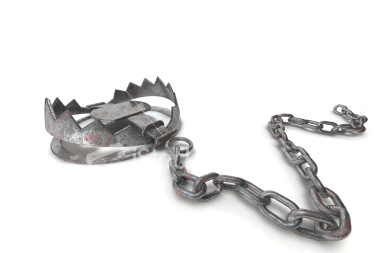
The why trap is a sneaky snare. It lures you in with promises of information that will lend sense to the nonsensical. It helps to take you out of the state of overwhelming emotion as you focus on facts rather than feelings. The problem is that there is often no defined end and trying to answer why leads through an endless serpentine labyrinth. And holds you prisoner of your past.


I fell into this trap within the first few days. Since he left me with no information, I obsessively gathered all of the evidence I could, uncovering the planned trip to Uganda, the stolen funds and maxed credit and eventually, the bigamy. It did answer some questions. After all, I could see why he was too cowardly to face me. Can you picture it?

Lisa, we need to talk. You know how I said we were on track financially for what we planned? Well, I sort of spent all of that and more on another life. It was an accident. Oh, and you know how just last night I told you how much I loved you and how I was looking forward to the rest of our lives together? Well, I changed my mind. In fact, I just got married to this awesome girl. Would you like the registry information? We really need a mosquito net since we’re going to Uganda in a couple weeks. Why do you look upset?

Yeah, not exactly. So, the early sleuthing uncovered some answers, but it didn’t provide any peace. So I switched gears towards trying to understand why he would do these things. That’s when I devoured books and websites about personality disorders and entertained the labels of sociopath and narcissist.  Here’s my full description of the results of that search.

And it did help some. Even though I decided to ultimately leave him labelless, I gained understanding of the fact that I had been gaslighted and I realized that he had some major issues.

But all that reading and research started to hold me back. I realized I was expending more energy on trying to understand him then on trying to understand and heal myself. And, as I always caution, whatever you nurture, grows.

If I wanted to heal and move forward, that was where I needed to focus.

So I did.

I still don’t know why it all happened. And I doubt I ever will.

But you don’t need to know why to walk away.


If you are having trouble with the why trap, here are some ideas to help you get out without having to gnaw off your leg:

Enter your search with intention. Decide what you want to discover and make a pact that once you find that information, you stop.

Set a limit – a timer, a number of books or a number of website searches.

Journal. Often we hold understanding within us and writing helps to release it.

When you feel the urge to dig deeper, try exercising first. Often, the need for information is really just restless and anxious energy.

Complete the sentence, “Once I know …, I will feel…” You may be surprised at how little knowledge really impacts emotion.

If your ex was particularly bad, do you really want to understand them? Maybe not understanding says something good about you.

Pray or meditate to find acceptance. There is much in this world we do not understand. And it’s okay to not always have all of the answers.

Maybe it didn’t happen for a reason, but it happened. Now you can create the reason. You can decide how you want this to fit within your bigger story. Create your own why.

Why People Cheat

I never thought I’d tackle this post. First of all, if I could answer this question with certainty, I certainly would not be teaching middle school math; I’d be taking over Oprah’s spot. The reasons people stray in their marriages are as varied and complex as marriage itself. Past, present and personality weaving together to create a perfect storm. To add to the complexity, the reasons people cheat are rarely the reasons they say they cheat. You are much more likely to hear excuses or blame because the truth takes bravery and insight along with a willingness to then divulge the understanding that was reached.


So, without further ado, here are the patterns I have seen emerge. We’ll start with the simplest.

The Bad Decision

This is the “it just happened” infidelity, although that excuse makes my skin crawl. This is the affair born of bad decisions that may or may not have other co-existing causes. There is no magic in a wedding band that suddenly causes all others of the opposite sex to be invisible. We all meet people that we find attractive and that awaken that little spark. But you always have a choice. Long before anything happens, you can make the decision to walk away. The earlier the better. The closer you get to flame, the more  difficult it becomes to leave. You may get to a point where your body has the best of you, but you can choose to use your brain before then.

The Need for Physical Connection

A marriage where the partners have different sexual needs is certainly a struggle. In this type of affair, one (or both) of the partners are craving more physical intimacy and they look outside the marriage to sate their appetites. My frustration with this type (and the affair described below), is that so often the straying partner is helping to create the desert at home by turning his or attentions away. This reason is also used as an excuse for infidelity and can even be created by the straying partner as a way for them to reconcile their decisions within their own mind. After all, it’s easy to claim a sexless marriage and difficult to refute unless you never close your blinds.

The Need for Emotional Connection

Two has the potential to be lonelier than one can ever be. There is no worse feeling that being with someone and yet feeling invisible. People can change and grow apart. In this type of affair, the straying partner is seeking responsiveness and demonstrative affection from another. They describe their marriage as “dead” and want to feel alive. I get it, but there are other options than an affair. Please, seek them out first.

The Need for Approval

This is often the affair of the narcissist. They are typically brief and in succession, a new partner replacing the former before he or she gets to know too much. This straying partner is driven by the need to be idolized, which is a trademark of early romance that fades as time reveals more about the person.

The Need for Stimulation

Affairs can be rewarding; there is a rush from the newness that is amplified by the necessary intrigue. Some people are wired to need more stimulation. These are your daredevils and stockbrokers. Others train themselves to need an increasing amount of stimulation, such as in the case of addiction. Their threshold for stimulation is set higher than a “normal” life can fulfill and so they are always seeking their next reward. I believe this is why there is a connection between Twitter use and affairs.

The Snipe Hunt for Happiness

I find this the saddest reason for infidelity. In this case, a person is truly unhappy and, rather than address the issue internally where it resides, they begin a snipe hunt for happiness, looking for it in external things and often, people. This affair is not driven by something missing in the marriage; it’s powered by something missing in the person. And, what makes it sad to me is that while they are on a winless quest for happiness, they steal joy from others along the way.


Many affairs can be described by more than one of the reasons above. After all, we’re all human with our complexities and fallibilities. Affairs happen. But maybe if we can understand more of why they do we can stop them before they start or learn from them once they do.


And, for those of you who have been betrayed, here is some more information for you:

Classification of Infidelity – A look at he types of infidelity from the perspective of the betrayed.

Will I Ever Trust Again? – A perspective on how to learn to trust again after betrayal.

Of Horses and Zebras – A description of how betrayal changes your brain.

The Upside of Betrayal – Betrayal isn’t all bad. There are some positives. I promise.

Why I Became a Tough Mudder

Brock and I did Tough Mudder in March of 2011. We had been together a little less than a year. It really was a transformative experience for our relationship and had a significant impact on my learning to trust again. We continue to do events together that require teamwork and perseverance. In fact, we have decided to consciously make that a cornerstone of our relationship. Most recently, we took the beast (AKA Tiger) on an 8 mile canoe trip down the Chattahoochee. Due to the recent rains, the water was very high and there were quite a few newly fallen trees across the swollen river. At one point, we thought we had reached an impasse where the combination of fallen trees and debris blocked our passage. Brock saw an opportunity, turned the canoe around so that he was leading the boat and I was paddling backwards from the distant front. He carefully guided the canoe through a narrow gap in the trees. I was traveling blind, relying fully on him to tell me when to duck or dodge from the large branches. Three years ago, that same situation would have caused anxiety, as I wondered if I could count on him. Now? I trust again. And that’s a good place to be.

IMG_2606

Originally posted in winter 2012:


79483-189-009f

When I told my family last year that I had signed up (and paid good money) for an 11 mile obstacle run, I think their first response was to shuffle through their contacts looking for the psychiatrist I saw in the early months of the divorce.  “You’re doing WHAT?  Why?,” I heard repeatedly, usually followed with a resigned head shake, “You’re crazy.”  Crazy I may be, but I felt compelled to do the event and I am so glad that I did.  Tough Mudder was more to me than a run.

A few months after the July disaster of my marriage, I signed up for my very first race ever: a half marathon.  This was a bit preemptive, since not only had I never competed, I still was weak and skinny.  I went into that race only having completed the distance once before.  That was the worst race of my life (cold, rain, illness), but I endured and made it through.  It was exactly the confidence boost I needed at that point.

Over the next several months, I ran more races, but none of them required me to dig all that deep into myself.  None of them gave me the sense of triumph over adversity that I was seeking.

Then came Mudder.  My boyfriend was the one who actually found this race and he proposed that we enter together.  I loved the idea immediately. With a shared purpose, we hit the gym with renewed vigor and not a little trepidation.

The event itself was unbelievable.  It turned out that it was slated to be held in a dry county, so the money that normally went towards beer instead paid for a longer track – almost 15 miles up and down (did I mention up?) a motocross track.  The temperature was cold, and the water obstacles were colder, as volunteers emptied flats of ice into the streams.

It was an amazing challenge for my boyfriend and I to tackle together.  It gave a true sense of working together and overcoming adversity.  My other races had been alone; it was beautiful to have someone to share this with.  It helped me learn to trust him, learn that he was not going to abandon me when the going got tough.  We pushed each other, encouraged each other, lifted each other, and even shared some muddy, sweaty kisses.  It was amazing.

I think everyone, especially those re-centering after trauma, should do their own version of Tough Mudder. Something that pushes you further than you comfortably want to go.  Something to show you what you can accomplish.  Something to show you that discomfort is temporary.  Something to show you that the support of friends can help get you through when you want to quit.  When the big picture of what you have to overcome is too big, it helps to have a little Mudder to think back on and realize, “I can do this.”

Tough Mudder logo
Image via Wikipedia