What You See Is What You Get

So I woke up feeling better this morning.

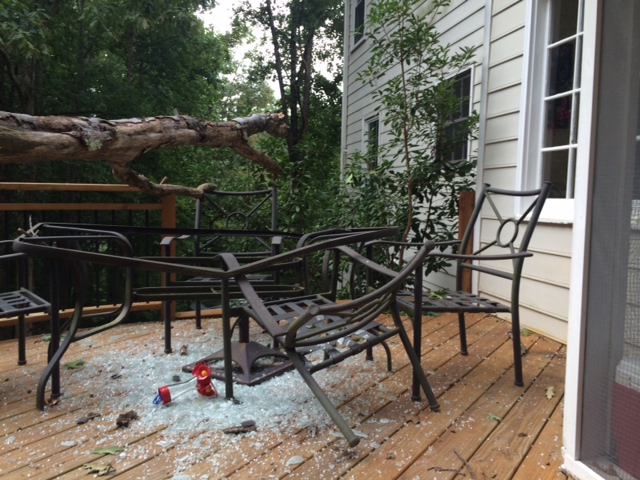
Better, that is, until this happened.

photo-43


I was standing at the large window by the table and my husband was in the driveway beyond the deck when the tree gave up and came crashing down. We were lucky. Everyone, including Tiger, was safe. The damage only to wood and metal, not flesh and bone.

I’m not gonna lie. I’m still a bit shaken up. It’s scary when glass explodes in front of your face and wood screams as it splinters. It’s frightening and disorienting when your house trembles under a cloudless sky. My breathing is still a little shallow. My heart a little rapid.

But more than anything, I’m thankful. Thankful that everyone is okay and that the damage can be repaired by carpenters rather than surgeons.


As with anything in life, what you see is what you get. If you look at a situation and see only the negative, that is what will stand out. If, however, you are able to see the blessings and potential within, the entire situation feels more positive. More doable.

The video below is one of the most inspiring examples I have ever seen of someone seeing and maximizing potential rather than focusing on the limitations.

Watch.

Be inspired.

And bring some tissues.


Now look around your life. What you see is what you get. What will you see today?


I Want You to Want Me

My kids this year are great – happy, funny and generous. Unfortunately, they’re also generous with their germs. Thursday night, those lovely little bugs finally got the best of me and led to a feverish Friday on the couch. My mind was too scrambled to focus on a book, so I ended up reading through the thousands of posts backlogged on my Feedly reader. And, as so often happens on the internets, one click led to another and another.

Until I ended up here on Penelope Trunk’s blog (possible trigger warning – domestic violence).

I’ve subscribed to her blog for years through my RSS reader, but only read the occasional post. I thought she was all about business and start-ups.

She’s not.

The post in question made me very uncomfortable. In it, she displays a picture with a bruise on her hip and tells an accompanying story about her husband shoving her into the bedpost. She is writing from a hotel room with her two kids, where she has sought refuge for the night.

But she doesn’t want to leave him. In fact, she claims in another post that domestic violence is a question of boundaries and that the abused can alter the dynamic alone. Like with so many inflammatory statements, there is a sliver of truth. There are patterns that tend to be in play that lead someone into an abusive relationship. And those (usually childhood) issues have to be addressed for that person to be in a healthy relationship. But, and here’s where my view differs, the first boundary that has to be enforced is getting away from the abuser. And then work on yourself. Get safe first (and get your kids safe) and then get healthy.

Her last sentence in the bruise post seemed to explain it all:

“That’s why I can’t leave. I want someone to miss me.”

Ah, now that’s a sentiment I think we all can understand in some form.

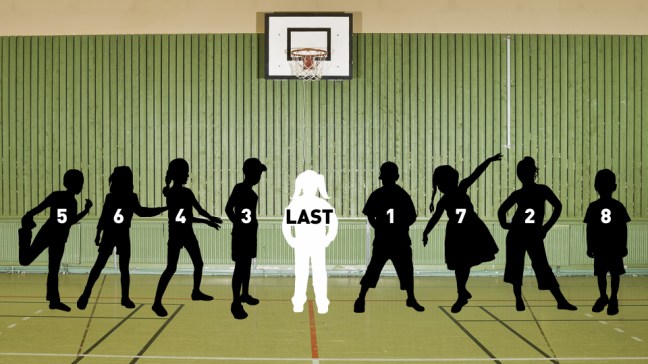
It’s human nature to want to be wanted. From being an early pick for the kickball game in elementary school to being tagged on Facebook from a friend, we all get a little thrill when we are chosen and feel the sting of rejection when we are not.

It’s natural. We’ve evolved to thrive in a community and, at the most basic evolutionary level, those that are not included are less likely to thrive as they struggle alone on the outskirts.

But as is so often the case, a basic drive can also go haywire. We can be so focused on being wanted that we ignore our basic safety and our own boundaries and beliefs. We can twist ourselves into parodies, subvert our true nature or ignore red flags just to save our spot as a chosen one.

The pain of rejection is real. And it is powerful.

But sometimes the pain incurred by avoiding rejection may be even worse.

Especially when you’re rejecting yourself in hopes of being accepted and desired by another.


We all want to be wanted.

But don’t compromise yourself just to be picked.

And make sure you’re wanted for who you are.

Because who you are is enough.

I’d pick you for my team any day:)


I Reject Your Reality and Substitute My Own

gaslighting

In my ex husband’s mind, why tell the truth when you can invent it? Why yell when instead you can quietly manipulate through gaslighting?

In all of the pain after my ex husband left, there is one pain that stands out as more acute than the rest. After being arrested for bigamy and bailing out of jail, my ex decided to overdose on sleeping pills. It appeared to be a sincere suicide attempt, but he made sure to cover his bases in case he survived.

He composed and emailed a suicide letter to both his new wife and to my mom. I read that email while sitting outside the DA’s office waiting to meet the victim advocate. He was recovering in the ICU.

I felt reality slipping away as I processed the words that distorted the world I knew. In the letter, he speaks of me being “impossible to live with” and “negative.” He talks about my irresponsible spending habits and how I “just had to have my way” and he “couldn’t tell me no.”  Our last trip together – that he initiated, planned and executed – was recast as my demand for a vacation. He spoke of my insistence on building a deck when he counseled that we couldn’t afford it. He tells my mom that she “would love [the other wife]” and that he hopes they get to meet.

His words hit like a punch to an unguarded gut. I spent hours dissecting them, talking them over with each of my parents in turn. I knew they weren’t true but they still caused me to doubt. I feared that others (including my mom) might think his words were genuine. It felt like a vicious, spiteful attack on my character. And it wasn’t even factual.

He was rejecting reality and substituting his own.

He was gaslighting – using deception and manipulation to cast himself as the sane and balanced one and to make me look unstable and vile.

And it wasn’t his first time.

He was a master at creating and convincing others of his own reality. And, as trusting of him as I was, I was easy to convince. When you’re being gaslighted and you are unaware of the sleight of mind tricks being applied, you feel crazy as you begin to doubt your own perceptions and conclusions. It’s disorienting as the friction between what you see and you’re told you see don’t quite line up, almost like the view through 3D glasses when you turn away from the screen.

For months, I hated that letter. Every reading caused me to feel ill, like I’d swallowed something that needed to be purged. I shared it only with my parents and the close friend I lived with that year, finding comfort in their assurances that his words were mere deflection and trickery.

But still I wondered.

You see, he had trained me well. I still struggled not to believe his words over my own memories.

I struggled, that is, until I rejected his reality and found my own.

I picked apart each of his claims and refuted them one by one with physical evidence:

I spend too much? Then why do I read library books while he spent over a hundred dollars a month on Kindle downloads as evidenced by the checking account registry. And why do I drive the old, paid for car (that I still have!) while he insisted on buying a new one that came complete with a $500 monthly payment. I made a list of his possessions vs mine. It wasn’t even a contest.

I demanded the vacation? I unearthed an email sent to my work address where he proposed the cruise and described its details.

I insisted upon the deck? I found a trail of emails that covered everything from the summer school income I earned being used to pay for the costs to his enthusiastic sharing of his deck designs.

As for me being difficult and negative, that was harder to disprove. But the fact that I had many friends offer to take me in that year told a different story. I bolstered their offers with the hundreds of notes I had received from students over the years, praising my passion and positivity.

And as for my mom wanting to meet the other wife? Well, that was just plain funny.

Eventually, the letter lost its sting as I saw it for what it really was – an attempt to save his image by destroying mine. I wavered over whether to include the letter in the book. I was afraid I would be seen as the hateful woman he described. I decided to include it, even at the risk of his words being believed by people who did not know me. I knew that many of the readers would relate to being controlled by lies and I wanted to share a rare physical manifestation of gaslighting. Because the most painful part of gaslighting and what makes it so effective is that the evidence usually disappears like smoke in the wind, leaving you with only doubts and questions.

Gaslighting is a subtle yet relentless abuse. It’s one person using power and manipulation to control another. The damage is hidden and persistent, the worm of uncertainty taking up residence and calling everything into question. The effects linger as memories collide with new understanding, the deceptions fighting for dominance over the truth.

Gaslighting is often paired with physical abuse or addiction, the repainting of reality used to keep the partner calm and in place. It is a favored tool of narcissists and sociopaths. Those that are adept at its use tend to be charismatic and intelligent, lending a believability to their assertions. It is deliberate and cruel and can be immensely damaging.

Recovering from gaslighting takes time. Even recognizing that you were gaslighted takes time.

No one should have the power to create your reality other than you.

And your trust in another should never be greater than your trust in yourself.

Gaslighting thrives on doubt.

Starve it by believing in yourself.

Why I Refuse to Call My Husband a Narcissist

Character Assassination

Covert Abuse

The Masks We Wear

I read this response to Robin Williams’ death this morning and it struck a nerve.

The author, also in the comedy business, discloses the dark underbelly that is often present beneath the laughs. He describes how childhood trauma or a sense of unworthiness leads to the development of an alter ago – a front man who entertains the crowd while distracting from the scared and broken child beneath.

He spoke of the yin and yang of depression and comedy. The pull of the audience and the isolation inherent in the belief that the performer is only loved for the performance.

Not for the child within who only wants to be loved.


The piece struck a nerve this morning. Caused my coffee to cool as I read.

I don’t fit that personality profile, although I have seen many in my personal and professional lives over the years (some of whom also tragically took their lives).

I don’t fit that profile.

But I fit another that I recognized as I read.


The performer is driven from a need to be loved.

I’m driven by a need to not be abandoned.

The performer learns how to entertain and draw a crowd.

I’ve learned how to be needed.

The performer struggles with depression.

I struggle with anxiety.

But we both hide behind masks.


In fact, to some extent, we all do.


The following are some of the masks and underlying causes I’ve seen. I see them in adults and I see them in my students – 13 and 14 years old. We all have the same basic needs and the same basic fears. We all try to hide them from the world and we begin to develop our own masks in childhood as we encounter stresses and learn from other’s responses to us.

These are caricatures of people. Oversimplifications. We are much more than the fears that drive us and the costumes we select to shield us.

But even though these are but a brief sketch, there is power in recognizing your own mask of choice and why you may have decided to wear it.


Mask – Performer or Funny Man

Behind the Mask – A sense of being unlovable

This may have the fat kid in school. Or the one who suffered abuse or neglect at the hands of his or her parents. This child felt alone and wanted nothing more than to loved and accepted. The performer found a love of sorts through making others smile. Even though inside he may have crying.

If I make you laugh, you’ll love me.


Mask – Worker Bee or Caregiver

Behind the Mask – A fear of being abandoned

This mask is usually picked up after a childhood event – death, divorce, desertion, or  neglect- leaves behind a fear of being abandoned at an age when adult support is needed. In order to temper the anxiety of being left again, the worker bee becomes an efficient taskmaster and the caregiver becomes a necessary nursemaid.

If you need me, you won’t leave me. 


Mask – Strongman or Overachiever

Behind the Mask – An insecurity of being unworthy

These are the people that grew up always being compared to others and found wanting. They internalize the message and feel that they will never measure up. They learn to overcompensate in a visible way to try to prove their worth and lessen their insecurities. Although often envied by others, they still never feel they will never make the grade.

If I work harder, I’ll meet your approval.


Mask – Professor or Distancer

Behind the Mask – A fear of being vulnerable

This is the person who refuses to show emotion. Who either responds with analytical perspective or indifference to any situation, even those that are emotionally charged. They are often read as cold, uncaring. But often they are soft and sensitive on the inside. So sensitive that they have learned to hide it well.

If I don’t show myself, you can’t wound me.


Most of us wear our masks when we feel threatened – a new situation, a large crowd, a demanding client. But most of us also feel comfortable enough to slip them off around our loved ones, revealing the fears and drives beneath.

It’s lonely living behind a mask for too long. You’re not alone yet you feel no one values you for the real you.

Only for the character you play.

It’s okay to shield your inner child sometimes.

But it’s also okay to let him out to play.

And teach him to trust that he can be loved and accepted as he is.

Fears and all.


Edit Your Personal Narrative

Did you ever have one of your English papers passed back filled with red marks; edits and deletions shaping your original script into something more cohesive and descriptive? If you’re at all like me, you first reacted with a bit of defensiveness tinged with embarrassment – “I thought the paper was good.” But then, upon reading the revised essay, you begrudging admit that the revised version is better. Maybe even much better.

The external hand wielding the marking pen gives you the gift of perspective, allowing you to see the patterns in your writing and the fall-back phrases that are too often used.  The editing process removes what doesn’t better the whole and selects the best choice of similar words to express an idea.


Have you ever paid attention to your internal narrative, the story you tell to and about yourself? Have you ever noticed a pattern in the words you select and the phrases you repeat?

Often we unwittingly craft a negative internal narrative, repeating past injuries and berating ourselves. Spinning yarns into straightjackets that keep us bound and gagged, prisoners of ours pasts and our beliefs. We excuse others while we abuse ourselves, framing our choices as worse than they are.


The words we choose to say to others have influence.

The words we choose to say to ourselves have power.


When we repeatedly hear the same words about ourselves, we begin to believe them. Even if they aren’t true.

Pay attention to the words you use to describe yourself. Are you selecting the best term? For example, feel the difference between “depressed” and “sad.” Sure, they are technically synonyms but the connotation is vastly different. Depressed is heavy, permanent. A condition. Whereas sad says, “I feel badly right now.” It’s a mood. Ephemeral. Even if you are depressed, try renaming it as sadness in your script. Keep repeating it and you’ll start to believe it.


Look to see what other words or phrases you can replace –

I shouldn’t feel that way” becomes “I feel this way right now and that’s okay.”

“I’m lonely” turns into “I’m feeling separated from others right now.”

“I’m stupid” is replaced with “I made the best decision I could in the moment and I’m learning.”

“I’m rehashing” is exchanged for “I’m processing.”

“I’m broke” is retired and “That doesn’t fit in to my personal wealth goal” is brought in to fill its place.

“I’ll never find love again” is crossed out and “I am open to receiving love again” is written in above.

“My life sucks” is modified with the phrase “right now.”


Edit your personal narrative to create a story of compassion. A script of forgiveness and learning and hope.

The words you choose have power.

Use that power to shape the life you want.

You’re worth it.