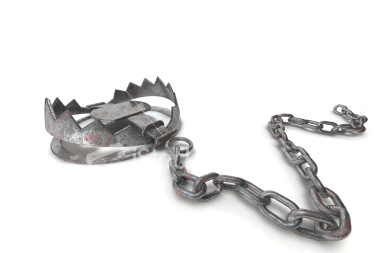
The Why Trap (And How to Get Out)

why

There are so many traps post-divorce that can grab hold and keep you stuck –

The anger trap that convinces you that you won’t be okay until he or she pays for his or her misdeeds.

The fairness trap that insists that all of life’s situations should be equitable and balanced.

The sadness trap that keeps you locked in a mental theater replaying the movies of your relationship.

And the why trap that charges that you will be able to move on as soon as you understand why it all happened.


The why trap looks for the reasoning behind your ex’s actions. It seeks to discover a greater purpose for the pain. The why trap attempts to mitigate blinding emotion with the application of rational thought and deliberate thinking. It convinces you that understanding will lead to peace and prompts determined, often frantic, searching for “the truth.”

But it’s a trap for a reason.

The why trap is a sneaky snare. It lures you in with promises of information that will lend sense to the nonsensical. It helps to take you out of the state of overwhelming emotion as you focus on facts rather than feelings. The problem is that there is often no defined end and trying to answer why leads through an endless serpentine labyrinth. And holds you prisoner of your past.


I fell into this trap within the first few days. Since he left me with no information, I obsessively gathered all of the evidence I could, uncovering the planned trip to Uganda, the stolen funds and maxed credit and eventually, the bigamy. It did answer some questions. After all, I could see why he was too cowardly to face me. Can you picture it?

Lisa, we need to talk. You know how I said we were on track financially for what we planned? Well, I sort of spent all of that and more on another life. It was an accident. Oh, and you know how just last night I told you how much I loved you and how I was looking forward to the rest of our lives together? Well, I changed my mind. In fact, I just got married to this awesome girl. Would you like the registry information? We really need a mosquito net since we’re going to Uganda in a couple weeks. Why do you look upset?

Yeah, not exactly. So, the early sleuthing uncovered some answers, but it didn’t provide any peace. So I switched gears towards trying to understand why he would do these things. That’s when I devoured books and websites about personality disorders and entertained the labels of sociopath and narcissist.  Here’s my full description of the results of that search.

And it did help some. Even though I decided to ultimately leave him labelless, I gained understanding of the fact that I had been gaslighted and I realized that he had some major issues.

But all that reading and research started to hold me back. I realized I was expending more energy on trying to understand him then on trying to understand and heal myself. And, as I always caution, whatever you nurture, grows.

If I wanted to heal and move forward, that was where I needed to focus.

So I did.

I still don’t know why it all happened. And I doubt I ever will.

But you don’t need to know why to walk away.


If you are having trouble with the why trap, here are some ideas to help you get out without having to gnaw off your leg:

Enter your search with intention. Decide what you want to discover and make a pact that once you find that information, you stop.

Set a limit – a timer, a number of books or a number of website searches.

Journal. Often we hold understanding within us and writing helps to release it.

When you feel the urge to dig deeper, try exercising first. Often, the need for information is really just restless and anxious energy.

Complete the sentence, “Once I know …, I will feel…” You may be surprised at how little knowledge really impacts emotion.

If your ex was particularly bad, do you really want to understand them? Maybe not understanding says something good about you.

Pray or meditate to find acceptance. There is much in this world we do not understand. And it’s okay to not always have all of the answers.

Maybe it didn’t happen for a reason, but it happened. Now you can create the reason. You can decide how you want this to fit within your bigger story. Create your own why.

Should You Divorce? 12 Questions to Consider

should divorce

I’m often thankful that my marriage ended via text. I never had to make the gut-wrenching decision to inform my husband that I wanted out. I’ve never experienced endless days and nights weighing the pros and cons of divorce and anticipating its impact on my life.

Even though I never thought about divorce prior to experiencing it, I have spent the past several years studying and writing about the end of a marriage. For those of you who are in the unenviable position of trying to decide if you should stay or go, here are twelve questions for you to consider.


Are you in or your children in danger?

If you are in an abusive situation, your first course of action is to find a safe place for your family. If the marriage is violent and available interventions are not successful, your responsibility is to take care of yourself and your children. Get out, get help and then consider the question of divorce.


Are you quitting or letting go?

Are you running away from your marriage because you’re hesitant to address issues with your spouse or with yourself? Are you giving up because the relationship seems like it requires too much work to repair? Have you made mistakes in your marriage and you’re afraid to own up to your actions? If you answered in the affirmative to any of these, you’re quitting.

Quitting is out of fear; letting go is born from acceptance.

It is a reality that sometimes people enter into a marriage that was wrong from the beginning. Or, perhaps the relationship worked for a time but now you and your partner are no longer the same people who committed years ago.

People change. Circumstances change. And not every marriage can adapt. Sometimes the best decision you can make is to accept that something is gone and let it go.


Are you putting at least as much energy into the marriage as you are into your escape plans?

It’s human to look across the fence and see the grass as greener on the other side. After all, you know everything about your circumstances and often only see the best of your neighbor’s.

Marriage is no different. A relationship of any duration has history, arguments and issues that clutter the memory banks and may threaten to overrun the grass with weeds. An encounter with a new person, fresh and unsullied by the reality, can be intoxicating.

But it’s just an illusion. All you’re seeing in the beginning is what they want you to see. And illusions can only be maintained for a time.

The grass isn’t greener on the other side; it’s greener where you water it. If your attentions are focused outside of the marriage, you are starving your relationship. Make the intention to give your marriage at least as much energy as you’re giving your escape plans. Water it, nurture it, before you declare it dead.


Have you made changes in yourself?

We often blame our partners for our misery and frustration. We proclaim that if our spouse was only a better listener or less grouchy that our home life would be happy. We argue that he or she is lazy or materialistic or self-absorbed. We see our partners as the problem and ourselves as the victim.

We often want to fix our spouses. When what we really should be doing is fixing ourselves. Because you can’t change another’s actions, but you can always change your response.

So much of negativity in a marriage comes down to patterns of behavior: push and pull, nag and retreat, blame and contempt. If you can alter your responses, you have the potential of changing the entire pattern. And maybe even the marriage.

Many people use divorce as a catalyst for personal growth. Why wait? Improve yourself first and maybe the divorce doesn’t need to happen.


Have you informed your partner about your concerns and your feelings?

The first time your husband or wife hears about problems in the marriage should not be on the day you ask for a divorce. Even if you feel distant and disengaged, you have a responsibility to your spouse to communicate about the state of the union.

It takes courage to broach these difficult conversations; you have to be prepared to face anger or despondency or desperation. Ultimately, you are not responsible for your partner’s well-being, but you are accountable for transparency and truthfulness. If the marriage is at risk, make sure both parties know and are given the opportunity to campaign.


Are you on a snipe hunt for happiness?

We often fall victim to inertia in our lives. We slide into marriage and often into parenthood without being fully conscious and deliberate about our actions. As a result, we often “wake up” and realize that we’re not happy. We blame it on our jobs, our environment and our marriages.

But really, we’re often not happy with ourselves.

It’s so easy to end up on a snipe hunt for happiness. We look for validation and acceptance in our possessions, buying more and more to give the appearance of a good life. We surround ourselves with sycophants and flirts that convince us that we’re desirable.

If you are looking for happiness in a new relationship status, you will be disappointed. Happiness can’t be found without; that’s a hunt that will never end. Instead of blaming your circumstances for your misery, try taking ownership of your own well-being.


Is there addiction on either side?

Addiction is a disease that is characterized with instability, deception and a difficulty in addressing issues head-on. Addicts frequently pair with enablers, the give and take meeting both of their needs in an unhealthy dynamic. All of these concerns make it very difficult to be a healthy relationship with active addiction in the picture.

If you struggle with addiction, your first responsibility is your own sobriety. It is not fair to place that burden on your partner, nor should you feel obligated to stay with someone who undermines your sobriety.

If your partner is an addict, your first step is learning your role in the pattern. Get help. Join an Al-Anon group or something similar and educate yourself about addiction, codependency and sobriety. Regardless of your decision about divorce, make sure to address your behaviors and thinking that developed alongside the dependence. Addiction is a family disease. Take responsibility for curing yourself.


Are you falling for the sunk cost fallacy?

According to the sunk cost fallacy, we have a tendency to stay in commitments purely because of the time or money invested. For example, we may hold on to a car well beyond its life because we have spent so much money on repairs, even though it makes more sense to purchase a newer and more reliable car. In marriage, we may find ourselves staying put because of the months or years invested in the relationship.

But that’s not a reason to stay.

The sunk cost fallacy is born of a calculus of fear. We prefer to stay with what is known rather than venture into the unexplored. We hesitate to scrap what we have because of a fear or starting over.

Stay because of the present marriage and the future one, not because of what has passed.


Has there been betrayal on either side?

Betrayal undermines a relationship. It often occurs when there are problems within the marriage, acting as an alert but also distracting from the underlying issues.

If you have been betrayed, you may find yourself grasping onto the marriage out of a panic of losing your spouse. Or you may react with anger, rage blinding you from rational thought. Betrayal is insanely painful. Give yourself time to grieve before making decisions. And, also understand, that if your spouse is not willing to end the affair or address the problems in the marriage, your decision may have been made for you.

If you have been the unfaithful one, work first to understand the motivation behind your actions. What were you seeking? Have you been starving your marriage of attention? Are you running away from some truth? Are you afraid of being alone and setting up a new bed to hop into as soon as you leave the old? If you fail to understand why you made this choice, you most likely find that you are given another opportunity to examine it when you cheat again.


Are you aware of the impact of divorce on children?

Some people proclaim that divorce destroys children. Others argue that it has no impact on them all. The reality is somewhere in the middle; divorce, no matter how amicable, affects the kids.

Regardless of the decision made, consider the needs of the kids. Research the impact of divorce on children of different ages. Be mindful about how and what you tell them. Watch out for signs of depression or anxiety and be ready to seek interventions if needed. Put your concern for your children ahead of your anger for your spouse.

The best gift you can give a kid is a stable and loving home life. That may mean repairing your marriage or staying together until the children have launched. Or, it may mean ending an unhealthy marriage so that the family can have a fresh start.


Is there a lack of passion and intimacy?

We often ask too much of marriage. We expect it to be our safe place, our den against the elements, providing stability and security while also looking to it for passion and excitement. It can’t fulfill both.

Passion comes from risk. It comes from seeing your partner as an individual with his or her own interests and ideas. If we feel too secure, as though we know our partners better than they know themselves, there is nothing exciting. Part of maintaining excitement in a marriage is the acceptance of risk and removing the illusion of security.

We also have tendency to construct walls with the intention of limiting possible heartbreak. Those walls are also an illusion, as all they do is limit the potential of a marriage. Intimacy has to start with vulnerability. Don’t blame your partner for a lack of connection if you are refusing to let them in.


Are you afraid of being alone?

A fear of being alone is no reason to enter into a relationship and it is also not a reason to stay in one. We are social creatures. We fear abandonment and isolation. Often to our own detriment as we grasp onto relationships that are not good for us. Being happy alone is better than being unhappy in a relationship.


Ultimately, no one else can make the decision regarding divorce for you. It’s a call you have to make on your own. If you decide that divorce is the right decision in your case, please enter it mindfully. You cannot eliminate the pain and fear and confusion that follow, but you have the ability to mitigate at least some of its effects.

I wish you and your family the best in whatever your decision.

Can You Trust Your Partner?

trust

Trust is a big deal to me. I thought I could trust my ex. After all, I had known him since high school, had unrestricted access to his iPhone and he followed through with his promises.

Oh, except those that had to do with not stealing from your spouse or marrying more than one person at a time.

Yeah.

Obviously, I was on high alert when I started dating again after divorce. One con man husband is enough, thank you.

Hindsight being what it is, I was able to be aware of certain (often subtle) signs that indicate a trustworthy person when I started dating.

You Have Access

I thought I had access in my first marriage. After all, his phone was always out and never unlocked. I was welcomed, even encouraged, to use it, especially because I did not have a smart phone of my own. Of course, he knew I had access to that phone. He either partitioned it, hiding the lies from my keystrokes or, most likely, had a second phone for his second life. I had access, but it was carefully controlled access.

Brock was different. He left me alone in his house early on in our relationship. His phone is locked, but I know there is only one and it or its screen is never hidden. The most important access was that to his friends; he encouraged me to get to know them on my own, not knowing what stories they may tell. There’s no sense of hiding. Of controlling what is seen and what is hidden. It all hangs out.

He/She Reveals the Bad

Be suspicious when someone’s stories always paint him or her in a positive light. Be extra cautious if blame is always pointed elsewhere. Revealing the bad demonstrates that the person is willing to face and accept reality. It indicates they take responsibility for their actions and choices. And it also means they are willing to confide their weaknesses rather than trying to hide them behind a mask.

Friends Stay Around

When I look back at my ex’s life, he tended to have friends for a season. They all seemed to drift away or he would have some reason to cut contact. Now, I realize that the lies became too much to uphold in certain cases and he had to sever the ties.

A trustworthy person tends to have friends that stay around. Look for loyalty on both sides.

He/She Trusts You

Deceivers and manipulators often assume others are like them. If your partner trusts you, it can be a sign that they can also be trusted. On the flipside, also look out for people that seem to trust too easiliy. They may be pretending for your benefit.

Proof That Isn’t Presented

My ex’s stories always had proof. But that proof was carefully laid out or presented for my benefit. It was too neat. Too perfect. A real story will usually have evidence to support it, but the evidence may not be immediately clear or obvious. Trust but verify and approach carefully wrapped proof with a healthy dose of skepticism.

Little Lies

When asked if he wanted to sample a cookie from a shop in the mall, my then-teenage boyfriend replied, “No thanks. I’m diabetic.” He wasn’t. What he was was a lier. Watch out for people that tell those little fibs with ease. They may be practicing for something greater.

Addresses Issues

All relationships have issues. If you want a trustworthy spouse, look for one that will address matters of concern head-on. After all, lies are meant to deflect, hide or redirect. So pay attention to someone who exhibits those tendencies.


Ultimately, there are no guarantees that your partner is not lying to you. But pay attention, listen to your gut and trust your instincts and you’ll be okay.

And THAT’S the truth!


Pros and Cons of a Disappearing Act

Being abandoned sucks. The shock alone is enough to stop your heart. And then, once it starts beating again, all you want to to is yell at your so-called partner who thought it was acceptable to simply walk away with no notice and no dialog. It steals your voice. It leaves you in a perpetual state of uncertainty and doubt. It means you never had a chance to fight for your marriage and you’re left alone to try to sort through the mess of what’s left. Friends and family question what about you was so bad to cause your spouse to slink away like a thief in the night. It calls the entire relationship into question. And there are no answers to be found.

Yeah, there’s no doubt. Being abandoned sucks.

But, as with everything, there is another side. One I have fully embraced (it was either that or go crazy). And one explored, somewhat humorously, by Chump Lady. One of my favorite lines from her? “You mistook this ice cube for a human being. It happens. Maybe you bred with the ice cube. I’m sorry.” Thank goodness I didn’t procreate with my ice cube and his vasectomy ensures he never will.


So, here are the pros and cons of abandonment as I see them. I’d love to hear your additions as well.


Pros

-It’s efficient. There’s no long, protracted “do we stay together or split?” period.

-You never get your hopes up. You know it’s over.

-The no-contact advice is really easy to follow.

-You know he/she is a jerk (regardless of what you thought before) and you don’t waste time pining over him/her.

-You don’t have to make the difficult decision about divorce. Even if your spouse leaves it to you to file (as in my case), it’s a clear course of action.

-You may have been lied to (for years, even), but the lies are over. You don’t have to listen to any more deceptions.

-You don’t have to spend any awkward time living in the same house as your soon-to-be-ex. Although you may have to clean out his/her underwear drawer if they left without their belongings.

-If you need evidence to prove “fault” for the divorce or custody laws in your state, you’ll have plenty of fodder.

-You’ll spend less time divorcing so you can get busy healing.

-It makes for an interesting divorce story.


Cons

-The shock is horrific. It literally almost killed me when I dropped 20 lbs in a week and developed an abnormal heart rhythm.

-You feel discarded. Like you weren’t even good enough to have a discussion with.

-You feel so angry, yet there is no one to yell at.

-You will always wonder what happened. And answers, even false ones, never come.

-You may discover a hidden life, complete with betrayals from sexual to financial.

-You will be blamed. Everyone always insists there are two sides to every story. Even when you didn’t know there was a story.

-You have no time to get used to the idea of being single. You’re married and then “poof!,” you’re not.

-It makes it hard to trust again. If one partner disappeared without warning, what’s to stop the next from doing the same.

-It’s difficult to sort through the marriage and identify areas where you could improve without assuming the guilt for the whole enchilada.

-If you have kids, their relationship with the disappearing parent will be affected at best and absent at worst.


Looking at those lists, I’m sure glad that I didn’t have to make a choice between the two. It goes without saying that they’re both awful, horrible, no good, very bad experiences. But, as I’ve said before, happiness is divorce in the rearview mirror. Get through and get on.


What Goes Around

Five years ago today, I went through the Atlanta airport on my way to Seattle to see my father for the first time in years. I was anxious about seeing my dad and had no idea it was the last time I would ever see my husband.

Today, I am going through the Atlanta airport on my way to Seattle to see my father for the first time in months. I am ecstatic about seeing him and my new husband is joining me on this trip.

I worried I would always dread this week in the year.

But there’s nothing to dread.

It may have been the week that ended my old life.

But it was also the start of my new and better one.