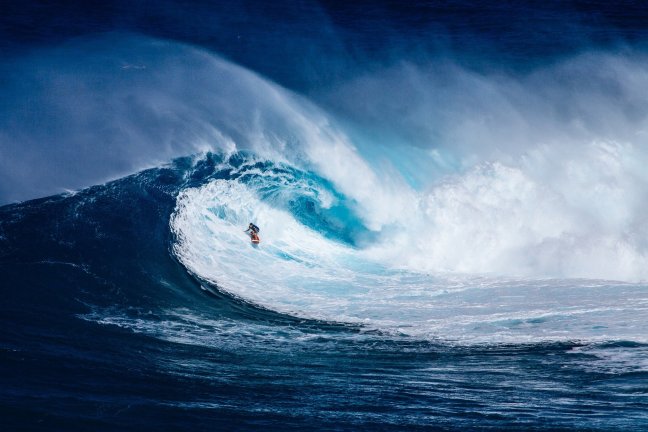
How to Surf a Tsunami

Restoration after a sudden trauma is not easy, but it is possible. In fact, you can even learn how to surf your tsunami, moving through it with skill and grace.


Many of us will face a personal tsunami at some point in our lives. We will be felled by a great wave bringing with it sudden change and loss. Perhaps your tsunami is in the form of the death of a loved one, maybe it is the loss of a job or a way of life or possibly you have lost the health you took for granted. My own tsunami was in the form of an unexpected divorce after being abandoned via a text message.

Regardless of the nature of your abrupt trauma, tsunamis have some common characteristics. By their nature, tsunamis are difficult to predict and even harder to prepare for. You have to face the realization that you cannot control your surroundings. The world that you knew is gone, swept away in a single move. You feel disoriented as you try to navigate this new realm.

Soon after the trauma, it feels like it will be impossible to rebuild. The odds seem insurmountable. The shock and grief permeate everything and make every move a struggle. Restoration after a sudden trauma is not easy, but it is possible. In fact, you can even learn how to surf your tsunami, moving through it with skill and grace.

The following are my healing tips for anyone who has been flattened by a tsunami.


Breathe

The blow of sudden trauma is physical. The body tenses as if anticipating another blow. The breath is the first to suffer; it becomes shallow and rapid behind a breast wrapped tight in a straightjacket of sorrow. Release it. It won’t be easy and it won’t be automatic, at least in the beginning. Set a reminder on your phone or computer to take several deep breaths at least once an hour. As long as the body is anticipating another blow, the mind will be as well. Sometimes it’s easier to train the body and allow the mind to follow.

Recognize the Moment

Understand that the way you feel right now is the way you feel right now. It is not how you will feel next year. It is not how you will feel tomorrow. In fact, it’s not even how you will feel in five minutes. Everything changes, including suffering. Just the realization that the current feeling is temporary makes it a little easier not to panic and feel as though you are drowning.


Goals

You are in the midst of change you did not ask for and did not want; however, that does not mean that you should simply throw yourself to the mercy of the sea. Take some time to think about what you want in your life. Formulate some goals — long-term or short-term, easy or next-to-impossible. It doesn’t matter; you can always change them. For now, it’s important simply to write them down and post them as a motivator during those difficult moments.


Mentors

After a tsunami, it is so easy to feel alone. It is tempting to curl up and hide in an attempt to protect yourself from further harm. You are not alone. There are others who can relate. Others who have been where you are and have rebuilt. Others who can extend a hand and help you find your way. These mentors may be in your life already or they may take the form of a counselor or pastor or even a group online. Accept their help — a difficult task is always made easier with assistance.


Patience

It’s hard to accept that everything can be destroyed in a blink yet it can take a lifetime to rebuild. Healing cannot be forced. It is not a task suited to lowering one’s head and barreling through. Healing is not linear. A bad day may follow a good one. Be gently persistent with yourself. Keep in mind where you want to be, but accept where you are.


Balm Squad

Assemble your balm squad — people and things that soothe you and bring you comfort. Fill your space with items that bring a sense of peace or joy. Take the time to visit places that make you feel good. Most importantly, seek out others that support you and encourage you. They are your best balm of all.


Restoration vs. Recreation

It’s easy to slip into the dangerous waters of “what if,” replaying the past and trying to find an alternate action that would have averted the tsunami. It’s easy but it’s also a dangerous game. What you had is gone. Healing has to begin with that understanding. Rather than try to recreate what was, focus on restoring a life. Just because it is different does not mean that it cannot be as good. Or even better!


Nourishment

Take care of yourself. Nourish your body with healthy foods and exercise. Make sure you’re sleeping. Nourish your mind with loving thoughts. Don’t be ashamed to ask a doctor for help if you need it. Medications can help to reset eating, sleeping and thought patterns when we cannot yet do it for ourselves. Your basic needs must be met before you will be able to work on healing.


Mindful Escape

When you are facing sudden trauma, it is easy to try to run away and escape your painful reality. You may seek oblivion in alcohol, video games, gambling, dating or media. You will need a break sometimes; it is okay to submerge yourself in distractions occasionally. However, be sure that you escape mindfully. Be present and aware so that you do not allow the distraction to become a habit because when you are in a weakened state, those habits have a way of consuming you.


Spin Doctor

Your trauma has a story, a tale that you most likely have spun again and again with you as the victim of the tsunami. Look at yourself as your own publicist, a spin doctor of your story. How can you rewrite your tragedy so that it is not all suffering? What can you be thankful for? What have you gained as a result of your loss? It will feel strange and even traitorous to find gratitude within your loss, but it can help you move beyond the pain.


Release

Find your outlets for release and restoration. Maybe you feel restored by playing with a baby or dog. Or, perhaps you are called to take a long walk in the fading sun. Maybe it’s a favorite yoga class or a certain sitcom that liberates you from the pain. You can never have too many avenues that provide freedom from the suffering; collect these outlets and apply them generously.


Don’t Wait

Healing from a tsunami is a difficult path. Don’t wait to live until you are healed; it is okay to find happiness along the way.

The trick to surfing a tsunami is not in trying to control the wave but in learning to how to flow through it.
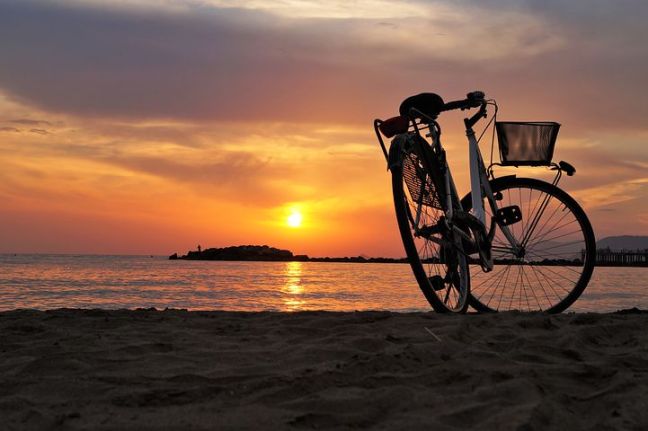

 

8 Things That Cannot Wait Until Tomorrow

I used to promise myself that I would have fun as soon as the weekend arrived. And then, I would push it off until the summer. I even let it get to the point where I resigned myself to more work and little play until retirement.

The timing was never quite right to let up on the responsibilities and to bring in the play. So I waited for the timing to be right.

Only it never was.

I changed my perspective once divorce arrived. Suddenly, everything that I had put away until later was gone. The anticipated future with my then-husband would never come.

In that moment, I decided that no matter what else was going on, I would make the time for these eight things because they are too important to put off until tomorrow.

Sometimes I’ve failed at my intention. But that’s okay (see number six below). Life is not about being perfect; it’s about being present. And by having an awareness of these eight things every day, you are fully present and making the most of your life.


1 – Appreciation

Have you said “thank you” today? Have you taken a moment to express gratitude for something or someone in your life? Have you shared your appreciation for others with others?

Gratitude is one of the most powerful tools we have. When we make the effort to consciously feel thankful, we are able to focus on our riches rather than on the perceived lack in our lives. When we express appreciation, we let others know that they are seen and valued.

Appreciation alters your view and shapes your reality. That’s some pretty powerful stuff. Why would you put that off when you can begin to use it today?


2 – Apologies

Some apologies happen in the moment (think of the knee-jerk “I’m sorry” that follows an accidental bump in a crowd). Others – the big ones – often get shelved. At first, we may refrain from taking responsibility. After all, the ego likes to point fingers. Then, even when we do become aware of our part, it may feel awkward or even scary to admit our wrongdoings and express remorse for any harm that it has caused.

While you’re waiting, the other person may be trapped within a narrative that they’ve constructed around the event, believing that they’re not worthy or deserving of an apology. It’s not easy to take responsibility for causing harm (especially when it’s unintentional), but it is the right thing to do. Saying sorry doesn’t mean that they will accept your apology, but it does mean that they are no longer waiting on you.


3 – Health

Health – or the lack thereof – has been prominent in my thoughts of late. I’m at an age where people’s lifestyle choices and/or genetics are beginning to catch up with them and my friends and coworkers are beginning to receive difficult diagnoses (Including my husband, who will go through cervical fusion next month. Based on his MRI, it’s good he didn’t postpone seeing the doctor.). In some cases, I’ve seen them adopt the “I’ll start tomorrow” attitude towards their health for years, delaying better choices or medical appointments in the belief that they still have time. And sadly, sometimes they don’t.

Whenever I have those days when I don’t feel like exercising or preparing healthier foods (because let’s face it, when we’re tired and stressed, ice cream and the couch sounds better than broccoli and a run), I remind myself that I’m lucky to have the opportunity to make better choices today. Because we never know what tomorrow may bring.


4 – Passions

What makes you, you?

We all have our passions, those interests that tiptoe into obsession and provide a sense of purpose and fulfillment. And we have (almost) all experienced the dearth of those passions when life’s demands and distractions increase.

Depending upon your particular interest, you may not be able to fully dive into it every day (I’m thinking of a friend here who loves to climb mountains). However, you can still do something every day that feeds into your passion (my mountain-clmibing friend enjoys planning her next adventure and spends time training her body for its demands).

Rediscover whatever it is that makes you feel alive. And then do it, at least a little bit, every day. Otherwise, you’re telling yourself that you’re not important and your passions don’t matter.


5 – Love Yous

It saddens me how many people I know that have never heard the words “I love you” from a parent or a spouse. Even when love is expressed in other ways (see The Five Love Languages for details) or is deemed to be understood (common in the case of parent to child), those words matter.

Make sure that the people in your life never have to wonder if you love them. Say the words. Write the words. Sing them if you want. Take the time to let the ones you love know that you love them. You don’t want to wait because tomorrow could be too late.


6 – Forgiveness

Forgiveness is a loaded word. In the way I’m using it here, it means that you let go of the weight of the wrongdoing that was done to you. It doesn’t require an apology, it doesn’t need a pardon. It simply says, “This is your burden to carry and I choose to let go of it.”

Often, the hardest person to forgive is ourselves. We give others the benefit of the doubt and turn a critical eye within. Forgiving yourself is a recognition that you were doing the best you could at the time and a promise that now that you know better, you’ll do better.

Anger, bitterness and self-flagellation are a heavy burden. Why would you wait until tomorrow to lighten your load?


7 – Smiles and Laughter

There are times in life when smiles are plentiful. And then there are those days or weeks or months when it seems as though the tears are a permanent fixture. It can feel wrong to give yourself permission to smile or to laugh during tragedy or even during periods of sustained effort and drudgery. So we often wait to smile until life brings us something to smile about.

There is certainly something to be said for acceptance, for understanding that sometimes life is just hard. And there’s even more to be said for being able to find the humor and the levity in any situation. Whoever taught you that laughter and tears are mutually exclusive was mistaken; they can go hand-in-hand. Make a habit of finding the smiles in every day.


8 – Mindfulness

We recently returned from a four-night cruise. One of my favorite parts was being disconnected from technology for the duration. After a brief period of discomfort from being away from the onslaught of information and, yes, distraction, I was amazed at how content I could be, well…just being.

Whether you follow a structured meditation practice, participate in prayer, use exercise as a form of moving meditation or simply take time out of your day to pause and breathe, mindfulness helps to reduce anxiety and increase a sense of peace. We often neglect this practice because it feels wasteful to take time out of our busy schedules to do nothing. Yet that space that nothing allows is exactly what our brains crave in order to be healthy. In other words, taking time out is too important to put off.


Curiosity Cap

Do you ever approach a new situation with the assumption it is going to be terrible?

Perhaps it’s the biting cold of your first winter run. Or the inaugural road trip with a young child. Or a medical procedure that carries the expectation of pain.

The potential list is endless; we greet new experiences with a suitcase full of expectation expressed as worries or complaints.

About something we’ve never done.

We anticipate the discomfort. The annoyances. The pain.

And by doing so, we prime the pump for reality to bear out our assumptions.

Helping to ensure that the anticipated awfulness comes to be.

There is a different way.

Put down that suitcase of expectations and put on that cap of curiosity.

My curiosity cap. And a reminder not to take things too seriously.

After all, this is something you haven’t experienced before, right? Or, even if you’ve done it prior, there are some variables that have been manipulated so that it is no longer the same event.

So rather than lead with a conclusion of full-on suckitude, approach with a sense of curiosity.

I wonder how the cold air is going to feel on my lungs.

It will be interesting to see how the baby responds to travel.

I’m intrigued to see what it feels like to have my body repaired.

And yes, you may find that it is terrible.

But you also leave the door open for the discovery that it’s not.

Get Fit Virtual Event

Discover the #1 shared secret that super achievers like Oprah, Richard Branson and Bill Gates link to their success

Do you have any idea what top performers in all walks of life have in common?

(Think about that for a moment!)

You might say they’re all brilliant or that they have amazing focus and determination. 

(Perhaps!)

But I’m sure you also know many high achievers who couldn’t make it through high school, let alone college.

(So you know it’s not just smarts!)


What is it then?


Believe it or not, it’s Fitness!

(And anyone can apply this to their own life for maximum benefit!)


Imagine what you could accomplish if you were totally Fit in Body, Mind and Spirit!


I’m excited to tell you that I’m part of an amazing video summit that teaches you exactly how to get Fit! You will learn how to tune into your body, your mind and your spirit to get whatever your heart desires!


Introducing this Special Video Summit hosted by my friend and colleague,

Dawn Berube:

Get Fit Virtual Event: Your #1 Resource to Achieve Your Goals, Cross That Finish Line and Stay Fit For Life!

And it’s free! Sign up here now.


Dawn and her speakers are inspiring!  Dawn shows you how to overcome whatever is holding you back from reaching your highest goals! You’ll learn how Dawn was able to transform a traumatic experience in her 20’s into a career and fulfilling life she lives today. Now as an exercise physiologist, personal trainer, running & swimming coach and meditation instructor, she knows the secret to getting fit and she can’t wait to share it with you.

Her message is simple. Get Fit. Be Empowered. Achieve Your Goals.

You Can Do It!

This doesn’t mean you aren’t already amazing. It just means learning to apply the secrets that top-performers apply to fulfill your dreams. This summit will show you how to do it!

Claim your seat at the video summit.

I join 21 amazing experts who share their insider secrets to getting Fit with you. You’ll get the inside track to feeling fit and fabulous in your body, your mind and your spirit to live an empowered life!


Join me and get FREE Access to the Get Fit Virtual Event: Your #1 FREE Resource to Achieve Your Goals, Cross The Finish Line and Stay Fit For Life.

Start your journey today.


Join me today!


P.S. Interviews will be released one a day for 21 days starting immediately. Don’t miss out on this transformational opportunity! http://www.getfitvirtualevent.com/lisaarends

How to Surf a Tsunami

Many of us will face a personal tsunami at some point in our lives. We will be felled by a great wave bringing with it sudden change and loss. Perhaps your tsunami is in the form of the death of a loved one, maybe it is the loss of a job or a way of life or possibly you have lost the health you took for granted. My own tsunami was in the form of an unexpected divorce after being abandoned via a text message.

Regardless of the nature of your abrupt trauma, tsunamis have some common characteristics. By their nature, tsunamis are difficult to predict and even harder to prepare for. You have to face the realization that you cannot control your surroundings. The world that you knew is gone, swept away in a single move. You feel disoriented as you try to navigate this new realm.

Soon after the trauma, it feels like it will be impossible to rebuild. The odds seem insurmountable. The shock and grief permeate everything and make every move a struggle. Restoration after a sudden trauma is not easy, but it is possible. In fact, you can even learn how to surf your tsunami, moving through it with skill and grace.

The following are my healing tips for anyone who has been flattened by a tsunami.

Breathe

The blow of sudden trauma is physical. The body tenses as if anticipating another blow. The breath is the first to suffer; it becomes shallow and rapid behind a breast wrapped tight in a straightjacket of sorrow. Release it. It won’t be easy and it won’t be automatic, at least in the beginning. Set a reminder on your phone or computer to take several deep breaths at least once an hour. As long as the body is anticipating another blow, the mind will be as well. Sometimes it’s easier to train the body and allow the mind to follow.

Read the rest here.