Courage

So much of it comes down to courage, doesn’t it?


The text from my ex husband read, “I’m sorry to be such a coward leaving you this way.”

That sentence contained the only truth he uttered.

He was a coward, choosing to hide his actions behind lies and then disappear without a conversation.

He was a coward, letting his fears keep him from asking for help or revealing his thoughts.

He was a coward.

But you know what?

So was I.

I never lied.

I never hid my actions.

But I still listened to fear and let it wrap me in its binds.

I was afraid of confrontation. In fact, one of the aspects of my first marriage that I enjoyed is that we rarely ever had confrontation. No wonder. He would lie and I would avoid.

I preferred to avoid anything ugly rather than face it head on. This made me all-too-willing to believe what he told me (Although, in my defense, nobody else knew he was lying either. He was damn good.).

I was so afraid of losing him that I was too cowardly to even consider it becoming a reality.

As though by not looking under the bed, the monster didn’t exist.

Perhaps the greatest gift I received from the end of the marriage was the gift of courage. It wasn’t unlike the journey the lion took to the great wizard of Oz. The cowardly one learned the wizard was an illusion but that courage could be built from within (with a little help from a liquid placebo). And that simply by tackling the journey (with the help of a few friends, of course), he found the bravery he always had and learned that it was characterized by action even in the face of fear.

Courage doesn’t mean you don’t hear fear. It means you don’t listen to everything it was to say.

Courage doesn’t mean that you’re immune to fear. It means it doesn’t paralyze you.

Courage doesn’t mean that you never doubt. It means that you trust yourself enough to make it through.


There were obviously many characteristics I considered critical in a second husband.

But one of the most important qualities I looked for was courage.

I needed to know that he would face any potential problems rather than hide.

I needed to know that he would speak the truth even if it was difficult.

And I needed to know that I could do the same.


So much comes down to courage.

The courage to see the truth.

The courage to speak the truth.

The courage to trust the truth.

The courage to face the truth.

And to know that it will be okay.

Even if you’re scared.


Our Bodies Lie to Us

Our bodies lie to us.

They send out hormones announcing an imminent threat to our well being when we take the podium or when we get into an argument with a loved one. Our heart rate increases at the thought of taking a test, and our immune system is compromised because of a noisy environment. We assume we are in danger because our body tells us so.

Our bodies lie to us.

They interpret so much stimuli (internal and external) as a threat and they respond with a cascade of physiological changes and adaptations that are referred to as the flight or fight response. It begins in the amygdala, a rather primal region of the brain that responds to perceived dangers. The hypothalamus taps the adrenal gland on the metaphorical shoulder to let it know to release adrenaline which leads to a release of cortisol, known familiarly as the stress hormone. Your brain doesn’t want to make you stressed; it wants to keep you alive. Click here to read the rest and learn how to outsmart the lie.

Turn Away

I frequently come across posts or emails written by people in the early aftermath of infidelity. The writings are often angry. Powerfully so, the words slashing across the screen like a serrated blade. You can feel the power, the fury. Each sentence an explosion of outrage towards the unfaithful partner, the affair partner and even circumstances in general.

When I encounter these posts, I want to turn my head in horror.

Not because of the writer.

But because of myself.

I recognize myself in those outbursts, those paragraphs of wrath-tinged keening.

I recollect responding in that same manner. With that same rage blinding my sight and deafening my ears.

I identify with the deep upswell of anger formed by betrayal and a sense of unfairness.

And I want to turn away.

I don’t want to remember that part of myself.

I don’t want to perhaps catch a glimpse of residual fury tucked away.

I don’t want to admit the power that anger held over me.

I see those posts and I remember my early journals, the pen digging deep trenches into the paper, pretending it was gouging flesh from his face. All I wanted to do was to lash out, to make him experience just a fraction of the pain he had inflicted upon me. It was ugly. And it made me ugly.

And I don’t like to face that, to remember the vileness of the anger, any potential for compassion forced out by blind indignation. I don’t like admitting that I wanted to respond to my pain by creating pain in someone else.

And so I want to turn my head. To deny that I once felt that same way.

But that’s becoming what I promised I wouldn’t – someone who writes about divorce only from the scrubbed and polished perspective of the other side.

I want to turn my head in horror.


But that’s not honest.

The horror is real.

The anger is real.

And facing it is the only way to lessen its grip.

So I read. And I remember. And I try to reach out.

Because anger is simply pain screaming to be heard.

A Woman I Used to Know

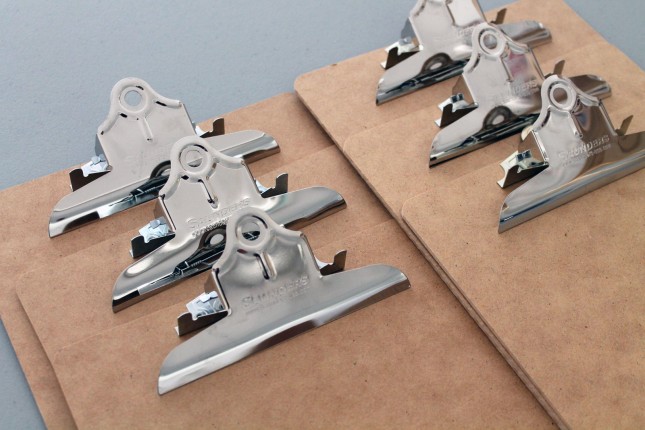
The student pulled a clipboard from the bin.

“Who’s Mrs. —?” he inquired, reading my old married name off the back of the clipboard.

I smiled, “Oh, just a woman I used to know a long time ago.”

Ain’t that the truth.


Many of the items in my classroom are labeled with my old name. When students ask who she is, I’m vague. Most have concluded that she is a retired teacher who gifted many of her classroom items to me.

In a way, they’re right.

She’s certainly retired. Not from teaching, but the old Mrs. — is no longer around. There are those who remember her and tell stories of those days, but they are behind us now.

Mrs. — has been replaced.

No, that’s not quite right.

She’s been transformed.


One of the more difficult aspects of a major life renovation such as divorce is that we struggle to imagine ourselves any way other than we are in that moment. If you asked the old Mrs. — who she was, she would speak of her role as teacher and tutor, she would talk lovingly about her husband, she would tell stories of her dogs and you would be cautioned from getting her on the subject of plants.

In those days when all was washed away, I remember feeling homeless in my soul. I didn’t know who I was anymore. Who I would become. I knew I would never be the same yet I couldn’t imagine anything but what I was.

And that was a scary place to be. Not the old me anymore and yet not the new one either. A limbo of self.

Scary and yet empowering. Because when you’re rebuilding your life and your identity from the ground up, you have the power of choice and the wisdom of experience. And that’s a powerful pair.

And the main choice I made was to be happy. Not happy because of the tsunami divorce. Happy in spite of it.

Everything else was secondary.


And now, here I am. Mrs. again. Dog momma again. About to plant again.

On the surface, much may be the same.

But beneath?

Everything has changed.

Because you can’t go back.

But you can always move on.


The old Mrs.— has retired. And now she’s just a woman I used to know.

And if you happen to see her, please tell her thanks for clipboards.


Debridement

When I was fourteen, I spent several months doing intensive outpatient physical therapy for an arm that had decided to go on strike. I was receiving therapy at an excellent rehabilitation hospital that primarily served inpatients who were working to overcome severe injuries and illnesses.

I spent most of my time in the outpatient gym, a large room outfitted with various tables, pulleys and other torture devices.

But that’s not where the real torture occurred.

Everyone in the outpatient room was pretty much okay, maybe a 6 or 7 on a Likert scale where 1 is dead and 10 is Olympian-healthy. We may have grumbled and cursed and even shed some tears, but we didn’t know what real torture was.

That was reserved for a couple of small, private therapy areas near the pool, just down the hall from the outpatient area. Those treatment rooms were primarily utilized by the burn patients. That was the hell-hole they had to venture to on a regular basis to have their wounds debrided.

For those of you unfamiliar with the process, this is where the patients are placed in a whirlpool tub and the old, dead or dying skin is removed through mechanical means. The nerves beneath the necrotic tissue are raw, screaming with each assault. Often, the patient’s screams could be heard as well echoing down the hall.

It’s a brutal process, especially for those who have burns over a large area of their body. They would begin to feel healed, a barrier forming over their exposed tissue. But the skin formed too soon, before the blood supply was ready to keep up. So that barrier, although it appeared intact, was really an impediment to healing. If left on its own, the dying tissue would spread infection to the rest of the body. And so the old would be removed to allow fresh real estate for new, healthy skin to grow.

For most of us in the outpatient gym, our healing journeys were pretty linear. The data on our charts and the weights on our pulleys spoke of continuous improvement. We could see the impact of our efforts on a weekly, if not daily, basis.

For those scorched souls that I saw wheeled down the corridors and heard wailing down the halls, a linear path to healing was unthinkable. They would make progress only to start back again after being knocked down by infection or delayed healing. I’m sure on many days, getting healthy felt like an impossibility to them.

But in many cases, it did happen.

I remember one man in particular. He sat next to me one day as we both we on the upper body cycle (picture bicycle pedals that you power with your arms). My right hand was fastened to the handle with an adhesive wrap, but other than that minor adjustment, I was pedaling along just fine.

The man next to me? His fingers gripping the handles had burned to not much more than nubs and kept slipping off the pegs. The scars wove up his wrists, disappearing under his long sleeves. I wondered how far the scars extended. Looking down, I saw his unscathed legs visible beneath his shorts. They looked somehow wrong on him, as though the scars had become his normal tissue and the unblemished flesh belonged to someone else.

We chatted that day as we both rotated our pedals to nowhere. He spoke of being burned in a grilling accident, the flames licking up the lighter fluid and developing a taste for human flesh. He told me he was hospitalized for several weeks and then in the inpatient unit of the rehabilitation center for many more. He had been discharged recently and was in the early stages of outpatient therapy.

I asked him about those treatment rooms, about the screams we could hear down the hall. I asked how it felt, both physically and psychologically, returning for more even knowing what was in store.

He spoke of the pain, both of the body and of the mind. But he said it with a levity that surprised me.

He told me how before each treatment, he reminded himself that the debridement was removing the old, the dead, the poison. He saw the pain as the death throes of his enemies, their waste allowing new life to form. He shared the minor successes that were major celebrations. Even though he had setbacks, he never let them become permanent, choosing instead to focus on the slow, but steady improvement. He pedaled that day, not with a grimace belying the pain I knew he felt, but with a smile, happy to be alive and moving.

I learned two things from him that day-

Be careful what you complain about. Someone always has it worse.

And time doesn’t heal all wounds. It debrides them.

Allowing them to heal.