
Wasted

“I’ve wasted half my life,” I wailed to my friend from my spot curled up against the doorframe on her checkered kitchen floor.

She turned from loading the dishwasher, “Don’t ever say that. Nothing is ever a waste.”

At that time, I certainly didn’t agree with her. After all, I had just realized that some or all of the past sixteen years had been a lie. I learned that the man I pledged everything to had been manipulating and conning me. I was in the process of losing everything I worked so hard for – from the house to the savings to even the dogs.

I felt defeated.

It was not unlike spending money and time anticipating a lavish vacation only to come down with the stomach flu upon arrival. Only this vacation spanned the better part of two decades and wiped out more than just my appetite.

I wondered how I would ever come to terms with squandering sixteen years. After all, I could rebuild my finances, find a new home and even a new husband, but time was one thing I could never get back.

I gave most of my teenage years and all of my twenties to this man.

Years that now felt wasted. Opportunities passed by and paths never taken.

I felt like I had been led blindly down a dead-end road. A worthless journey to nowhere.

I grew angry, blaming him for stealing my years. My youth. My potential.

I wrote scathing words in my journal about the unfairness of it all, the pointed tip of my pen slashing through the pages. I spent hours crying about the loss, not only of the future, but of my past.

One night, the sobs suddenly stopped and as my breath hitched down to normal, I realized that these hours spent mourning the “what ifs” were the real waste. Not the years I spent living, even if it that life ended.

In that moment, curled in a fetal position on the worn and tear-stained flannel sheets in my friend’s spare bedroom, I vowed to not waste any more time thinking about what could have been. I promised myself that I would never again view those years as wasted.


Because nothing is every wasted is ever wasted if we enjoyed it in the moment.

Nothing is ever wasted if we learn and grow from the experience.

And nothing is wasted because it helps shape who we are today.


To see those years as wasted was really a reflection of how I saw myself after the piercing pain of rejection.

But those years weren’t worthless and neither was I.

Those moments may not have been deposited into the life I expected, but they turned out to be an investment into an even better future.


Choosing to see those years as anything-but-wasted was a gift of forgiveness to myself. I made the best choices I could have at the time. And now I know better and I choose better.

And I choose to make sure to live a life that I will never feel wasted.
Debridement

When I was fourteen, I spent several months doing intensive outpatient physical therapy for an arm that had decided to go on strike. I was receiving therapy at an excellent rehabilitation hospital that primarily served inpatients who were working to overcome severe injuries and illnesses.

I spent most of my time in the outpatient gym, a large room outfitted with various tables, pulleys and other torture devices.

But that’s not where the real torture occurred.

Everyone in the outpatient room was pretty much okay, maybe a 6 or 7 on a Likert scale where 1 is dead and 10 is Olympian-healthy. We may have grumbled and cursed and even shed some tears, but we didn’t know what real torture was.

That was reserved for a couple of small, private therapy areas near the pool, just down the hall from the outpatient area. Those treatment rooms were primarily utilized by the burn patients. That was the hell-hole they had to venture to on a regular basis to have their wounds debrided.

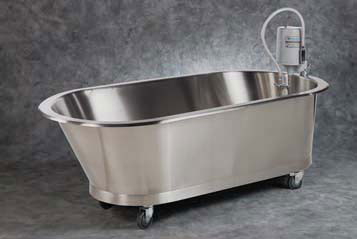
For those of you unfamiliar with the process, this is where the patients are placed in a whirlpool tub and the old, dead or dying skin is removed through mechanical means. The nerves beneath the necrotic tissue are raw, screaming with each assault. Often, the patient’s screams could be heard as well echoing down the hall.

It’s a brutal process, especially for those who have burns over a large area of their body. They would begin to feel healed, a barrier forming over their exposed tissue. But the skin formed too soon, before the blood supply was ready to keep up. So that barrier, although it appeared intact, was really an impediment to healing. If left on its own, the dying tissue would spread infection to the rest of the body. And so the old would be removed to allow fresh real estate for new, healthy skin to grow.

For most of us in the outpatient gym, our healing journeys were pretty linear. The data on our charts and the weights on our pulleys spoke of continuous improvement. We could see the impact of our efforts on a weekly, if not daily, basis.

For those scorched souls that I saw wheeled down the corridors and heard wailing down the halls, a linear path to healing was unthinkable. They would make progress only to start back again after being knocked down by infection or delayed healing. I’m sure on many days, getting healthy felt like an impossibility to them.

But in many cases, it did happen.

I remember one man in particular. He sat next to me one day as we both we on the upper body cycle (picture bicycle pedals that you power with your arms). My right hand was fastened to the handle with an adhesive wrap, but other than that minor adjustment, I was pedaling along just fine.

The man next to me? His fingers gripping the handles had burned to not much more than nubs and kept slipping off the pegs. The scars wove up his wrists, disappearing under his long sleeves. I wondered how far the scars extended. Looking down, I saw his unscathed legs visible beneath his shorts. They looked somehow wrong on him, as though the scars had become his normal tissue and the unblemished flesh belonged to someone else.

We chatted that day as we both rotated our pedals to nowhere. He spoke of being burned in a grilling accident, the flames licking up the lighter fluid and developing a taste for human flesh. He told me he was hospitalized for several weeks and then in the inpatient unit of the rehabilitation center for many more. He had been discharged recently and was in the early stages of outpatient therapy.

I asked him about those treatment rooms, about the screams we could hear down the hall. I asked how it felt, both physically and psychologically, returning for more even knowing what was in store.

He spoke of the pain, both of the body and of the mind. But he said it with a levity that surprised me.

He told me how before each treatment, he reminded himself that the debridement was removing the old, the dead, the poison. He saw the pain as the death throes of his enemies, their waste allowing new life to form. He shared the minor successes that were major celebrations. Even though he had setbacks, he never let them become permanent, choosing instead to focus on the slow, but steady improvement. He pedaled that day, not with a grimace belying the pain I knew he felt, but with a smile, happy to be alive and moving.

I learned two things from him that day-

Be careful what you complain about. Someone always has it worse.

And time doesn’t heal all wounds. It debrides them.

Allowing them to heal.

How to Transform Your Life When You’re Short On Time

Seedling

If you’re anything like me, you find that your life’s to-do list grows longer each year while your available time seems to grow shorter. Perhaps you make the same resolutions each season (lose weight, eat better, stress less… sound familiar?) only to find that you do not have the freedom in your schedule to fulfill them. I know I find that the longer I live, the more I want to accomplish, and yet the responsibilities I carry continue to grow. The following are five strategies that I have used to transform my life that don’t take much time (or money!).


Read the rest on The Huffington Post.

Work is Like a Gas

Chemistry 1965

Work is like a gas.

It expands to fill its allotted space.

As a teacher, I have fixed hours: 8:30-4:30 M-F. That time is entirely consumed with meetings, conferences, tutoring and, let’s not forget, instruction. That means that I have to find time outside of that window to prepare lessons, write materials and grade papers.

In my old life, I let that work expand unbounded into all areas of my life. I showed up at work at 7:00 when the custodians were the only other life in the building.  I worked in the evenings, grading papers while watching a movie with my husband. Half of my Saturday would be spent in front of the computer, planning lessons and writing materials. Even vacations weren’t sacred – I would frequently have a bag of work by my feet as we drove off to some destination.

During the divorce, I realized that I needed to set boundaries. I still came into school early, but I refused to take work home. I liked that morning time – it was bound by the bell that started the day. Much to my surprise, I found that I could still get done much of what I needed to. The lessons weren’t as fleshed out, but my years of experience had long since made that unneccessary. The activities weren’t as neat and typo-free, but it turns out that 8th graders don’t really care (or even notice) and a type doesn’t limit learning. Occasionally, I felt rushed or unprepared when something came up unexpectedly at the last moment. But that happened when I worked all of the time, too.

Last year, when I started my 28 day mediation challenge, I pushed my start time back to 7:30 so that I a few precious moments in the morning where I could meditate without having to get up at an even more ridiculous time. It was heaven. I arrived at work rested and calm. The centered mind more than made up for the missing half hour.

This year, I told myself that I would start the year by going in at 7:00 to allow time for the added workload of the beginning of the school year. I promised myself that I would move that back to 7:30 by the end of the 1st quarter.

It’s now the 3rd quarter and I’ve only walked through the doors after 7:00 a handful of times. In fact, it’s been closer to 6:45 on most mornings.

What went wrong? Why am I allowing this time? Do I really need it or am I just afraid that I will fall behind if I do not allow that extra half hour? I’ve been feeling unbalanced with work this year – it’s taking more energy and causing more stress than I would like.

What would happen if I narrow its container? Bound it with walls that restrict its flow? Would that found time restore balance?

I intend to find out.

Beginning today.

Dulling the Knife’s Edge

This was one of my first posts on this site (back when I had all of 4 followers, I think). I put it on Facebook today and it’s been generating some interesting feedback so I thought I would repost it again here. Enjoy:)


knives serious

When I first felt the raw, unwashed trauma of my divorce, I would direct anger and indignation towards anyone who blithely told me that time heals all wounds.  How foolish they must be, I thought.  They must have never been through any challenges.  How could the mere rotation of a clock hand soften the shock and pain of being utterly betrayed from the inside out?  I scoffed at the notion.

Luckily for me, time continued on, ignorant of my harsh view of it.

The changes were so subtle at first, I did not notice them.  The improvement from one hour to the next too small to be measured.  But it was there nonetheless.

A clock made in Revolutionary France, showing ...
A clock made in Revolutionary France, showing the 10-hour metric clock. (Photo credit: Wikipedia)

As time continued its relentless linear path, my pain followed suit in an inverse relationship, although in a much more randomized pattern.  I became accustomed to the things causing my discomfort, and so I was not as aware of them.  The pain, once so alien, became familiar and no longer needed attention.  Anniversaries came and went and I survived. I layered memories, replacing painful ones with fresher happier ones. The hardest times occurred with diminishing frequency  and lessening intensity.

I still dismiss the notion that time will heal all wounds; time is no surgeon, ready to excise the malignant past.  However, time does dull the knife’s edge of past traumas, lessening their ability to cause that searing pain, that sharp intake of breath when the blade pierces your heart.  The pain becomes duller, more distant, more manageable.  It’s as though its initial razor edge is dulled by time dragging it through the rocks lining the river of life, new experiences whittling away the once-sharp edge.

River Rocks and Clouds Reflected

While waiting for the blade of your trauma to dull, carry lots of bandages and always be wary of the edge.