
Betrayal

Today would have been my thirteenth wedding anniversary. Thirteen years ago today, I married my high school sweetheart on an empty beach in Florida. The photos from that day capture the love we had. The youth. The innocence. The promise.
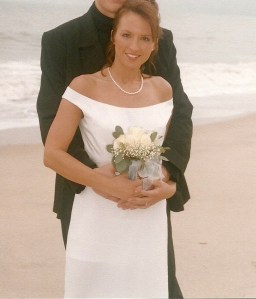
What would have been our tenth anniversary was the hardest. He has left five months prior and we were still legally married. I used a psychiatrist’s appointment as an excuse for a sick day off work (the last day before winter break and a planned trip to San Antonio). After the morning appointment, I took a Xanax (one of three I took during the whole experience) and spent the day in my bed in my friend’s guest room. I distinctly remember not wanting to be alone and feeling reassured that her husband and then her father were going to be there throughout the day. I couldn’t muster up the energy to be social. I don’t think I ever made it down stairs, but I remember listening to the sounds coming in my door. I spent the day in a fugue state – not awake and not asleep. I tried to read, but couldn’t. I tried to sleep, but that eluded me too. I cried. A lot. I wrote. I cried some more. I could not face that anniversary that wasn’t.
By the would-have-been eleventh anniversary, I was in a much better place. I was situated in my own apartment and in the early stages of a new relationship. It was still a very difficult day. A sad day. I went to work. I functioned. But I also broke down and cried a few times. I was afraid to be alone that evening and spent the night at Brock’s. I still mourned what had been lost, but I also saw hope for the future.
Last year, on would be anniversary number twelve, I felt okay. I didn’t feel like I was a damn holding back a wall of sadness that was waiting to crush me. I felt okay. But I didn’t trust it. I remember tiptoeing through the day, as if I might release the pain if I tread too hard. The pain didn’t come. I spent a normal (as normal as a middle school can be) day at work and spent a quiet evening on the couch with Brock.
And today? On lucky number thirteen? I’m alone at the moment and I okay. No, I’m more than okay. I’ve been aware of the date but it hasn’t hurt. I left a note for Brock this morning as this same date is a difficult anniversary for him for different reasons) and I received an image with the following quote from him on my Facebook:
Good relationships don’t just happen. They take time, patience, and people who truly want to be together.
That definitely helps keep any demons at bay:) I came home to Brock and his friend, who just had knee surgery, on the couch laughing and playing Call of Duty. It was a scene that made me smile – two friends helping each other and laughing while doing it. By the time I got back from the gym, Brock was at ju jitsu, where he will be until after I’m asleep (I’m pitiful in the evening). I’m alone on December 18, but I’m not alone. I’ve let people into my heart and they are with me even now. Oh, and Tiger and Maddy too:) It’s hard to feel alone when you have a 90 lb pit bull on your lap!

Anniversaries that aren’t are strange things. They are meaningless and yet we mark them. It’s a time when we used to reflect upon the past years of the relationship. Now that the relationship is over, we find ourselves playing a game of “what if?,” wondering what this day might have looked like otherwise. These anniversaries are so piercing at first, the loss overwhelming and threatening to undo a year’s worth of work. But they don’t have to stay that way. We can let them soften, let them become mere curiosities on the calendar. I see it like a number line. I used to count the positive numbers away from my wedding day. Now, I am on the other side of zero, counting away from my divorce date. I can see today as would-have-been thirteen or I can celebrate it as it-is-three. I bet you can guess which view I choose:)
So, I am wishing myself a happy anniversary. And I am celebrating three years of loving and laughing and learning. That’s an anniversary I can celebrate every year!
It is a moment between moments where we are lost and searching, broken and vulnerable, wanting and open. In those moments between moments we learn who we really are and what we are capable of.
Read the rest of my post on elephant journal.


When I was a teenager, I identified with the term ‘warrior.’ I liked the sense of quiet power the word conveys and I sought the wisdom that often accompanies it. As I moved into adulthood, I lost my warrior. It was replaced with scholar, wife, teacher and other personas. When I met Brock, who very much embodies the idea of warrior, I started to find my own power again.
As is often the case with Brock and I, we have found ourselves exploring the same idea from multiple perspectives. I picked up the audiobook, Way of the Peaceful Warrior: A Book That Changes Lives from the library a few weeks ago. I had read this back in high school, but had completely forgotten about it until I saw it on the library shelf. I’m only a couple chapters in, but I’m finding that this book has a very different impact on me than it did twenty years ago. Then, it was just a book, teaching me about abstractions. Now? I’ve lived it. Life has been my teacher and the book is simply the Cliff Notes.
Brock has been reading The Warrior Ethos. It hasn’t been passed to me yet, so I cannot comment too much. I know that I love the excerpts that he has shared and the conversations it has spurred.
This is what Brock has to say about warriors, inspired by The Warrior Ethos:
“The term warrior is often thought of as applying to an individual who fights, such as a soldier or martial artist. However, I believe we are all warriors of life and to that extent most of us live by some sort of moral code that guides us. We change as we grow and we are always trying to figure out our place in life, whether it be professionally, personally or internally. Your ethos is just that – yours and yours alone. It should speak to your soul and if no one else gets it then that is perfectly okay.”
Here is part of Brock’s warrior ethos:
1) Set the standards by leading by example.
2). Never ask a teammate to do something you have not already done or are not willing to do.
2) The team is more important than any one person within the team.
3) Think of the needs of your teammates prior to your own.
4 ) Let your decisions be guided with just cause, compassion and respect.
5). If you share all you have with your teammate you will be rewarded with a with a wealth of knowledge, skill and most importantly, you will understand what loyalty truly means.
6). Listen more than you talk.
7). Selflessness produces courage because it binds people together and proves to each individual that they are part of a team.
8). Embrace adversity not from the flank but head on with confidence, courage and conviction.
9). Let your life be guided by the light of the sun and the moon and not the empty darkness of nothingness.
10). Courage to me is defined not by the absence of fear but rather having fears and facing them regardless of the danger to oneself.
I look forward to developing my own warrior ethos as I yet again embrace my inner warrior.
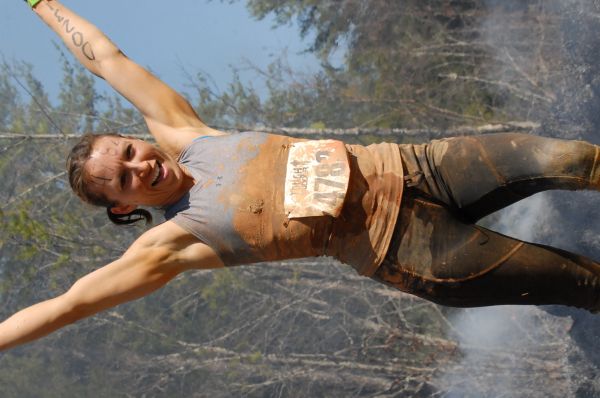
“Whatever you are physically…male or female, strong or weak, ill or healthy–all those things matter less than what your heart contains. If you have the soul of a warrior, you are a warrior. All those other things, they are the glass that contains the lamp, but you are the light inside.”
― Cassandra Clare, Clockwork Angel
“A warrior does not give up what he loves, he finds the love in what he does”
― Dan Millman, Way of the Peaceful Warrior: A Book That Changes Lives
“When one has nothing to lose, one becomes courageous. We are timid only when there is something we can still cling to.”
― Don Juan
“A warrior acknowledges his pain but he doesn’t indulge in it. The mood of the warrior who enters into the unknown is not one of
sadness; on the contrary, he’s joyful because he feels humbled by his great fortune, confident that his spirit is impeccable, and
above all, fully aware of his efficiency. A warrior’s joyfulness comes from having accepted his fate, and from having truthfully
assessed what lies ahead of him.”
― Don Juan Matus
“Even in times of trauma, we try to maintain a sense of normality until we no longer can. That, my friends, is called surviving. Not healing. We never become whole again … we are survivors. Even in times of trauma, we try to maintain a sense of normality until we no longer can. That, my friends, is called surviving. Not healing. We never become whole again … we are survivors. If you are here today… you are a survivor. But those of us who have made it thru hell and are still standing? We bare a different name: warriors.re today… you are a survivor. But those of us who have made it thru hell and are still standing? We bare a different name: warriors.”
― Lori Goodwin
When tragedies happen, we seek understanding. We want to diagnose and cure. We often try to control our surroundings and the actions of others.
We want to feel safe. It’s a basic need. That desire for security is so primal, so strong, that it can cause us to behave irrationally. I experienced this myself in my teenage years. From my softmore year in high school to my freshman year in college, I had 13 friends or mentors die. I will never forget receiving the news of the final two. I was in Austin for college when I called a friend back home in San Antonio to see about getting together on an upcoming break. She told me the news about the latest two deaths.
I broke. I simply couldn’t handle any more loss. My reaction? I shrunk my world. I no longer stayed in contact with high school friends. I built walls to keep out new friends. My then-boyfriend (now ex-husband) was the only one that I allowed to stay close. It worked. By shrinking my world, I eliminated the potential for hearing about or being affected by tragedy. The odds were stacked in my favor. After all, I only had one person in my inner circle.
And then there were none. My greatest fear came true; I lost him as well. Surprisingly, I was okay. I realized that my old ways of living in my walled-off world simply guaranteed less happiness at the time and yet provided no guarantee against loss in the future. I grew less afraid. More willing to take risks. I let people get close. Some have stayed, others have moved on. That’s okay. I am figuring out how to live with the natural cycles of growth and decay rather than try to fight against them.
It’s natural to examine your surroundings after a tragedy. To evaluate the weaknesses around you and to shore up any breaches in the hull. That increased security always has a tradeoff, however. It’s up to you to decide if that particular exchange is worth it.
More than a million people die in traffic accidents worldwide each year. We take precautions to keep this from happening. We gladly pay extra for cars with added safety measures, we sacrifice some comfort when we pull the seatbelt around our chests, and we write and enforce laws that limit who can drive and under what conditions they can operate a vehicle. I think we can all agree that these are reasonable measures; they balance security and freedom. Yet, how many of us look at the statistics for traffic fatalities and decide to never enter a car again? Very few. The tradeoff simply isn’t worth it.
It can be scary out there. Recent events have shown us that we cannot assume safety in our theaters, malls, or schools. There can be a temptation to scale back, pull into a shell and seal it shut. Like with me after the deaths, it does tilt the odds in your favor, but it doesn’t eliminate the risk. And, speaking from experience, life behind walls is no way to live.
Fear is an important feeling. It tells us to run when we are being chased. It tells us to seek shelter when we are under attack. It tells us to avoid high and unstable cliffs or dangerous stunts. However, fear also tells us not to love. It whispers avoidance of risk even when those chances can lead to something great. Fear tells you to hunker down and wait rather than live. Listen to your fears. But you don’t have to believe everything they say.
So continue to wear your seatbelt, but don’t neglect to drive your life.

 Lessons From the End of a Marriage