Bad Things Happen When You Aim Instead of Throw

“Bad things happen when you aim instead of throw.”

I heard this quote on NPR during some story on MLB pitchers. I missed the rest of broadcast as my mind made sense of those words, mental fingers untangling the knot of words.

I’ve been working through a meditation series on anxiety the past month and trying to become better in my “real life” of implementing the mediation strategy of “noting.” This particular series encourages a two-step noting process, where you first identify if you’re thinking or feeling and then further recognize the quality of your thought or feeling – positive, negative or neutral.

And it’s been eye-opening.

The thoughts that tend to cloud my vision are almost entirely of one particular variety. So much so that I added a third option to step one: thinking, feeling or planning.

I barely ever note the first two. The third? It’s a constant note, as though I’m stuttering. Planning. Planning. Planning.

Planning how I’m going to approach this one concept with my 6th graders. Planning when I need to do laundry so that it doesn’t interfere with my other plans. Planning what to wear the next day. And the next. Planning to plan my grocery list. I even find myself planning to return to the breath, once I finish planning of course.

Ugh.

It has a neutral tone, there’s no sense worry or concern in it. But it’s obviously rooted in anxiety, a need to think and strategize for every possible outcome.

I’m aiming ten times for every one throw.

And that’s not good.

In my chosen career as a teacher, I have to plan. This year, with three accelerated preps, I have to PLAN. My days are scheduled down to the minute and I have to plan how to fill every one of them with meaningful content and activities.

When I first started teaching, my plans were rigid. Every detail was fully thought out prior to the start of the day and I would get flustered when an unplanned fire drill unexpectedly eroded away half of second period.

Over time, I grew to trust myself and my instincts in the classroom. My well-written plans dissolved into brief words jotted down in a sequential list or placed into small calendar squares. The mental work still happened, lessons being tweaked in the shower or thrown out on the morning drive, but the obsessiveness about the detail faded as I grew more confident with my abilities and insights.

I relaxed into the planning more, less worried about a forgotten photocopy or dropped detail. I knew that it wasn’t the end of the world. I was aiming and throwing in relatively equal measure.

And then this year happened. And with it, my trust in myself unhappened.

My planning has become all-consuming. Partly of of necessity. And partly (hey, 80% is still part! 🙂 ) from what I put on myself.

img_7094
My daily reminder list. I often neglect the last point. My students help remind me:)

At work, I’m succeeding.

In my life, I’ve been too busy aiming.

Duly noted.

img_6539
For my fellow math geeks:)

Our Bodies Lie to Us

Our bodies lie to us.

They send out hormones announcing an imminent threat to our well being when we take the podium or when we get into an argument with a loved one. Our heart rate increases at the thought of taking a test, and our immune system is compromised because of a noisy environment. We assume we are in danger because our body tells us so.

Our bodies lie to us.

They interpret so much stimuli (internal and external) as a threat and they respond with a cascade of physiological changes and adaptations that are referred to as the flight or fight response. It begins in the amygdala, a rather primal region of the brain that responds to perceived dangers. The hypothalamus taps the adrenal gland on the metaphorical shoulder to let it know to release adrenaline which leads to a release of cortisol, known familiarly as the stress hormone. Your brain doesn’t want to make you stressed; it wants to keep you alive. Click here to read the rest and learn how to outsmart the lie.

Flight, Fight or Breathe

Our bodies lie to us.

They send out hormones announcing an imminent threat to our well being when we take the podium or when we get into an argument with a loved one. Our heart rate increases at the thought of taking a test and our immune system is compromised because of a noisy environment. We assume we are in danger because our body tells us so.

Our bodies lie to us.

They interpret so much stimuli (internal and external) as a threat and they respond with a cascade of physiological changes and adaptations that are referred to as the flight or fight response. It begins in the amygdala, a rather primal region of the brain that responds to perceived dangers. The hypothalamus taps the adrenal gland on the metaphorical shoulder to let it know to release adrenaline which leads to a release of cortisol, know familiarly as the stress hormone. Your brain doesn’t want to make you stressed; it wants to keep you alive. It has to assume that any perceived threat is valid and it responds by stimulating an increase in blood pressure, blood sugar, heart rate and respiration. The blood flow is increased to your major muscle groups and diverted away from non-essentials, like digestion and immunity (after all, it doesn’t matter is you digest that steak or ward off that cold if you fall to the saber tooth in the next few minutes).

Our bodies lie to us.

And we so often listen. We may or may not be aware of the stressor, but we are certainly aware of our body’s response. We feel the agitation, the unease in the gut. We instinctively want to lash out, to attack the threat at its source. Or, we elect the other option and bury our heads, fleeing from the danger through action or addiction. If all threats were as simple as a saber tooth, this strategy would be effective. After all, a saber tooth and a human cannot peacefully coexist. The problem comes in that our modern lives possess endless saber toothed imposters, threats from every angle. Some of these dangers can be be effectively fought (a mistaken bill) or fled from (an obnoxious landlord). But, in many cases, we have to find a way to coexist with these imposters. They do not directly threaten our lives but, if we allow them, they can wear away at our defenses by overtaxing our adrenal system.

Our bodies lie to us.

They tell us that we must fight or flee. That we have only two choices. But there is a third option available. An option that will counteract the cascade started when the brain senses a threat. An option that teaches the body that the threats are not real and that you can be peaceful alongside of them. An option that uses the mind to teach the body.

Just breathe.

That’s it. It seems so simple, doesn’t it? But it’s not, especially when your body is screaming at you to move your fists or your feet. It’s not easy to trust, to let go of the impulse and to stay with the breath. It’s not easy to encourage the breath to slow and to allow to heart to follow suit.

Mindfulness meditation changes the body. It removes cortisol from the blood, essentially turning down the dial on the body’s alert system. Even more powerfully, meditation causes changes at the cellular level, counteracting the influence of flight or fight.

Our bodies lie to us.

They tell us that we do not have a choice. That if something is stressful, we have to be stressed.

Instead of moving your body, try moving your mind.

The mind knows the truth. We are only stressed if we allow ourselves to be. So, instead of fighting or fleeing,

just breathe.

Unless the saber tooth is real. Then, please run like the wind:)

How to Transform Your Life When You’re Short On Time

Seedling

If you’re anything like me, you find that your life’s to-do list grows longer each year while your available time seems to grow shorter. Perhaps you make the same resolutions each season (lose weight, eat better, stress less… sound familiar?) only to find that you do not have the freedom in your schedule to fulfill them. I know I find that the longer I live, the more I want to accomplish, and yet the responsibilities I carry continue to grow. The following are five strategies that I have used to transform my life that don’t take much time (or money!).


Read the rest on The Huffington Post.

Taming the Monkey Mind: Taking the Monkey for a Ride

My monkey mind has been unruly of late. It’s been delivering excuses to refrain from sitting quietly faster than McDonald’s serves up burgers. And the excuses are about as palatable.

I could list those excuses, rationalize away my lack of mindfulness. But what’s the point? It’s just noise. Distraction.

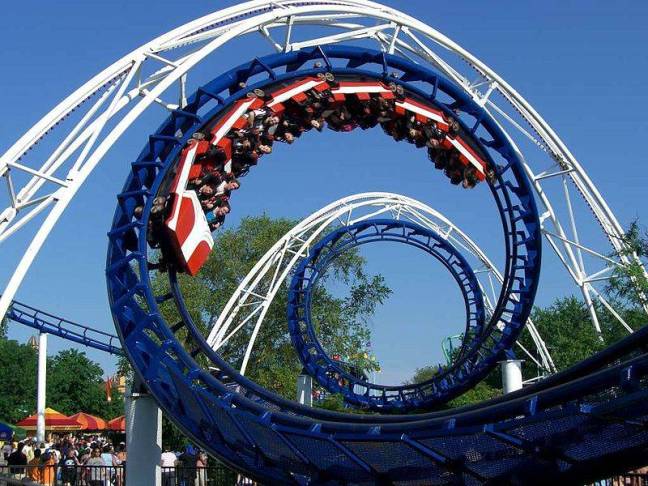
I have two friends, sisters, who lost their mother many years ago. Ever since, they have chosen to make Mother’s Day a day of celebrating life. Their venue of choice? Amusement parks. I have been lucky enough to have been included in the tradition.

Every Mother’s Day finds us at the gates of some purveyor of adrenaline – laced fun. Sometimes we stay local, sometimes we travel. Regardless, the goal is the same – a day of riding as many coasters as possible while engaging in great food and better company.

Boy, did I ever need that yesterday.

The coasters forced my monkey into submission. I had no choice but to accept the experience. No choice but to let go. No choice but to be in the moment and enjoy the ride. With my eyes closed, there was no anticipation, just experience.

With each new coaster, I could feel the tension draining from my shoulders and clarity slowly replacing my muddied brain. My breath deepened and my posture straightened. I felt refreshed and relaxed.

For weeks now, meditation has been a chore, something I have to force myself to do. But this morning, my mat is calling to me, inviting. I want to sit. I want to breathe. I want to be.

Sometimes my monkey mind protests too much stillness and too much routine. He needs to feel the air rushing past his face and hear the joyful screams and laughter bursting forth, unrestrained. He needs to have his untamed side acknowledged and celebrated. He needs to let go with no thought of decorum or restraint (well, other than the ones that keep me from falling 200 feet to the ground!).

Sometimes the monkey just needs to ride. Maybe next year I’ll bring my meditation mat and some incense to the park:)