How to Fall Out of Love

love divorce fall out

Sometimes I wish everything was as direct and straightforward as teaching algebra. Where every concept begins with a clear definition, which can then be followed by a specific series of steps that, when followed correctly, will always lead to the desired solution.

But life is not as direct and straightforward as algebra.

Especially when it comes to love.

Poets, philosophers, clergymen, psychologists and even scientists have wrangled with its definition for millennia, yet no consensus has been reached. Most of us have experienced being in love, yet all struggle to assign words to the experience.

Even with the nebulous nature of love, I think we all agree that it feels overwhelming amazing while it’s growing, comforting and supportive once established

and unbelievably agonizing and distressing when it ends.

This is especially acute when the ending is unwanted. And the rejection absolute and sudden.

When you still love the one that no longer loves you.

—–

We speak of the beginning of love as falling, as though we have no control once we’re within the field of the gravitational force of attraction. The coming together seen as inevitable.

Which means falling out of love is working against that gravitational pull. A slow and deliberate climb away from the influence of the attraction.

And much like gravity, its effect lessens as you move further away. But those first few steps are tortuous.

Even though love cannot be defined, it can be broken down into some of its constituent parts. And even though love has no formula, there are ways to address each step along the road out of love.

—–

When you’re in love, you have companionship. Your “Netflix and chill” partner lives in the same home. You know how you’ll spend your evenings and you know who will sit across the dinner table from you. You probably spend less time with others than before you married as your spouse naturally becomes your primary social contact.

To fall out of love, fill the voids in your life. I liken the feeling of being alone post-divorce to sitting in a cold and empty bathtub after a bathing companion has left. When the cold porcelain is chilling your bones, you turn back on the water. When you face the void at the end of a marriage, seek to fill the voids in your life. Was Thursday night pizza night in your home? Sign up for a class to keep you occupied on that night. Buy more pillows to occupy the now-empty space in your bed. Instead of staying at home, replace date night with  “reconnect with friends” night. Wherever there is a void, find something to put in its place.

When you’re in love, you have a sense of being known and accepted. One of most driving needs of all of us is a desire to be seen, understood and loved as we are. And that’s one of the most magical parts of love – we can be our imperfect, messy selves and still feel as though we are honored and respected. Our partner is the one who knows our greatest fears and our biggest dreams. They can anticipate our needs and know just how to cultivate a smile.

To fall out of love, focus on getting to know yourself again. It’s easy to fall into the trap of expecting that your spouse will make you happy. As a result, you may have lost touch with yourself – your needs, your desires and perhaps most importantly, how to take care of yourself. Court yourself. Get to know yourself. Fall in love with yourself.

When you’re in love, you have somebody you can count on. There’s a comfort in having a name and number to enter in your “emergency contacts.” It’s nice to know that somebody can pick up the Advil when you’re sick and the slack when you’re busy. Your spouse easily becomes your primary support structure. Always there with your back.

To fall out of love, build and nurture a larger support system. It’s easy to take your spouse’s support for granted. It’s dangerous to place too much weight on any one person; things can happen (not just divorce). Build your community. It’s scary to reach out and ask for help, yet people often are waiting to help once you tell them what you need. It’s okay to take more support than you give right now. Just don’t forget to pay that kindness back once you’re able.

When you’re in love, you have biochemistry on your side. Love is a drug. What we call “falling” could also be described as “tripping,” as our brains are awash in hormones that cause positive feelings, bonding and relaxation. The body wants you to create a stable relationship for long enough to have and at least partially raise children. And biology is a powerful force indeed.

To fall out of love, view your residual unwanted feelings as signs of withdrawal. If love is a drug, divorce is going cold turkey. Be patient with your cravings. They are to be expected. Accept that it’s going to be hard, especially at first, and that you will have relapses. And seek help if you need it. There is no shame is asking for assistance.

When you’re in love, you have a shared history. A private language of relieved moments and memories. There are the inside jokes, the special places and the family rituals. There are the shared family stories about the first time you met or the birth of the first child.

To fall out of love, reconnect with people from your past and/or layer memories in your present. It’s a lonely feeling when you lose the only person that speaks that private language. But there may be others that also know you well. This is a great time to reach out to those long-lost childhood friends. Laugh over shared early memories. The more pictures unearthed, the better. You can also work to create a new shared history through intentionally layering new memories over the old. It’s a way of reclaiming those memories instead of allowing them to limit you.

When you’re in love, you have a teammate. Someone on your side. Someone to work with. A coparent. A coworker. A copilot. You fight life’s battles together. And you celebrate life’s victories together.

To fall out of love, celebrate your new freedoms. Having a teammate is a bit like approaching life as though you’re running a three-legged race. You are working together, yet you are also somewhat limited by your partner. When you’re on your own, you have to learn to be stronger yet you are also more nimble. Explore those freedoms. You’re in the driver’s seat.

When you’re in love, you have sexual energy and release. You have a horizontal dance partner that has learned your moves and hopefully mastered theirs. You don’t need to woo your lover or spend energy wondering if you’ll find a lover.

To fall out of love, channel that energy elsewhere. Sex has two components – the physical release and the mental release that comes from a switch from a more analytical brain to a more animalistic and intuitive one. Address both.

When you’re in love, you have shared dreams and goals. You work together to overcome obstacles and build a shared life. The shared goals become a life organizer. A reason for every action and decision.

To fall out of love, create purpose. Volunteer. Sign up for something with a finish line. Pour yourself into your job. Or parenting. Make you matter.

When you’re in love, you have attachment. You and your partner grow together. And you bond. You feel affection. You become accustomed. Your spouse becomes almost a part of you.

To fall out of love, depersonalize rejection. Just because it happened to you does not mean it happened because of you. Such a simple statement, yet one of the most difficult to accept when you’ve been rejected. The truth is that the rejection says more about your former partner then it does about you. Learn to separate yourself from what happened to you.

When you’re in love, you have idealization. You place your partner on a pedestal, highlighting the good while whitewashing the bad. And those rose-colored glasses help to preserve love as you see the best of your partner and they see the best in you.

To fall out of love, focus on the negative. Tear out the pedestal and shine a light on your ex partner’s flaws. Remind yourself of all that you don’t like in them. Take it to the extreme if you need to right now. Once you’ve fallen out of love, you can strive for more balance again.

When you’re in love, you have security. You know who is waiting for you at home. You know that you can cry or scream and that person will still be there.

To fall out of love, embrace the power of vulnerability. It takes great courage to be vulnerable. It’s scary. Especially if you fear rejection. Yet there is a beauty, a realness and a rawness, that only exists when people are willing bare all. Explore it.

When you’re in love, you have anticipation. You look forward to your partner’s embrace. You miss them when they’re gone and count the moments until they return again. Time before the time together passes slowly in delicious agony.

To fall out of love, schedule smiles. Take out your calendar and pencil in activities and events to look forward to. Bonus points if you invite someone to share in the smile with you:)

When you’re in love, you have a spiritual partner. Perhaps you share a spiritual practice and a common view of your place and purpose in the world. Maybe your marriage and family is your center and gives you a sense of meaning.

To fall out of love, recommit to your your spiritual journey. If you belong to a church, this may be the time to dedicate more energy. If you don’t have a church, this may be a time to find one. If you’re a spiritual do-it-your-selfer, commit to what speaks to your soul. Spirituality is a wonderful reminder that we are not alone and that our problems are smaller than we often believe. It’s a gift of perspective.

When you’re in love, you have trust. You depend upon your partner. Rely on them. Have faith that they have your best interests at heart and they will always be there for you.

To fall out of love, build self-confidence. It’s good to trust others. And it’s even better to trust yourself. Believe that you can do this. Have faith that you can be happy again. Trust that you can fall out of one love and into another.

Are You Setting Healthy Boundaries or Hiding Behind Walls?

healthy boundaries

I thought I was setting boundaries.

But in reality I was also building walls.

It’s easy to do. To get so carried away with a line in the sand that it becomes the beginning of a foundation of a fortress. A stronghold intended to keep you safe. But that really holds you prisoner.

Do you know the difference between setting healthy boundaries and constructing isolating walls?

Boundaries

tennis-court-443267_1280Boundaries are rational and deliberate lines that define what is and is not allowed to be done to you. They are communicated and consistent and are less about keeping others out than keeping yourself intact.

Boundaries allow others to see you. Be with you. But they don’t allow others to use you.

Boundaries say, “I’m not letting anyone abuse me” and “You can come in as long as you abide by the rules.”

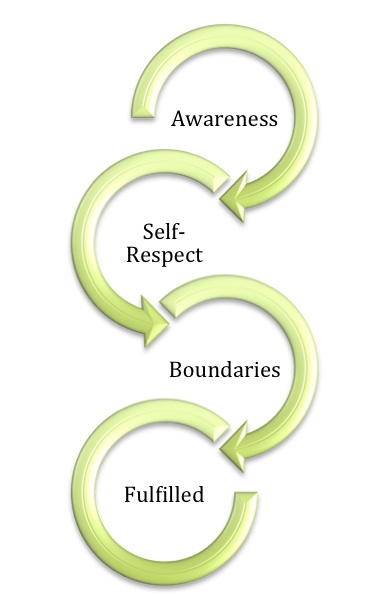
Healthy boundaries are anchored in awareness and self-respect. When in place by both partners, boundaries allow for a deeper connection because both people don’t feel as though they are threatened by an increase in vulnerability.  Although you may be hurt, your self will remain intact.

Examples of boundaries include not tolerating abusive actions or language, refusing to accept the responsibility for another’s happiness or choices and not acting in opposition to your own values and ethics.

boundaries

Walls

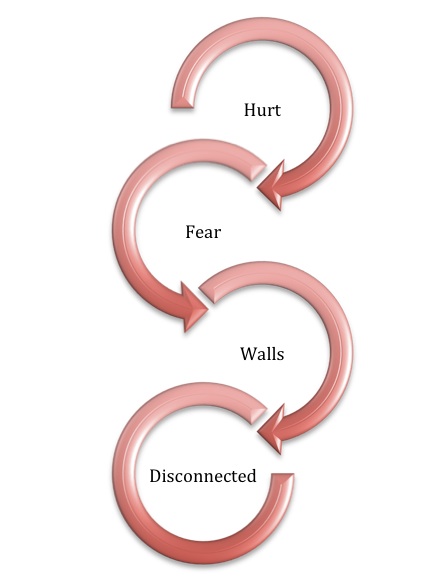
brick-293507_1280Emotional walls are bricks of self-protection mortared with fear. They are erected as a result of being wounded. They are rarely acknowledged and their existence is often only discovered when somebody runs head-first into one. Unlike boundaries, which only keep out those who misbehave, walls do not discriminate – they hold everyone back.

Walls say, “I will never allow myself to be hurt again” and “I’m not letting anyone get close to me.”

Walls are built upon fear. When one or both partners in a relationship is hiding behind walls, a deeper connection forged through vulnerability is impossible. As a result, the partner(s) hiding behind the walls may feel safe, but he or she will also feel empty and disconnected because the true self is not being seen. The wall keeps others out. And it also holds you prisoner.

Examples of walls include never letting your emotions show, deliberately withholding important information from a potential partner and isolating out of a fear of being hurt again.

wallsWhich are you building? Walls? Or boundaries?

9 Reasons You’re Struggling to Find Love Again

love struggling

Are you struggling to find love again after divorce?


“I’m never going to find anybody else.”

“I’m doomed to die an old cat lady.”

“Nobody else is ever going to love me like he/she did.”

“My ex was the one. And now he/she is gone and I’m alone.”

I hear it all the time. Variations on a theme. A composition of loneliness and longing that often settles into bitterness and resolve.

After divorce or a break up, most people enter a phase of chosen singlehood. It is a period to regain sanity, re-establish self and start the steps into a new life. If kids are in the picture, this swearing-off of partnership may last until the children are grown and gone.

Yet at some point, most people decide (or, even if it is not a conscious choice, start to respond to a pull towards) to enter a new relationship. To entertain the thought of dating and be open to the idea of love.

Some people are happy and fulfilled single and make a thoughtful decision to stay solo. This is not for them.

This is for those that want love but cannot seem to find it.

Those who sign up for online dating and never seem to get past the first coffee date. Those who think they found somebody only for the nascent relationship to spectacularly explode before its first anniversary. Those who only seem to attract the broken or seem to always end up with the sh*tty people. Those that are tired of watching everybody else pair off while they’re afraid they will never again be picked.


If you want love,

you want a partner

but you feel like giving up,

This is for you.

You’re Scared of Being Vulnerable

Relationships are hard. Damned hard. And anyone who tells you differently is selling something. After experiencing the anguish at the end of a relationship, it is so tempting (and so easy) to keep others at an arm’s distance. But that never works; love is all or none. If you have walls built around your heart (even if you didn’t intentionally construct them), you are keeping love away.

In order to love, you have to be willing to accept the very real risk of loss of love. Personally, I think trade-off is well worth it (even when I’m feeling overly vulnerable), but you will have to decide for yourself if and when it’s worth it in your own life.


You’re Looking to Fill Your Ex’s Shoes

When something or someone slides into our pasts, it can be easy to look back with rose-tinted glasses. Smoothing over the rough spots and settling on the good. Additionally, when we are with someone for a period of time, we grow accustomed to their particular strengths and can easily take them for granted and assume they are universal traits.

This can combine to creating an ex-shaped hole in your life that you are looking to fill exactly by seeking a doppelgänger. Perhaps you might find someone that seems to fit the gap, but then you discover some characteristic that causes discord in your assumptions. Or, you find that potential partners sense that they are replacements and they leave in search of somebody who wants them as they are.

A new relationship will never be the same as your former one. It will be different. And be open to the idea that different can be better. It means that you will have to accept the lack of some things you used to take for granted and it means you will be surprised by new benefits you didn’t have before.

And most importantly, it means that you have to take responsibility for filling that ex-shaped hole before you go looking for love. Be a partner to love. Not a cavity to fill.


You’re Seeking Perfection

Sometimes when a relationship ends, we assign its failure to its imperfection. And so we seek the ideal. The guaranteed. This time, we want the real thing. The soul mate and the fairy tale. Because if we can just find the perfect person, it will all work out.

And there is truth in some of that. At its most basic, your marriage did fail because of imperfection. Not just with the situation. And not just with your spouse. But also with you. Because nothing and no one is flawless and faultless.

Real love, lasting love, doesn’t begin with perfection. It begins with the acceptance (and open discussion) of imperfection. Perfection assumes you say, “I do” and then you’re done. You just sit back for the ride. Acceptance of the idea that we are all always learning creates the foundation for a growth mindset marriage. Not perfect, but fulfilling.


Your Actions Don’t Align With Your Intentions

It’s easy to say you want love. It’s easy to complain about the quality of the people on dating sites or the lack of options in your environment. Words take little energy. Wishes even less.

Love doesn’t come to the lazy. Especially love after loss.

If you want a relationship, ensure that your actions match your intentions. Get out and meet people. Lead with curiosity rather than judgement. Say “yes” to experiences and opportunities.

If you want a relationship, don’t act like you’re on the prowl. Act with integrity. Be trustworthy. Show that you can be committed. Don’t claim you want stability while you’re refusing to stand still. And most importantly, be the person you hope to attract.


You Are Sending Out Warning Signals

We are often unaware at the subtle signals that we are constantly receiving from others and sending out to those around us. And even those these signals are often subtle and below conscious awareness, they are powerful.

Do you keep attracting broken people that seem to need fixing or parenting? Perhaps you’re unwittingly sending out the message that you need to be needed in order to feel okay about yourself.

Do you keep attracting control-freaks that at first want to “save” you only to later try to dictate your life? Maybe your damsel-in-distress call has been heard by someone that needs to feel powerful.

Do you continually have people abandon you? Is it possible that you come across as too clingy, your intense neediness inadvertently pushing others away?

It’s hard to see these signals head-on; it’s often easier to spot them in the patterns of our relationships. If you always seem to end up in the same position, look to your own insecurities to learn why.


You’re Looking For Too Much Too Soon

When you’ve been married or in a long-term relationship, you acclimate to the intimacy of a well-known person. You become comfortable. Safe. And it’s easy to except to find that same feeling again.

But that’s impossible.

Because relationships are formed, not found.

It takes time and effort to develop a partnership. Instead of looking for insta-intimacy (which is usually just lust and/or desperation), look for someone that has the raw materials that you want that you believe you can build a relationship with.


You’re Still Anchored to the Past

It’s easy to be so done with the past that you try to move on too soon. There is a reason that the saying, “The best way to get over a man is to get under another” exists. There is nothing wrong with post-divorce flings, but don’t confuse them with love.

When you’re still enmeshed in your past, either situationally or emotionally, you are not creating the space or providing the nourishment for a new relationship.

Maybe you just need time. Or maybe you need some help.

But you have to let go before you can move on.


You Are Not Happy With Yourself

This is especially common with people who have been subjected to abuse, abandonment or infidelity. It is so easy to internalize your partner’s actions. To take them personally. To assume that unloving actions and words were directed at you because you are somehow flawed. Unlovable.

And when you believe that, others will begin to believe it as well.

Finding love with and for another has to begin with finding love for yourself. With forgiving your own mistakes and seeing your own beauty.

And the first step is realizing that when somebody treats you poorly, they are telling you more about their character than about your worth.


You Tell Yourself, “I’m Never Going to Find Love Again”

When you prime the pump for failure, don’t be surprised when you fail. Yes, learning to be open and vulnerable again is hard. Yes, finding somebody that meets your needs and puts up with your flaws is hard. Yes, relationships are harder when we are older have have more complications in our lives. And yes, getting a relationship past the early dates and into love is hard.

And hard doesn’t mean impossible.

Never say never.


Love Is Holding

Always good to remember…

We push people away because we are afraid of letting them in and being hurt when they leave.

We grasp on to people that are not good for us because we are afraid of being alone and someone is better than no one.

Pushing and pulling are fear, not love.

Love is holding.

Loosely enough so that each person has the freedom to grow and change.

And firmly enough so that each person knows they are supported.

It is trusting the other person enough that they want to stay even if they have the ability to leave.

And trusting yourself that you will be okay if they do.

Love Doesn't End

The Role of the Environment

They were everywhere.

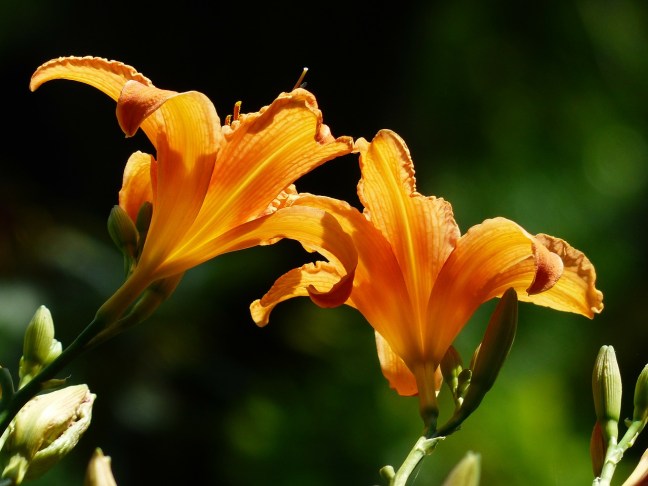
Their tawny heads bobbing in the breeze atop three-foot high slender stalks anchored in grassy skirts. The common daylily is certainly common in Madison, Wisconsin, found in almost every landscape. And I was shocked to see them in such numbers. Because, in Atlanta, they are much more of a rarity.

Not because they struggle with the conditions.

But because they grow too well.

The common daylily (often called “ditchlily” in the south) thrives in the heat and humidity. Spreading on its own volition, it can be found in great swaths across neglected fields and breathing through the exhaust along the highways. It’s rarely found in cultivated landscapes because it does not play well with others. It seeks to dominate, becoming a monoculture if not held in check by sturdy borders or isolated by an elevated bed.

START NOW

In the short summers of Madison, the lily is much more polite. I saw endless evidence of common daylilies coexisting pleasantly with less vigorous companions. The conditions of the cooler climate hold the plants in check and fail to nurture the bullying behavior that is so evident in the south.

Same plant. Two completely different presentations in two different environments.

And, in many ways, we are just like the daylily. Some environments nurture our negative qualities whereas others cultivate our beauty and suppress our harmful drives.

But unlike the daylily, we are not anchored into the ground. We have the ability to choose our environment.

We have two friends that were in a relationship together for a few years. They loved each other deeply, yet together they created a toxic brew of negativity and drama. Eventually, the roots were pulled up and each found a new companion. And the same people, now immersed in a different environment, have none of the previous damaging behaviors.

It’s not always easy for them – they see the way their ex is now and wonder why he/she couldn’t be that way for them. They are different because their surroundings are different. That’s it. No nefarious plot or devious withholdings. It’s not something to take personally.

We all hold the potential to be noxious weeds or beautiful flowers. And it’s up to us to ensure that our environment nurtures the qualities we wish to multiply. And to understand that sometimes people in our lives require a different environment themselves in order to thrive.

I guess our parents were right – it really is important to choose your friends wisely.

I neglected to capture any photos of the ubiquitous daylilies, but here's an amazing view of downtown Madison from Lake Menona:)
I neglected to capture any photos of the ubiquitous daylilies, but here’s an amazing view of downtown Madison from Lake Menona:)