Is It Better to Know the Pain Is Coming?

I have a rerun of a medical procedure scheduled for next week. The first time I had it done, the medical professions assured me ahead of time that it would be no big deal and so that’s what I planned for. I went to the doctor’s after work (even though it meant seeing someone other than my usual provider). I planned to go to the gym after (What? They said it was no big deal!) and I had not arranged for a sub the next day at work.

Except it was a big deal. I didn’t get back home until late. Not because of the gym, but because I had to keep pulling over to vomit from the pain. I ended up teaching from a rolling chair for the next week, kicking myself every day for not arranging a sub the night before. I was still on the meds prescribed to me post-divorce, but even those weren’t enough to provide decent slumber for a few nights.

It was a terrible few days.

I learned from that experience (especially after reading that it’s a common one). This time is different. I will take Advil before the appointment. I couldn’t secure a ride, but the office is now closer to home and I’ll make sure my stomach is empty. I have already arranged for a sub on the next day and I have a few pain pills left over just in case.

So, I’m ready. But I’m also anxious.

The first time, all of the agony was on the back-end once the pain hit.

This time, I’ve transferred the agony to the front-end. Which means I’m ready. But I may be stressing over pain that won’t be as bad as I fear.

So is it better to know the pain is coming so that you can prepare even though the anticipation of the pain is often worse that the pain itself?

Or is it better to be blindsided, caught unprepared and bowled over by the pain yet blissfully unaware before?

I’m not sure about the answer. But right now, in the pre-anxiety, I’d happily trade for happily ignorant.

Related:

I Was Lucky

Pros and Cons of a Disappearing Act

At Some Point, It’s No Longer About the Nail

hurt divorce

In the beginning, I made it all about him.

What he did.

Why he did it.

How he did it.

Where he was.

Who he was.


It was an escape of a sort. A distraction. If I stayed focused on him, I didn’t have to think about me.


What I was going to do now that my life was washed away.

Why this happened to me.

How I was going to survive and rebuild.

Where I was going to live.

And who I was without him.


But at some point, I had to decide to make it all about me. To turn my energies towards what I could change rather than curse what I could not.

Because no matter how much attention I turned towards him, it wasn’t going to help me feel any better.


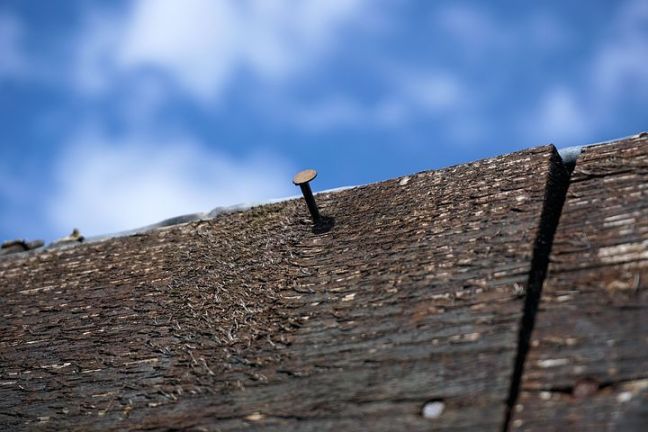
When you first step upon a nail, the sharp steel tearing through tender flesh, it is prudent to focus on the nail. First by removing the offending stake and then by examining it for any signs of rust or fragments left behind.

And then at some point, the nail no longer matters.

Only the wound is of consequence. And your attentions must turn to the ministrations of puncture care, ensuring that it heals fully without infection to poison the blood.


A difficult divorce is much the same. Once the distressing person has been removed, focus on them only leaves your wounds unattended.

Because at some point, the nail no longer matters.

Only you do.


Learn more.


Just Because It Happened To You, Does Not Mean It Happened Because of You

rejection

Rejection always hurts.

From the lack of an invite to a classmate’s party to the failure of a job offer, we feel the pain of being dismissed.

And when that rejection slip comes from our partner?

Let’s just say the pain is searing. Unescapable.

fMRI results have shown that the agony of rejection follows the same neural pathways as physical pain.  It is real. And it can be devastating.

We all have an innate drive to want to be accepted. To be recognized and wanted. As social creatures, we have evolved to need the group and to fear being ostracized.

The worst feeling in the world is not to be seen and hated. It is to be invisible and discarded.

When rejection from relative strangers occurs, we often rationalize the reasons:

“I wasn’t invited to the party because she is a stuck-up snob.”

“They didn’t accept my proposal because they’re short-sighted morons.”

“He didn’t call me back because he lost my number.”

“I was passed over for the job because I am over-qualified.”

It’s easy to perform this ego-preserving mental choreography when we do not intimately know the rejector and the rejector does not fully know us. We can depersonalize the experience, shifting the reasons for the refusal to the other person while protecting our own sense of self and worth.
photo 1-68

But when the rejection comes from the one that knows you best?

The one that promised he or she would always be there?

The one with whom you felt safe exposing your deepest fears and greatest vulnerabilities?

It’s personal.

I felt like I was discarded like so much garbage. No longer able to provide utility or beauty. Lacking in key features as I was replaced with a newer model. I trusted this man, had valued his opinions for years. So when he indicated I wasn’t enough, it was easy to believe him.

I think my desperate quest to label him was not only coming from a need to understand why, but also from a need to prove that his judgement was somehow faulty. That I was rejected because of something in him rather than something in me.

It’s so difficult not to internalize intimate rejection.

We all too easily assume that because it happened to us, it must have happened because of us. Sometimes we’re just collateral damage.

We take rejection by our partners personally.

He or she turns down a proposal of sex? It must because of the five extra pounds you’re carrying.

He or she is withdrawn? You must have said or done something to make him or her angry.

He or she requests time alone? It must be because you’re not wanted.

Yet much of the time, what we perceive as a personal attack has more to do with our partners than ourselves.

Perhaps sex was refused because of pressures at work.

Maybe the withdrawing was due to a sense of being overwhelmed.

And the alone time may just be a need to breathe.

Don’t let one person determine your value.

One of the biggest problems of internalizing rejection within a relationship is that it lays the groundwork for the marriage-destroying pursuer-distancer dance. The more the rejected partner feels abandoned, the more he or she desperately pursues attention and affection. The more the distancer feels hounded, the more he or she retreats and withdraws.

It’s a common pattern. And often a deadly one, slowly starving the marriage of trust and intimacy. If you feel rejected, it’s easy to respond with a frantic attempt to be wanted. 

And when the rejection comes at the end of a marriage?

It’s all too easy to respond the same way. Looking for worth and validation from anyone that will provide it. And holding on too tightly will suffocate any relationship.

Your worth can only come from within. And no rejection can ever take that away.

Rejection is about opinion, not fact.

When someone we love suddenly makes claims that we are substandard, we often believe them. Take their assertions as facts. Truth.

When they are actually opinion.

Opinion that may easily be influenced by other factors.

When I first read the suicide note that my ex sent to his other wife and my mother, I felt worthless. He spent full paragraphs discussing how impossible I was followed  by more paragraphs singing the other wife’s praises.

Of course he did. By demonizing me, he justified his actions. By discounting me, he secured his own value. And by praising her, he stood a chance of winning her back.

I was rejected because he could not continue to hide the truth.

I was rejected because he needed an escape.

I was rejected because he convinced himself that I had already rejected him.

I was rejected because of his opinions. And I no longer care what he thinks.

It’s a delicate ego dance learning to sift through the facts of the rejection to see if there is some truth to be learned.

Cheaters and deceivers often try to place the burden of the blame for their actions at the feet of their spouse. They act out of selfishness and greed and then claim that “you made me do it.” Yet nobody ever makes anyone else do something. Their choices are theirs alone.

Still, sometimes there is a bigger picture. Nothing you did or didn’t do make your partner act a certain way. But that doesn’t mean you have nothing to learn.

There is a difference between taking the blame for someone else’s actions and accepting responsibility for your own.

One man’s trash is another person’s treasure.

Just because one person took you out to the curb, doesn’t mean you have to stay there.

Reject their opinion of you and form your own.

Someone will see you for the treasure you are.

You’re Not Special

You’re not special.

That realization was the  hardest pill for me to swallow post-divorce.

I would read or listen about the depths of pain others experienced through divorce and silently believe that my pain had to be different.

Special.

And I had plenty of evidence to back up my belief. After all, how many 16 year relationships end with a text, fraud and bigamy?

It was a great excuse to delay the real work of healing for a time; by focusing on the sordid details, I gave myself a reason to ignore the collective wisdom from the universal experience of love and loss. On the surface, I would graciously accept guidance and advice while tacitly believing that it didn’t apply to me.

Because I thought that my situation, my experience, my pain was special.

I focused on what set me apart rather than what bound me to the common.

I thought I was special. And that belief was both affirming and alienating, giving blessing to the pain and isolating me from others. It’s a lonely place, sorted into a group of one by the particulars of your story. The blessings of excuses soon wear out their welcome and the focus on the details begins to feel like an un-welcomed quarantine.

My unexpected guide out of the isolation chamber of my perceived specialness came in the form of books. Fiction, mostly, and in many cases, not even particularly good fiction. As has always been my habit, I made a weekly library trip and loaded up on whatever was available – mystery, thriller, historical and even some that could be classified as chic lit.

And I read.

And, as is to be expected, my own recent experiences altered the lens I used to view these fictitious worlds; I related to characters who were facing some unimaginable trauma and were suddenly tasked with the seemingly impossible assignment of rebuilding their lives.

And I learned that when it comes to pain, the details don’t matter.

I empathized with characters facing illness, losing loved ones in myriad ways, dealing with natural and manmade disasters and even with those experiencing what would be classified by most as a minor loss. I related to the antagonists and protagonists, men and women, children and elderly and even the occasional non-human. In almost every story, I found elements shared with my own.

My focus blurred, editing out the details and seeing instead the ever-present themes of love and loss, of fear and shame and of hope and persistence.

I wasn’t special.

And I welcomed that realization.

It meant I wasn’t alone. That others had faced similar and thrived. That even though this was a new path to me, it was well-worn and well-marked.

Pain isn’t a solitary experience and healing is not a solo journey.

And even though you are unique and awesome in your own way, when it comes to suffering, you’re not special.

Rather than focus on what sets your pain and experience apart, find comfort in what binds you to others.

You’re not special. And you’re also not alone.

Group hug?:)


What Are You Waiting For?

Have you ever had the flu?

I mean the full-on, full-body type that leaves you shivering and feverish, an aching human husk collapsed beneath the covers. The rising temperature somehow short circuiting your brain until all thoughts are amorphous jello and the mind doesn’t even recognize its own attached body. The kind of illness where all you can do is stay beneath the sweat-stained sheets and wait it out, praying that it will slip out peacefully before it kills its hostage.

In those moments of acute illness, we have no choice; we are a prisoner of the poisons coursing through our bodies. All we can do is wait for the battle to be won before we begin the process of rebuilding strength and vitality.

But not all illnesses are so severe as to be debilitating.

Have you ever had a cold?

The kind that starts with that tell-tale scratch down the back of the throat before it progresses into a log jam in your sinuses. An illness that leaves you feeling depleted and irritated, especially when the cough lingers and refuses to vacate your rattled lungs. The encroaching mucus dampening your thoughts, like a heavy blanket slowing you down.

In those moments of lingering illness, we have a choice. We can back off from life and retreat to the blanket on the sofa, waiting weeks for the symptoms to retreat. Or, we can address the features of the illness with medicines and modalities while we continue to live our lives, even if they are slightly reserved.


The first days and weeks of divorce certainly feel like the flu.

You may well be flattened. Dependent upon others for every care.

Disconnected from your life and from your self.

But divorce is not an acute illness.

It’s a lingering one.

If you wait until you are healed to begin living, you will be wasting many precious days while sitting under the covers.


So, what are you waiting for?


I know you hurt.

But pain does not preclude life.

I know you think about the past.

But the past only steals the present if you let it.

I know you feel the empty ache of loss.

But wallowing in the hole won’t help to fill it.

I know you’re not healed.

But you’re also not contagious and life itself acts as a soothing balm.


So, what are you waiting for?

Get out there and live your life.

Embrace the possibilities and celebrate the successes.

The healing will happen alongside.