An Open Letter to Extroverts: What the Introverts in Your Life Want You to Know

introvert

I’m not an extrovert, but I play one in real life.

Most people would probably be shocked to discover than I am a true introvert – that  social situations and crowds exhaust me and I seek balance by being alone. After all, I have chosen to be a teacher. I am outspoken in meetings and not shy to speak in front of a group. On top of that, I have intentionally cultivated a large group of friends and I enjoy spending time with them and having them in my space. I have developed countless online relationships and enjoy time with my online family. Surprisingly, I can be loud. I rarely slow down. And I once rocked a shirt that said, “Sweet Talker in Action” as a kid because I never shut up.

photo-42

But behind all of that is a woman who feels most at home in her office, a “safe” space of solitude. A woman who would be more comfortable in solitary confinement than in a cell with multiple roommates (not that I ever intend to try out either!). I need my alone time in order to be the public me. In a way, I put on an act every day. It’s still me, but it’s the “on” me. It’s the real me with a booster rocket of extroversion. And if I play the role too long, the tank runs dry.

I was looking for a concise article that would explain characteristics of introverts for my very extroverted husband after feeling overwhelmed by the demands of the beginning of the school year.

I drew a blank.

So I decided to write it instead.

Not all of these characteristics will apply to every introvert. After all, that is simply one label and we are all represented by more than a single word. But I think many introverts will recognize themselves here and I hope that extroverts will find some compassion and understanding for their more reserved brethren.

Dear Extroverts,

I envy you sometimes. The way you seem at ease in a crowd. How you seem to know how to initiate and carry on a conversation with no apparent effort. When I’m at the periphery of a crowd, I see you in its center, pulling energy from those around you, like some kind of emotional fusion reactor. And I’m jealous as I feel my own energy waning as the event progresses.

But then, when I’m tucked away in a quiet nook or nose-deep in my latest book, I’m at ease with myself and pleased with my nature. You see, it’s not always easy living as an introvert in an extrovert’s world. We must learn to adapt. To play-act. Or run the risk of being overlooked.

There are more of us out here then you may imagine (usually thought to be somewhere between 25-33% of the population). Some, at the extreme, are obvious – they rarely talk, have a few select friends and work at jobs where the interactions are minimal. But the rest of us? We can be found anywhere – in classrooms and boardrooms, in media and marketing and even in your own home. You see, we’re good at blending in. But sometimes we pay a price.

The following characteristics can help you identify and support the introverts in your life:

1) Shyness and Introversion Are Not the Same

I used to be shy. Painfully so. But that’s a learned response and can be changed. Introversion is a character trait found in shy and more outgoing people. You can learn to work with it but it is a fundamental piece of who you are. Many introverts have no problem approaching new people. And then they will retreat to recharge.

2) Introverts Are Not Always Quiet

The stereotypical introvert is quiet. Bookish. Reserved. Yes, that person is probably an introvert but they are not the only ones. Although I prefer to express my ideas in writing, I frequently find I am the leader and spokesperson for groups. I talk fast and often. I gravitate towards heavy metal and intensity in my activities. Only those close to me know about my need for quiet and solitude. Introversion isn’t worn on my sleeve; it’s carried inside.

Continue to read the rest.

I Reject Your Reality and Substitute My Own

gaslighting

In my ex husband’s mind, why tell the truth when you can invent it? Why yell when instead you can quietly manipulate through gaslighting?

In all of the pain after my ex husband left, there is one pain that stands out as more acute than the rest. After being arrested for bigamy and bailing out of jail, my ex decided to overdose on sleeping pills. It appeared to be a sincere suicide attempt, but he made sure to cover his bases in case he survived.

He composed and emailed a suicide letter to both his new wife and to my mom. I read that email while sitting outside the DA’s office waiting to meet the victim advocate. He was recovering in the ICU.

I felt reality slipping away as I processed the words that distorted the world I knew. In the letter, he speaks of me being “impossible to live with” and “negative.” He talks about my irresponsible spending habits and how I “just had to have my way” and he “couldn’t tell me no.”  Our last trip together – that he initiated, planned and executed – was recast as my demand for a vacation. He spoke of my insistence on building a deck when he counseled that we couldn’t afford it. He tells my mom that she “would love [the other wife]” and that he hopes they get to meet.

His words hit like a punch to an unguarded gut. I spent hours dissecting them, talking them over with each of my parents in turn. I knew they weren’t true but they still caused me to doubt. I feared that others (including my mom) might think his words were genuine. It felt like a vicious, spiteful attack on my character. And it wasn’t even factual.

He was rejecting reality and substituting his own.

He was gaslighting – using deception and manipulation to cast himself as the sane and balanced one and to make me look unstable and vile.

And it wasn’t his first time.

He was a master at creating and convincing others of his own reality. And, as trusting of him as I was, I was easy to convince. When you’re being gaslighted and you are unaware of the sleight of mind tricks being applied, you feel crazy as you begin to doubt your own perceptions and conclusions. It’s disorienting as the friction between what you see and you’re told you see don’t quite line up, almost like the view through 3D glasses when you turn away from the screen.

For months, I hated that letter. Every reading caused me to feel ill, like I’d swallowed something that needed to be purged. I shared it only with my parents and the close friend I lived with that year, finding comfort in their assurances that his words were mere deflection and trickery.

But still I wondered.

You see, he had trained me well. I still struggled not to believe his words over my own memories.

I struggled, that is, until I rejected his reality and found my own.

I picked apart each of his claims and refuted them one by one with physical evidence:

I spend too much? Then why do I read library books while he spent over a hundred dollars a month on Kindle downloads as evidenced by the checking account registry. And why do I drive the old, paid for car (that I still have!) while he insisted on buying a new one that came complete with a $500 monthly payment. I made a list of his possessions vs mine. It wasn’t even a contest.

I demanded the vacation? I unearthed an email sent to my work address where he proposed the cruise and described its details.

I insisted upon the deck? I found a trail of emails that covered everything from the summer school income I earned being used to pay for the costs to his enthusiastic sharing of his deck designs.

As for me being difficult and negative, that was harder to disprove. But the fact that I had many friends offer to take me in that year told a different story. I bolstered their offers with the hundreds of notes I had received from students over the years, praising my passion and positivity.

And as for my mom wanting to meet the other wife? Well, that was just plain funny.

Eventually, the letter lost its sting as I saw it for what it really was – an attempt to save his image by destroying mine. I wavered over whether to include the letter in the book. I was afraid I would be seen as the hateful woman he described. I decided to include it, even at the risk of his words being believed by people who did not know me. I knew that many of the readers would relate to being controlled by lies and I wanted to share a rare physical manifestation of gaslighting. Because the most painful part of gaslighting and what makes it so effective is that the evidence usually disappears like smoke in the wind, leaving you with only doubts and questions.

Gaslighting is a subtle yet relentless abuse. It’s one person using power and manipulation to control another. The damage is hidden and persistent, the worm of uncertainty taking up residence and calling everything into question. The effects linger as memories collide with new understanding, the deceptions fighting for dominance over the truth.

Gaslighting is often paired with physical abuse or addiction, the repainting of reality used to keep the partner calm and in place. It is a favored tool of narcissists and sociopaths. Those that are adept at its use tend to be charismatic and intelligent, lending a believability to their assertions. It is deliberate and cruel and can be immensely damaging.

Recovering from gaslighting takes time. Even recognizing that you were gaslighted takes time.

No one should have the power to create your reality other than you.

And your trust in another should never be greater than your trust in yourself.

Gaslighting thrives on doubt.

Starve it by believing in yourself.

Why I Refuse to Call My Husband a Narcissist

Character Assassination

Covert Abuse

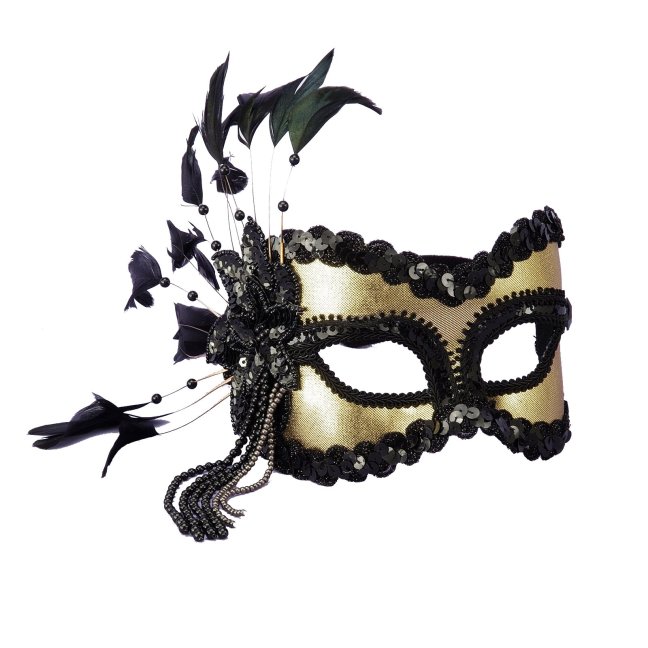
The Masks We Wear

I read this response to Robin Williams’ death this morning and it struck a nerve.

The author, also in the comedy business, discloses the dark underbelly that is often present beneath the laughs. He describes how childhood trauma or a sense of unworthiness leads to the development of an alter ago – a front man who entertains the crowd while distracting from the scared and broken child beneath.

He spoke of the yin and yang of depression and comedy. The pull of the audience and the isolation inherent in the belief that the performer is only loved for the performance.

Not for the child within who only wants to be loved.


The piece struck a nerve this morning. Caused my coffee to cool as I read.

I don’t fit that personality profile, although I have seen many in my personal and professional lives over the years (some of whom also tragically took their lives).

I don’t fit that profile.

But I fit another that I recognized as I read.


The performer is driven from a need to be loved.

I’m driven by a need to not be abandoned.

The performer learns how to entertain and draw a crowd.

I’ve learned how to be needed.

The performer struggles with depression.

I struggle with anxiety.

But we both hide behind masks.


In fact, to some extent, we all do.


The following are some of the masks and underlying causes I’ve seen. I see them in adults and I see them in my students – 13 and 14 years old. We all have the same basic needs and the same basic fears. We all try to hide them from the world and we begin to develop our own masks in childhood as we encounter stresses and learn from other’s responses to us.

These are caricatures of people. Oversimplifications. We are much more than the fears that drive us and the costumes we select to shield us.

But even though these are but a brief sketch, there is power in recognizing your own mask of choice and why you may have decided to wear it.


Mask – Performer or Funny Man

Behind the Mask – A sense of being unlovable

This may have the fat kid in school. Or the one who suffered abuse or neglect at the hands of his or her parents. This child felt alone and wanted nothing more than to loved and accepted. The performer found a love of sorts through making others smile. Even though inside he may have crying.

If I make you laugh, you’ll love me.


Mask – Worker Bee or Caregiver

Behind the Mask – A fear of being abandoned

This mask is usually picked up after a childhood event – death, divorce, desertion, or  neglect- leaves behind a fear of being abandoned at an age when adult support is needed. In order to temper the anxiety of being left again, the worker bee becomes an efficient taskmaster and the caregiver becomes a necessary nursemaid.

If you need me, you won’t leave me. 


Mask – Strongman or Overachiever

Behind the Mask – An insecurity of being unworthy

These are the people that grew up always being compared to others and found wanting. They internalize the message and feel that they will never measure up. They learn to overcompensate in a visible way to try to prove their worth and lessen their insecurities. Although often envied by others, they still never feel they will never make the grade.

If I work harder, I’ll meet your approval.


Mask – Professor or Distancer

Behind the Mask – A fear of being vulnerable

This is the person who refuses to show emotion. Who either responds with analytical perspective or indifference to any situation, even those that are emotionally charged. They are often read as cold, uncaring. But often they are soft and sensitive on the inside. So sensitive that they have learned to hide it well.

If I don’t show myself, you can’t wound me.


Most of us wear our masks when we feel threatened – a new situation, a large crowd, a demanding client. But most of us also feel comfortable enough to slip them off around our loved ones, revealing the fears and drives beneath.

It’s lonely living behind a mask for too long. You’re not alone yet you feel no one values you for the real you.

Only for the character you play.

It’s okay to shield your inner child sometimes.

But it’s also okay to let him out to play.

And teach him to trust that he can be loved and accepted as he is.

Fears and all.


Calisthenics For the Soul

Fortitude.

Grit.

Resilience.

Or, as my husband calls it, an extra gear.


It doesn’t matter what you call it, it is a trait we admire in others and desire in ourselves.

We often observe the strength in others when they face adversity and claim that we are not made of the same fiber. That we would not be able to handle the same.

The truth?


You never know how strong you are until being strong is your only choice.


But what if you could build up your inner strength? Develop your mental toughness before it’s thrown into the ring against the lions?

What if you could do calisthenics for your soul?


You can.


You can build that extra gear, develop that thicker skin that resists every arrow and train for adversity.

And you can do it all while remaining true to yourself and leading with compassion.


Life can be tough.

Learn to be tougher.


Here’s your training manual. 


Secrets of Happiness

secrets of happiness