I really enjoyed doing this interview. Susanne asked some great questions that led me to talk about parts of my story that I rarely reflect on. Additionally, I also give some advice for people who are facing a tsunami divorce.


I really enjoyed doing this interview. Susanne asked some great questions that led me to talk about parts of my story that I rarely reflect on. Additionally, I also give some advice for people who are facing a tsunami divorce.

At the gym yesterday, there was a man near me who was using his headset to have a phone conversation. Hearing the one-sided discussion about inane business matters made me irrationally angry. I kept trying to tune him out, to let the music and other voices drown out his, but my attention kept being drawn back to him.
Science has studied this phenomenon and has confirmed that we find one-sided conversations particularly distracting. It’s proposed that this is because our brains detest a void and so they are working overtime in an attempt to piece together the missing part of the exchange.
I partially credit this fact with my obsession of having my voice heard after abandonment. It felt like an important conversation, interrupted. He said his piece and my brain was desperate to fill in the response. When all of my attempts at establishing a dialog were ignored, I became desperate to be heard.
I was first asked to write a victim impact statement by the district attorney’s office in association with the bigamy charge. I actually had to have my mom help with the first iteration, as I was not yet able to articulate the extent of the emotional, financial and physical fallout of his actions.
I was more prepared for the second impact statement, part of the required documentation by the IRS for Innocent Spouse Relief. As I composed the statement, I imagined I was speaking to my ex-husband. As I detailed his egregious acts, I started to feel a little better as my reply to his side of the conversation was recorded. And when the federal government validated my response by grating me relief, I felt even better still.
Not all victims are recognized by the legal system and given the opportunity to compose a victim impact statement. But that doesn’t mean that you can’t choose to write one yourself.
When you have been victimized, there is a power imbalance at play. You feel like you’ve been disregarded, disrespected and even dismissed. A victim impact statement is a way of taking back some of that power. Of saying, “I have a voice and my voice matters.”
An impact statement both highlights the injustices committed and describes the impact that those acts have had upon you. It gives you the space to say, “What you did was not okay and it hurt me.”
Being victimized often carries with it some shame. Abuse flourishes when people are too scared or too embarrassed to speak out. By writing your statement, you are saying, “I have the courage to speak up and take a stand against your behaviors.”
And finally, composing a victim impact statement can be the first, critical, step of taking ownership over your own life again. It’s a way of saying, “You hurt me, but you did not silence me. You harmed me, but you cannot stop me. You tried to keep me down, but I will rise again, stronger and even better than before.”
In some ways, this blog and my books have become an extension of my own victim impact statements. My way of refusing to be silenced.

I’ve always been drawn to small, enclosed spaces. As a child, I would play (and sleep) in appliance boxes that I decorated and filled with blankets and pillows.
I’ve felt very over-taxed and over-stimulated this school year and could tell that I needed to get serious about my self-care. I have a dormer in my home office that has been my meditation nook for a few years, but with its view of my workspace, I tended to be distracted by what I needed to get done.
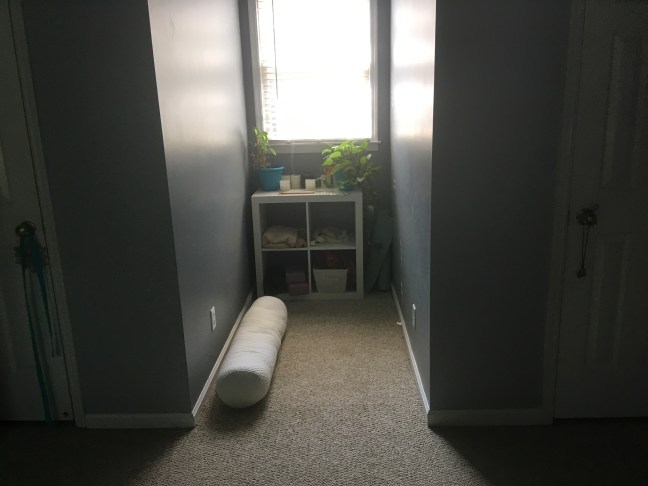
So, last weekend, I added some curtains (to block the view of the computer) and stocked up on T.J.Maxx pillows to make the floor inviting. The combination of soft light, fluffy pillows and incense is like a dose of instant calm.

Now, if I could just figure out a way to have one of these in my classroom 🙂

We all have seen that some people manage to make it through even the most horrific of divorces with their hearts and smiles intact, whereas others seem permanently withered by their experience. We all want to be a member of the first group and yet we often find ourselves unwitting members of the second.
Why is it that some people flourish and others atrophy?
This is the advice that I wished I had received while I was still in the depths of my own divorce. I had plenty of people telling me what to do (and I followed the suggestions that fit for me), but nobody really clarified what those that thrive don’t do.
 Lessons From the End of a Marriage