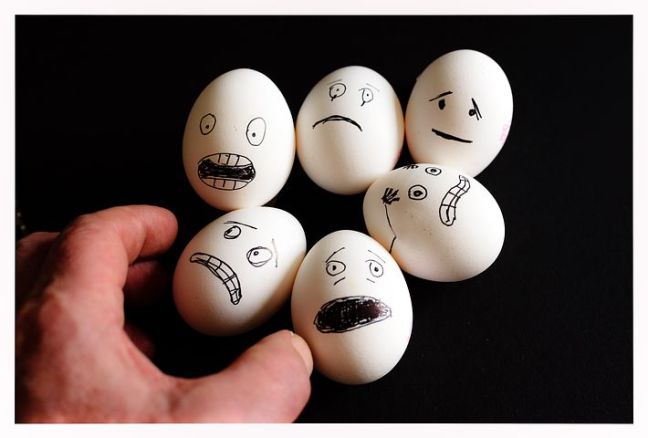
Jumping to Conclusions

jumping to conclusions

My 8th graders are finishing up a unit on geometric proofs. This material has even my live-and-breathe-math kids questioning, “When will we ever have to use this?”

And I’m honest with them. I confess that they will never be asked to write a two-column proof justifying why two triangles are congruent in order to clinch a job interview. No romantic interest will ever look over their paragraph constructed to show that a quadrilateral is, in fact, a rectangle and criticize the fact that they failed to correctly use the slopes to show right angles. In fact, the only time that this exact skill will come in handy is if they happen to become math teachers. (In fact, I’m kicking myself now for making my way through 9th grade geometry in a zombie-like haze.)

But I don’t stop there.

“Forget the content for a moment,” I advise them. “What does this process, as painful as it may be, actually teach you?”

There are confused looks. A few random and half-hearted attempts to answer my question. And then I hear it from the back corner –


“It teaches us how to think. How to move from one fact to another and not jump to conclusions.”


When I was four, I had not yet had the benefit of geometric proofs to teach me how to think. At my grandmother’s house, I would spend hours sitting by her side as she narrated her way through countless family photos. Photos, that were for the most part, in black and white.

So I reached the obvious (well, to a four-year-old at least), conclusion: the world used to be in black and white.

That made sense. But I still struggled to understand how my grandmother, who sat next to me in full color, could have become pigmented as a young adult. I wrestled with this dilemma for a time until I finally solved the problem (and felt quite proud of myself for my powers of deduction) –  Rainbow Brite was responsible for bringing color to the world.

Well, it sure seemed reasonable then.

I had leaped from one fact – photos had transitioned from black and white to color over time – to a completely arbitrary conclusion that was based solely on the information generated within my own mind.

That particular assumption was harmless (and humorous). But that’s not always the case.


Once we believe something, even if we leapt recklessly to that opinion, we then proceed to ignore that which doesn’t support our conclusion. 


We become willfully blind. Feeding on an information diet filtered through confirmation bias. Conclusions, like habits, are much more difficult to shape once they’ve hardened into place. The time to be careful is when you’re laying down the initial layers. Jumping to conclusions has a tendency to keep you in one place.

And that’s what my students are learning. Just like you can’t claim that an angle is right because it “looks” like 90º, you can’t assume things in life just because it “feels” a certain way. 

It’s harder in life than in the classroom. After all, the stakes are higher when you’re you’re talking about real life instead of a poorly drawn polygon. Yet the lesson is still the same as we learn how to not carelessly jump to conclusions:


Base everything on the facts.

Move from one fact to another. No jumping.

Accept that there may be more than one correct way to link these facts and don’t be afraid to explore these options.

Ask for another person’s opinion. Sometimes a fresh set of eyes will see something you do not.

When you have enough facts, make a conclusion.

If you find other facts that refute your conclusion, be ready with the eraser.

In fact, actively look for ways that your reasoning may be wrong. That’s how you test its strength.

It’s okay to make temporary assumptions to test a theory, but refrain from putting it in writing until you can prove it using facts.


Here’s an example of how I put this into practice in my own life as it pertains to learning to trust again after betrayal.


Separation Anxiety: Understanding Why Rejection Hurts

rejection hurt

Our new pup apparently has some issues with separation anxiety.

So far, he has destroyed every bed that has been secured with him in his crate and tried to eat through a window when he was allowed to roam free (He was wearing the cone of shame when this happened. I would love to see video of how he managed to get his teeth to the window frame!).

Once we realized what were dealing with, my husband immediately researched Cesar Millan’s recommendations for mitigating separation anxiety.

In one video, Cesar highlights the origination of the behavior and why it can be so pervasive.


“Dogs are pack animals. And to be left behind from the rest of the pack is the most painful thing ever.”


Wow.

Now, I know it’s dangerous to equate human emotions to dogs. But when I heard this, I immediately thoughts of the excruciating pain of a sudden break up. After all, our human packs may look different, but social bonds are just as important to us. And to be rejected from the rest of the pack is the most painful thing ever.

In our ancestral past, to be rejected could easily become a death sentence. Without the protection and pooled resources of the tribe, the outcast immediately has to enter into a battle for sheer survival.


It’s no wonder then that rejection registers the same as physical pain on fMRI scans. To be rejected can feel like a literal death sentence. 


This framework also helps to understand why people respond to romantic rejection the way that they do. Especially when the break up is sudden and complete or the withdrawal unexplained and painfully cold.

Some choose to fight, channeling their distress into relentless anger targeted at the people they see as responsible for their dismissal. They may paint their ex as a malicious monster or demonize the other man or woman. Rejection can prompt an offensive attack  or it can lead to a fight to hold on to the rejector. This grasping may manifest physically as stalking behavior or it may exist only the rejected’s mind in the form of obsessive and persistent thoughts.

Others, powered by the fear of being alone, choose to flee, hoping that if they can only run fast enough, they can outpace the pain. They may seek to distract themselves from the rejection or find temporary acceptance from hollow interactions. Maybe they convince themselves that they prefer being isolated and they build walls to ensure that others cannot approach (thus eliminating the chances of further rejection).

And some choose to freeze. Becoming stuck, anchored in their isolation. They turn inward, perhaps blaming themselves for not being enough. As they internalize the experience, they shift from seeing rejection as something that happened to them to wearing it as an identity and projecting this idea that they are not to be desired.


At its most basic, rejection triggers fear. Fear of being alone. Fear of being unwanted. Fear of insignificance. 


At home, we’re working with Kazh to help him understand that being alone isn’t something to fear. He’s learning how to stay calm even as his humans walk away and to trust that the solitude is transitory. We’re building his confidence in himself so that he becomes more comfortable when his pack leaves him behind. And, as the healing leg allows, we’re exercising the body so that it is less likely to send the mind signals of panic.

And it’s not really so different for us. We can practice staying calm in times of rejection, reminding ourselves that isolation is often fleeting. We can refrain from exaggerating the magnitude of the rejection, understanding that feeling like you’re dying doesn’t mean that death is truly imminent. We can focus on building our confidence so that being alone doesn’t equate to feeling helpless. And we can use the body to help to train the mind.

But we, unlike many of our canine companions, can also find a new pack when we’re pushed out of the existing one. A rejection from one person does not equate to a rejection from all.  Instead of seeing rejection as a sign that you’re not good enough, chose to view it as an indication that you’re not the right fit.


When you view rejection as information, it empowers you to find a more fitting situation. Better to know that you’re not a good fit than to spend your life trying to be a square peg in a round hole.


And if you’re still feeling the sting of rejection, play with a dog. They’re good at making you feel wanted. Especially if you have treats:)

Lisa Arends divorce
Obligatory puppy photo.


Dating After Divorce: Distinguishing Between Forewarnings and Normal Fears

dating after divorce fears

Dating after divorce requires navigating a minefield littered with the emotional debris of your marriage. In such a potentially hostile and alien environment, differentiating between true threats and harmless anxieties can be challenging. Here are some clues to help you decide if your new relationship worries are normal…or something to be worried about –


Signs That You May Need to Reevaluate Your Relationship:


1 – Feeling like the other person “saved” you.

This can be such a seductive feeling. When you’ve been slogging through the suck of divorce and you meet somebody that promises (through word or action) to pull you free of all that misery, it’s an amazing sensation. Things go from seeming insurmountably terrible to unbelievably simple as this person sweeps you off your feet.

It’s tempting to read into this feeling as a sign that you’ve finally met the right one. That by replacing the person on your arm, you’ve immediately shed all of the pain and struggle from your previous relationship. Yet it’s not that simple. That lightness and elation you’re feeling with your new date is a great sign – it tells you that you won’t be mired in the past forever. And when it comes solely from an external source, it will also be fleeting. Because nobody has the power to save you from yourself.

If you find that you’re assuming the stance that you have been saved by your new dating partner, you’re putting yourself in the perilous position of counting on them to remedy your problems. You’re both giving them too much responsibility and too much power over you.


2 – Only staying with your new partner because you don’t want to be alone.

When we’re starving, we’ll settle for food that is less than desirable in order to avoid the urgent discomfort of an empty stomach. Likewise, when we’re hungry for companionship, we’ll accept a partner that is far from ideal.

The fear of being alone is universal and powerful. Consider the role isolation plays in some of the more psychologically terrifying fiction. From Hanks’ character in Cast Away to Wahlberg in The Martian, we feel that primal twinge of panic at the thought of being abandoned. And after divorce? That primal scream is awfully loud.

And so we easily can grasp onto the first available body that we encounter. Not only setting us up for a misguided choice, but also increasing the chances of feeling lonely within a relationship. Which, as many people can attest, is even more isolating than feeling lonely by yourself. Being alone suck, but being with the wrong person is even worse.


3 – Describing your dating partner as good, but…

There’s a common narrative in relationship letters to advice columnists. The writer first describes all of the wonderful characteristics of their partner, only to then follow up with, “but…” And the word that follow that conjunction are often terrible, describing abusive or controlling behaviors. Effectively negating all of the positives that were first recounted.

Nobody will be all-good or even an entirely good fit for you. Every person and every relationship has its “yes, buts…” And in order to have a happy and healthy relationship, you have to be willing to live with (and even ignore) those negatives. However, especially when you’re feeling vulnerable, it can be easy to be in denial about some major red flags. Pay careful attention to the downsides that your partner brings to the table. The good side can only balance out so much.


4 – Only staying with your partner because you don’t want another “failed” relationship.

It’s not easy to accept that either you chose poorly again or haven’t yet developed the skills needed to maintain a healthy relationship (or both). It’s both disheartening and embarrassing to have to admit that you’re yet again at the end.

So maybe you begin to tell yourself that “it’s not that bad” or maybe you begin to believe that this is what all relationships ultimately dissolve into. For many of us, it’s not easy to admit to our mistakes or our shortcomings. We stay on the path because it seems preferable to conceding a wrong turn.

Yet often, refusing to admit to a mistake is the worst mistake you can make. What’s worse – having to say you screwed up or living with a screw-up for the foreseeable future?


5 – Feeling embarrassed to introduce your date to your friends or family.

When you feel like you have to keep your date a secret from others, you need to ask yourself where this shame or embarrassment is coming from. Do you subconsciously believe that they are somehow beneath you? Do they have some very real shortcomings that you privately believe should be deal-breakers (but you still don’t want to break the deal)?

Friends and family can often provide a helpful perspective on your romantic relationships. Unblinded by love (or lust) and fear, they may be able to give you some insight that you’re too close to see. It’s a warning sign if you’re reticent to hear that input.


6 – Justifying or ignoring “deal breakers.”

before you started dating again after divorce, you probably generated a list of deal breakers in a relationship. Some of these may have been reactionary and rather inconsequential (I know I swore off men with a certain pattern of facial hair). But other items on your list are probably there for an important reason.

Take a moment to recall those traits that you swore would be a “stop sign” to a relationship. Have you allowed your resolve to slip and you’re now justifying or excusing those very things you swore you would not tolerate?

Changing your own values and boundaries is a sign that you’re allowing yourself to be swallowed up within your relationship. Remember, the promises you make with yourself are the most important ones of all.


Normal Fears When You’re Dating Again After Divorce:


1 – Struggling with being open and vulnerable.

Dating is risky. Allowing yourself to love again is scary. You will probably find yourself either wanting to hide behind an emotional wall or wanting to run at the first sign of developing intimacy. This impulse is completely normal as you try to find the balance between never wanting to be hurt again and wanting to find love again.


2 – Learning to manage triggers from the past.

You will carry some of your old assumptions and fears into your new relationship. You will struggle to differentiate between an appropriate reaction to the present situation and an attempt to battle ghosts from the past. Feeling triggered often says more about where you are in the healing process than it does about the state of your new dating relationship.


3 – Negotiating the terms and expectations of the relationship.

This new dating relationship is not your marriage. There will be rocky periods as you navigate the unfamiliar terrain and both communicate your needs and expectations. Divorce has most likely influenced you; the terms you seek within a relationship now may differ from those that you sought before.


4 – Fear of losing your dating partner.

You’re fresh on the heels of lost love. It’s completely natural to fear losing it again. You may find that you have a tendency towards clinginess or a drive to know everything your partner is doing in an attempt to control the outcome. This fear is normal; however, it can also easily become out of control if it is allowed to run amuck.


5 – Missing elements of your ex.

No matter how vile you now believe your ex to be, there were traits that drew you to them. Traits that you may now miss. Occasionally longing for the positive elements of your ex is nothing to worry about. Just be careful about comparing your new date to your former spouse. 


6 – A sense of awkwardness and discomfort.

In time, marriages become the comfortable tee shirt you’ve had since college. The sharp folds have been softened as it molds to your body and you’re familiar with its every seam. A new relationship is a unworn pair of boots. Shiny and full of promise, but also a bit uncomfortable and strange feeling. It doesn’t mean it’s not a good fit. You have to give it some time to break in.

Divorce: Expectations vs. Reality

Was your divorce anything like you would have expected divorce to be like?

I know mine wasn’t.

Not. Even. Close.

Movies, books, billboards, magazine articles and my own parent’s divorce created certain expectations in my mind about what I could anticipate from divorce.

But the reality?

Something entirely different.

Can you relate?

Here are the expectations many of us have before we experience divorce and the reality that we realize only once we’re living it. 

Look Out For These “Red Flag” Phrases

I’d never do anything to hurt you.

This is naive at best and a manipulative distraction at worst. In any meaningful relationship, the occasional hurt is unavoidable.  Toes are carelessly stepped on, harsh words erupt before they’re caught and actions are misconstrued to have an alternate meaning. Hurt happens. And it’s what happens after that matters. Instead of a promise to “never hurt,” look for somebody who will be willing to learn from the unintentional injury and try to do better going forward.

In the more malevolent case, this phrase is used as a numbing balm that conceals the sharpness of the knife pressed into your back. It claims that your best interest is at heart, when the reality is that your heart is being shredded without your knowledge.


You deserve better.

When somebody makes this claim, listen. It may be that they have been far-from-honest with you and they are admitting that you don’t deserve that betrayal of trust. Alternately, they may possess a low sense of self and they feel that they are not worthy of you. Although not malicious, this is also a warning sign because an insecure person will bring unhealthy needs and patterns into a relationship.

Ideally, a relationship inspires both people to be at their best because they want their partner to have the best.


You’re my everything.

Talk about a whole lot of pressure. If you’re someone’s everything, they are looking to you to meet ALL of their needs. And not only is this stressful, it’s also impossible.

It’s healthy and natural to be the most important thing in each other’s lives.  But those lives should also be filled with other friends, interests and supports.


Your happiness is more important than my own.

Sounds good, right? But think it through. First off, this would require a perfect reciprocity to pull it off, both partners neglecting their own well-being in exchange for cultivating their partner’s happiness. Furthermore, nobody else has the power to make you happy or unhappy. That has always been – and will always be – an inside job.

Ideally, each person takes full responsibility for their own happiness and understands that by attending to your own well-being, you’re in turn nurturing the other person as you present your best self and refrain from making impossible demands that they make you okay. You want your partner to be happy and you strive to support that, but you also recognize the limitations of you can provide.


You made me…

Just no. You cannot make somebody do/feel/think anything. You are responsible for your words and actions. The other person is responsible for their reactions. It is up to them to communicate clearly and instate boundaries if needed. Then, the ball is back in your court to respond to that information.

This phrase is a favorite one of abusers, as they manipulate their partners into believing that it is all their fault. Even in milder cases, these words are an indication that the person shirks responsibility for themselves and is more likely to point fingers than make changes.


I can’t survive without you.

Again with the pressure. This is commonly used to tether a person to a toxic relationship. It’s hard to leave when you’re told that your leaving could have dire consequences for the person that you (presumably) care about.

But that burden is not your to carry. If you need to leave, you need to leave. Your responsibility is do so in the kindest, clearest and cleanest way possible. What happens from there is not on you.


You’re my soulmate.

This one sure sounds romantic. But there’s a dark side to it. If you’re placed on the pedestal stamped with the title “soulmate,” you do not have permission to be anything less than perfect. A successful relationship of any duration requires a growth mindset that accepts that perfection is an illusion and sees mistakes as opportunities to learn.