The Why Trap (And How to Get Out)

why

There are so many traps post-divorce that can grab hold and keep you stuck –

The anger trap that convinces you that you won’t be okay until he or she pays for his or her misdeeds.

The fairness trap that insists that all of life’s situations should be equitable and balanced.

The sadness trap that keeps you locked in a mental theater replaying the movies of your relationship.

And the why trap that charges that you will be able to move on as soon as you understand why it all happened.


The why trap looks for the reasoning behind your ex’s actions. It seeks to discover a greater purpose for the pain. The why trap attempts to mitigate blinding emotion with the application of rational thought and deliberate thinking. It convinces you that understanding will lead to peace and prompts determined, often frantic, searching for “the truth.”

But it’s a trap for a reason.

The why trap is a sneaky snare. It lures you in with promises of information that will lend sense to the nonsensical. It helps to take you out of the state of overwhelming emotion as you focus on facts rather than feelings. The problem is that there is often no defined end and trying to answer why leads through an endless serpentine labyrinth. And holds you prisoner of your past.


I fell into this trap within the first few days. Since he left me with no information, I obsessively gathered all of the evidence I could, uncovering the planned trip to Uganda, the stolen funds and maxed credit and eventually, the bigamy. It did answer some questions. After all, I could see why he was too cowardly to face me. Can you picture it?

Lisa, we need to talk. You know how I said we were on track financially for what we planned? Well, I sort of spent all of that and more on another life. It was an accident. Oh, and you know how just last night I told you how much I loved you and how I was looking forward to the rest of our lives together? Well, I changed my mind. In fact, I just got married to this awesome girl. Would you like the registry information? We really need a mosquito net since we’re going to Uganda in a couple weeks. Why do you look upset?

Yeah, not exactly. So, the early sleuthing uncovered some answers, but it didn’t provide any peace. So I switched gears towards trying to understand why he would do these things. That’s when I devoured books and websites about personality disorders and entertained the labels of sociopath and narcissist.  Here’s my full description of the results of that search.

And it did help some. Even though I decided to ultimately leave him labelless, I gained understanding of the fact that I had been gaslighted and I realized that he had some major issues.

But all that reading and research started to hold me back. I realized I was expending more energy on trying to understand him then on trying to understand and heal myself. And, as I always caution, whatever you nurture, grows.

If I wanted to heal and move forward, that was where I needed to focus.

So I did.

I still don’t know why it all happened. And I doubt I ever will.

But you don’t need to know why to walk away.


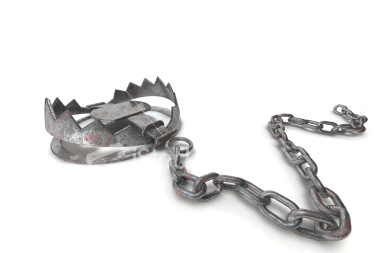
If you are having trouble with the why trap, here are some ideas to help you get out without having to gnaw off your leg:

Enter your search with intention. Decide what you want to discover and make a pact that once you find that information, you stop.

Set a limit – a timer, a number of books or a number of website searches.

Journal. Often we hold understanding within us and writing helps to release it.

When you feel the urge to dig deeper, try exercising first. Often, the need for information is really just restless and anxious energy.

Complete the sentence, “Once I know …, I will feel…” You may be surprised at how little knowledge really impacts emotion.

If your ex was particularly bad, do you really want to understand them? Maybe not understanding says something good about you.

Pray or meditate to find acceptance. There is much in this world we do not understand. And it’s okay to not always have all of the answers.

Maybe it didn’t happen for a reason, but it happened. Now you can create the reason. You can decide how you want this to fit within your bigger story. Create your own why.

What Would Make it All Okay?

I used to play this mind game with myself.

I started by thinking it would all be okay if he had to face me. I entertained vicious dreams of inflicting bodily harm in order to make him feel at least a piece of the pain I was experiencing.

But really all that would do was temporarily release the rage while reducing me to the level of a petty crook. And the pain could never compare.

So then I thought that it would all be okay if he was required to spend time in prison. I wanted him to suffer the loss of a life like I had and to be reduced to a bare existence.

But really all that would do was give me a brief respite from the possibility of running into him in public. And it would fuel funny jokes about him dropping the soap.

So I concluded that it would all be okay if he was convicted of the bigamy and had to go through life limited by the label of felon. I wanted his future to be restricted as he destroyed mine.

But all that would do was give me a moment of satisfaction that he was caught.

So I resolved that it would all be okay if I shared his name and picture with the world, shaming him and protecting others from his machinations. I wanted him to face the embarrassment I felt.

But that would only make me look vindictive and would cause me to be ashamed of my own behavior.

So I decided that it would all be okay if he paid me back the tens of thousands of dollars that he stole from my past and robbed from my future. I wanted him to face the fear of living so close to nothing.

But really all that would do is sooth the account woes; the heart would still be shattered.

So then I was emphatic that it would all be okay if I received an apology letter. I needed to know that he felt guilt and remorse for his actions and for the impact it had on me and our families.

But all that would be is a paper filled with words carrying no more meaning than an essay typed by monkeys.

And still I kept trying.

I played out certain scenarios in my mind and found that each time, the relief would be temporary and greatly lacking.

I finally had to accept the conclusion that there was nothing that could make it all okay.

Nothing that is, except myself.

Okay wasn’t going to come from the courts. Okay wasn’t going to be linked to a bank transfer or prison sentence. Okay wasn’t even going to come from him.

I had to figure out how to create okay on my own.

For me, okay was found in creating meaning and purpose from the pain. It came from sharing my story, not to shame him, but to help others. It came from encouraging dialog about abandonment and marital fraud, hoping to protect others. It came from using my rock bottom as a foundation for a better life.

Ultimately, my okay comes from helping others find their own okay.

Your okay is not out there.

It’s in you.

Claim it.


Can You Trust Your Partner?

trust

Trust is a big deal to me. I thought I could trust my ex. After all, I had known him since high school, had unrestricted access to his iPhone and he followed through with his promises.

Oh, except those that had to do with not stealing from your spouse or marrying more than one person at a time.

Yeah.

Obviously, I was on high alert when I started dating again after divorce. One con man husband is enough, thank you.

Hindsight being what it is, I was able to be aware of certain (often subtle) signs that indicate a trustworthy person when I started dating.

You Have Access

I thought I had access in my first marriage. After all, his phone was always out and never unlocked. I was welcomed, even encouraged, to use it, especially because I did not have a smart phone of my own. Of course, he knew I had access to that phone. He either partitioned it, hiding the lies from my keystrokes or, most likely, had a second phone for his second life. I had access, but it was carefully controlled access.

Brock was different. He left me alone in his house early on in our relationship. His phone is locked, but I know there is only one and it or its screen is never hidden. The most important access was that to his friends; he encouraged me to get to know them on my own, not knowing what stories they may tell. There’s no sense of hiding. Of controlling what is seen and what is hidden. It all hangs out.

He/She Reveals the Bad

Be suspicious when someone’s stories always paint him or her in a positive light. Be extra cautious if blame is always pointed elsewhere. Revealing the bad demonstrates that the person is willing to face and accept reality. It indicates they take responsibility for their actions and choices. And it also means they are willing to confide their weaknesses rather than trying to hide them behind a mask.

Friends Stay Around

When I look back at my ex’s life, he tended to have friends for a season. They all seemed to drift away or he would have some reason to cut contact. Now, I realize that the lies became too much to uphold in certain cases and he had to sever the ties.

A trustworthy person tends to have friends that stay around. Look for loyalty on both sides.

He/She Trusts You

Deceivers and manipulators often assume others are like them. If your partner trusts you, it can be a sign that they can also be trusted. On the flipside, also look out for people that seem to trust too easiliy. They may be pretending for your benefit.

Proof That Isn’t Presented

My ex’s stories always had proof. But that proof was carefully laid out or presented for my benefit. It was too neat. Too perfect. A real story will usually have evidence to support it, but the evidence may not be immediately clear or obvious. Trust but verify and approach carefully wrapped proof with a healthy dose of skepticism.

Little Lies

When asked if he wanted to sample a cookie from a shop in the mall, my then-teenage boyfriend replied, “No thanks. I’m diabetic.” He wasn’t. What he was was a lier. Watch out for people that tell those little fibs with ease. They may be practicing for something greater.

Addresses Issues

All relationships have issues. If you want a trustworthy spouse, look for one that will address matters of concern head-on. After all, lies are meant to deflect, hide or redirect. So pay attention to someone who exhibits those tendencies.


Ultimately, there are no guarantees that your partner is not lying to you. But pay attention, listen to your gut and trust your instincts and you’ll be okay.

And THAT’S the truth!


Dating After Divorce: Common Pitfalls

Are you dating after divorce? Here are some common pitfalls to be aware of –


I received a message the other day from a woman who was recently divorced after fifteen years of marriage. But that’s not why she was reaching out. She was instead asking for help dealing with the utter devastation she was feeling at the end of a six month relationship.

She seemed surprised at the depth of her response.

I wasn’t.

Dating after divorce is often a journey through murky waters. Every encounter and action can have multiple layers, as we work through the end of one marriage, heal ourselves and learn to be in a new relationship. Those events take time and often result in certain stumbling blocks in dating after divorce.

Beginning Deja-Vu

If you were in a long marriage and you were faithful, it has probably been a long time since you have experienced the particular thrill that can electrify the early stages of infatuation. In fact, the last time you felt that intense passion and excitement may well have been with your ex, back when you thought they were the best thing ever. Anyone can get swept up in the romance of new love, but if you’re associating it with the beginning of long marriage, you’re even more at risk for reading more into it than there is. The beginning is always intense. But it’s what happens after that matters.

The Gift of Hope

When a marriage ends, it’s easy to feel unlovable. Broken, even. This belief is even more prevalent when infidelity or abandonment occurred and a partner is left wondering why he/she is not good enough. It’s common to fear that you will be alone. That no one will want you. When that first glimpse of love again occurs, it is though the clouds parted and let the sun through for the first time after a long, dark winter. It’s a sign that maybe you’re not broken beyond repair and that you can be loved as you are. Be careful, though. Because if you’re projecting damage, you will attract those who want to fix – white knights and enablers. It may feel good for a time, but they need you to remain broken. Is that what you want?

Warp Speed

When one has been married, one knows how to be married. And one often forgets how to date. Recent divorcees are known for rushing in to a relationship and then rushing in to commitment. It’s usually not intentional. It’s just the comfort zone. But getting to know someone takes time. If you’re talking home buying before you have discussed deepest fears and witnessed their most important values, you’re falling in love with an idea rather than a person. Slow down. 

Loss Amplified

Loss often triggers memories of other loss. Especially when a new relationship is entered soon after divorce, healing may be delayed. After all, it’s more fun to focus on the new romance than the demise of the old. But the thing about feelings is that they refuse to stay buried for long. As a result, the end of even a superficial connection can feel immense as it triggers the emotions buried from the earlier loss. What you feel may not always be a result of what just happened; cause and effect of emotion is more nuanced than that.

By all means, go out and date when you’re ready.

But please, keep your eyes open.

Alone

I don’t believe my ex intended to leave the marriage via text.

In fact, what I think he had planned was much worse.

I was across the country when he packed his belongings into his car and drove away from his life. I was supposed to return to Atlanta six days later, where I was expecting my husband to pick me up from the airport.

I believe his original plan was to continue to play at normal on our daily phone calls so that I would arrive at the Atlanta airport to wait for a ride that would never come. And be left helpless and penniless with accounts that had already been drained.

It’s strange. Even though I never experienced abandonment that stranded me at Atlanta Hartsfield, a part of me experienced the trauma of being alone, marooned and confused as I waited expectantly for a husband that no longer existed.

And sometimes that trauma is triggered.

And my response is not rational.

My emotions greatly overshadow reality as part of my brain becomes that abandoned wife frantically awaiting a sign that everything is okay.


Last week, after a long Friday at work, I went to start my car only to discover it was flatlined. It was no cause for panic – I was parked safely in a well-known and well-lit parking lot. I had coworkers around who could help. Brock was in town and at home, just twenty miles away. My AAA card was in my purse and I still had one more free tow remaining. I had money in my account to pay for a cab, if it came to that.

In other words, I should have been calm.

I was anything but.

It’s like a breakdown of my car leads to a breakdown in me.

I didn’t take the time to lift my hood and fiddle with my battery. I didn’t ask if someone could jump my car. All I could think about was getting home.

Not being stranded.

I ran back into the building to locate a coworker who drives past my neighborhood on her way home. And I left my car behind.

Brock and I returned to the school a few hours later, where my car started up fine as soon as it felt the caress of the jumper cables. I drove home without incident.

But all week, my anxiety was present.

I didn’t trust my car.

It’s strange. The feeling I had mirrored the anxiety and helplessness I felt at the end of my marriage. Afraid of being abandoned, afraid of not having enough money to survive and yet also scared to look too closely at what may be under the hood.

I just wanted everything to be okay.

To keep on running.

The car obeyed until yesterday, when it again abruptly refused to start. And again, I left it in order to return to the security of home. A home with a husband who again helped me retrieve the car, this time putting a new battery under the hood before making sure I made it home safely.


And even though the car is securely tucked into the garage and I’m snuggled comfortably with my husband in front of the fire, a part of me is still scared.

Scared that my car will betray me again.

Scared that I’ll be stranded and helpless.

Scared that I’ll be abandoned and alone.


A huge hug of gratitude to the friends who drove me home:)