Critical Signs That Your Emotional Walls Are Too High

emotional walls

After experiencing heartbreak, it’s natural to take a protective stance, to build emotional walls in an attempt to head off any additional pain and loss. These precautionary barricades serve an important purpose at first, as they help to shield us from additional assaults while we’re still tending to the wounds that require immediate attention and we are too fragile to withstand any further insults.

Yet left unchecked, these emotional walls that were initially constructed to provide security inadvertently become our own self-built prison. The possibility of connection exchanged for an illusion of safety. Left too long or built too high, we languish behind those emotional walls. Reassuring ourselves that at least we won’t get hurt again while at the same time allowing loneliness to slowly infect from within.

It’s difficult to accept that we’ve inadvertently walled ourselves in, depriving ourselves of the very things that nourish a heart and soul. It can be downright terrifying to take the risk to open up and again be vulnerable when the memory of the pain is still screaming in your ear.

Yet often the best places can only be reached by taking a leap of faith.


The following are signs that your emotional walls may be too high:


You Panic When You Become Vulnerable

It’s often referred to as flooding – that physical sense of overwhelming emotion. Your stomach churns. The blood rushes. And you’re filled with either an immediate need to escape or a total and complete shut-down.

This fight-or-flight reaction is completely normal when you’re in actual danger. However, when the response is this intense just because somebody saw through your defense, it’s an indicator that your emotional walls are too impenetrable.

Pay attention to those physical signs. Are they appropriate for the situation or are they an overreaction? If you find that you frequently panic or flood when emotions are present, it may be a sign that it’s time to learn how to live with these emotions (instead of simply trying to keep them at bay).


You Cut People Out As Soon As They Get Too Close

In general, there is an emotional dance that happens as you get to know somebody. Over time, the boundaries are renegotiated as trust is built and further access is allowed.

When the emotional walls are too high, this dance becomes interrupted as soon as the hidden tripwire is activated. And once this alarm sounds, the perceived interloper is immediately removed from the premises. Often for good.

There are certainly times when it is completely appropriate and healthy to remove somebody from your life. But if you have a history of cutting people out of your life, it may be a sign that you are afraid of letting them in. Examine your reasons for eliminating others from your life. Are they justified, or do they come down to excuses?


You Continually Choose Unavailable Partners

Do you know the best part about choosing unavailable partners? You always have a ready-made reason for the relationship not working out.

Consider who you are attracted to. Are they already in a relationship? Or are they hiding behind their own walls after facing heartbreak? Perhaps they are physically unavailable due to their location or the demands on their time?

When you’re staying in your comfort zone behind too-high emotional walls, unavailable partners are attractive because they will not try to get too close and they won’t challenge your duck-and-cover strategy. At the same time, accepting these partners is a guarantee that you will remain alone behind your walls.


You Become Defensive Whenever Somebody Questions Your Emotional Walls

“I’m not closed-off!” you insist when somebody notes your unwillingness to be vulnerable and authentic. “It’s just that I haven’t met the right person,” you continue, in an attempt to redirect the attention elsewhere. Or, perhaps you bring up your previous heartbreaks to justify your stance, “You would understand if you had felt pain like I have.”

A defensive response is often indicative of two things – 1) somebody is pushing against an area of tenderness and 2) they are uncovering some truth that you’re not ready to hear. Pay attention to who is hightailing your emotional walls. Are these people who are coming from a place of genuine concern (if so, it may behoove you to listen) or they predatory-types who want you to let them in (bye, Felecia)?


You Strive to Keep Areas of Your Life Completely Separated

It is completely normal to act differently with different people and to have distinct groups of friends related to areas of your life. But if you’re overly concerned about any overlap between these groups, it may be a sign that you’re trying to prevent any one person or group from getting to know you too well.


You Use Projection to Assume What Others Are Feeling

“They wouldn’t want to know,” you tell yourself as you bite your lip to avoid opening up. We all have a tendency to assume that others feel the way we do and to tell ourselves what we want to hear. Taken together, this means that when your emotional walls are too high, you are going to unconsciously reinforce that decision by assuming the intentions of those around you.


You Try to Control the Outcome

Ultimately, the construction and maintenance of emotional walls comes down to control. After experiencing the excruciating pain of loss, you strive to never feel it again. And since you cannot prevent others from leaving, you instead keep them from getting in.

And, of course, that is your choice. Letting down the walls carries with it some real risk. You may be invaded by those intending to do you harm. Or, you may find love only to suffer its end. Whenever we open ourselves to another, we are giving them the opportunity to cause pain.

The problems arise when we are not happy or fulfilled and we don’t recognize that ultimately we are the cause of our discontent. Or, more specifically, our self-made walls are. That those barricades that provided needed protection from the elements for healing to occur have now become obsolete or even detrimental.

At the end of the day, only you can decide for yourself –

Is love worth the risk?


Related: 9 Reasons You’re Struggling to Find Love Again


There’s More Than One Way to Wear a Wedding Ring

Marriages stand a better chance when they begin with conversations rather than assumptions.

It’s all too easy to enter marriage with an expectation of what it is going to look like. It is all too easy to expect that your partner-to-be (or even current spouse) has the same view and presumptions about matrimony as you do. It is all too easy to fall into a marital model that does not match the needs and wants of you and your spouse.

Conversations about marriage are not comfortable. They are not easy. And, in many cases, they are even taboo because we see the institution of marriage as being rigid with defined rules and boundaries.

But it doesn’t have to be.

Instead of trying to make everyone fit into the mold of a “traditional” marriage, maybe it makes more sense to shape marriage around our own desires for family and companionship. Maybe the reason that half of all marriages “fail” is that they didn’t fit the couple to begin with.

I received a copy of The New “I Do” last week. It provides templates for seven different types of marriages: starter, companionship, parenting, distance, covenant, safety and open. Each section consists of a description of each style, real-world examples, pros and cons and matters to think about.

And think I did.

As I read, I found elements of some of the models that intrigued me and other ideas that repulsed me. I found myself nodding in agreement for a few paragraphs only to bust out a, “oh, hell no!” in the next.

But throughout, it made me think.

And when it comes to marriage, a little more thinking can go a long way.

Even though I am already in a happy marriage, I found that this book made me consider ideas and options that I had not before. When I summarized the marriage styles for Brock while I was reading, it led to some great discussion about the broader ideas of marriage in general as well as conversation specific to our own marriage.

And marriages stand a better chance when they are based upon conversations rather than assumptions.


If you’re divorced, check it out. It may make you look differently at your first (or second) marriage and see areas where you could do things differently.

If you’re afraid of marriage or convinced marriage (or remarriage) isn’t for you, read it and you may find a model that fits what you’re looking for.

If you’re in a troubled marriage, this book may give you ideas about how you can restructure your relationship to fit your changing needs and perspectives.

And if you’re in a happy marriage, this book lends itself to some deep and interesting conversations about what it means to be married and if you and spouse share the same priorities.


Because when it comes down to it, marriage is not one size fits all. And there’s more than one way to wear a wedding ring.


If you’re curious, Brock and I concluded that our relationship doesn’t exactly fit any of the models. Its core is based on companionship with a healthy dose of passion. That doesn’t mean that’s the right kind of marriage; it means it’s right for us.


Fine China

It seems like people possess one of two mindsets when it comes to their dishes.

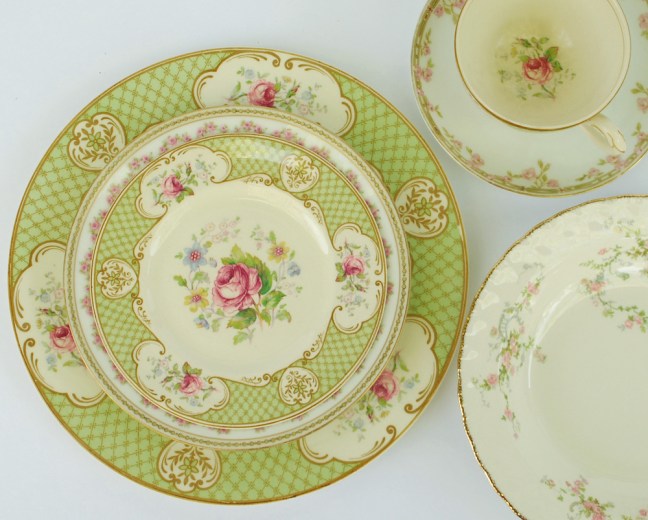
Some invest in a glorious set of matching fine china with visions of dinner parties and holiday dinners dancing through their heads. The dishes are prized, often protected behind the glass barricade of a cabinet. Every use requires an internal debate – is the perceived benefit worth the possible breakage that could occur? Most “china” families that I have known usually ere on the side of caution. The china becomes something to admire from afar while more plain plates grace the dinner table. No event seems quite good enough to unlock the doors.

Those on the other side of the divide either fill their cabinets with accumulated ware or purchase a budget-friendly matched set. There is no debate about bringing out a certain plate. After all, plates are meant to be eaten from. Sometimes, a bowl may chip when it meets the counter’s edge or a plate may shatter if it is dropped to the floor. It is a loss, certainly. But it is understood that some loss is inherent in the use of dishes.

I see that same dichotomy in people’s mindset after heartbreak.

Some people, after experiencing the crushing blow of the end of a relationship, vow to never risk that feeling again. They work to repair their heart and then they hide it away, afraid that using it would open them up to further heartbreak. With each encounter, they carefully weigh the potential risks against the possible reward. And usually they ere on the side of caution. Nobody ever seems quite worth the risk of tearing down the barriers.

Other are less cautious. They feel the heartbreak just as intently, but they understand that some amount of loss is inherent in love. Once their hearts are repaired, they are ready to put it back on the table. Even if that means that it may break again. After all, aren’t hearts meant to love and be loved?

A note to those of you in “china” families: I don’t get y’all, but I’m jealous. My home will never look as good or as put together:) Keep rocking that china! And, on a related note, please don’t judge if you’re over for dinner. You will be eating off chipped plates. Which I happen to think are perfect.


Vulnerable

Vulnerable

I’ve been feeling very vulnerable lately. Why? Who knows, but it doesn’t really matter, does it?

What matters is that I need to learn to be here when my body is screaming for to hide and bury my head beneath the covers and my mind is begging for to re-erect the barriers that once surrounded it.

I’m scared. For the first time in my entire journey, I’m truly scared of being abandoned. Again.

The feeling isn’t based on any reality. But that doesn’t matter. I was blindsided by a text after 16 years. I don’t have much faith in my view of reality.

I know I’m primed for these reactions: my dad moved across the country when I was 11, I had 13 friends die by my freshman year of college, and then there’s my ex-husband. Yeah, I’m no stranger to being left.

Early in my relationship with my fiance, I thought I worked through these issues. Adapted from the book:

It hasn’t been easy to be vulnerable again or to learn how to trust after my faith had been betrayed. It took me many months to open up again and I still find myself erecting a shield at times. My biggest challenge was not giving into to the fear of being abandoned again. This became clear about four months into my new relationship when I saw my boyfriend’s car pull up to the curb outside the airport where he was picking me up after a trip.

Relieved to see him, I reached up to give him a hug, “It’s great to see you.”

Hugging me back, “I missed you,” he replied.

Once inside the car, I admitted, “I halfway expected you not to show.”

He looked shocked, hurt. “Why would you think that?” he said, a hard edge sliding into his voice. “I told you I’d come get you.”

“I know,” I replied softly, feeling ashamed. “It’s just that last year…” I trailed off.

“I’m not him.”

Of course, I knew that on a rational level; I never consciously compared them. It was a matter of memories coursing through my bloodstream, igniting stress hormones that, in turn, sent false signals of impending doom. I also knew that this was dangerous territory; if I expected others to behave like my ex, eventually they would.

The truth? I had only worked through that because I wasn’t fully vulnerable. I don’t expect to be left anymore, but now it scares me. I’ve allowed it to scare me. I’m not holding back anything anymore and I’m only now realizing I still was. I knew that the upcoming marriage had that effect on my fiance. Now I’m realizing that it is having the same effect on me, only a few months later. I am allowing myself to fully feel the love I have for him. And, damn, that’s scary.

I’m realizing that I trust him now but that I might not yet fully trust myself. That’s a strange feeling.

So now here I am. Open and bleeding. No walls, no buried head. I need to learn to be here, to stay vulnerable, without allowing myself to panic and either hide or grasp too tightly. It’s not easy. It doesn’t feel safe.

I want reassurances. Promises. But the truth? That’s only a bandaid. I need to relax and breathe through my fear. I know I’ll be okay, I just need to do a better job of convincing myself. After all, the only true abandonment is when we abandon our true selves. And that’s one I can control.

Breathe in. Breathe out.

It will be okay.

Fear


Related posts:

Fear in the Driver’s Seat

Love After Divorce: A Reflection on a Journey

Static Cling

Like a Moth

Brahmeid Moth (Brahmaea wallichii insulata) at...
Brahmeid Moth (Brahmaea wallichii insulata) at Leader Village Hotel, Buluowan, Taiwan. Photographed on 1 March 2009. (Photo credit: Wikipedia)

Now that the oppressive heat has finally broken in the South, the AC is off and the windows are wide open. We are fortunate to live in a home with plenty of windows that backs onto a wooded area that is infused with the sounds of nature. We are unfortunate that this same house is a rental with missing and torn screens that allow the nature to come right in and make itself at home.

While I was waiting for the coffee to percolate yesterday morning, I noticed a huge (and beautifully-patterned) moth beating furtively against the wall behind the sink. It had been drawn to the light above that we leave on at night. The moth appeared exhausted; its energy stores had been depleted in its fruitless endeavor to reach the light. If it continued along this path, it would surely perish. Meanwhile, an open (and screenless!) window lay mere feet away, entirely unnoticed by the fatigued moth. I used a cup to gently scoop up the insect and I released it into the crisp morning air just outside the window where it could chase the emerging sun rather than the false call of the flourescent bulb.

Open Window Season
Open Window Season (Photo credit: Chiot’s Run)

We often act like moths, drawn to false promises that dazzle us with overwhelming light rather than waiting for the real thing. Once we are hypnotized by that which draws us, we can easily get lost. Stuck. Beating ourselves against a wall that will not yield. Sometimes, we need the perspective of another to scoop us up and release us into the open window that we cannot see.

In my life, work is my false light. It pulls me and consumes me. It leads me to believe that satisfaction and contentment can be found through accomplishment. However, it is never done. I am lucky to have people around me that will point me towards the open window and the rest of the world that exists outside my office. Being aware of the false light that pulls me has helped me avoid its call, yet I still need a helping hand to scoop me up at times.

I just hope they don’t throw me out the kitchen window 🙂

What is the false light light that draws you?