Diving for Pearls

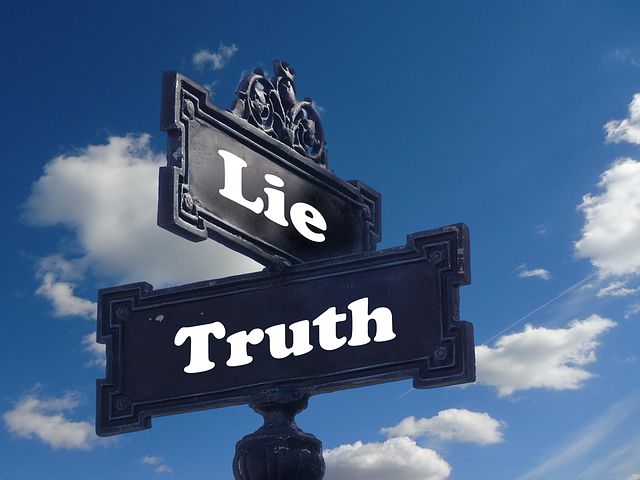
There are times when Truth is important –

When my students use verified geometric theorems to prove triangles congruent.

When my husband tells me where he’s going on a Tuesday night.

When my doctor asks about my family history of cancer.


And then there are times when Truth really doesn’t matter.


A person reached out to me yesterday with the concern about their place in their former partner’s view – did they love me or did they use me?

As I sat on the bench in the gym locker room typing out a response, I was transported to a time when that same question consumed me. As the details of my husband’s other life began to surface, I couldn’t help but contrast what I was feeling at that time (loved) with what he was doing at the time (anything but loving). There was no doubt that he was acting without concern for me towards the end, but did that mean that he never cared for the entire sixteen years?

I was obsessed with answering this question. I would consider evidence in the form of memories or discovered facts and dutifully enter a mental tally mark in either the “He loved me” or the “He loved me not” column. And yet, I never seemed able to settle on a true answer. For every indication that he loved me at some time, I could find a counterclaim that I was merely a pawn in his game.

I was looking for definite proof. For Truth.

But what I really wanted was for the pain to stop.

And Truth, assuming it could even be ascertained, really didn’t matter.


I made a conscious decision to retire my search for Truth. I accepted that he had used me  in the final few years of the marriage and I chose to believe that the love I felt prior to that was real. Maybe I’m right and he did have the capacity for love until he collapsed under the pressure of shame and addiction. Or, I may be completely off base and he may have been a manipulative sociopath from the beginning.

It doesn’t matter.

The marriage is over. I don’t need this information to make any decisions in the present moment. My views don’t impact my ex one way or the other. I’m not presenting this conclusion as definitive and I’m not deceiving anyone. There are no judges evaluating the evidence for my claim and no real-world repercussions either way.

It only matters within me.

So I choose to believe the truth that brings me peace and allows me to hold onto some of the good memories instead of throwing sixteen years of my life away.


Oysters developed a resourceful strategy for handling unwanted and irritating invaders. In order to reduce the pain from a wayward grain of sand or grit, they surround the unwanted particle with smooth coating of calcium carbonate.

That’s how I see my resolution to conclude that I was once loved by him – a pearl enveloping and softening the pain.

And it may not be Truth in any real sense, but it’s real enough to me.


The Pathology Behind the Lie

I don’t get spooked easily.

But I’m spooked right now.

Not because of anything imminent.

But because I’m really starting to understand what kind of danger I may have been in.

When the police first told me how lucky I was to make it out of my first marriage alive, I brushed off their concern. After all, they were talking about the man who had cared for me when I was sick and would gently slide my glasses off my sleeping face each night. How could he have tried to kill me?

Yet even though it seemed unfathomable and he had made no direct threats, I found that I was frightened of him. The reports from his other wife that she found evidence that he was planning her death didn’t help to calm my nerves. And the police took his actions and my fears seriously, setting up nightly patrols during those first few uncertain weeks.

Even then, I didn’t really take it seriously.

But now I do.

And my change in perspective came from the most unlikely of places – a podcast about Casey Anthony, the Florida woman who was accused of killing her young daughter in 2008.

At the time of the trial, I remained largely ignorant of the intense publicity. I knew only the basic outline – she accused the babysitter of kidnapping her child and the child’s body was found some time later.

But listening to the podcast?

In many ways, I felt like I knew her.

Because even though she was a twenty-something mother accused of murder and my ex-husband was a thirty-two-year-old man who committed bigamy and fraud, they were operating out of the same playbook.

And the more I heard about her lies and realized the parallels with my ex’s, the more spooked I became. A feeling of looking down and suddenly realizing that you’re precariously perched high above the security of the ground.

(A quick note here before I delve into the details: As stated, I never followed this case while it was active. Even now, I have not referenced any sources apart from this podcast. There may be information that was discussed in the show that is incorrect or incomplete. Frankly, I’m spooked enough from these details; I have no interest in digging any deeper. Also, I have my gut feelings about Casey’s involvement in Caylee’s death, but I’m not going to speculate about that here. I’m more interested in her multiple lies and her reactions (or non-reactions) to her daughter’s disappearance and then confirmed death.)

In many ways, I’m still too close to my ex’s lies to be able to see them all clearly. They are so interwoven with my own memories of what I believed at the time, that it is difficult for me to be objective. In listening to the description of Casey Anthony, I was able to see these behaviors in a more impersonal and detached manner.

And realizing these similarities makes me truly wonder what my ex was (is?) capable of.


Everything’s Fine

Casey Anthony’s daughter was missing for 39 days. For most of that, Casey kept insisting that everything was fine. Whenever her mother asked about Caylee, she was told that she was an amusement park or with the nanny. Any concern was brushed off with an, “How can you be so ignorant as to think that?” attitude.

My ex had been living a double life for years at the time he left and the financial deceptions that he carried out were beginning to reach critical mass. It got to a point where he was no longer able to shield me from everything (although he gave it a damn good try, including cutting the phone line so that I couldn’t receive calls from creditors). Whenever I would see something that would give me pause, his reaction would always be, “How could you be so ignorant or distrustful to question that?”


Real-Life People Becoming Fictitious Characters

When Casey could no longer deny that her daughter was missing, she then claimed that she was kidnapped by the babysitter. She described to the police how she met this woman through a mutual acquaintance and that she used to babysit his child. This man was real, but he not only didn’t know this babysitter. He had no children.

My ex used a friend in a similar manner. He claimed (to both his other wife and the police) that he co-owned this friend’s business and had a great deal of money coming to him as part of the agreement. This friend (although I’m not sure that’s the correct term) was real. The business was real. But everything else my ex claimed was simply fabricated to connect the dots of lies he had spread.

If They Don’t Exist, Create Them

Sometimes the character needed for the story you’re telling doesn’t exist. When that happened to Casey Anthony, she simply invented the person. For the month that her daughter was missing, she consistently made the claim that her child was with the babysitter. But there was no babysitter. After she accused the nanny of stealing her daughter, she was forced to bring more detail to this imagined character. And she did, even describing the details of the woman’s apartment (which was a merely a vacant unit when the police investigated).

When my ex met his soon-to-be other wife, he told her he was divorced and that his ex-wife was remarried. This fabricated “second husband” of mine remained a mere sketch until he tried using the same story with the police. And they pushed for details. So my “husband” and I had been married a year, were on friendly terms with my ex (in fact, apparently he even attended our imaginary wedding), lived in Snellville and had three dogs. Oh, and my husband apparently worked as a chiropractor. Strangely, I appreciate the fact that if my ex was going to invent a life for me, at least it seems he made up a good one.


Names of Fictitious People Pulled From the Environment

Of course, the nanny that Casey Anthony invented needed a name. She was given the made-up moniker Zenaida Fernandez-Gonzalez, which was later found to be cobbled together from the names of Casey’s boyfriend’s neighbors. Unfortunately, there did happen to be a real Zenaida Fernandez in the Orlando area at the time. I can only imagine the trauma this poor woman faced as she was questioned by the police and hounded by the media.

My ex was also forced to come up with a name for my fabricated husband. He settled on Mark (Marc?) Mercer. When I learned about this pretend husband’s name from the arresting officer, my mind immediately remembered a prominently-placed billboard for Mercer University. The location? Snellville.


Just Write it Yourself

Casey Anthony apparently created several email addresses to send messages as other people. She apparently didn’t know enough about IP addresses to not be fingered as the origination point of these emails.

My ex got into my email account and sent a “Merry Christmas” email from me to him that incorporated the fake fact that we were divorced. The only problem? This email was dated in July because he either neglected to alter the date or didn’t know how.


Fake the 9 to 5

For months, Casey Anthony told he friends and family that she had a well-paying job as an event planner at Universal Studios. She would get up, get dressed, and go…well, anywhere but Universal Studios, as they had no record of her ever being an employee. My favorite detail – when the police asked her to take them to where she worked (after they learned that Universal didn’t know her), she walked them into one the buildings, up an elevator and down a hall. She didn’t admit the truth until her back was literally against the wall.

I’ve had to try to fill in the gas about my ex’s fake employment, as he took all of the related documentation when he left, but from what I uncovered, he pretended to have clients in his freelance business for quite some time. He made up assignments, pretended to work on them when I went downstairs to his basement office and funneled money from credit cards when he needed to get paid from his invented clients.


If You’re Backed Into a Corner, Just Change Direction

When police discovered that the nanny’s supposed apartment was vacant (and had been for quite some time), Casey Anthony then came up with a new story about the nanny’s location.

When asked by the police why he was recently in Brazil, my ex first denied ever being there. Then, when confronted with the evidence of the trip from passport records, he then claimed that it was a work trip (this was the story that I had been told along with details that even included pictures of the trade show he supposedly was working). The police then proved this claim false with a short phone call to his boss. Although he was no longer freelancing at this point, he then asserted that he was doing a side job for somebody. His other wife soon dismissed this fiction as well.


Financial Lies and Bad Checks

Casey Anthony had a problem. She told everyone she had a job that paid well, yet she often had no real source of income. While her parents bought her gas and often provided her with a roof over head, she faked the rest with a series of bad checks.

I don’t have much detail about most of my ex’s financial deceptions because the evidence went with him (but suffice to say, he made many purchases with money that he didn’t have). But I did get to see a series of emails between the band that played at his illegal wedding and he and the other wife. He continually assured them that “the check is in the mail.” I’m sure. He also strung his attorney out who made the comment to me after the divorce hearing, “Not until I get paid first.” At that one, I just had to giggle. And then there’s the one that gave me my only sense of justice in this whole mess. He lied on the taxes and, as a result, I was granted innocent spouse relief. Thank you, IRS, for seeing him for what he is.


Garnering Sympathy and Flirting With the Professionals

Casey Anthony would flip between continuing to live her life that nothing had happened and playing the victim. After her case was over and she was found not guilty of the murder charges, she started a relationship with one of the investigators from her case.

My ex (and by extension, his attorney), kept whining that I was “vindictive” because I alerted law enforcement about his bigamous marriage. I know, poor baby. In an email to his other wife and my mother, he then went on to describe me as “impossible to live with.” Of course, the letter then went on to accuse me of doing exactly what he was guilty of. Nice try. His smarmy behavior continued when he went to my attorney’s office to pick up some keys. The paralegal called me after he left and said it was disgusting how he was flirting with her and trying to win her over. Maybe he was looking for wife number three?


I know that the possible murder of a child and the deceptions involved in fraud and bigamy are worlds apart. I’m not trying to equate those two situations. Yet, if Casey Anthony did intentionally kill her daughter, it doesn’t seem to be an act driven by malice or even momentary rage. Instead, it would have been an act by somebody who is willing to take extreme actions to get what they want without concern for the consequences.

And by seeing those parallels between her undertakings and my ex’s, I now am starting to believe that he really was capable of taking extreme actions. Maybe even extending to murder.

And that is spooky.


My Side, His Side and … the Truth?

narcissist lie

One of the more infuriating responses I’ve received when others have heard my synopsis of my ex-husband’s actions that led to the divorce is, “Well, you know how it is. There’s your side, his side and then, somewhere in between them, there’s the truth.”

After I swallow my scream, I try to respond with a well-meaning and polite-sounding, “That’s so awesome that you haven’t met anybody like him. I hope you never do.”

In general, I am a huge fan of the concept that there are facts and then there is the way we perceive the facts. And those perceptions can be very different. Give two people the same fictional book and they will not only interpret the characters’ actions in different ways, they will likely build mismatched views of the protagonist’s appearance.

Yet the text is the same.

And that’s where I have a problem with this phrase being applied to the circumstances surrounding my divorce.

Of course my ex-husband is entitled to his own opinion. But he is NOT entitled to his own facts.

Which is exactly what he was doing.

When he told the police that we had been divorced for years, I highly doubt that he was simply expressing some metaphorical feeling that he was keeping under wraps. As he recorded my salary on the financial disclosure as a third more than it was, I don’t think it was because he’d viewed the numbers in a different way. And when he described how his “workday” was going while he was on his honeymoon, I struggle to believe that he was really under the impression that he was working long days on the trade show floor.

Those are facts. And there are thousands more where those came from.

And those facts don’t care about feelings – his or mine.

Now, when it comes to the particular climate of the marriage that acted as fertile soil for those deceptions to grow, I’m sure we have our own opinions and perspectives. I would have loved to have been given the opportunity to hear his side. To try to understand where the unhappiness resided and to learn more about his interpretations and outlook.

But I was never given that chance.

So all I have is my side, my best guesses at his side and the facts.

And as for the truth? I’ll never know.

Look Out For These “Red Flag” Phrases

I’d never do anything to hurt you.

This is naive at best and a manipulative distraction at worst. In any meaningful relationship, the occasional hurt is unavoidable.  Toes are carelessly stepped on, harsh words erupt before they’re caught and actions are misconstrued to have an alternate meaning. Hurt happens. And it’s what happens after that matters. Instead of a promise to “never hurt,” look for somebody who will be willing to learn from the unintentional injury and try to do better going forward.

In the more malevolent case, this phrase is used as a numbing balm that conceals the sharpness of the knife pressed into your back. It claims that your best interest is at heart, when the reality is that your heart is being shredded without your knowledge.


You deserve better.

When somebody makes this claim, listen. It may be that they have been far-from-honest with you and they are admitting that you don’t deserve that betrayal of trust. Alternately, they may possess a low sense of self and they feel that they are not worthy of you. Although not malicious, this is also a warning sign because an insecure person will bring unhealthy needs and patterns into a relationship.

Ideally, a relationship inspires both people to be at their best because they want their partner to have the best.


You’re my everything.

Talk about a whole lot of pressure. If you’re someone’s everything, they are looking to you to meet ALL of their needs. And not only is this stressful, it’s also impossible.

It’s healthy and natural to be the most important thing in each other’s lives.  But those lives should also be filled with other friends, interests and supports.


Your happiness is more important than my own.

Sounds good, right? But think it through. First off, this would require a perfect reciprocity to pull it off, both partners neglecting their own well-being in exchange for cultivating their partner’s happiness. Furthermore, nobody else has the power to make you happy or unhappy. That has always been – and will always be – an inside job.

Ideally, each person takes full responsibility for their own happiness and understands that by attending to your own well-being, you’re in turn nurturing the other person as you present your best self and refrain from making impossible demands that they make you okay. You want your partner to be happy and you strive to support that, but you also recognize the limitations of you can provide.


You made me…

Just no. You cannot make somebody do/feel/think anything. You are responsible for your words and actions. The other person is responsible for their reactions. It is up to them to communicate clearly and instate boundaries if needed. Then, the ball is back in your court to respond to that information.

This phrase is a favorite one of abusers, as they manipulate their partners into believing that it is all their fault. Even in milder cases, these words are an indication that the person shirks responsibility for themselves and is more likely to point fingers than make changes.


I can’t survive without you.

Again with the pressure. This is commonly used to tether a person to a toxic relationship. It’s hard to leave when you’re told that your leaving could have dire consequences for the person that you (presumably) care about.

But that burden is not your to carry. If you need to leave, you need to leave. Your responsibility is do so in the kindest, clearest and cleanest way possible. What happens from there is not on you.


You’re my soulmate.

This one sure sounds romantic. But there’s a dark side to it. If you’re placed on the pedestal stamped with the title “soulmate,” you do not have permission to be anything less than perfect. A successful relationship of any duration requires a growth mindset that accepts that perfection is an illusion and sees mistakes as opportunities to learn.


How NOT to Be a Victim (No Matter What Life Throws at You!)

“Let me introduce you to the victim advocate,” offered the policeman who had arrested my husband the day before.


I stopped short. That was the first time that word – victim – had ever been applied to me. I certainly felt victimized. My partner of sixteen years had just abandoned me with a text message, stolen all of my money and then committed bigamy. Yet even though I was still in the acute phase of suffering, I startled at the application of the word “victim.”


Because even though I had been hurt, I did not want to see myself as a victim. Although it felt good for the pain and unfairness to be recognized, the term also made me feel minimized. That word embodied weakness in my mind and I wanted to feel powerful. It spoke of a lack of control and I wanted to be the one to drive my life.


I did not want to be a victim.


But for a time, I was.


In the beginning, I spoke about what was done to me. I looked for resolution and justice from outside sources, hoping for an apology from him and a conviction from the courts. I embraced my pain, feeling justified in holding on to it. Meanwhile, I demonized my ex, removing all semblance of humanity in my view of him.


There was a certain comfort in accepting a role as a victim. I garnered sympathy and commiseration from those around me. I had limited control and limited responsibility. But those same conditions that sheltered me also confined me.


As long as I saw myself as a victim, I would remain one. As long as I was limited by my past, I would remain a prisoner of what happened.


When the desired justice from the courts failed to appear and the hoped-for apology never came, I was left with a decision to make: I could either bemoan the circumstances or I could change my response.


I chose the latter.


I used the following ideas to help shed the guise of victim and make myself the hero of my own life:


Rewrite Your Story


When we are harmed, we often feel powerless, as though we are simply being led through someone else’s story. One of the first steps to renouncing victimhood is to take control of your story. Rewrite it. Reframe it. Narrate it. Change the perspective. Take yourself out of the role of victim (done to me) and put yourself in the role of hero (I did…). Write it or tell it until you believe it.


Pick up a pen and write your happy ending.


Create Purpose


Whatever happened, happened. There is no changing the past. But you can use the past to create something better in the future. Find some anger about what occurred and use that as fuel to drive you to create something better. Look around and see others suffering and use your experience to render aide. Use your rock bottom as a foundation for your life’s purpose.


You have the power to create something wonderful out of something terrible.


Make Changes


When unwanted change is thrust upon our lives, it’s easy to feel hopeless. Learn to recognize the potential hidden within and use the opportunity of uncertainty to create change of your choosing. There is no better time to release what no longer serves you and to embrace new beginnings.


When you’re rebuilding your life from the ground up, you have the power of choice and the wisdom of experience. That’s a powerful pair.


Find Gratitude


One of the powerful and difficult exercises that can empower the victimized is practicing radical gratitude. Face what has caused you the greatest pain, the most suffering, and write down why you are grateful for it. It is an amazing reminder of how much our thoughts rather than our circumstances are responsible for our happiness.


When gratitude is your wrapping paper, everything is a gift.


You are only a victim if you imprison yourself. Release yourself from the shackles of your past and let your spirit soar.