
Dating After Divorce: Common Pitfalls

Are you dating after divorce? Here are some common pitfalls to be aware of –


I received a message the other day from a woman who was recently divorced after fifteen years of marriage. But that’s not why she was reaching out. She was instead asking for help dealing with the utter devastation she was feeling at the end of a six month relationship.

She seemed surprised at the depth of her response.

I wasn’t.

Dating after divorce is often a journey through murky waters. Every encounter and action can have multiple layers, as we work through the end of one marriage, heal ourselves and learn to be in a new relationship. Those events take time and often result in certain stumbling blocks in dating after divorce.

Beginning Deja-Vu

If you were in a long marriage and you were faithful, it has probably been a long time since you have experienced the particular thrill that can electrify the early stages of infatuation. In fact, the last time you felt that intense passion and excitement may well have been with your ex, back when you thought they were the best thing ever. Anyone can get swept up in the romance of new love, but if you’re associating it with the beginning of long marriage, you’re even more at risk for reading more into it than there is. The beginning is always intense. But it’s what happens after that matters.

The Gift of Hope

When a marriage ends, it’s easy to feel unlovable. Broken, even. This belief is even more prevalent when infidelity or abandonment occurred and a partner is left wondering why he/she is not good enough. It’s common to fear that you will be alone. That no one will want you. When that first glimpse of love again occurs, it is though the clouds parted and let the sun through for the first time after a long, dark winter. It’s a sign that maybe you’re not broken beyond repair and that you can be loved as you are. Be careful, though. Because if you’re projecting damage, you will attract those who want to fix – white knights and enablers. It may feel good for a time, but they need you to remain broken. Is that what you want?

Warp Speed

When one has been married, one knows how to be married. And one often forgets how to date. Recent divorcees are known for rushing in to a relationship and then rushing in to commitment. It’s usually not intentional. It’s just the comfort zone. But getting to know someone takes time. If you’re talking home buying before you have discussed deepest fears and witnessed their most important values, you’re falling in love with an idea rather than a person. Slow down. 

Loss Amplified

Loss often triggers memories of other loss. Especially when a new relationship is entered soon after divorce, healing may be delayed. After all, it’s more fun to focus on the new romance than the demise of the old. But the thing about feelings is that they refuse to stay buried for long. As a result, the end of even a superficial connection can feel immense as it triggers the emotions buried from the earlier loss. What you feel may not always be a result of what just happened; cause and effect of emotion is more nuanced than that.

By all means, go out and date when you’re ready.

But please, keep your eyes open.
Alone

I don’t believe my ex intended to leave the marriage via text.

In fact, what I think he had planned was much worse.

I was across the country when he packed his belongings into his car and drove away from his life. I was supposed to return to Atlanta six days later, where I was expecting my husband to pick me up from the airport.

I believe his original plan was to continue to play at normal on our daily phone calls so that I would arrive at the Atlanta airport to wait for a ride that would never come. And be left helpless and penniless with accounts that had already been drained.

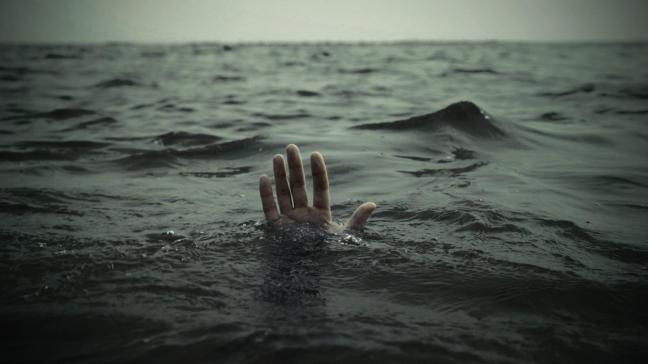
It’s strange. Even though I never experienced abandonment that stranded me at Atlanta Hartsfield, a part of me experienced the trauma of being alone, marooned and confused as I waited expectantly for a husband that no longer existed.

And sometimes that trauma is triggered.

And my response is not rational.

My emotions greatly overshadow reality as part of my brain becomes that abandoned wife frantically awaiting a sign that everything is okay.


Last week, after a long Friday at work, I went to start my car only to discover it was flatlined. It was no cause for panic – I was parked safely in a well-known and well-lit parking lot. I had coworkers around who could help. Brock was in town and at home, just twenty miles away. My AAA card was in my purse and I still had one more free tow remaining. I had money in my account to pay for a cab, if it came to that.

In other words, I should have been calm.

I was anything but.

It’s like a breakdown of my car leads to a breakdown in me.

I didn’t take the time to lift my hood and fiddle with my battery. I didn’t ask if someone could jump my car. All I could think about was getting home.

Not being stranded.

I ran back into the building to locate a coworker who drives past my neighborhood on her way home. And I left my car behind.

Brock and I returned to the school a few hours later, where my car started up fine as soon as it felt the caress of the jumper cables. I drove home without incident.

But all week, my anxiety was present.

I didn’t trust my car.

It’s strange. The feeling I had mirrored the anxiety and helplessness I felt at the end of my marriage. Afraid of being abandoned, afraid of not having enough money to survive and yet also scared to look too closely at what may be under the hood.

I just wanted everything to be okay.

To keep on running.

The car obeyed until yesterday, when it again abruptly refused to start. And again, I left it in order to return to the security of home. A home with a husband who again helped me retrieve the car, this time putting a new battery under the hood before making sure I made it home safely.


And even though the car is securely tucked into the garage and I’m snuggled comfortably with my husband in front of the fire, a part of me is still scared.

Scared that my car will betray me again.

Scared that I’ll be stranded and helpless.

Scared that I’ll be abandoned and alone.


A huge hug of gratitude to the friends who drove me home:)


Rewriting the End of a Relationship

We often underestimate the power we have to change our own lives. Even when circumstances resist change, we can alter our perceptions and our responses. This is a piece I wrote for the Good Men Project about reframing the end of a relationship. About seeing the loss in a new light. About taking back the reigns and driving your own life. Read it and be inspired to rewrite the end of your relationship. Because every ending holds the seed to a new beginning.

Let it grow.


Rewriting the End of a Relationship

When a relationship ends, it is natural to focus on what is lost, to fully submerge in the heartache and mourn the departed. It is all too easy to become so mired in the sadness that the end of a relationship is extrapolated to mean the end of so much more. But that’s just your wounded heart speaking. And it has a tendency to exaggerate.

The End of a Relationship is Not…Read the rest at the Good Men Project

To-Be List

I would wager that barely a day goes by where you are not at least partially driven by a to-do list. Whether scribbled on a slip of paper, stored neatly in your phone’s database or merely a memorized inventory of all that you need to accomplish, you move from one task to another. As you cross each item off the list – laundry, gym, phone call to the bank – you feel a sense of accomplishment. But all too often, that feeling of achievement is short-lived as you look back down at the ever-growing list of tasks that need attending.


To-do lists are important. They keep us organized and productive. They help to maximize our time and ensure that necessary items are addressed.


To-do lists are important.


But they are not everything.


Because we are so much more than simply the tasks we accomplish. Our value is found more in who we are than in how much we can cross off in a day.

Learn how to be today!

How Your Belief in a Soul Mate is Holding You Back

I’ve never been one to believe in soul mates. Even when my 22-year-old self said “I do” to the man I thought was perfect for me, I didn’t perceive him as “the one.”

And that idea may have saved me.

Because when the man-who-wasn’t-the-one decided to leave the marriage with a text message one day, I believed that I could create a happy marriage again and that I wasn’t merely a victim of fate.

There’s an allure to the idea of a soul mate, the belief that there is one person that is your perfect companion. The idea brings peace when relationships end (it’s over because he/she was not the one) and serves as a beacon of hope that everything will be okay once the right person enters your life.

We like the idea of a predestined partnership.

It’s romantic. It’s encouraging.

But it’s also limiting at its best and damaging at its worst.


 Here are five ways that your belief in a soul mate is holding you back.