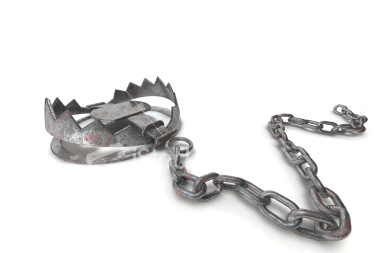
Wasted

“I’ve wasted half my life,” I wailed to my friend from my spot curled up against the doorframe on her checkered kitchen floor.

She turned from loading the dishwasher, “Don’t ever say that. Nothing is ever a waste.”

At that time, I certainly didn’t agree with her. After all, I had just realized that some or all of the past sixteen years had been a lie. I learned that the man I pledged everything to had been manipulating and conning me. I was in the process of losing everything I worked so hard for – from the house to the savings to even the dogs.

I felt defeated.

It was not unlike spending money and time anticipating a lavish vacation only to come down with the stomach flu upon arrival. Only this vacation spanned the better part of two decades and wiped out more than just my appetite.

I wondered how I would ever come to terms with squandering sixteen years. After all, I could rebuild my finances, find a new home and even a new husband, but time was one thing I could never get back.

I gave most of my teenage years and all of my twenties to this man.

Years that now felt wasted. Opportunities passed by and paths never taken.

I felt like I had been led blindly down a dead-end road. A worthless journey to nowhere.

I grew angry, blaming him for stealing my years. My youth. My potential.

I wrote scathing words in my journal about the unfairness of it all, the pointed tip of my pen slashing through the pages. I spent hours crying about the loss, not only of the future, but of my past.

One night, the sobs suddenly stopped and as my breath hitched down to normal, I realized that these hours spent mourning the “what ifs” were the real waste. Not the years I spent living, even if it that life ended.

In that moment, curled in a fetal position on the worn and tear-stained flannel sheets in my friend’s spare bedroom, I vowed to not waste any more time thinking about what could have been. I promised myself that I would never again view those years as wasted.


Because nothing is every wasted is ever wasted if we enjoyed it in the moment.

Nothing is ever wasted if we learn and grow from the experience.

And nothing is wasted because it helps shape who we are today.


To see those years as wasted was really a reflection of how I saw myself after the piercing pain of rejection.

But those years weren’t worthless and neither was I.

Those moments may not have been deposited into the life I expected, but they turned out to be an investment into an even better future.


Choosing to see those years as anything-but-wasted was a gift of forgiveness to myself. I made the best choices I could have at the time. And now I know better and I choose better.

And I choose to make sure to live a life that I will never feel wasted.

Starting Over

“I can’t do this.”

“Why should I try again? I’m just going to fail.”

“Maybe I’m just no good at this.”

“I’m tired of trying.”

I hear those refrains from my coaching clients about lifestyle changes. I hear them from my blog followers about relationships. And, most of all, I hear them from my students about algebra.

My days are filled with students groaning  in frustration, papers wadded up and thrown away in disgust. Every day, I reach into my supply of pencil-topping erasers and provide students with a way to obliterate their mistakes. Sometimes, they become too defeated by even the faintest echoes of work gone wrong, and I have to provide them with a fresh copy, unsullied by their past choices. Some students thrive when they can write on the Activeboard or even with dry erase markers on the desk, where the marks of any error erase without a trace. I model starting over, capitalizing upon rather than hiding my own mistakes at the board.

So much of my day is spent coaching people in starting over – motivating past the initial resistance and guiding new attempts. And even though I coach students on algebra and adults on life, much of the lessons are the same.

We would rather fail because we didn’t try than fail because we couldn’t do.

This was a powerful realization in my early teaching days. I would get so frustrated with students who would just give up and refuse to attempt anything. I saw it as lazy. Or obstinacy. But usually it was a form of self protection. You see, if we try and fail, it reflects upon on abilities. Whereas if we do not try, it only discloses our choices. I learned that in order to reach these students, I had to first convince them that they were worthy in spite of their failures. I found ways to build them up. To let them know that it was safe to try and fail; I would not ridicule mistakes and I would not allow other to either. And then I would find ways to create successes so that they could feel the joy of finally getting something right.

Failure means you’re learning. Starting over means you’re applying the lessons.

We may me more mature than those kids in some ways, but we also shy away from trying because of a fear of how it reflects upon us. We internalize failure rather than see it as a sign of growth. We want to play it safe, stay in known zone where the risks are not too great and the effort not too imposing. We look at the past effort as wasted and we fear starting over because it may lead to another dead end. But the reality is that nothing is ever wasted if you learn from it.

Starting over is overwhelming.

Whether it’s one of students having to re-do a page long problem or a person facing dating again after the end of a long marriage, starting over is hard. Very hard. It’s like taking your first step of thousands in a marathon – your leg is moving forward even as your brain is screaming, “Don’t! It’s impossible!” As with any feat of endurance, the trick is to focus on one step at a time. Starting over requires energy and if you’re mentally biting off more than you can chew, you’re exhausting your resources before you even begin.

When we focus only on the results, we grow frustrated. Celebrate the steps along the way.

I get a strange look from students when I praise their reasoning or skill on one step of a problem but still advise them that their answer is incorrect. “But, Mrs. Arends, I got it wrong. Why are you telling me I did something good?” Learning is a process. Starting over is a process. When we attach too much meaning to the outcome, whether it be a date or an algebra problem, we may miss the signs that we are getting better. So even when the results aren’t what you wanted, celebrate any signs of improvement.

Defeat only occurs when you give up. It’s better to change your goal than to throw in the towel.

In spite of the message put forth by the “everybody gets a trophy” mentality, not everybody can do everything. There are times that you may be trying to accomplish something that is beyond your reach and requires an endless amount of starting over. Rather than just give up completely, shift your goal to something you can do.

When we begin again, the possibilities are endless.

There is something about a blank slate that cultivates enthusiasm. It’s an empty canvas ready to accept whatever you put down. It’s easier to start from the actions of the past, rewriting what we have already tried. But this is your chance to do something new. Different. If one way didn’t work, toss it out and play around with another. If you allow it, starting over can have a sense of playfulness. Curiosity. Wonder and excitement.

Starting over is not doing the same thing again. Starting over is a gift of being able to apply the wisdom of your past to create the image of your future. 

Try. You just might amaze yourself with what you can do.


Confirmation Bias in Marriage

Election season has now reached a fervent peak around the country. My weekly runs take me by countless yards with campaign signs stabbed in their soil as though the occupants are laying claim to virgin land. The radio ads cause whiplash, with one party’s claims following the other, blaring rhetoric in an attempt to sway votes at the last minute.

There’s a reason that political campaigns are so heavy-handed and in-your-face. They are up against an enormous hurdle in their attempt to change our minds.

The politicians are trying to overcome our confirmation bias.

Confirmation bias is an innate trait that we all possess to varying degrees. It states that we have a tendency to seek out information that corroborates our beliefs. It says that we are rarely neutral researchers in life, rather we form hypotheses and then seek out confirmation that our conclusions are correct.

In other words, we look for proof that our opinions are true and we actively ignore or discredit information that threatens our beliefs.

In the political arena, we gravitate towards legislators that echo our conclusions about civic matters. We support those that tell us that we are right and those that threaten our views are often met with intense disdain.

But confirmation bias doesn’t just exist in the poll booths. It’s everywhere. It’s one of the reasons that scientific papers are peer reviewed. It contributes to teachers not grading their own students’ high stake tests. It influences dating when we gravitate towards those that reflect back our own principles. If we believe we are fat, we see the flesh above the waistline; if we believe we are skinny, we focus on the exposed bone structure. It’s why we respond differently to someone wearing a suit than someone whose underwear is exposed above sagging jeans. Bias is behind the success of optical illusions and Hollywood movies. Bias is everywhere.

We see what we want to see.

Confirmation bias is powerful. Even with relatively mundane matters, it still drives down to our core self. Our egos don’t like to be told they’re wrong. Confirmation bias can lead to elaborate choreography to try to shore up our beliefs and the construction of huge blinders to avoid the recognition of anything that threatens our opinions.

Part of the power of confirmation bias is our inability to recognize it. Countless studies have demonstrated that even when people protest that they are acting without bias, that they still gravitate towards confirming information. It operates below our level of cognition and influences every encounter.

So what does confirmation bias have to do with marriage?

Everything.

Because you have a mental construct of your marriage. Of your spouse. Of your relationship and roles. And whether you are aware of it or not, you seek information that substantiates these conclusions while ignoring data that doesn’t align.

It’s one of the reasons that people (myself included) can be blindsided by divorce or infidelity. We believe that our spouse is trustworthy, and we are biased towards evidence that supports our belief. Because if we allow ourselves to see the other data, it not only threatens our view of our spouse, but also of ourselves. After all, if we were wrong about that, what else might we be wrong about?

It’s a slippery slope that’s scary to tread. So we don’t.

We see what we want to see.

Confirmation bias in marriage can also work the other way. If a spouse has concluded that the marriage is garbage or his or her partner is awful, evidence will be mounted to substantiate the claim. One episode of nagging or stonewalling will be added to the tally, while days or months of good behavior is tacitly ignored as a case is built against the spouse.

We see what we want to see.

Given that confirmation bias is innate and subconscious, can we learn to be nonpartisan in our views of the world? Can we learn to see what is and not only what we believe?

Yes and no.

The biggest weapon against confirmation bias is the knowledge that it exists and the acceptance that you are not immune to its siren’s call. Because when you find yourself defensively proclaiming that you have considered all of the information, it’s a good sign that you haven’t. In fact, the more emotional you are about a situation, the more likely it is that confirmation bias is present. Strive to release the ego that says that you can’t be controlled by bias and you will be more likely to recognize its influence.

Confirmation bias also helps to regulate fear. It provides an illusion of certainty and predictability. In order to consider other views, you first have to be willing to let go of the security blanket your bias provides. It comes down to trusting in your own strength and resiliency.

Welcome situations that provide new perspectives. Observe loved ones in interactions with new people or circumstances and try to see them with fresh eyes. Invite others to share their viewpoints and work to consider that they may be accurate in their conclusions. Even if it threatens your beliefs. Especially if it threatens your beliefs.

Ultimately, it is impossible to be completely impartial in every situation. We believe the person we spend the most time with – ourselves. And we see what we want to see.

eyes

The Why Trap (And How to Get Out)

why

There are so many traps post-divorce that can grab hold and keep you stuck –

The anger trap that convinces you that you won’t be okay until he or she pays for his or her misdeeds.

The fairness trap that insists that all of life’s situations should be equitable and balanced.

The sadness trap that keeps you locked in a mental theater replaying the movies of your relationship.

And the why trap that charges that you will be able to move on as soon as you understand why it all happened.


The why trap looks for the reasoning behind your ex’s actions. It seeks to discover a greater purpose for the pain. The why trap attempts to mitigate blinding emotion with the application of rational thought and deliberate thinking. It convinces you that understanding will lead to peace and prompts determined, often frantic, searching for “the truth.”

But it’s a trap for a reason.

The why trap is a sneaky snare. It lures you in with promises of information that will lend sense to the nonsensical. It helps to take you out of the state of overwhelming emotion as you focus on facts rather than feelings. The problem is that there is often no defined end and trying to answer why leads through an endless serpentine labyrinth. And holds you prisoner of your past.


I fell into this trap within the first few days. Since he left me with no information, I obsessively gathered all of the evidence I could, uncovering the planned trip to Uganda, the stolen funds and maxed credit and eventually, the bigamy. It did answer some questions. After all, I could see why he was too cowardly to face me. Can you picture it?

Lisa, we need to talk. You know how I said we were on track financially for what we planned? Well, I sort of spent all of that and more on another life. It was an accident. Oh, and you know how just last night I told you how much I loved you and how I was looking forward to the rest of our lives together? Well, I changed my mind. In fact, I just got married to this awesome girl. Would you like the registry information? We really need a mosquito net since we’re going to Uganda in a couple weeks. Why do you look upset?

Yeah, not exactly. So, the early sleuthing uncovered some answers, but it didn’t provide any peace. So I switched gears towards trying to understand why he would do these things. That’s when I devoured books and websites about personality disorders and entertained the labels of sociopath and narcissist.  Here’s my full description of the results of that search.

And it did help some. Even though I decided to ultimately leave him labelless, I gained understanding of the fact that I had been gaslighted and I realized that he had some major issues.

But all that reading and research started to hold me back. I realized I was expending more energy on trying to understand him then on trying to understand and heal myself. And, as I always caution, whatever you nurture, grows.

If I wanted to heal and move forward, that was where I needed to focus.

So I did.

I still don’t know why it all happened. And I doubt I ever will.

But you don’t need to know why to walk away.


If you are having trouble with the why trap, here are some ideas to help you get out without having to gnaw off your leg:

Enter your search with intention. Decide what you want to discover and make a pact that once you find that information, you stop.

Set a limit – a timer, a number of books or a number of website searches.

Journal. Often we hold understanding within us and writing helps to release it.

When you feel the urge to dig deeper, try exercising first. Often, the need for information is really just restless and anxious energy.

Complete the sentence, “Once I know …, I will feel…” You may be surprised at how little knowledge really impacts emotion.

If your ex was particularly bad, do you really want to understand them? Maybe not understanding says something good about you.

Pray or meditate to find acceptance. There is much in this world we do not understand. And it’s okay to not always have all of the answers.

Maybe it didn’t happen for a reason, but it happened. Now you can create the reason. You can decide how you want this to fit within your bigger story. Create your own why.

What Would Make it All Okay?

I used to play this mind game with myself.

I started by thinking it would all be okay if he had to face me. I entertained vicious dreams of inflicting bodily harm in order to make him feel at least a piece of the pain I was experiencing.

But really all that would do was temporarily release the rage while reducing me to the level of a petty crook. And the pain could never compare.

So then I thought that it would all be okay if he was required to spend time in prison. I wanted him to suffer the loss of a life like I had and to be reduced to a bare existence.

But really all that would do was give me a brief respite from the possibility of running into him in public. And it would fuel funny jokes about him dropping the soap.

So I concluded that it would all be okay if he was convicted of the bigamy and had to go through life limited by the label of felon. I wanted his future to be restricted as he destroyed mine.

But all that would do was give me a moment of satisfaction that he was caught.

So I resolved that it would all be okay if I shared his name and picture with the world, shaming him and protecting others from his machinations. I wanted him to face the embarrassment I felt.

But that would only make me look vindictive and would cause me to be ashamed of my own behavior.

So I decided that it would all be okay if he paid me back the tens of thousands of dollars that he stole from my past and robbed from my future. I wanted him to face the fear of living so close to nothing.

But really all that would do is sooth the account woes; the heart would still be shattered.

So then I was emphatic that it would all be okay if I received an apology letter. I needed to know that he felt guilt and remorse for his actions and for the impact it had on me and our families.

But all that would be is a paper filled with words carrying no more meaning than an essay typed by monkeys.

And still I kept trying.

I played out certain scenarios in my mind and found that each time, the relief would be temporary and greatly lacking.

I finally had to accept the conclusion that there was nothing that could make it all okay.

Nothing that is, except myself.

Okay wasn’t going to come from the courts. Okay wasn’t going to be linked to a bank transfer or prison sentence. Okay wasn’t even going to come from him.

I had to figure out how to create okay on my own.

For me, okay was found in creating meaning and purpose from the pain. It came from sharing my story, not to shame him, but to help others. It came from encouraging dialog about abandonment and marital fraud, hoping to protect others. It came from using my rock bottom as a foundation for a better life.

Ultimately, my okay comes from helping others find their own okay.

Your okay is not out there.

It’s in you.

Claim it.