Adventures in Publishing, Part II

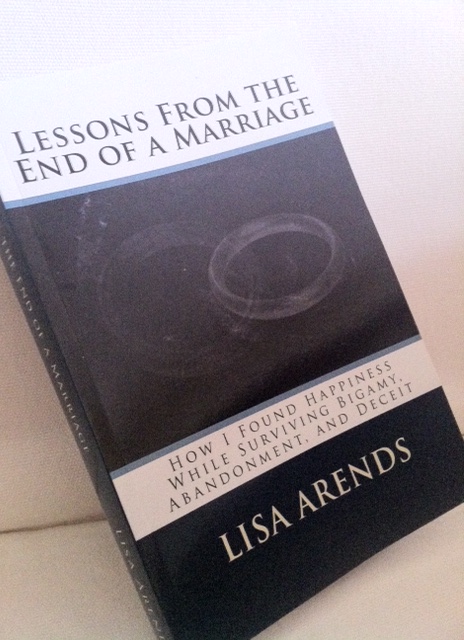
The proof copy of the book came in the mail today! 🙂


It’s a bit strange. I’ve gone from being completely ignorant about self-publishing to being to go-to person amongst my friends in the span of two months. I’ve already explored the early stages of the process here and now I will share some of the other hits, suggestions, frustrations and random thoughts about the process now that I am a whole month wiser (I need a sarcasm font!) and I have a couple more iterations of my book under my belt.

Because endless formatting and the start of the school year have left me unable to assemble sentences coherently, I’m going to present this in a series of rambling bullet points.

First, a primer. I published using three platforms: Kindle Direct Publishing (ebook, Amazon), PubIt! (ebook, Nook), and CreateSpace (print, Amazon) in that order.

– ebooks are da bomb! Both programs were easy to work with and the formatting took a minimum of hassle. After I got my head around how certain styles and formatting options looked in html (the file type used for e-readers), it was pretty simple. The main difference between the two programs is that Kindle wants page breaks and PubIt! want section breaks (the latter is also used in CreateSpace so starting from a PubIt! formatted file saves some time).

-For the initial digital cover, I first tried using Fiverr, but I wasn’t happy with what came back. I ended up using Clipart (the online library is pretty good these days) to create my own image in the specified dimensions, saved it as a PDF, and then converted it into a JPEG. It was pretty simple. The main criteria to keep in mind is that the cover needs to look good as a thumbnail.

-I’m not sure about PubIt!, but Kindle offers formatting for a fee (under $100) if you don’t want to tackle it yourself. Otherwise, it’s free. Honestly, it was simple enough, I wouldn’t pay for this service.

-Another benefit of the ebook format is that you can update your file at any time.  The turnaround seems to be a few days for the old file to be replaced with the new.

-I was planning on delaying the release of the print book for several months, mainly to give myself a break and to allow time to collapse after the early days of the school year. Alas, it was not to be:) I was surprised how many people not only preferred tangible books, but did not have access to an e-reader, smart phone, or iPad. So, I quickly got to work reformatting.

-Print books are another animal entirely. With an e-reader, you don’t have to worry about where the text breaks because it is different on every device and changes with the user settings. A paperback is static. You have to get that spacing right. CreateSpace walks you through the process. After I selected my book size (6″x9″), I downloaded a free MS Word template in which to paste my text. This is where I made mistake #1. I assumed that the template was already sized for the format I selected since it came after I was prompted to choose a size. Wrong. The template was for a standard size page. So, I formatted (and numbered!) the whole thing incorrectly on the first pass. Grrr. Unlike me, you should change the paper size (under page formatting) first. The template is a bit strange to get used to – it looks like an open book but the odd pages are on the left, not the right as it will be in print. Have fun with that one.

-I decided to purchase an ISBN number ($99) through Bowker so that I have options regarding distribution. CreateSpace gives you information on all of your options. As a side note, if you purchase your own ISBN, you are technically opening your own publishing house. I’m having fun with that one.

“What did you do this summer?”

“Oh, I just wrote a book and opened my own publishing house.”

Giggle:) I don’t tell them it was as easy as providing my address and credit card number.

-Next, set your margins. For most books, set the outer margins to .50 and the inner to .75. If your book ends up greater than 400 pages, your gutter will need to be increased.

-At this point, I recommend uploading your file to CreateSpace so that it can scan for errors and you can view the document in their mock-up program. This way you can fix any margin or gutter issues before you spend time on fonts and spacing. And, yes, this would be mistake #2. You can upload Word or PDF files. I had better luck with PDF holding true to format.

-Now it’s time to start working with the text. Make sure all of the text is the font and size you desire. I’m not going into all of that here – Google it for more information on fonts than you ever wanted to know. Size everything the way you want it before you begin monkeying around with spacing. Yup, you guessed it. That was my mistake #3.

-Okay, you’re margined and sized? Now you have the delightful task of playing with spacing and section breaks. If you need to change entire paragraphs, select the entire document and play around with Word’s paragraph settings. You can specify where they break, if words are hyphened, and the amount of space between paragraphs. Once the basic settings are where you want, go page by page and make sure that paragraphs are where you want. Remember that new chapters should always begin on odd numbered pages (left side in the template). If you need to add a blank page to make that happen, use a section break. One quirk to be aware of – you are not allowed more than three blanks in a row, including at the beginning and end of the book.

-A brief interlude: Save multiple copies of your file as you move through the process. My file became corrupted as I was putting on the finishing touches. I had been saving versions of it at various points, which ended up saving me. I still had to redo all of the formatting, but I could dig through several versions to find the most recent, yet uncorrupted, file.

-The final step is to insert headers (usually title or title/author) and footers (page numbers). I used the directions on this site. Once you get the hang of it, the page numbers aren’t too bad. Until you get the hang of it, you want to throw your computer out the window.

-Speaking of computers…I have a cute little 11″ MacBook Air. I love the thing. It’s small enough to slip into my purse or a backpack and take to the park or a coffee shop. The battery lasts long enough that I rarely have to worry about bringing along a charger. During the formatting process, however, my computer was not my friend. Its screen was simply too small to be efficient. If you have access to a large monitor, use it for this process!

-I thought I was home free after I finished the interior of the book. I was planning on using the image from my thumbnail in the cover template from CreateSpace. Yeah, not so much. First, the cover creator in CreateSpace is pretty (read: very) limited. There are only a handful of templates to choose from and they offer little in terms of customization. After discovering that the pixel count wasn’t high enough in my original image (they suggest 300 dpi), I had to start over from scratch. I was frustrated with the lack of choice, but I didn’t want to spend the time or money to create a cover (much harder to do for a physical book) without the template. If you use their program, try to enter the process with only a general idea of what you want so that you are not frustrated with their (lack of) options. If you’re still counting, I would call that mistake #4.

-As with Kindle, you can pay CreateSpace (around $300) to do the formatting for you. This may be worth it, especially if you have images or other elements that make it difficult to format.

Overall, self-publishing is relatively easy and can be done for little to no money. It is a great option to get your book out to the world without relying on the whims of agents and publishers. So, what are you waiting for? Finish that book you’re always talking about writing!

Preventative Medicine


There is one question that I am frequently asked that I find difficult to answer.


“What advice can you give to others to keep this from happening to them?”


I wish I could dispense some nugget of wisdom that would alert to an impending tsunami divorce. I would love to be able to provide a talisman against deception and betrayal. It would be wonderful to give people the security in knowing that if they only said or did certain things that this could not happen to them. I wish I could. But I cannot.


There are no guarantees. The cancer of a compulsive liar can metastasize in even the most visibly healthy relationships. There are no guarantees but there are some signs that something wicked may be coming.


In my case, I had been with my husband since we were 16. I knew his family. I knew his childhood friends. I was with him as he grew into an adult. I saw him through struggles and triumphs. I thought I knew him as well as it is possible to know another. I was wrong. Just because you knew someone does not mean that you know them.  It is natural to be more alert at the beginning stages of a relationship and then to slowly settle as you develop a comprehensive picture of who your partner is. It is not healthy or beneficial to remain on that higher state of alert for the long haul but that does not mean that one’s eyes should completely close either. We all change. It is important that your mental construct of your partner be flexible to change as well.


It was different for Amanda, my husband’s other wife. They married within three months of meeting. She had never been to Atlanta, where he lived, nor met any of his friends and family (their wedding had a couple hundred people – all on her side). That would have been a little too awkward since they all knew me as his long-time wife. He told her stories of great sums of money he was to earn from the sale of a company that he owned (actually, it was his friend’s company, not his) while he maxed out her credit cards. He was ready to leave his established life and move to Uganda with her without hesitation.Perhaps it’s just my insider perspective here, but I see huge warning signs that she could have spotted.

Health
Health (Photo credit: Tax Credits)

I think my answer to prevention can be best thought of by comparing it to physical health.


I would like to never face the ravages of cancer. I read research on the disease to educate myself about its known causes. I work to mitigate those causative factors within my life: I eat well, I exercise, I don’t smoke, etc. However, I do not let the fear of a potential disease prevent me from a day in the sun or enjoying a glass of wine. There is balance between knowledge and preventative medicine and continuing to live. I try to find that sweet spot. Regardless of how healthy I try to be, there is no promise that I will never face malignancy. All I can do is try to lower the risk factors and make sure that I am as healthy as possible in case I do have to fight that battle. And, in the meantime, I’m not wearing armor for a war that may never begin.


The Accounting of Loss

Lean accounting

I’m a numbers girl. I like to quantify things. I enjoy manipulating variables until I arrive at the security of the right answer. So, when I went to play a favorite album on my iTunes yesterday and my ex’s email popped up with a prompt for an unknown password (his computer was the main one and so all iTunes purchases and downloads were routed through his machine), I wanted to pick up a red pen and add “iTunes library” to the mental ledger that catalogued all of the losses from the divorce. Its entry would reflect the dollar value of replacing all of the shared library that now only accessible by him. It would not be a lonely entry; it would join hundreds of other losses, both tangible and intangible, that I incurred with that initial text.

Fuming, I settled on another album, pressed play, and looked up to resume work on formatting the book (note to self – never, and I mean never, take a job that includes editing or formatting!). My eye caught a note that I have posted above my computer:

Gratitude

-great relationship

-awesome family & friends

-good job and promising additional career

-health and love of working out

-awesome pets

-roof over my head in a city I love

-progress beyond imagined

-learning to let go of fear

-being able to help others heal

-he didn’t take my life

Obviously, that list would be recorded in black in the assets column of my mental ledger. But what dollar amount would I assign to each item? How could I even begin to quantify those things that are so dear? I can’t. There are some things that go far beyond an analytical list.

I think it’s time to retire the ledger and to become lax in my accounting, at least that done in the red. I think I’ll choose to count my blessings rather than enumerate my losses.

Surrender

It is natural to resist.

To struggle.

To put up a fight.

It is natural for us but that does not mean that it always helps us.

I receive a lesson in surrendering twice a day when it is animal feeding time. The cat, Maddy, comes first. She usually is loud and insistent as she tries to lead me to her food dish. She likes to wind in and out of my feet making the journey difficult especially if I have to come down the stairs. She then positions her body over the food dish, making it challenging to pour the kibble around her ready frame. At least once a week, she pushes up against my arm while I am pouring, thus spilling food across the floor. She gets fed, but we all end up frustrated in the process.

A full dish with no cat in sight. A VERY unusual situation! She probably knew I wanted a picture…

The dog, Tiger, is in total contrast to the feline. As soon as I make a move towards his dish, he slides into a prone position with his head down and averts his gaze as I mix his food. He stays in that position until the food is on the floor and he is told “okay.” By surrendering to the process, he (and the rest of the household!) is calm and peaceful while the food is served.

There are certainly times in life when it is appropriate to take up arms and be ready to fight for your rights or those of your loved ones. There are times when pushing through is the only way and surrendering will only leave you trampled in the dust.

But those times are much fewer and far between than we realize. Think of your own life. Do you ever fight for a meal that is coming anyway? Do you protest even when others are moving to your aide? Do you inadvertently trip those around you or block what you desire?

Tiger patiently waiting for his breakfast.

I know I do.

I have a tendency to see surrendering as a weakness, a sign of giving up and giving in. I fight, not against any real adversary, but for control. The desire for the illusion of control is what holds us back from acceptance. It is a fruitless fight, that battle for control. You may as well be in a brawl with a ghost, struggling to hold tight to an apparition. There is power in surrender. It shows that you are strong enough to let go of control and trust that you will remain standing nonetheless. There is peace in surrender as the pointless clash is let go. Learn when to trade in your sword for a white flag and yield to that which causes you struggle.

Luckily feeding time comes twice a day so that I can remember the value in surrendering. And the fact that cats are not very trainable.

Transistance

transistance [tran′zis·təns]

(electronics)
The characteristic that makes possible the control of voltages or currents so as to accomplish gain or switching action in a circuit; examples of transistance occur in transistors, diodes, and saturable reactors.

McGraw-Hill Dictionary of Scientific & Technical Terms, 6E, Copyright © 2003 by The McGraw-Hill Companies, Inc.

transistance [tran′zis·təns]

(psychology)

The characteristic of being resistant to transitions.

Me. Sometimes I feel the need to make up a new word or ascribe a new meaning to an established word in order to say what I want to say. This is one of those cases. Apologies in advance if that offends you.

Anyone involved with education is familiar with the enormous transitions from school to summer and then back again. As a teacher, I am involved with shutting down and then restarting an entire organization every year. It is a transition on a macro scale. Embedded within that transition, each person involved is also facing change. I see it in the rising freshmen in the spring and the incoming sixth graders in the fall. I see it on the faces of the parents as they witness their “babies” growing into maturity. I see it in the teachers as we adapt to new curriculum and new routines. It is an exciting and stressful time for all.

But why is it stressful? The coming of another school year and the aging of children are expected. Normal. So why the anxiety that bleeds into the buzz?

Transistance.

We so easily fall into the trap of thinking that the way things are now is the way they are always going to be. We might plan for tomorrow yet we see it from the perspective of today. That creates a friction between our psyches and the “now” that results in a resistance to change. We know transitions are inevitable yet it is difficult to imagine the biting wind of a winter storm while baking in the summer sun.

The only thing constant is change. Heraclitus

I did not used to be as aware of the affect that transitions had on me. I would find that I didn’t sleep as well or that my mind felt scattered, but I never really dug down into it. I am trying to be more mindful of the transitory periods in my life so that approach them proactively. I make sure to take a little extra time to be quiet: yoga, meditation, or a solo hike or run. I do a better job listening to my body even it that means going to bed before 9:00 p.m. I remind myself that the stress of transition is also temporary and that a new normal will once again be reached. I still experience transistance. We all do. But now I can face it with a smile.

How about you? Have you experienced any transitions lately? Did you have transistance? How do you cope with transitions?