Separation Anxiety: Understanding Why Rejection Hurts

rejection hurt

Our new pup apparently has some issues with separation anxiety.

So far, he has destroyed every bed that has been secured with him in his crate and tried to eat through a window when he was allowed to roam free (He was wearing the cone of shame when this happened. I would love to see video of how he managed to get his teeth to the window frame!).

Once we realized what were dealing with, my husband immediately researched Cesar Millan’s recommendations for mitigating separation anxiety.

In one video, Cesar highlights the origination of the behavior and why it can be so pervasive.


“Dogs are pack animals. And to be left behind from the rest of the pack is the most painful thing ever.”


Wow.

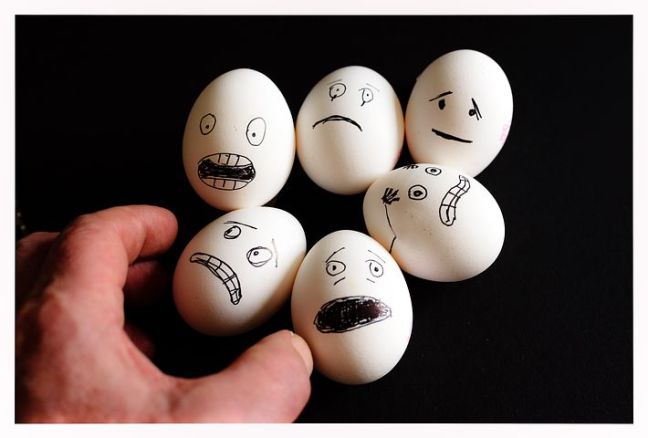
Now, I know it’s dangerous to equate human emotions to dogs. But when I heard this, I immediately thoughts of the excruciating pain of a sudden break up. After all, our human packs may look different, but social bonds are just as important to us. And to be rejected from the rest of the pack is the most painful thing ever.

In our ancestral past, to be rejected could easily become a death sentence. Without the protection and pooled resources of the tribe, the outcast immediately has to enter into a battle for sheer survival.


It’s no wonder then that rejection registers the same as physical pain on fMRI scans. To be rejected can feel like a literal death sentence. 


This framework also helps to understand why people respond to romantic rejection the way that they do. Especially when the break up is sudden and complete or the withdrawal unexplained and painfully cold.

Some choose to fight, channeling their distress into relentless anger targeted at the people they see as responsible for their dismissal. They may paint their ex as a malicious monster or demonize the other man or woman. Rejection can prompt an offensive attack  or it can lead to a fight to hold on to the rejector. This grasping may manifest physically as stalking behavior or it may exist only the rejected’s mind in the form of obsessive and persistent thoughts.

Others, powered by the fear of being alone, choose to flee, hoping that if they can only run fast enough, they can outpace the pain. They may seek to distract themselves from the rejection or find temporary acceptance from hollow interactions. Maybe they convince themselves that they prefer being isolated and they build walls to ensure that others cannot approach (thus eliminating the chances of further rejection).

And some choose to freeze. Becoming stuck, anchored in their isolation. They turn inward, perhaps blaming themselves for not being enough. As they internalize the experience, they shift from seeing rejection as something that happened to them to wearing it as an identity and projecting this idea that they are not to be desired.


At its most basic, rejection triggers fear. Fear of being alone. Fear of being unwanted. Fear of insignificance. 


At home, we’re working with Kazh to help him understand that being alone isn’t something to fear. He’s learning how to stay calm even as his humans walk away and to trust that the solitude is transitory. We’re building his confidence in himself so that he becomes more comfortable when his pack leaves him behind. And, as the healing leg allows, we’re exercising the body so that it is less likely to send the mind signals of panic.

And it’s not really so different for us. We can practice staying calm in times of rejection, reminding ourselves that isolation is often fleeting. We can refrain from exaggerating the magnitude of the rejection, understanding that feeling like you’re dying doesn’t mean that death is truly imminent. We can focus on building our confidence so that being alone doesn’t equate to feeling helpless. And we can use the body to help to train the mind.

But we, unlike many of our canine companions, can also find a new pack when we’re pushed out of the existing one. A rejection from one person does not equate to a rejection from all.  Instead of seeing rejection as a sign that you’re not good enough, chose to view it as an indication that you’re not the right fit.


When you view rejection as information, it empowers you to find a more fitting situation. Better to know that you’re not a good fit than to spend your life trying to be a square peg in a round hole.


And if you’re still feeling the sting of rejection, play with a dog. They’re good at making you feel wanted. Especially if you have treats:)

Lisa Arends divorce
Obligatory puppy photo.


Dating After Divorce: Distinguishing Between Forewarnings and Normal Fears

dating after divorce fears

Dating after divorce requires navigating a minefield littered with the emotional debris of your marriage. In such a potentially hostile and alien environment, differentiating between true threats and harmless anxieties can be challenging. Here are some clues to help you decide if your new relationship worries are normal…or something to be worried about –


Signs That You May Need to Reevaluate Your Relationship:


1 – Feeling like the other person “saved” you.

This can be such a seductive feeling. When you’ve been slogging through the suck of divorce and you meet somebody that promises (through word or action) to pull you free of all that misery, it’s an amazing sensation. Things go from seeming insurmountably terrible to unbelievably simple as this person sweeps you off your feet.

It’s tempting to read into this feeling as a sign that you’ve finally met the right one. That by replacing the person on your arm, you’ve immediately shed all of the pain and struggle from your previous relationship. Yet it’s not that simple. That lightness and elation you’re feeling with your new date is a great sign – it tells you that you won’t be mired in the past forever. And when it comes solely from an external source, it will also be fleeting. Because nobody has the power to save you from yourself.

If you find that you’re assuming the stance that you have been saved by your new dating partner, you’re putting yourself in the perilous position of counting on them to remedy your problems. You’re both giving them too much responsibility and too much power over you.


2 – Only staying with your new partner because you don’t want to be alone.

When we’re starving, we’ll settle for food that is less than desirable in order to avoid the urgent discomfort of an empty stomach. Likewise, when we’re hungry for companionship, we’ll accept a partner that is far from ideal.

The fear of being alone is universal and powerful. Consider the role isolation plays in some of the more psychologically terrifying fiction. From Hanks’ character in Cast Away to Wahlberg in The Martian, we feel that primal twinge of panic at the thought of being abandoned. And after divorce? That primal scream is awfully loud.

And so we easily can grasp onto the first available body that we encounter. Not only setting us up for a misguided choice, but also increasing the chances of feeling lonely within a relationship. Which, as many people can attest, is even more isolating than feeling lonely by yourself. Being alone suck, but being with the wrong person is even worse.


3 – Describing your dating partner as good, but…

There’s a common narrative in relationship letters to advice columnists. The writer first describes all of the wonderful characteristics of their partner, only to then follow up with, “but…” And the word that follow that conjunction are often terrible, describing abusive or controlling behaviors. Effectively negating all of the positives that were first recounted.

Nobody will be all-good or even an entirely good fit for you. Every person and every relationship has its “yes, buts…” And in order to have a happy and healthy relationship, you have to be willing to live with (and even ignore) those negatives. However, especially when you’re feeling vulnerable, it can be easy to be in denial about some major red flags. Pay careful attention to the downsides that your partner brings to the table. The good side can only balance out so much.


4 – Only staying with your partner because you don’t want another “failed” relationship.

It’s not easy to accept that either you chose poorly again or haven’t yet developed the skills needed to maintain a healthy relationship (or both). It’s both disheartening and embarrassing to have to admit that you’re yet again at the end.

So maybe you begin to tell yourself that “it’s not that bad” or maybe you begin to believe that this is what all relationships ultimately dissolve into. For many of us, it’s not easy to admit to our mistakes or our shortcomings. We stay on the path because it seems preferable to conceding a wrong turn.

Yet often, refusing to admit to a mistake is the worst mistake you can make. What’s worse – having to say you screwed up or living with a screw-up for the foreseeable future?


5 – Feeling embarrassed to introduce your date to your friends or family.

When you feel like you have to keep your date a secret from others, you need to ask yourself where this shame or embarrassment is coming from. Do you subconsciously believe that they are somehow beneath you? Do they have some very real shortcomings that you privately believe should be deal-breakers (but you still don’t want to break the deal)?

Friends and family can often provide a helpful perspective on your romantic relationships. Unblinded by love (or lust) and fear, they may be able to give you some insight that you’re too close to see. It’s a warning sign if you’re reticent to hear that input.


6 – Justifying or ignoring “deal breakers.”

before you started dating again after divorce, you probably generated a list of deal breakers in a relationship. Some of these may have been reactionary and rather inconsequential (I know I swore off men with a certain pattern of facial hair). But other items on your list are probably there for an important reason.

Take a moment to recall those traits that you swore would be a “stop sign” to a relationship. Have you allowed your resolve to slip and you’re now justifying or excusing those very things you swore you would not tolerate?

Changing your own values and boundaries is a sign that you’re allowing yourself to be swallowed up within your relationship. Remember, the promises you make with yourself are the most important ones of all.


Normal Fears When You’re Dating Again After Divorce:


1 – Struggling with being open and vulnerable.

Dating is risky. Allowing yourself to love again is scary. You will probably find yourself either wanting to hide behind an emotional wall or wanting to run at the first sign of developing intimacy. This impulse is completely normal as you try to find the balance between never wanting to be hurt again and wanting to find love again.


2 – Learning to manage triggers from the past.

You will carry some of your old assumptions and fears into your new relationship. You will struggle to differentiate between an appropriate reaction to the present situation and an attempt to battle ghosts from the past. Feeling triggered often says more about where you are in the healing process than it does about the state of your new dating relationship.


3 – Negotiating the terms and expectations of the relationship.

This new dating relationship is not your marriage. There will be rocky periods as you navigate the unfamiliar terrain and both communicate your needs and expectations. Divorce has most likely influenced you; the terms you seek within a relationship now may differ from those that you sought before.


4 – Fear of losing your dating partner.

You’re fresh on the heels of lost love. It’s completely natural to fear losing it again. You may find that you have a tendency towards clinginess or a drive to know everything your partner is doing in an attempt to control the outcome. This fear is normal; however, it can also easily become out of control if it is allowed to run amuck.


5 – Missing elements of your ex.

No matter how vile you now believe your ex to be, there were traits that drew you to them. Traits that you may now miss. Occasionally longing for the positive elements of your ex is nothing to worry about. Just be careful about comparing your new date to your former spouse. 


6 – A sense of awkwardness and discomfort.

In time, marriages become the comfortable tee shirt you’ve had since college. The sharp folds have been softened as it molds to your body and you’re familiar with its every seam. A new relationship is a unworn pair of boots. Shiny and full of promise, but also a bit uncomfortable and strange feeling. It doesn’t mean it’s not a good fit. You have to give it some time to break in.

Divorce: Expectations vs. Reality

Was your divorce anything like you would have expected divorce to be like?

I know mine wasn’t.

Not. Even. Close.

Movies, books, billboards, magazine articles and my own parent’s divorce created certain expectations in my mind about what I could anticipate from divorce.

But the reality?

Something entirely different.

Can you relate?

Here are the expectations many of us have before we experience divorce and the reality that we realize only once we’re living it. 

11 Tips to Make Friends As an Introverted Adult

make friends

I watch friendships form every day. I see the new kids slink through the halls and into the classrooms on their first day, both wanting to be invisible and also yearning for recognition and acceptance. Their first interactions with the other kids are often uncomfortable, but within the span of a week, most of the new students no longer stand out as different.

It’s easy to make friends in childhood. School provides both the structure and freedom needed for relationships to develop. Classes and lunch schedules allow for repeated exposure to the same people so that familiarity easily builds. The down time in the halls and the lunch room provides an easy opening for exploration and banter, often centered on the shared experience of school.

It’s not as easy to make friends as an adult.

Especially as an introverted one.

Introverts can easily underestimate the importance of friendships. After all, we don’t feel the same intense pull towards others that our more extroverted brethren experience. Our social groups are smaller, our interactions fewer. The need for time alone is often more pressing than the need for connection.

And yet, we need friends just as much as the gregarious. Loneliness and a lack of human connection has been associated with both lower mental and physical well-being. We introverted ones may treat friendships as a nicety, but they are really a necessity.

Introverts tend to be adept at maintaining already established friendships, especially with people that are understanding of their periodic need for hibernation. But when life circumstances remove those familiar relationships, introverts can stall in the quest to create – and build – new friendships.

So how can introverts make friends in adulthood?

Adult life doesn’t easily provide the nutrient-rich agar that friendships feed off of. We may encounter others sporadically or only with a task-oriented goal in mind. There are no teachers or counselors to intervene on our behalf, requesting that others extend a hand.

By the time we’re old enough to rent a car, we have become quite comfortable with the room within our own minds and, as independent beings, have the opportunity to curl up and stay there. This natural introversion can come across as cold or uncaring, leading to further isolation.

But with just a few tweaks and adjustments, even the most introverted can find and nurture new friendships.


Accept that you will be uncomfortable sometimes.

Like most introverts, I am comfortable in my own home. My own room. My own head.

But that’s not where potential friends reside. In order to meet people, you will have to leave your comfort zone. You will be in environments that may feel overwhelming. You will be asked to stretch beyond your unusual routine. Learn to distinguish between ordinary discomfort and your intuition telling you that something is amiss. Refuse to pander to the former and what was once unsettling will become easier to navigate.


1 – Seek out one-to-one or (very) small group interactions.

Play to your strengths. You likely find large groups of people draining and even isolating. While an extrovert may throw a party to meet new people, you’ll be better served by inviting an acquaintance to coffee.

Recognize the numerical tipping point where you go from. “I like this” to “This is too much” and strive to keep your social interactions within that limit. When you do find yourself in a big group, try to find or create a smaller, more intimate gathering within (or just beyond) the masses.


2 – Say yes.

I know your book is calling. I know that you crave the solitude of your bed after a crazy day. It’s easy to make excuses to those invites that find there way to you. To beg off those intrusions on your peace.

Make a promise to yourself to say “Yes” to a certain number of invitations every month. The gathering may not exactly be your cup of tea (again, you will be uncomfortable sometimes), but you’re opening the door to allowing someone in. And you never know, they just might become a friend.


3 – Plan for buffer zones.

If Maslow had written a hierarchy of needs for the introvert, alone time would certainly be on the lower rungs. In order to both maintain your sanity and to ensure that you’re at your best in social situations, plan for some down time both before and after any taxing interactions.

You may be surprised how minimal these need to be in order to be effective. Try wearing headphones to block out others on your daily commute or diving into a book for five minutes in the parking lot before you exit your car.


4 – Strive for repeated and frequent exposure.

Familiarity breeds friendships. You cannot make a friend in just one encounter. If you meet someone and they pique your interest, look for a way to see them again soon. If you’re trying to meet others, seek out environments where you encounter the same (manageable-sized) group on a frequent basis.

Repetition is especially important in the beginning of a friendship. You may need to have more contact than you usually prefer in the early stages in order to get the relationship off the ground.


5 – Practice extending invites.

I’m good about saying “Yes” to invites, but not as good at initiating them. And since I have a lot of introverted friends, we can easily go quite a long time without contact.

Look for opportunities to extend an invitation. Instead of falling to your default position of doing things alone, see if somebody wants to join. It may feel awkward at first to ask, but often that effort is needed to create the frequency of contact needed for friendship.


6 – Use technology wisely.

On the one hand, the internet and texting technology has been a boon for introverts. After all, we can now “talk” to others without ever leaving our home. On the other hand, it can easily provide an excuse to not have meaningful connections with others as we hide behind our screens.

Use technology as an assist, not an excuse. Send an invite through text. Find potential friends through an online interest group. And then put the phone down and talk to the person. In person.


7 – Find your niche.

If you find small talk awkward and annoying, you may find it easier to meet potential friends that already share an interest of yours.

Introverts often have passions and hobbies that are largely solo activities – writing, model-building, gaming, etc. Since you may not meet others simply by engaging in your interests, it will take some extra effort to find others that share your enthusiasm.


8 – Look outside your familiars.

When we’re in school, our friends largely mirror us. They tend to be of a similar age, background and social class. As adults, we are not limited by the factors that guide childhood friendships.

We find it easier to identify with and bond with those that are superficially like us, but sometimes the best friendships can be formed with apparent opposites.


9 – Identify and manage any social anxiety.

Introversion and social anxiety are no the same thing (the former deals with how you recharge your energy and the latter comes from a fear of “what ifs”), but they can go hand-in-hand.

Recognize if you have any signs of social anxiety that are making it more difficult for you to make friends. Anxiety can be managed and inaction often serves to only allow it to grow.


10 – Communicate your needs.

Your budding friends may not recognize you as an introvert or may be unfamiliar with the needs of the more introspective set. Be upfront with your need for alone time and be clear that it has nothing to do with your like – or dislike – of another.

People are going to respond much more favorably to an explanation of a need for solitude than to constant brush-offs or unanswered texts. Additionally, if you sometimes need a nudge to get you out of the house, let that be known as well.


11 – Maintain your intention.

As an introvert, you need your time alone. Yet you also need meaningful human connection. Once you determine how much you require of each in order to be happy and healthy, make maintaining that balance a priority.


Related –  An Open Letter to Extroverts: What the Introverts in Your Life Want You to Know


Guest Post: Proof Divorce Can Make You Happier

When you’re in the midst of it, divorce and happiness seem mutually exclusive. As though you’re not only divorcing your spouse, but also splitting from your ability to ever smile again.

This post gives hope that happiness can follow on the heels of divorce. That sometimes losing what we thought we wanted can sometimes be exactly what we need.


Proof Divorce Can Make You Happier

The decision to end a marriage inevitably comes bundled up with worry and anxiety. It’s only human to find yourself wondering whether you’re making a mistake; whether this decision will continue to have negative repercussions – particularly with regards to your mental health – long after the divorce has been finalised.

As familiar as such concerns will be to anyone that has been through or is considering a divorce, though, a recent study conducted by UK-based Quickie Divorce has revealed that they’re often unfounded.

We polled 100 former customers whose divorces had been finalised more than two years ago. We asked them, simply, how happy they now felt and whether they regretted their divorce. Their responses were, we’re pleased to report, overwhelmingly positive.

Of the 100 people we polled, 83 informed us that they were much happier and that they believed that their decision to end their marriage was the right one. Of the remaining 17 respondents, only two informed us that they regretted their decision to end their marriage with the remaining 15 stating that, whilst they believed that they did not regret their divorces, they had found it difficult to adjust to their new lives. All but four of these respondents also informed us, however, that they still felt optimistic for the future and that they believed that they had found it difficult to adapt because they had not established a solid support network following the end of their marriages.

A large number of respondents – 37 to be precise – also reported that they were now in new long-term relationships. In addition, 22 of these individuals stated that they had learnt lessons from their marriages that had benefited their new relationships. In particular, they felt that they were now better at compromising and were more considerate of their partner’s needs.

One of the most common concerns amongst parents that are considering a divorce is that it will have both a significant and adverse effect on the children of the marriage but, of the 73 respondents who had children, only two informed us that they believed that their children had struggled following their divorce. The remaining 71 reported that they felt that their children had benefited from both their and their spouse’s determination to remain civil and create co-parenting plans that were robust enough to meet the needs of both parties and their children.

Ultimately, the pertinent findings of this study are that the vast majority of respondents felt much happier following their divorce, that divorce does not necessarily harm any children involved and that establishing a strong support network during a divorce – as well as maintaining it following the marriage having legally ended – is vital for the emotional wellbeing of those involved.

More important, though, is the fact that this study shows that the worries that so often accompany the decision to end a marriage are often baseless. Indeed, when we asked respondents what advice they would give to anyone that is considering a divorce, their guidance could, without exception, be summarised with one simple statement: trust your judgement.


Jay Williams works for Quickie Divorce, one of the largest providers of uncontested divorce solutions in the United Kingdom.