It Stays With You

Texas has been getting pummeled with repeated rounds of severe storms. And Texans aren’t surprised. Because they’ve come to expect these epic storms. It’s familiar territory.

And once you’ve been a Texan (raises hand), you’ve always been a Texan. With a Texan’s memories and expectations.

These are some pictures of flooding in San Antonio, where I spent my formative years.

From a young age, I was schooled to avoid creeks and low lying areas during any kind of decent rainfall. In driver’s education, we spent the better part of a class learning about the signs of a flooded roadway and the repercussions of ignoring those signs. This was harder than you may imagine, as the literal measuring sticks at flood-prone intersections usually ended up underwater themselves. Even before I started driving, I learned alternate routes through the city that avoided the roads that had a tendency to submerge. That included a stretch of I-10 through downtown.

As a child, I watched with horror the footage of a school bus swept off the road by raging floodwaters, teenagers desperately grasping onto trees awaiting helicopter rescue. When I went tubing down the Guadalupe River every summer, I would stare up, way up, at the high water marks on the trees and rocks. I was stranded by water several times, unable to leave the house or unable to return.

As you can imagine, this stayed with me.

Even though Atlanta’s soil is actually permeable (unlike the slooow-draining limestone under a dusting of dirt that supports San Antonio), I still react defensively when the rain starts pounding. I mentally catalog potentially flooded roadways (a rarity here) and think about the closest high ground.

When my ex (also from San Antonio) and I purchased our first home in Atlanta, we viewed it with Texas eyes and insisted upon full coverage flood insurance even though we were not officially in a flood plain. We didn’t care. We saw that small, tame creek and didn’t trust it. Because we had both witnessed the incredible transformation of trickles into torrents in mere moments. In our ten years there, we never did use that insurance (although the flood map was redrawn a few years before we left and the house was deemed to be in the flood plain. Validation:) )

Of course, we didn’t buy the insurance with the expectation of using it. We bought it just in case. Protection against an unlikely but previously experienced outcome.

I didn’t have cheating, lying husband insurance.

Perhaps I should have. But that was an unexpected storm, one that I had never experienced and never saw coming.

One that I have now experienced.

And it stays with me.


How to Ease the Torment of Infidelity

Finding out that your partner has cheated is a special kind of hell. From the incessant questions that plague your uneasy mind to the sense of rejection and unworthiness, an affair causes pain like no other.

It was only later, once I had gained some perspective on that period in my own life, when I realized that I was unintentionally doing some things that made my torment even worse.

Could you be doing the same and not even realize it?

Find out here. And then make some easy changes to feel better.

The Four Words That Are Holding You Back (And the Four Words to Say Instead)

holding

It’s ingrained in all of us.

Inevitably, when I motion for a student to quiet down, I hear the response,

“It’s not my fault.”

(Or its synonym, “It wasn’t me.”)

people-315908_1280

It is a knee-jerk reaction to any pronouncement of culpability.

And rather than grow out of it as we grow older, we begin to pay others to tell us that it is not our fault.

———-

When I first starting getting into health and fitness in the early 90s, I noticed that the industry advice came in two distinct forms – one voice said that you could transform your life and your body through willpower and hard work while the other side spoke of reassurances that the excess weight or sagging muscle was due to no fault of your own (and often this burden shift would be followed up with a “quick fix” for the low, low price of only $19.95).

And I soon figured out that the second view led to increased sales.

Even as it failed to create the desired body.

Because we all like to hear that it’s not our fault. That someone or something else is responsible for whatever is holding us back.

Yet even though we all have situations and circumstances that make certain goals more challenging, you are ultimately the only thing holding you back.

index-315754_1280

I encounter people that tell me that they cannot lose weight because of PCOS or hypothyroidism. “It’s in my genes,” is offered as a reason for the Type II diabetes or metabolic syndrome. I hear others defend their lack of fitness by claiming that their family or job requires all of their time.

They feel a freedom by stating that it is not their fault.

Yet really they are in chains of their own making.

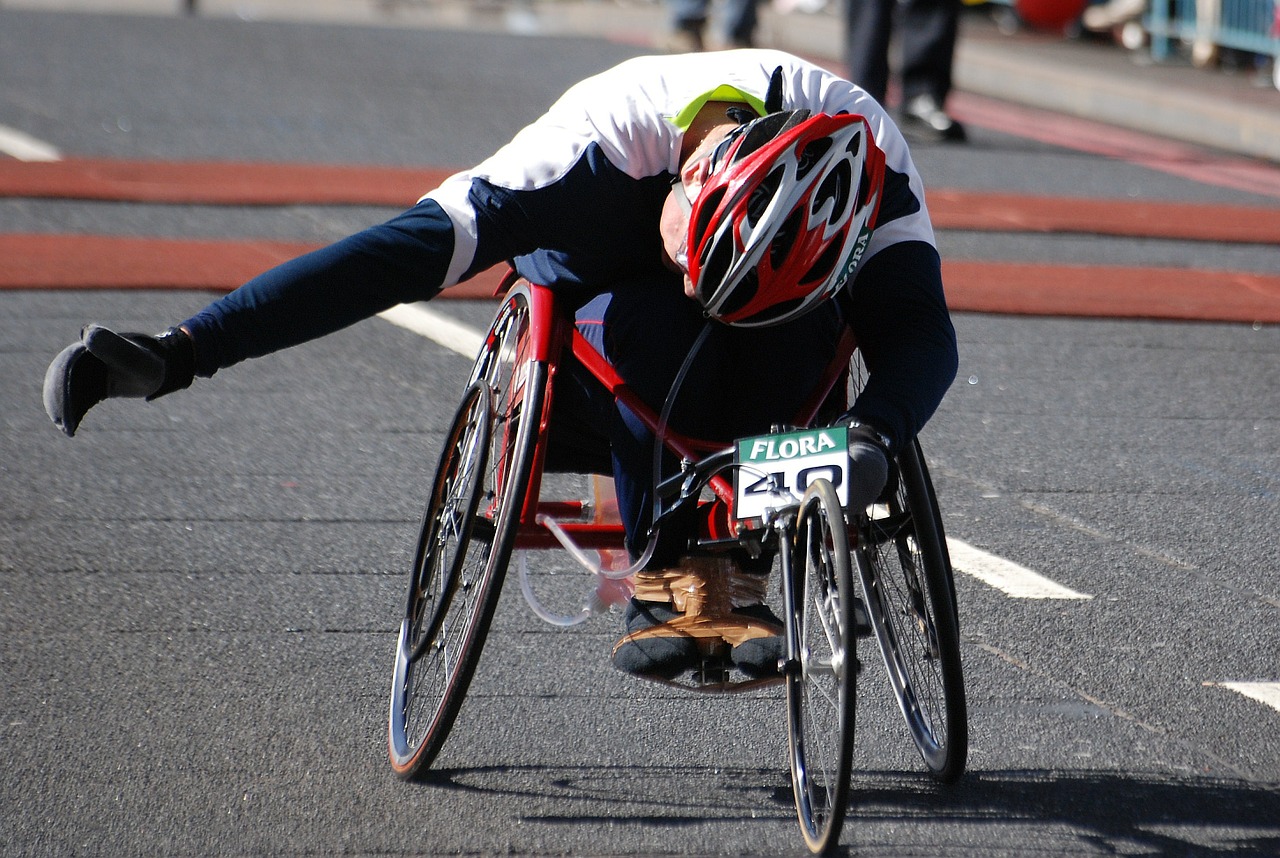
I workout alongside people who use wheelchairs and people with artificial limbs. I have friends who alternate days at the gym with nights at the hospital as they are treated for their autoimmune disorders. I know women with PCOS who accept that weight loss will be harder for them even as they strive to work within the limitations of their disease. I work with single parents who problem-solve creative ways to exercise while the kids are at practice or asleep.

I’ve never once heard any of these people say that the situation is not their fault.

And it’s no accident that they are constantly pushing the boundaries of their situations.

wheelchair-369735_1280

———-

The problem with, “It’s not my fault,” is that it so easily slides into “And therefore there’s nothing I can do about it.”

And the two declarations are vastly different.

It is not your fault if you have been cursed by faulty genes that cause your body to grasp onto every fat cell for dear life.

(And what are you going to do now?)

It is not your fault if you suffered at the hands of abusive or negligent parents who failed to give you the tools to excel in adulthood.

(And what are you going to do now?)

It is not your fault if you have been exposed to trauma, bruising and damaging your very core.

(And what are you going to do now?)

It’s not your fault if your brain struggles with anxiety or depression.

(And what are you going to do now?)

It’s not your fault if your spouse cheated or abandoned you.

(And what are you going to do now?)

In all of these cases (or in any limitations and struggles you have in your life), you can spend your energy on blaming the fault-carrier. Others will help you, either for pay or for free. After all, it’s easy to point fingers at others.

Because then we are absolved of any effort.

Of course, we are also guaranteed not to make any progress.

Because the last time I checked, reps of reciting “It’s my hormones,” had a dramatically lesser effect on fitness than reps on the weight machine.

And assigning liability to a screwed up family of origin is inherently dissatisfying because they’re too entrenched in their own drama to absorb yours.

And calling your cheating ex an ass won’t help you get off yours to build your new life.

So rather than focus on what happened, focus on what you can do now.

Replace “It’s not my fault” with “It is my responsibility.”

Rather than point fingers (or waste your time and money on those that help you pass blame), use those fingers to grab your own bootstraps.

boots-691670_1280

Nobody else is going to do it for you.

———-

Your future is your responsibility.

Your well-being is your responsibility.

Your happiness is your responsibility.

And if you don’t accept that responsibility, that IS your fault.

———-

It is my responsibility to …

Shift my attention from what happened to me to what I am going to make happen.

Focus on what I can do.

See my limitations as my starting point, not as excuses to never start.

Be realistic with my goals.

Set a limit to the amount of energy I expend on placing blame. That energy can be put to better use.

Surround myself with people who believe I can.

Ask for (and accept) help when I need it.

To refuse to allow somebody else to define me.

Communicate my needs clearly and calmly.

Manage my emotions so that they do not control me.

Establish and maintain appropriate boundaries.

Speak and act with kindness. Towards others and also towards myself.

Believe in myself and act in accordance with that belief.

life-863186_1280

And what are you going to do now?

Related:

The Part of the Betrayed

Sprained

I’m Not Strong Enough

Should You Divorce? 12 Questions to Consider

should divorce

I’m often thankful that my marriage ended via text. I never had to make the gut-wrenching decision to inform my husband that I wanted out. I’ve never experienced endless days and nights weighing the pros and cons of divorce and anticipating its impact on my life.

Even though I never thought about divorce prior to experiencing it, I have spent the past several years studying and writing about the end of a marriage. For those of you who are in the unenviable position of trying to decide if you should stay or go, here are twelve questions for you to consider.


Are you in or your children in danger?

If you are in an abusive situation, your first course of action is to find a safe place for your family. If the marriage is violent and available interventions are not successful, your responsibility is to take care of yourself and your children. Get out, get help and then consider the question of divorce.


Are you quitting or letting go?

Are you running away from your marriage because you’re hesitant to address issues with your spouse or with yourself? Are you giving up because the relationship seems like it requires too much work to repair? Have you made mistakes in your marriage and you’re afraid to own up to your actions? If you answered in the affirmative to any of these, you’re quitting.

Quitting is out of fear; letting go is born from acceptance.

It is a reality that sometimes people enter into a marriage that was wrong from the beginning. Or, perhaps the relationship worked for a time but now you and your partner are no longer the same people who committed years ago.

People change. Circumstances change. And not every marriage can adapt. Sometimes the best decision you can make is to accept that something is gone and let it go.


Are you putting at least as much energy into the marriage as you are into your escape plans?

It’s human to look across the fence and see the grass as greener on the other side. After all, you know everything about your circumstances and often only see the best of your neighbor’s.

Marriage is no different. A relationship of any duration has history, arguments and issues that clutter the memory banks and may threaten to overrun the grass with weeds. An encounter with a new person, fresh and unsullied by the reality, can be intoxicating.

But it’s just an illusion. All you’re seeing in the beginning is what they want you to see. And illusions can only be maintained for a time.

The grass isn’t greener on the other side; it’s greener where you water it. If your attentions are focused outside of the marriage, you are starving your relationship. Make the intention to give your marriage at least as much energy as you’re giving your escape plans. Water it, nurture it, before you declare it dead.


Have you made changes in yourself?

We often blame our partners for our misery and frustration. We proclaim that if our spouse was only a better listener or less grouchy that our home life would be happy. We argue that he or she is lazy or materialistic or self-absorbed. We see our partners as the problem and ourselves as the victim.

We often want to fix our spouses. When what we really should be doing is fixing ourselves. Because you can’t change another’s actions, but you can always change your response.

So much of negativity in a marriage comes down to patterns of behavior: push and pull, nag and retreat, blame and contempt. If you can alter your responses, you have the potential of changing the entire pattern. And maybe even the marriage.

Many people use divorce as a catalyst for personal growth. Why wait? Improve yourself first and maybe the divorce doesn’t need to happen.


Have you informed your partner about your concerns and your feelings?

The first time your husband or wife hears about problems in the marriage should not be on the day you ask for a divorce. Even if you feel distant and disengaged, you have a responsibility to your spouse to communicate about the state of the union.

It takes courage to broach these difficult conversations; you have to be prepared to face anger or despondency or desperation. Ultimately, you are not responsible for your partner’s well-being, but you are accountable for transparency and truthfulness. If the marriage is at risk, make sure both parties know and are given the opportunity to campaign.


Are you on a snipe hunt for happiness?

We often fall victim to inertia in our lives. We slide into marriage and often into parenthood without being fully conscious and deliberate about our actions. As a result, we often “wake up” and realize that we’re not happy. We blame it on our jobs, our environment and our marriages.

But really, we’re often not happy with ourselves.

It’s so easy to end up on a snipe hunt for happiness. We look for validation and acceptance in our possessions, buying more and more to give the appearance of a good life. We surround ourselves with sycophants and flirts that convince us that we’re desirable.

If you are looking for happiness in a new relationship status, you will be disappointed. Happiness can’t be found without; that’s a hunt that will never end. Instead of blaming your circumstances for your misery, try taking ownership of your own well-being.


Is there addiction on either side?

Addiction is a disease that is characterized with instability, deception and a difficulty in addressing issues head-on. Addicts frequently pair with enablers, the give and take meeting both of their needs in an unhealthy dynamic. All of these concerns make it very difficult to be a healthy relationship with active addiction in the picture.

If you struggle with addiction, your first responsibility is your own sobriety. It is not fair to place that burden on your partner, nor should you feel obligated to stay with someone who undermines your sobriety.

If your partner is an addict, your first step is learning your role in the pattern. Get help. Join an Al-Anon group or something similar and educate yourself about addiction, codependency and sobriety. Regardless of your decision about divorce, make sure to address your behaviors and thinking that developed alongside the dependence. Addiction is a family disease. Take responsibility for curing yourself.


Are you falling for the sunk cost fallacy?

According to the sunk cost fallacy, we have a tendency to stay in commitments purely because of the time or money invested. For example, we may hold on to a car well beyond its life because we have spent so much money on repairs, even though it makes more sense to purchase a newer and more reliable car. In marriage, we may find ourselves staying put because of the months or years invested in the relationship.

But that’s not a reason to stay.

The sunk cost fallacy is born of a calculus of fear. We prefer to stay with what is known rather than venture into the unexplored. We hesitate to scrap what we have because of a fear or starting over.

Stay because of the present marriage and the future one, not because of what has passed.


Has there been betrayal on either side?

Betrayal undermines a relationship. It often occurs when there are problems within the marriage, acting as an alert but also distracting from the underlying issues.

If you have been betrayed, you may find yourself grasping onto the marriage out of a panic of losing your spouse. Or you may react with anger, rage blinding you from rational thought. Betrayal is insanely painful. Give yourself time to grieve before making decisions. And, also understand, that if your spouse is not willing to end the affair or address the problems in the marriage, your decision may have been made for you.

If you have been the unfaithful one, work first to understand the motivation behind your actions. What were you seeking? Have you been starving your marriage of attention? Are you running away from some truth? Are you afraid of being alone and setting up a new bed to hop into as soon as you leave the old? If you fail to understand why you made this choice, you most likely find that you are given another opportunity to examine it when you cheat again.


Are you aware of the impact of divorce on children?

Some people proclaim that divorce destroys children. Others argue that it has no impact on them all. The reality is somewhere in the middle; divorce, no matter how amicable, affects the kids.

Regardless of the decision made, consider the needs of the kids. Research the impact of divorce on children of different ages. Be mindful about how and what you tell them. Watch out for signs of depression or anxiety and be ready to seek interventions if needed. Put your concern for your children ahead of your anger for your spouse.

The best gift you can give a kid is a stable and loving home life. That may mean repairing your marriage or staying together until the children have launched. Or, it may mean ending an unhealthy marriage so that the family can have a fresh start.


Is there a lack of passion and intimacy?

We often ask too much of marriage. We expect it to be our safe place, our den against the elements, providing stability and security while also looking to it for passion and excitement. It can’t fulfill both.

Passion comes from risk. It comes from seeing your partner as an individual with his or her own interests and ideas. If we feel too secure, as though we know our partners better than they know themselves, there is nothing exciting. Part of maintaining excitement in a marriage is the acceptance of risk and removing the illusion of security.

We also have tendency to construct walls with the intention of limiting possible heartbreak. Those walls are also an illusion, as all they do is limit the potential of a marriage. Intimacy has to start with vulnerability. Don’t blame your partner for a lack of connection if you are refusing to let them in.


Are you afraid of being alone?

A fear of being alone is no reason to enter into a relationship and it is also not a reason to stay in one. We are social creatures. We fear abandonment and isolation. Often to our own detriment as we grasp onto relationships that are not good for us. Being happy alone is better than being unhappy in a relationship.


Ultimately, no one else can make the decision regarding divorce for you. It’s a call you have to make on your own. If you decide that divorce is the right decision in your case, please enter it mindfully. You cannot eliminate the pain and fear and confusion that follow, but you have the ability to mitigate at least some of its effects.

I wish you and your family the best in whatever your decision.

The Grass Isn’t Greener

grass isn't greener

greener

For some reason I have been receiving quite a few messages lately from people who are looking for my validation of their decision to a) have an affair, b) continue an affair, c) abandon their unsuspecting spouse or d) all of the above.

Umm…do they realize who they’re messaging? Do they honestly expect that I’m going to give them a stamp of approval and send them on their merry, marriage-detroying ways? I mean, yes, I’m in a better place than I’ve ever been after facing my husband’s infidelity and abandonment, but that doesn’t mean I endorse that as a life-affirming event. Honestly, I would have preferred a cruise.

I usually take a little time to breathe before composing my responses. Ultimately, I want to ensure that I’m not coming from a place of my personal experience or reacting defensively. After all, even though these folks are looking for approval, they may also be asking for help. And there’s a chance that what I say may register.

There are some common themes in all of the messages I receive in this category. Many all tell me that their spouse would be better off without them. They all speak of interest in another man or woman. And perhaps most telling, they all seem hesitant to speak to their spouse.

And most of all, the attention is focused outside of the marriage.

Well, then, it’s no wonder the marriage is floundering. How can you expect a marriage to flourish when your efforts are spent elsewhere? Before you diagnose your marriage with a fatal case of failure to thrive, feed it. Nurture it. Give your marriage the attention you’re giving your escape plans.

Your intentions drive your attentions. If you’re committed to leaving, your focus will be on your exit.

So, before you call it quits, make staying your intention. At least for a while.

Now, attention is no Miracle Grow. Your marriage may have fatal defects or may have been starved for too long to ever thrive. But, at least give it a try before you leave it for dead.

One person asked me if he owed it to his wife to stay.

No. That’s just a breeding ground for resentment and contempt.

But he does owe it to his wife to at least try to nurture the marriage before making the decision. He does owe it to his wife to end things in a kind and mature manner, if it comes to that. And, he does owe it to his wife to not use her for excuse or blame.

The grass isn’t greener on the other side. It’s greener where you water it.

So, stop blaming your spouse, stop pretending that you’re doing this to help him or her and pick up the damn watering can and water your marriage.

Okay, public service announcement over. Now back to our regularly scheduled program:)