A Message to Those in Pain From Divorce


I’m a sucker for science so when I saw this article by Lifehacker – The Science Behind Why Breakups Suck (and What You Can do About It), I read it with great interest. I’m especially interested in their description of the physical response to rejection stimulated by the parasympathetic nervous system, as this relates to the PTSD-like symptoms that some experience after a breakup. It’s an interesting article which serves to validate the intensity of emotions after the end of a relationship and gives some tangible strategies to help the mind and body recover from the loss.
I would love to see further research on the impact of rejection and relationship trauma on the brains of previously healthy adult subjects. With my completely subjective and n=1 experiment, it seems like it can lead to long term changes in the brain’s ability to process.
What are your thoughts? In what areas would you like to see research?

Whether it be a brief dalliance or a decades-long marriage, there is no shortage of advice on how to survive a breakup. Much of the advice is sound and can help provide hope and perspective as you face heartbreak. However, when you are facing the intense pain and loneliness of the end of a relationship, you can use all the help you can get. Here are six tips for surviving a breakup that you haven’t heard.
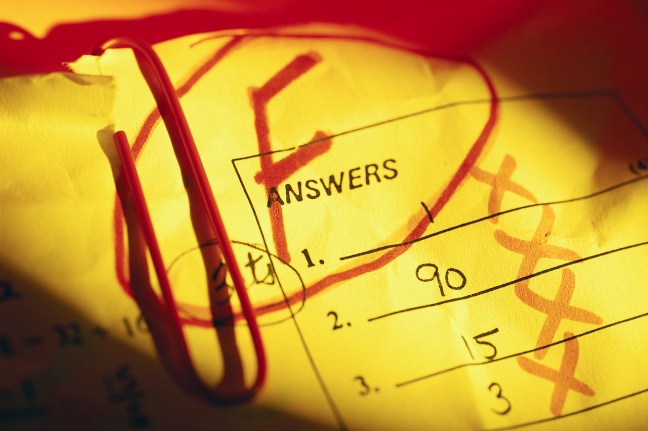
Marriage is not a test.
I lived.
I loved.
I lost.
But I didn’t fail.
Society makes assumptions about those who are divorced. Maybe we lack the fortitude to persist through difficulties. Perhaps we possess some great fatal flaw that makes us unable to sustain matrimony. Or, possibility we are flighty, given to jump in without thought and give up just as easily.
There is often shame inherent in admitting that one is divorced, like some scarlet letter “D” is forever branded upon your character if your “ever after” ended sooner than expected. It’s as though you failed at one of the biggest assessments you face as an adult.
In the strictest sense, my marriage did fail. After all, it ceased to exist upon the receipt of the horrific text: “I’m sorry to be such a coward leaving you this way but I’m leaving you and leaving the state.” Furthermore, my husband failed me through his betrayal and abandonment. I failed him by not seeing that he needed help and I failed myself by not being aware of his actions and the signs of a crumbling marriage. Yet, even with all that defeat, I refuse to look at my marriage as a failure. That label undermines our years together with all its shared memories and joys; the shared life and experiences are negated with that single word. Although I did feel as though I failed in some ways, I was adamant that I was not going to let my divorce define me as a failure.
Failure is an act, not a person. I’m divorced. Not defective.
As I grappled with the end of my marriage, I found comfort in the words of others. Others who had faced their own challenges and were determined to learn from and grow from their mistakes and unrealized goals. Read the rest on The Huffington Post.


Divorce is a major reboot of your life. Control-Alt-Del of all that is familiar. The process can vary, some may have time to save and safely exit their open files. For others, applications are subdued with repeated clicks of the “force quit” button. Divorce causes damage to the system, errors and gaps. For most of us, we have to start our lives over again in safe mode.
According to Microsoft,
Safe mode is a troubleshooting option for Windows that starts your computer in a limited state. Only the basic files and drivers necessary to run Windows are started. The words “Safe Mode” appear in the corners of the display to identify which Windows mode you are using. If an existing problem does not reappear when you start in safe mode, you can eliminate the default settings and basic device drivers as possible causes.
After a divorce, safe mode means that your life is powered up again in a limited state. Only the necessary applications for living are in place; it is survival mode. There is nothing wrong with this state; in fact, it is often required to be able to function at all. However, just as a computer in safe mode is not truly operational, a life in safe mode is not truly living. Safe mode is a time, a space, a tool that should be used to diagnose and treat any maladaptive hardware or software issues so that a full reboot can occur.
Look at your own life. Are you in safe mode? Does this state still serve you, or is time to complete the repairs and perform a full reboot of your life?
 Lessons From the End of a Marriage