Understanding Projection

My ex husband accused me of cheating.

Never to my face, maybe because he feared my response or because on some level he knew the claim was baseless, but to his friends and coworkers. After he left, I learned that others had been hearing graphic and disturbing stories of my supposed infidelity for years.

He then went on to detail my irresponsible spending in his “suicide” letter to his other wife and to my mom (he made a suicide attempt when he was released from jail). He described how I wouldn’t take “no” for an answer and I always needed the latest and greatest things.

My initial reaction to my discovery of these accusations was one of unmitigated horror. You see, I trusted him so much and had slowly been groomed to accept his description of reality, that I initially believed that his claims must be true.

And then I grew confused. Because none of the facts, which I obsessively detailed to those who surrounded me in the aftermath of the tsunami, matched his claims. I struggled to understand what was real as the oil of his accusations failed to blend with the water of my recollection.

Finally, it became clear. He was charging me with the exact misconduct that he was guilty of. He was projecting and I was the screen.


What is Projection?


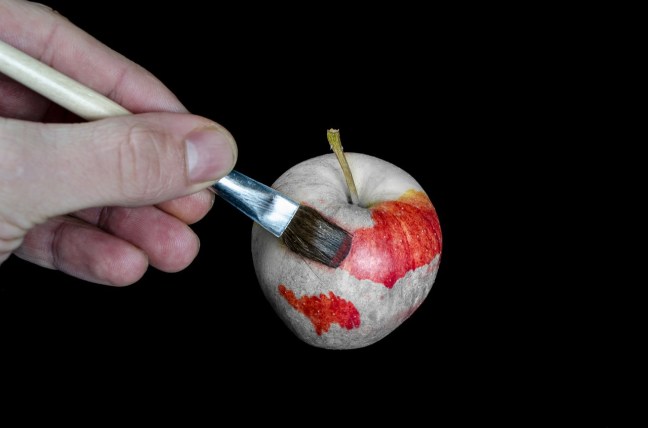
Projection is a common cognitive dance where self attributes or actions are shifted to another person. Much of the time, it is relatively harmless. Yet in the hands of an addict or abuser, projection can be used in a more detrimental way to distract or to transfer blame.

We all engage in some amount of projection. In some cases, projection allows us to empathize with others when we superimpose how we believe we would feel in a given situation over their stated experience. Other times, we may assume that someone feels the way we do or that they have the same aptitudes or perspectives. You see this when people caught behaving badly offer up the excuse that “everybody does it.”

Projection is also used as a defense mechanism. When there is some aspect of your beliefs or behavior that does not align with your view of yourself, you experience something called cognitive dissonance, where you either have to alter your view or amend your behaviors. One “solution” to the discomfort caused by this misalignment is to assign the disallowed characteristics to somebody else in the classic, “It’s not me, it’s you” move.

Often times, projection occurs when we are aware of something, yet we’re not yet ready to see it in ourselves (an example of this would be the claim that, “You don’t love me” when the reality is that we’re starting to doubt our own love). After all, it takes quite a bit of courage to look within.


Projection As a Weapon


I’ll never know to what extent my ex husband was aware of his projections. It’s possible that he was so deluded that he accepted his lies as truth (in fact, he actually told my mom after the suicide attempt that he had started to believe his own bullshit). But it’s also likely that his projection was largely conscious, distilled and aimed in order to cause the maximum damage.

By accusing me of horrific misdeeds, he excused his own undeniable choice of abandonment. When he projected his deceptions on me, he painted himself as the victim. His indictments acted as a slight of hand, keeping me distracted from looking too closely at what was happening on the other side of the stage. And finally, he used projection as a form of gaslighting, blurring and altering my view of reality.

If you’ve been in a situation where you have endured emotional abuse or faced the helplessness and frustration that comes from living with an addict, you’re vulnerable to believing the displaced accusations. Your self-image and confidence are likely low and you’re prone to assume responsibility for another’s well-being. When these accusations arise, refrain from blind acceptance. Ask yourself first if those claims are actually a better fit for your accuser.

As the divorce proceedings progressed, I found my new awareness of his tendency to project helpful. Whenever he accused me of something (withholding information, lying on a discovery document, etc.), I knew what to expect from him. Because even though his projections were aimed at me, they were simply a reflection of him.

We Don’t Talk About That

we don't talk about that

It usually starts in childhood.

The son learns to play the clown whenever the topic of conversation begins to make his father uncomfortable. The daughter of divorced parents learns that mentioning the other parent has a tendency to end in tears, so it’s better to simply keep quiet. At school, any mention of financial struggles in the home leads to ridicule, so any words that would reveal the truth are instead swallowed. Even when the home environment is one that welcomes open dialog, the reactions of those outside the home often reinforce that it’s not considered polite or acceptable to bring up issues of death, disease or discord.


“We don’t talk about that,” becomes the unspoken vow of secrecy that follows most of us into adulthood.


As we grow and become more aware of the very real threats that exist, we continue to remain silent. Convinced that merely speaking of the thing that frightens us will give it the power to manifest. And that as long as we refuse to say its name, it does not exist. That which will not be named is relegated to the shadows where it can grow and influence without notice.

The husband, sensing a growing distance in his marriage, makes the largely unconscious decision to press onward without comment, believing that addressing the issue would only make it more formidable and would upset his wife. The mother becomes increasingly concerned about her child’s mental health but brushes away the unsettled feelings by telling herself that this is a normal part of growing up. The boss, increasingly demanding of her employees, steadfastly refuses to discuss her increasing fears of failure.

When something becomes off-limits to talk about, it only grows in power.


There’s a strange thing that happens when something is banned. Any parent of teenagers knows that the surest way to get them to act is to forbid them to do something. And we are not so different when it comes to banned trains of conversation; the prohibited becomes more powerful as we begin to fill in the gaps with our fears and our imaginations. Because the dialog still happens, only we are simply listening to ourselves.

The adopted child internalizes the implied rejection, assuming that it must be because she simply isn’t enough.  The young man begins to drink to try to escape his feelings of inadequacy because he’s learned that men aren’t supposed to express weakness. The  matriarch elects not to disclose her cancer diagnosis to the family after envisioning the tears that the revelation will cause. After all, isn’t it better to spare them the pain?


“We don’t talk about that” implies that your feelings are wrong, misguided.


In our modern culture, we value rational thought and have a tendency to dismiss feelings. We see them as animalistic, base and unsophisticated. We push them down. Shove them aside. Pretend that they do not exist even as we berate ourselves that we shouldn’t feel the way we do.  We feed our shame and in turn, it tells us that we need to hide our true selves.

Meanwhile, the suppressed feelings bubble to the surface in the form of increased blood pressure, recurring headaches, panic attacks or IBS. We seek answers in doctor’s office’s, self-help books, online support groups and endless therapy in pursuit of the root of all our problems.

And often it’s found in the dark, in the shadows. By finally bringing light to that which we do not talk about.

Because of instead of causing it to grow, talking about those things that scare us serves to bleed them of their power. Once we name it, bring it to the surface, it no longer can control us.


It’s only when we talk about it that we can begin to release it.


Are You In Love With the Person or With Their Potential?

potential

I was lucky.

The decision to file for divorce was a no-brainer for me. At that point, my husband was MIA, had committed bigamy and had used all of my money (and credit) to fund his other life.

Many of you do not or did not have that decision present itself in such a clear-cut manner.

And I feel for you.

I used to play a little thought exercise where I would consider how I would have responded to finding out about my ex’s actions at some point along his pathway to destruction. When I’m honest with myself, I probably would have been way too forgiving and lenient with his behavior.

Not because I would have been okay with what he was doing, but because I believed in him. After reaching the understanding that he needed help, I would have held onto the hope that he would have accepted it. I know that I would have grasped onto any glimpse of the man I knew and loved and made excuses for actions that didn’t align.

I’m afraid that I would have stayed too long and endured way too much. Confusing a love of his potential for a love of the person. Setting hard boundaries would have felt too much like giving up on him, and that thought would have been devastating.


I currently teach accelerated math students. That means they all have the ability to be in my class and they had to demonstrate that in order to register. But one of the first – and often hardest- lessons they have to learn in my class is that it doesn’t matter what you can do. It only matters what you do.

Most of them learn the lesson. I love to watch them grow and mature over the year as they slowly take on more responsibility for their learning. Others struggle to put their potential into practice. And at some point, I, along with their parents, have to decide if this is the right place for them at this point in time.

It’s given me an interesting perspective on potential. After all, I’m evaluating it on an almost constant basis and with a large number of people. And from what I’ve learned watching them, I would now handle a situation like the imagined one with my ex very differently.

We often face these situations – with our children, our employees and our spouses. We can easily get so caught up in the frustrations of the “shoulds” and the deflection of the fears that we have trouble seeing the situation clearly.

If you’re facing a tough decision about somebody and you’re trying to balance their potential with the current reality, try asking yourself these questions:

Do they believe in their potential? Does it look the same as what I envision?

Are they motivated by different goals that are currently more important to them?

How far away are they from what I perceive as their potential?

Are they motivated to work towards their potential? Do they care about the impact on me? 

Are they making progress towards their potential?

What sort of timeline am I looking at for them to reach their potential? Am I willing to give it that much time?

What will the growth process entail? Am I willing to put the work in too?

Am I realistic about their potential or am I asking them to be somebody they’re not?

Do I believe that I have the power to make them change?

Am I lowering the benchmark or my boundaries in order to avoid making a decision? 

Am I constantly excusing their behavior?

Am I setting appropriate boundaries so that their choices have limited impact on me?

Am I holding onto my hope that they can change out of a fear of confrontation or of letting go?

Am I allowing their actions to consistently compromise my own well-being?

Am I okay if they never change?

It is so hard when we see what somebody can be. We can be so distracted by the possibility that we ignore the reality. Or, we can become fixated on the idea that if we just motivated them the right way, said the right thing, that they would change their ways.

Yet their journey is different than yours.

They may change and grow. But not on your timeline. On theirs. And not to your goals. But to theirs. When we only see people from what we perceive as their potential, we are not truly allowing them to be themselves. Rather, we are trying to push our own ideals, beliefs and needs upon them.

Here’s the reality –

You cannot change them. You cannot ignore their current state forever. You cannot manifest their perfect potential. You cannot decide what is important to them. You cannot make them revert to the way they were or become what they said they wanted.

All you can do is try to gain a clearer picture of the situation and make the best decision you can.

For them.

And for you.

How Long Should You Wait For Promised Change?

“He promised he would change. But he’s still the same. I can’t go on like this.”

“She said she was going to be different, but it hasn’t happened yet. How long do I wait?”

One of the harder places to be in any relationship is waiting for the other person to follow through with promised change. I am often asked how long one should wait for the agreed upon changes to occur – what’s too long and what’s not long enough?

It’s never a pat answer. There is no magic formula, no rule that states how many weeks, or months or years have to pass while you wait powerlessly for the promise to be kept.

If you find yourself in this unenviable position, here are some of the things to consider as you ask yourself how long you should wait:

Who initiated the idea of change?

If you are the one who brought up the desired alterations, it’s time for a pause. You cannot change another person, no matter how much you want to. Even if it was agreed upon, if you initiated the idea, there’s a very good chance it will not come to fruition on your timeline (or at all). The question then becomes are you willing to wait for them to internally motivated to change or not?

Here’s a difficult truth – people never change for another. They change for themselves.

Are you hung up on potential?

The quickest way to anger a teenager is to bring up the fact that they have potential. They’ll immediately shut down, feeling simultaneously judged and unappreciated. Adults are no different. Yes, it’s difficult to see what somebody can become while, from your perspective, they’re squandering some of their gifts. And it’s easy to fall in love with somebody’s promise. But that’s no guarantee they’ll ever reach that ideal that you’ve pictured.

We are all always changing. They may move towards their potential and they may not. All you have to go on is who they are right. this. moment. How do you feel about that person?

snip20161218_24

Are there actions alongside the words of promise?

It’s one thing to claim an intention to change. It’s another to take steps. In these cases, the words tend be grandiose, full of promise and potential. They can distract and cloak reality. In contrast, actions, real actions towards meaningful change tend to be quiet, easily overlooked. Yet these are where you attention should focus.

Understand that change is hard and rarely linear.

As long as actions towards the goal are occurring, be patient and compassionate. Change is scary and often way more difficult that we anticipate. Be supportive. Be an a$$kicker and a cheerleader. When there are signs of progress, give the benefit of the doubt.

snip20161218_23

Set ultimatums with yourself and boundaries with the other person.

You need to decide exactly what you’ll tolerate. Think through those “if…thens…” and make firm decisions on your responses. Communicate these to the other person, not in the form of ultimatums, but in the form of boundaries – what you are and are not willing to put up with.

Ultimatums can be manipulative, seeking to control another’s response (which never goes over well). Instead, make your own decisions about you and communicate them clearly. Then allow the other to make their choices and follow through on what you promised yourself. That last part is important.

Accept that you may have to step back with the hope of one day stepping back in.

It may be that you cannot tolerate the situation unless and until the change has occurred. Or maybe the nature of relationship is in opposition to the change occurring while a certain level of contact is maintained. Distance can be helpful if it does without manipulative intentions and without the expectation of a guarantee.


Be honest about the limitations of change.

Behaviors can be learned or unlearned. Habits can be developed. Personal challenges can be managed. But ultimately, this person is who they are. Is that enough for you? If you are waiting for a total transformation, you’re not being fair to either one of you.

snip20161218_25

When you’re frustrated, change your approach or your response.

After all, it’s what you can control. And you may be surprised just how powerful that can be.


Is addiction a part of the story?

Addicts are extremely skilled at doling out promises of change (peppered with just enough evidence) to keep you waiting. If there is addiction (or the suspicion of) in the mix, you’re going to have to practice some tough love. Check out Al-Anon for help and support here.

Attend to yourself.

Sometimes we get so caught up in somebody else’s issues that we forget to take care of our own. And sometimes we use somebody else’s problems as an excuse to ignore our own. Make sure to attend to yourself.

And most importantly –

Although you may be waiting on change, refuse to wait to live.

Speaking Out: Why Hiding Your Struggles Makes it Worse

hiding

At this point, the only real regret I have about my first marriage was that I didn’t know.

Not about the financial and sexual infidelity (although it would have been nice to have had some insider information!). And not even about his plan to leave and secure another wife.

I regret that I didn’t know about his struggles with addiction and depression.

Because when it comes down to it, that is the real tragedy.

And unlike the bizarre secret life and the bigamy, hiding battles with addiction and depression* is exceedingly common.

And the consequences of trying to conceal these struggles are far-reaching and often devastating.

*I limit my emphasis here to addiction and depression partly because I believe those are the struggles my ex faced and because those are the two areas that I still witness the most stigma around. These same ideas hold true for most struggles – from weight loss to divorce, from anxiety to dealing with loss. These are the hard parts of the human journey. And they share a common language that we all speak if we’re willing to listen.
thrive ad

—–

At this point, I can only guess at what happened. At what demons my ex was wrestling with behind closed doors and only witnessed with closed eyes.

I know that he was taught from a young age the skill of hiding. He covered for his father when he was drunk at his son’s birthday party. He created stories to keep classmates away from his house and its concealed secrets. He learned to keep his tears in and his shoulders up.

I knew these things. I saw these things. But I also thought he was different with me. That he could open up. Feel safe. He showed me some secrets. I mistakenly thought he revealed them all.

I learned otherwise when I opened the cupboard doors in the basement after he left. The clutter of empty bottles spoke of another side of my husband. A darker side. A struggling side.

A side he never let me see.

Part of me wonders if is some strange way, by living this other life in secret and then leaving suddenly, he was trying to protect me. Shield me from his shadow-self. He had always seen himself as my guardian.

Or maybe he was too ashamed to reveal his internal conflicts and fears. His concern with his outward appearance and perception increased while his downward spiral accelerated. Ever afraid as being seen as less-than, something he perceived in his own father.

Perhaps he was afraid at the repercussions of speaking out about his problems. I have to admit, I would not have taken it well, especially if it had been hidden for some time. He may have been fearful of my anger. My disappointment. And my own fear.

Or maybe it was more about the fear of being judged by his family. His friends and coworkers. The world. At being distilled down to a single word – “depressed”. Or “addict”. Instead of a singularly complex man.

Conceivably, his depression or addiction had him feeling spun out of control. And so orchestrating his own magic show of misdirection and misinformation became his way of exerting control. Of making the pain somehow a little more bearable. I’m no stranger to that trick.

Of course, he may not even have possessed that level of self-awareness, simply seeking refuge from his pain wherever it could be found. Doubtful that true help could ever be obtained. And instead of seeing himself as struggling in the moment, he may have seen himself as permanently broken. Or maybe he couldn’t even bear to face himself at all.

And that’s the part that breaks my heart.

For him. And for all the others like him that are too stoic or too afraid or too ashamed to speak out.

Because no matter what his reasons were for not speaking out, not reaching out,

Keeping it in only made it worse.

—–

I Don’t Want to Hurt Them

It’s natural to want to shield those we love from excessive pain or ugliness. We care for them. We want the best for them. Even when it’s at the expense of ourselves.

There’s a magical thinking that can occur – if I can only keep this hidden from them, I’ll fix it on my own and everything will be the same. Yet upon reaching that point, things have already changed. For one, it’s impossible to be fully present when you’re presenting with a facade. You’re playacting. And that’s not fair to you or to them. Also, one of the strongest human drives is to be seen and accepted for who we are. And by wearing a mask, you’re isolating yourself.

We all need a human connection. We wither away without affection, attention and connection just as easily as we do without without food. When you make a decision to keep it in out of a sense of obligation, you’re starving yourself of the very sustenance you need to get better.

Furthermore, although you may believe you’re holding this in out of altruism, it’s ultimately a selfish act. You’ve decided that you are the one in control of their reality and you’re guiding it along based on your script alone.And when they find out – and they will eventually find out – the fact that you have kept the truth hidden from them will prompt anger, frustration, sadness and self-doubt.

Truly acting in their best interest occurs when you present them with the facts and allow them to reach their own decisions.

It is not your responsibility to ensure that others never feel pain. It is your responsibility to not willingly inflict needless suffering. And trying too hard to protect somebody often results in the pain magnifying needlessly.

I’m Afraid of Disappointing People

It’s not unusual for those stricken with depression or addiction to be people-pleasers. To want to be liked and often to find their own validation through that of others. And so when depression or addiction, with its inevitable impact on daily life and productivity, rears its ugly head, it can be easy to try to keep it under the covers for fear of letting down those around you.

You don’t want to go from being seen as “the smart one” to “the sad one.” From “the person who is always there for me” to “the person who never shows up.” Or “the responsible one” to “the don’t-trust-them-with-anything one.” And so you keep quiet. Keep the illusion.

Yet, just like you are not responsible for making sure that nobody ever feels pain, you are also not responsible for making others happy. For pleasing them. You do you and don’t worry so much about them.

Witnessing disappointment in the eyes of another is like a reflection of yourself that you have been avoiding. And maybe that’s exactly what you need to face.

I’m Afraid of Being Judged

And sadly, you will be.

By people who don’t understand, who believe that it can never happen to them and that you are somehow “less than” for letting it happen to you. By people that refuse to see you as a person with an illness rather than simply a walking label. By people who believe that strength is found in silence and that you are weak by speaking out. When in reality, their judgment is only because they’re cowardly with facing uncomfortable truths. By people that see depression and addiction as character flaws instead of character-builders. By people that have narrow minds because they are threatened by the inclusion of the unknown. By people that believe that they can control everything in their lives and are not willing to concede otherwise.

You will be judged.

Not because of who you are. But because of who the adjudicators are.

Don’t let them define your life for you. Be stronger than their fears and more forthcoming than their views.

Let them judge. And seek to prove them wrong.

I’m Ashamed of Who I Am

One of the most important things to realize about the illnesses of addiction and depression is that they lie to you. They devise reasons why it’s  imperative that you remain secretive. Not because it’s better for you. But because it’s better for the illness. They grow stronger in the dark, unchecked by outside influence.

They tell you that because you have failed at something, you are a failure. They whisper that you’re hopeless and then feed upon your despair. They convince you that you’re broken, unlovable and that anyone would recoil upon seeing your true nature.

Shame is perhaps the most malignant of human emotions. It is the root of so many bad choices and behaviors as it tries to distract from its own misery while inadvertently feeding it. It is the wound that screams at the sight of the sun, when light is the very thing that will bring healing.

And here’s the thing with shame – it tells you that you are alone in your feelings. When in reality, they are feelings we have all shared. And it’s only upon sharing them that this truth becomes evident.

—–

If you are suffering with addiction or depression currently, speak up and get the support and help you need. There is no shame in asking for help. In fact, recognizing your need for help and being brave enough to ask for it shows your strength. You are not your illness. You are so much more. Begin by refusing to listen to your illness’s orders to keep it hidden. Because that only makes it worse.

If you have suffered from addiction or depression in the past, speak out about your story. Do your part to help remove the stigma and assumptions about mental illness. Silence implies complacency with the status quo. So refuse to be silent. Allow your story to become one of understanding for those with a tendency to judge and one of inspiration for those further behind you. You don’t have to be perfect. In fact, it’s better if you show that you’re not.

If you love someone who is suffering from addiction or depression, speak with compassion. Facing a loved one’s struggles is hard. Accepting that you cannot control their decisions is scary. And setting and maintaining healthy boundaries is an on-going cycle of hope and heartbreak. Understand that they are not doing this to hurt you, they are doing this because they are hurting. So be kind. Both to them and to you. After all, we’re all in this thing together.

For all of you who have spoken out, I respect you and your courage. I hope my former husband has joined your ranks.

Related:

Hurt People Hurt People and the 7 Keys of Conscious Compassion

It’s Nice to be Important