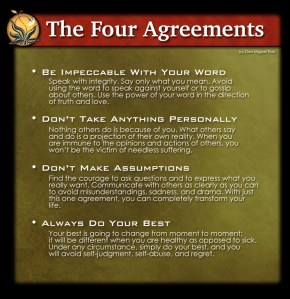
The Four Words That Are Holding You Back (And the Four Words to Say Instead)

holding

It’s ingrained in all of us.

Inevitably, when I motion for a student to quiet down, I hear the response,

“It’s not my fault.”

(Or its synonym, “It wasn’t me.”)

people-315908_1280

It is a knee-jerk reaction to any pronouncement of culpability.

And rather than grow out of it as we grow older, we begin to pay others to tell us that it is not our fault.

———-

When I first starting getting into health and fitness in the early 90s, I noticed that the industry advice came in two distinct forms – one voice said that you could transform your life and your body through willpower and hard work while the other side spoke of reassurances that the excess weight or sagging muscle was due to no fault of your own (and often this burden shift would be followed up with a “quick fix” for the low, low price of only $19.95).

And I soon figured out that the second view led to increased sales.

Even as it failed to create the desired body.

Because we all like to hear that it’s not our fault. That someone or something else is responsible for whatever is holding us back.

Yet even though we all have situations and circumstances that make certain goals more challenging, you are ultimately the only thing holding you back.

index-315754_1280

I encounter people that tell me that they cannot lose weight because of PCOS or hypothyroidism. “It’s in my genes,” is offered as a reason for the Type II diabetes or metabolic syndrome. I hear others defend their lack of fitness by claiming that their family or job requires all of their time.

They feel a freedom by stating that it is not their fault.

Yet really they are in chains of their own making.

I workout alongside people who use wheelchairs and people with artificial limbs. I have friends who alternate days at the gym with nights at the hospital as they are treated for their autoimmune disorders. I know women with PCOS who accept that weight loss will be harder for them even as they strive to work within the limitations of their disease. I work with single parents who problem-solve creative ways to exercise while the kids are at practice or asleep.

I’ve never once heard any of these people say that the situation is not their fault.

And it’s no accident that they are constantly pushing the boundaries of their situations.
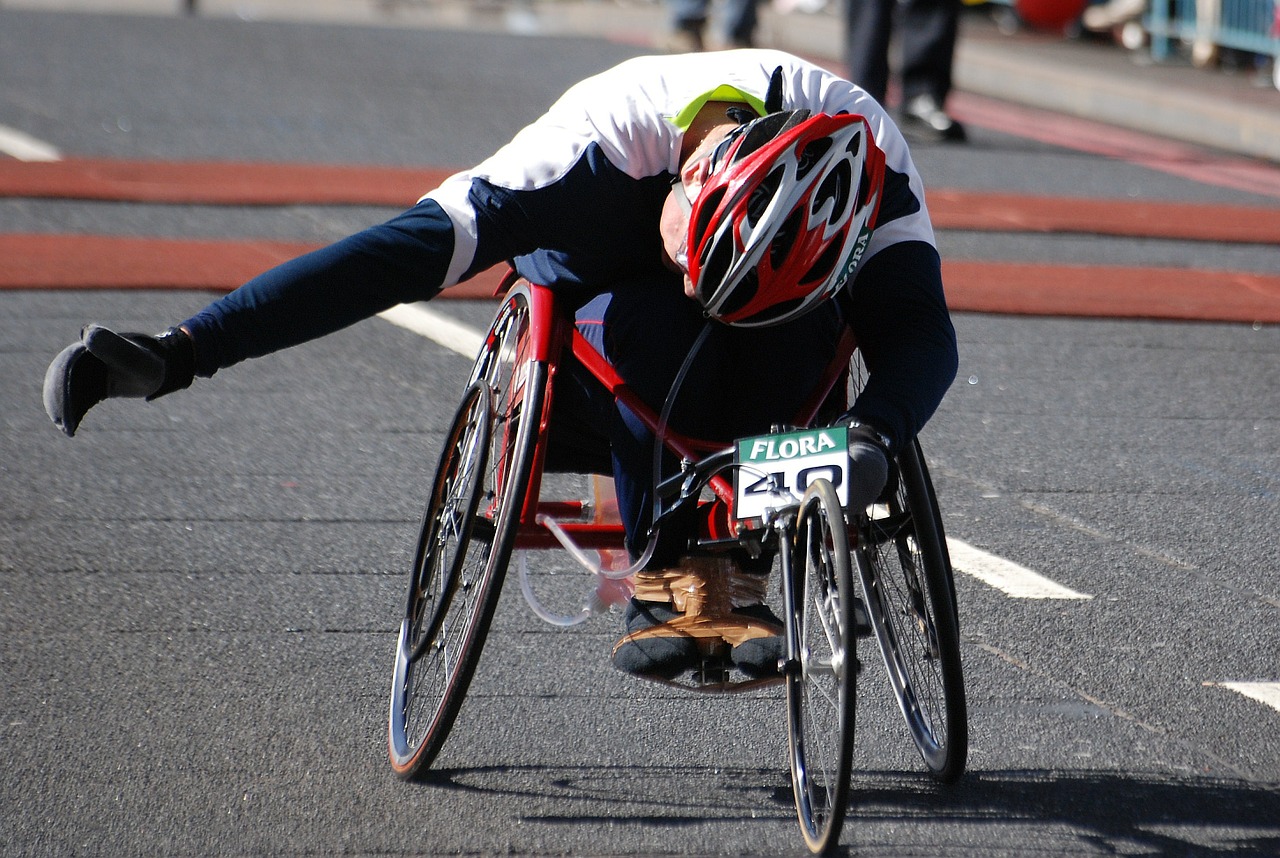
wheelchair-369735_1280

———-

The problem with, “It’s not my fault,” is that it so easily slides into “And therefore there’s nothing I can do about it.”

And the two declarations are vastly different.

It is not your fault if you have been cursed by faulty genes that cause your body to grasp onto every fat cell for dear life.

(And what are you going to do now?)

It is not your fault if you suffered at the hands of abusive or negligent parents who failed to give you the tools to excel in adulthood.

(And what are you going to do now?)

It is not your fault if you have been exposed to trauma, bruising and damaging your very core.

(And what are you going to do now?)

It’s not your fault if your brain struggles with anxiety or depression.

(And what are you going to do now?)

It’s not your fault if your spouse cheated or abandoned you.

(And what are you going to do now?)

In all of these cases (or in any limitations and struggles you have in your life), you can spend your energy on blaming the fault-carrier. Others will help you, either for pay or for free. After all, it’s easy to point fingers at others.

Because then we are absolved of any effort.

Of course, we are also guaranteed not to make any progress.

Because the last time I checked, reps of reciting “It’s my hormones,” had a dramatically lesser effect on fitness than reps on the weight machine.

And assigning liability to a screwed up family of origin is inherently dissatisfying because they’re too entrenched in their own drama to absorb yours.

And calling your cheating ex an ass won’t help you get off yours to build your new life.

So rather than focus on what happened, focus on what you can do now.

Replace “It’s not my fault” with “It is my responsibility.”

Rather than point fingers (or waste your time and money on those that help you pass blame), use those fingers to grab your own bootstraps.

boots-691670_1280

Nobody else is going to do it for you.

———-

Your future is your responsibility.

Your well-being is your responsibility.

Your happiness is your responsibility.

And if you don’t accept that responsibility, that IS your fault.

———-

It is my responsibility to …

Shift my attention from what happened to me to what I am going to make happen.

Focus on what I can do.

See my limitations as my starting point, not as excuses to never start.

Be realistic with my goals.

Set a limit to the amount of energy I expend on placing blame. That energy can be put to better use.

Surround myself with people who believe I can.

Ask for (and accept) help when I need it.

To refuse to allow somebody else to define me.

Communicate my needs clearly and calmly.

Manage my emotions so that they do not control me.

Establish and maintain appropriate boundaries.

Speak and act with kindness. Towards others and also towards myself.

Believe in myself and act in accordance with that belief.

life-863186_1280

And what are you going to do now?

Related:

The Part of the Betrayed

Sprained

I’m Not Strong Enough

Life In Transition

I had coffee with a friend recently who is in the middle of a Major Life Renovation. She has gone from a known life and full home to an existence in flux and an empty apartment.

I did a lot of listening.

And I left her with three pieces of advice for a life in transition:

One – Plant Your Seed

When you take the leap from one life to a new one, it is so easy to focus on what is left behind rather than embrace the possibilities for the future.

I felt this acutely in my early months. I had gone from a home (not to mention a husband and dogs) to a spare bedroom in a friend’s house. It was exactly what I needed at the time, yet I knew that it was only temporary and I struggled to imagine the next step. Let alone how in the world I would ever have enough money or strength to take it.

One Saturday afternoon, I wandered through some stores trying to keep the loneliness and uncertainty at bay. I found myself inside Cost Plus World Market, where my eye was drawn immediately to a brightly-colored and patterned throw. I slid off the ribbons that were holding it bound into a neat square and flung the fabric over a nearby chair. I stood there for what seemed like half the afternoon, looking at the colors and running the woven blanket through my fingers.

IMG_4273

It was a throw that would have been vetoed by my couldn’t-be-ex-soon-enough husband. And maybe that was part of why I felt myself drawn to it. But I think there was more to it. The colors spoke of life. Of energy. The pattern was wild and a little unpredictable. That blanket was the seed that I wanted my life to grow into.

That day, I spent $60 I didn’t have at the time to buy a throw that I had no place for at the time.

Eight months later, I moved into my first apartment and the throw found a home on the sofa after inspiring the color choices for the art.

And now that blanket sits in my meditation nook, where I use it to cover myself as I sit in gratitude for the life it hatched.

Find your seed. Your inspiration. Plant it. Nurture it.

And let it grow.

Two – Be a Student of Life

I love the saying that life is the hardest teacher you’ll ever have – she gives the test first and only then provides the lesson.

Transitions are tests. Often very difficult tests. It’s easy to become so concerned about passing that we lose sight of the bigger picture.

With everything changing around you, your view can become me-centric, everything else simply orbiting around.

Take a deep breath. Take a step back. And take a quick read. One little book. Four little ideas.

One enormous lesson.

IMG_6040

Three – Savor the Moment

Those moments between are special. While in transition, it’s easy to yearn for stability and certainty. Those will come again before you know and along with them, the fear of change and risk. There is a freedom in not knowing what comes next. The lack of expectation is a gift. Enjoy it.

I like to compare those times of metamorphosis with a freshly-fallen snow before any prints have been pressed into its surface. It’s cold. It may even be inhospitable, hiding dangerous terrain beneath its gloss. Yet it is also beautiful in its unblemished purity.

arctic-139394_1280

Enjoy the possibilities. Enjoy the unknown. Enjoy the open canvas ready for you to paint your new life.

Before you know it, this time will be over. A mere memory. One chapter in a life full of stories.

9 Reasons You’re Struggling to Find Love Again

love struggling

Are you struggling to find love again after divorce?


“I’m never going to find anybody else.”

“I’m doomed to die an old cat lady.”

“Nobody else is ever going to love me like he/she did.”

“My ex was the one. And now he/she is gone and I’m alone.”

I hear it all the time. Variations on a theme. A composition of loneliness and longing that often settles into bitterness and resolve.

After divorce or a break up, most people enter a phase of chosen singlehood. It is a period to regain sanity, re-establish self and start the steps into a new life. If kids are in the picture, this swearing-off of partnership may last until the children are grown and gone.

Yet at some point, most people decide (or, even if it is not a conscious choice, start to respond to a pull towards) to enter a new relationship. To entertain the thought of dating and be open to the idea of love.

Some people are happy and fulfilled single and make a thoughtful decision to stay solo. This is not for them.

This is for those that want love but cannot seem to find it.

Those who sign up for online dating and never seem to get past the first coffee date. Those who think they found somebody only for the nascent relationship to spectacularly explode before its first anniversary. Those who only seem to attract the broken or seem to always end up with the sh*tty people. Those that are tired of watching everybody else pair off while they’re afraid they will never again be picked.


If you want love,

you want a partner

but you feel like giving up,

This is for you.

You’re Scared of Being Vulnerable

Relationships are hard. Damned hard. And anyone who tells you differently is selling something. After experiencing the anguish at the end of a relationship, it is so tempting (and so easy) to keep others at an arm’s distance. But that never works; love is all or none. If you have walls built around your heart (even if you didn’t intentionally construct them), you are keeping love away.

In order to love, you have to be willing to accept the very real risk of loss of love. Personally, I think trade-off is well worth it (even when I’m feeling overly vulnerable), but you will have to decide for yourself if and when it’s worth it in your own life.


You’re Looking to Fill Your Ex’s Shoes

When something or someone slides into our pasts, it can be easy to look back with rose-tinted glasses. Smoothing over the rough spots and settling on the good. Additionally, when we are with someone for a period of time, we grow accustomed to their particular strengths and can easily take them for granted and assume they are universal traits.

This can combine to creating an ex-shaped hole in your life that you are looking to fill exactly by seeking a doppelgänger. Perhaps you might find someone that seems to fit the gap, but then you discover some characteristic that causes discord in your assumptions. Or, you find that potential partners sense that they are replacements and they leave in search of somebody who wants them as they are.

A new relationship will never be the same as your former one. It will be different. And be open to the idea that different can be better. It means that you will have to accept the lack of some things you used to take for granted and it means you will be surprised by new benefits you didn’t have before.

And most importantly, it means that you have to take responsibility for filling that ex-shaped hole before you go looking for love. Be a partner to love. Not a cavity to fill.


You’re Seeking Perfection

Sometimes when a relationship ends, we assign its failure to its imperfection. And so we seek the ideal. The guaranteed. This time, we want the real thing. The soul mate and the fairy tale. Because if we can just find the perfect person, it will all work out.

And there is truth in some of that. At its most basic, your marriage did fail because of imperfection. Not just with the situation. And not just with your spouse. But also with you. Because nothing and no one is flawless and faultless.

Real love, lasting love, doesn’t begin with perfection. It begins with the acceptance (and open discussion) of imperfection. Perfection assumes you say, “I do” and then you’re done. You just sit back for the ride. Acceptance of the idea that we are all always learning creates the foundation for a growth mindset marriage. Not perfect, but fulfilling.


Your Actions Don’t Align With Your Intentions

It’s easy to say you want love. It’s easy to complain about the quality of the people on dating sites or the lack of options in your environment. Words take little energy. Wishes even less.

Love doesn’t come to the lazy. Especially love after loss.

If you want a relationship, ensure that your actions match your intentions. Get out and meet people. Lead with curiosity rather than judgement. Say “yes” to experiences and opportunities.

If you want a relationship, don’t act like you’re on the prowl. Act with integrity. Be trustworthy. Show that you can be committed. Don’t claim you want stability while you’re refusing to stand still. And most importantly, be the person you hope to attract.


You Are Sending Out Warning Signals

We are often unaware at the subtle signals that we are constantly receiving from others and sending out to those around us. And even those these signals are often subtle and below conscious awareness, they are powerful.

Do you keep attracting broken people that seem to need fixing or parenting? Perhaps you’re unwittingly sending out the message that you need to be needed in order to feel okay about yourself.

Do you keep attracting control-freaks that at first want to “save” you only to later try to dictate your life? Maybe your damsel-in-distress call has been heard by someone that needs to feel powerful.

Do you continually have people abandon you? Is it possible that you come across as too clingy, your intense neediness inadvertently pushing others away?

It’s hard to see these signals head-on; it’s often easier to spot them in the patterns of our relationships. If you always seem to end up in the same position, look to your own insecurities to learn why.


You’re Looking For Too Much Too Soon

When you’ve been married or in a long-term relationship, you acclimate to the intimacy of a well-known person. You become comfortable. Safe. And it’s easy to except to find that same feeling again.

But that’s impossible.

Because relationships are formed, not found.

It takes time and effort to develop a partnership. Instead of looking for insta-intimacy (which is usually just lust and/or desperation), look for someone that has the raw materials that you want that you believe you can build a relationship with.


You’re Still Anchored to the Past

It’s easy to be so done with the past that you try to move on too soon. There is a reason that the saying, “The best way to get over a man is to get under another” exists. There is nothing wrong with post-divorce flings, but don’t confuse them with love.

When you’re still enmeshed in your past, either situationally or emotionally, you are not creating the space or providing the nourishment for a new relationship.

Maybe you just need time. Or maybe you need some help.

But you have to let go before you can move on.


You Are Not Happy With Yourself

This is especially common with people who have been subjected to abuse, abandonment or infidelity. It is so easy to internalize your partner’s actions. To take them personally. To assume that unloving actions and words were directed at you because you are somehow flawed. Unlovable.

And when you believe that, others will begin to believe it as well.

Finding love with and for another has to begin with finding love for yourself. With forgiving your own mistakes and seeing your own beauty.

And the first step is realizing that when somebody treats you poorly, they are telling you more about their character than about your worth.


You Tell Yourself, “I’m Never Going to Find Love Again”

When you prime the pump for failure, don’t be surprised when you fail. Yes, learning to be open and vulnerable again is hard. Yes, finding somebody that meets your needs and puts up with your flaws is hard. Yes, relationships are harder when we are older have have more complications in our lives. And yes, getting a relationship past the early dates and into love is hard.

And hard doesn’t mean impossible.

Never say never.


What Took Me So Long?

What took me so long?

I’ve muttered under my breath for the past three weeks all while mentally kicking myself for being so stupid. Stubborn. Slow to act.

I’m not even sure what was motivating (okay, demotivating) my actions (or non-actions, I suppose).

I think some of comes down to not wanting to admit to myself that I made a mistake.

That I chose poorly.

Over five years ago, I moved from the spare bedroom in my friend’s home to my own apartment. And I was starting from scratch. As in, I didn’t even own a towel, much less a spoon. And so, like the list-maker I am, I researched the bigger products and price-shopped the smaller ones. I then compiled a spreadsheet of everything I would need.

And for the most part, I’ve been very happy with my choices as they’ve seen me through that apartment and into a new marriage and a new home.

But there was one exception.

One lemon amongst the rest.

The food processor/blender combo.

I never owned a food processor before because I never really cooked that much before. But that was before the tsunami, before I learned the importance of nurturing myself and before I became acclimated to my friend’s food processor. As a health-conscious vegetarian, I chop a lot of vegetables. And I mean A LOT. And I’m not fast about it, thus the decision to buy a machine that would simplify this for me.

But mine was nothing like hers. The blade became jammed on the stem upon its inaugural use, making both removing the food and cleaning the device a limb-threatening exercise. There apparently was some wormhole in the machine, because huge pieces of vegetable matter could escape the whirling dervish of the blades seemingly unscathed.

But the worst part was the size. Or, more accurately, the lack thereof. Whenever I would make cauliflower rice (something I love to eat!), my kitchen would look like a blizzard managed to break down the front door. And the pan would have just a light dusting of the cruciferous veg.

For over five years, I’ve been cursing this little disappointment of a device every time I pulled it out. Actually, I think I cursed it even more while it nestled safely in the cabinet while I tediously chopped carrots into tiny. little. pieces.

And three weeks ago, I finally had it.

And after 20 minutes of internet research, a few clicks on Amazon and a grand total of $40, I now have a new machine. And the curses have been replaced with praises. The frustration with glee. (I know that sounds extreme, but 30 minutes of prep cut down to 3? That is glee. Pure and simple.) And the pan is now overflowing with cauliflower rice while the floors and counters remain blizzard-free.

And now I wonder what in the hell took me so long?

Was I being stupid? Stubborn? Slow to act?

Yes to all three.

Inaction is easy. Even when you’re not happy.

Excuses are easy. Even when they’re lame.

Complaining is easy. Even when it changes nothing.

So here’s what I want to know – what decision did you wait too long to make? One that once you took the step, you wondered why you ever waited so long to act?

Please, help me out here and let me know I’m not alone! 🙂

Oh, and just in case you’re not laughing at me yet, I have another one for you. For my lunch this week, I made stuffed peppers. And the peppers are just firm enough that they require the use of a knife and fork.

Should be no problem for a grown woman, right?

Wrong.

As an almost-lifelong vegetarian, I eat very few foods that require the use of a knife. And so at lunch today, I clumsily passed the utensils between my hands until finally settling on holding the knife in my right fist like some poker while lamely trying to coordinate the two hands to saw off a bite. And I had to go through this process for every single ungainly bite.

My coworker compared me to his 6-year-old son.

He was being generous.

Facepalm.

Now, your turn. What decision did you put off for far too long???

I’m Not Strong Enough

Every year I have some kids who break my heart.

It happens as soon as I task them with completing some assignment and they whisper to me with down-turned eyes, “I’m not smart enough.”

And my heart breaks for the broken spirit of the child.

Because the truth is, there are very few kids that are truly not smart enough to understand the math I teach and those are never even in my class.

But I can see how some may conclude they are not smart enough. After all, they see some of their classmates tearing through assignments like a kid at Disney World. They hear others volunteer answers before they have even processed the question. They feel their struggle while they see others’ successes.

But the problem is not that they aren’t smart enough.

Maybe they are not skilled enough, having missed earlier important concepts.

Maybe they are not present enough, excessive absences interfering with their ability to comprehend the material.

Maybe they are not supported enough, missing out on the help needed at home or at school.

Maybe they are not focused enough, allowing in outside distractions that make it difficult to think clearly.

Maybe they are not disciplined enough, forgoing homework for the call of video games and not participating in the needed practice.

Maybe they are not understanding enough, ignorant of their own ways of learning and demonstrating knowledge.

Or maybe they are not confident enough, perceiving themselves as lacking in some fundamental way that is fixed and rigid.

None of those things have anything to do with smart.

And all of those things can be addressed.

And overcome.

To expose the smart kid that was there all along.

Hiding behind those limiting beliefs.

———-

With adults, I rarely hear, “I’m not smart enough.” Yet I often hear, “I’m not strong enough.”

And it breaks my heart to hear the broken spirit.

Because the truth is, there are very few adults that are truly not strong enough to overcome the challenges that fall into their path.

But I can see how some may conclude they are not strong enough. After all, they see others speak and write and sing about their own journey and the conquering of it. They see others reach the finish line of their trauma before they have even finished processing their own. And they feel their struggle while they see others’ successes.

But the problem is not that they aren’t strong enough.

Maybe they are not skilled enough, having missed earlier opportunities to practice struggle and the overcoming of it.

Maybe they are not present enough, not able to put the time into healing that it requires because of other demands.

Maybe they are not supported enough, lacking the buttressing effect of family, friends and professionals.

Maybe they are not focused enough, allowing in outside distractions that make it difficult to think clearly.

Maybe they are not disciplined enough, electing to avoid the pain rather than face it and move through it.

Maybe they are not understanding enough, unaware of their own needs and what tools are effective for them.

Or maybe they are not confident enough, judging themselves as broken and somehow less than others.

None of those things have anything to do with strong.

And all of those things can be addressed.

And overcome.

To expose the strong person that was there all along.

Hiding behind those limiting beliefs.

———-

In the classroom, I work to help figure out what needs each kid has and then we work together to discover what methods and tools best meet those needs. I act as a cheerleader when they’re discouraged and a butt-kicker when they’re trying to avoid. I reveal my own struggles to them and help them to see their own strengths. I give them opportunities to shine when the quick-to-get-it kids often falter and I praise the effort that moves them forward. I highlight their progress, comparing them to themselves rather than to anybody else.

We talk about how everybody has some things that come easy and some things that don’t. And how often those that struggle become the better for it. They laugh when I tell them that math was my worst subject and that I almost failed Algebra II. They laugh, and then they smile because it gives them hope.

In the adult world, I do much of the same. I help people figure out their own needs and what tools will best match those needs. I encourage when the spirit is down and kick some butt when it is dragging. I share my own struggles (and the struggles that others have made public) and I help them to see their own strength. I look for opportunities for them to shine when maybe the quick-to-heal folks still stumble. I highlight their progress, comparing them to their earlier version rather than to somebody else.

We talk about how some people seem to move through trauma easier than others due to a blessing of biology, support, environment or prior experience. And that some may have to struggle more to get there.

And that struggle can make you better.

I had one client that had a life relatively free of trauma until a big one that sent her to me. She knew that it was harder for her to deal with the situation than others because as she was processing the pain, she was also doing the hard work of identifying her own strengths, weaknesses, needs and tools of best fit.

And she appreciated that effort even as it wore at her.

“I know this won’t be the only thing I have to go through in my life. If I do it well, it will serve me going forward and if I don’t do it well, it will become the thing that holds me back.”

And she’s right.

At the beginning, she wasn’t strong enough to reach the summit.

But she was strong enough to take the first step.

And then the next.

And each step built her strength.

Her confidence.

Her resolve.

YOU are strong enough.

I see it.

I want you to see it too.

And you don’t have to do it alone. Learn more.