Just Because It Happened To You, Does Not Mean It Happened Because of You

rejection

Rejection always hurts.

From the lack of an invite to a classmate’s party to the failure of a job offer, we feel the pain of being dismissed.

And when that rejection slip comes from our partner?

Let’s just say the pain is searing. Unescapable.

fMRI results have shown that the agony of rejection follows the same neural pathways as physical pain.  It is real. And it can be devastating.

We all have an innate drive to want to be accepted. To be recognized and wanted. As social creatures, we have evolved to need the group and to fear being ostracized.

The worst feeling in the world is not to be seen and hated. It is to be invisible and discarded.

When rejection from relative strangers occurs, we often rationalize the reasons:

“I wasn’t invited to the party because she is a stuck-up snob.”

“They didn’t accept my proposal because they’re short-sighted morons.”

“He didn’t call me back because he lost my number.”

“I was passed over for the job because I am over-qualified.”

It’s easy to perform this ego-preserving mental choreography when we do not intimately know the rejector and the rejector does not fully know us. We can depersonalize the experience, shifting the reasons for the refusal to the other person while protecting our own sense of self and worth.

photo 1-68

But when the rejection comes from the one that knows you best?

The one that promised he or she would always be there?

The one with whom you felt safe exposing your deepest fears and greatest vulnerabilities?

It’s personal.

I felt like I was discarded like so much garbage. No longer able to provide utility or beauty. Lacking in key features as I was replaced with a newer model. I trusted this man, had valued his opinions for years. So when he indicated I wasn’t enough, it was easy to believe him.

I think my desperate quest to label him was not only coming from a need to understand why, but also from a need to prove that his judgement was somehow faulty. That I was rejected because of something in him rather than something in me.

It’s so difficult not to internalize intimate rejection.

We all too easily assume that because it happened to us, it must have happened because of us. Sometimes we’re just collateral damage.

We take rejection by our partners personally.

He or she turns down a proposal of sex? It must because of the five extra pounds you’re carrying.

He or she is withdrawn? You must have said or done something to make him or her angry.

He or she requests time alone? It must be because you’re not wanted.

Yet much of the time, what we perceive as a personal attack has more to do with our partners than ourselves.

Perhaps sex was refused because of pressures at work.

Maybe the withdrawing was due to a sense of being overwhelmed.

And the alone time may just be a need to breathe.

Don’t let one person determine your value.

One of the biggest problems of internalizing rejection within a relationship is that it lays the groundwork for the marriage-destroying pursuer-distancer dance. The more the rejected partner feels abandoned, the more he or she desperately pursues attention and affection. The more the distancer feels hounded, the more he or she retreats and withdraws.

It’s a common pattern. And often a deadly one, slowly starving the marriage of trust and intimacy. If you feel rejected, it’s easy to respond with a frantic attempt to be wanted. 

And when the rejection comes at the end of a marriage?

It’s all too easy to respond the same way. Looking for worth and validation from anyone that will provide it. And holding on too tightly will suffocate any relationship.

Your worth can only come from within. And no rejection can ever take that away.

Rejection is about opinion, not fact.

When someone we love suddenly makes claims that we are substandard, we often believe them. Take their assertions as facts. Truth.

When they are actually opinion.

Opinion that may easily be influenced by other factors.

When I first read the suicide note that my ex sent to his other wife and my mother, I felt worthless. He spent full paragraphs discussing how impossible I was followed  by more paragraphs singing the other wife’s praises.

Of course he did. By demonizing me, he justified his actions. By discounting me, he secured his own value. And by praising her, he stood a chance of winning her back.

I was rejected because he could not continue to hide the truth.

I was rejected because he needed an escape.

I was rejected because he convinced himself that I had already rejected him.

I was rejected because of his opinions. And I no longer care what he thinks.

It’s a delicate ego dance learning to sift through the facts of the rejection to see if there is some truth to be learned.

Cheaters and deceivers often try to place the burden of the blame for their actions at the feet of their spouse. They act out of selfishness and greed and then claim that “you made me do it.” Yet nobody ever makes anyone else do something. Their choices are theirs alone.

Still, sometimes there is a bigger picture. Nothing you did or didn’t do make your partner act a certain way. But that doesn’t mean you have nothing to learn.

There is a difference between taking the blame for someone else’s actions and accepting responsibility for your own.

One man’s trash is another person’s treasure.

Just because one person took you out to the curb, doesn’t mean you have to stay there.

Reject their opinion of you and form your own.

Someone will see you for the treasure you are.
The Why Trap (And How to Get Out)

why

There are so many traps post-divorce that can grab hold and keep you stuck –

The anger trap that convinces you that you won’t be okay until he or she pays for his or her misdeeds.

The fairness trap that insists that all of life’s situations should be equitable and balanced.

The sadness trap that keeps you locked in a mental theater replaying the movies of your relationship.

And the why trap that charges that you will be able to move on as soon as you understand why it all happened.


The why trap looks for the reasoning behind your ex’s actions. It seeks to discover a greater purpose for the pain. The why trap attempts to mitigate blinding emotion with the application of rational thought and deliberate thinking. It convinces you that understanding will lead to peace and prompts determined, often frantic, searching for “the truth.”

But it’s a trap for a reason.

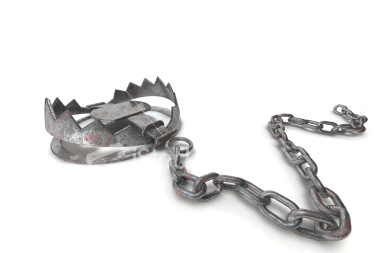
The why trap is a sneaky snare. It lures you in with promises of information that will lend sense to the nonsensical. It helps to take you out of the state of overwhelming emotion as you focus on facts rather than feelings. The problem is that there is often no defined end and trying to answer why leads through an endless serpentine labyrinth. And holds you prisoner of your past.


I fell into this trap within the first few days. Since he left me with no information, I obsessively gathered all of the evidence I could, uncovering the planned trip to Uganda, the stolen funds and maxed credit and eventually, the bigamy. It did answer some questions. After all, I could see why he was too cowardly to face me. Can you picture it?

Lisa, we need to talk. You know how I said we were on track financially for what we planned? Well, I sort of spent all of that and more on another life. It was an accident. Oh, and you know how just last night I told you how much I loved you and how I was looking forward to the rest of our lives together? Well, I changed my mind. In fact, I just got married to this awesome girl. Would you like the registry information? We really need a mosquito net since we’re going to Uganda in a couple weeks. Why do you look upset?

Yeah, not exactly. So, the early sleuthing uncovered some answers, but it didn’t provide any peace. So I switched gears towards trying to understand why he would do these things. That’s when I devoured books and websites about personality disorders and entertained the labels of sociopath and narcissist.  Here’s my full description of the results of that search.

And it did help some. Even though I decided to ultimately leave him labelless, I gained understanding of the fact that I had been gaslighted and I realized that he had some major issues.

But all that reading and research started to hold me back. I realized I was expending more energy on trying to understand him then on trying to understand and heal myself. And, as I always caution, whatever you nurture, grows.

If I wanted to heal and move forward, that was where I needed to focus.

So I did.

I still don’t know why it all happened. And I doubt I ever will.

But you don’t need to know why to walk away.


If you are having trouble with the why trap, here are some ideas to help you get out without having to gnaw off your leg:

Enter your search with intention. Decide what you want to discover and make a pact that once you find that information, you stop.

Set a limit – a timer, a number of books or a number of website searches.

Journal. Often we hold understanding within us and writing helps to release it.

When you feel the urge to dig deeper, try exercising first. Often, the need for information is really just restless and anxious energy.

Complete the sentence, “Once I know …, I will feel…” You may be surprised at how little knowledge really impacts emotion.

If your ex was particularly bad, do you really want to understand them? Maybe not understanding says something good about you.

Pray or meditate to find acceptance. There is much in this world we do not understand. And it’s okay to not always have all of the answers.

Maybe it didn’t happen for a reason, but it happened. Now you can create the reason. You can decide how you want this to fit within your bigger story. Create your own why.

Alone

I don’t believe my ex intended to leave the marriage via text.

In fact, what I think he had planned was much worse.

I was across the country when he packed his belongings into his car and drove away from his life. I was supposed to return to Atlanta six days later, where I was expecting my husband to pick me up from the airport.

I believe his original plan was to continue to play at normal on our daily phone calls so that I would arrive at the Atlanta airport to wait for a ride that would never come. And be left helpless and penniless with accounts that had already been drained.

It’s strange. Even though I never experienced abandonment that stranded me at Atlanta Hartsfield, a part of me experienced the trauma of being alone, marooned and confused as I waited expectantly for a husband that no longer existed.

And sometimes that trauma is triggered.

And my response is not rational.

My emotions greatly overshadow reality as part of my brain becomes that abandoned wife frantically awaiting a sign that everything is okay.


Last week, after a long Friday at work, I went to start my car only to discover it was flatlined. It was no cause for panic – I was parked safely in a well-known and well-lit parking lot. I had coworkers around who could help. Brock was in town and at home, just twenty miles away. My AAA card was in my purse and I still had one more free tow remaining. I had money in my account to pay for a cab, if it came to that.

In other words, I should have been calm.

I was anything but.

It’s like a breakdown of my car leads to a breakdown in me.

I didn’t take the time to lift my hood and fiddle with my battery. I didn’t ask if someone could jump my car. All I could think about was getting home.

Not being stranded.

I ran back into the building to locate a coworker who drives past my neighborhood on her way home. And I left my car behind.

Brock and I returned to the school a few hours later, where my car started up fine as soon as it felt the caress of the jumper cables. I drove home without incident.

But all week, my anxiety was present.

I didn’t trust my car.

It’s strange. The feeling I had mirrored the anxiety and helplessness I felt at the end of my marriage. Afraid of being abandoned, afraid of not having enough money to survive and yet also scared to look too closely at what may be under the hood.

I just wanted everything to be okay.

To keep on running.

The car obeyed until yesterday, when it again abruptly refused to start. And again, I left it in order to return to the security of home. A home with a husband who again helped me retrieve the car, this time putting a new battery under the hood before making sure I made it home safely.


And even though the car is securely tucked into the garage and I’m snuggled comfortably with my husband in front of the fire, a part of me is still scared.

Scared that my car will betray me again.

Scared that I’ll be stranded and helpless.

Scared that I’ll be abandoned and alone.


A huge hug of gratitude to the friends who drove me home:)


Pros and Cons of a Disappearing Act

Being abandoned sucks. The shock alone is enough to stop your heart. And then, once it starts beating again, all you want to to is yell at your so-called partner who thought it was acceptable to simply walk away with no notice and no dialog. It steals your voice. It leaves you in a perpetual state of uncertainty and doubt. It means you never had a chance to fight for your marriage and you’re left alone to try to sort through the mess of what’s left. Friends and family question what about you was so bad to cause your spouse to slink away like a thief in the night. It calls the entire relationship into question. And there are no answers to be found.

Yeah, there’s no doubt. Being abandoned sucks.

But, as with everything, there is another side. One I have fully embraced (it was either that or go crazy). And one explored, somewhat humorously, by Chump Lady. One of my favorite lines from her? “You mistook this ice cube for a human being. It happens. Maybe you bred with the ice cube. I’m sorry.” Thank goodness I didn’t procreate with my ice cube and his vasectomy ensures he never will.


So, here are the pros and cons of abandonment as I see them. I’d love to hear your additions as well.


Pros

-It’s efficient. There’s no long, protracted “do we stay together or split?” period.

-You never get your hopes up. You know it’s over.

-The no-contact advice is really easy to follow.

-You know he/she is a jerk (regardless of what you thought before) and you don’t waste time pining over him/her.

-You don’t have to make the difficult decision about divorce. Even if your spouse leaves it to you to file (as in my case), it’s a clear course of action.

-You may have been lied to (for years, even), but the lies are over. You don’t have to listen to any more deceptions.

-You don’t have to spend any awkward time living in the same house as your soon-to-be-ex. Although you may have to clean out his/her underwear drawer if they left without their belongings.

-If you need evidence to prove “fault” for the divorce or custody laws in your state, you’ll have plenty of fodder.

-You’ll spend less time divorcing so you can get busy healing.

-It makes for an interesting divorce story.


Cons

-The shock is horrific. It literally almost killed me when I dropped 20 lbs in a week and developed an abnormal heart rhythm.

-You feel discarded. Like you weren’t even good enough to have a discussion with.

-You feel so angry, yet there is no one to yell at.

-You will always wonder what happened. And answers, even false ones, never come.

-You may discover a hidden life, complete with betrayals from sexual to financial.

-You will be blamed. Everyone always insists there are two sides to every story. Even when you didn’t know there was a story.

-You have no time to get used to the idea of being single. You’re married and then “poof!,” you’re not.

-It makes it hard to trust again. If one partner disappeared without warning, what’s to stop the next from doing the same.

-It’s difficult to sort through the marriage and identify areas where you could improve without assuming the guilt for the whole enchilada.

-If you have kids, their relationship with the disappearing parent will be affected at best and absent at worst.


Looking at those lists, I’m sure glad that I didn’t have to make a choice between the two. It goes without saying that they’re both awful, horrible, no good, very bad experiences. But, as I’ve said before, happiness is divorce in the rearview mirror. Get through and get on.


It’s Nice to Be Important

Not long after we started dating, I accompanied my teenage boyfriend to his grandfather’s funeral. I had never met nor heard anything about the deceased; my first impression came from the pastor’s opening lines:

“It’s important to be nice, but it’s more important to be important.”

Surprised at the mutilation of the common quote, I turned quizzically to my boyfriend.

“He messed up,” he confirmed in a whisper, “But it’s accurate in this case.”

I spent the remainder of the service wondering about the life and priorities of a man who left his family with that impression.

You can read the rest over at The Good Men Project, where I am now a contributing writer:)