Why Yoga Is the Answer to Your Post-Divorce Woes

yoga

I rarely give the advice that people should do a certain thing. After all, we are all different with unique needs and situations.

But today I’m making an exception.

Because this one thing is really that transformative.

If you give it a chance.

Before I explain all of the reasons why yoga will improve your life, I’m going to first dispel some of the myths I frequently hear:

Yoga is not something you have to be flexible to do. In a purely physical sense, yoga is something you do to become flexible. A good teacher can work with you no matter your body type or limitations.

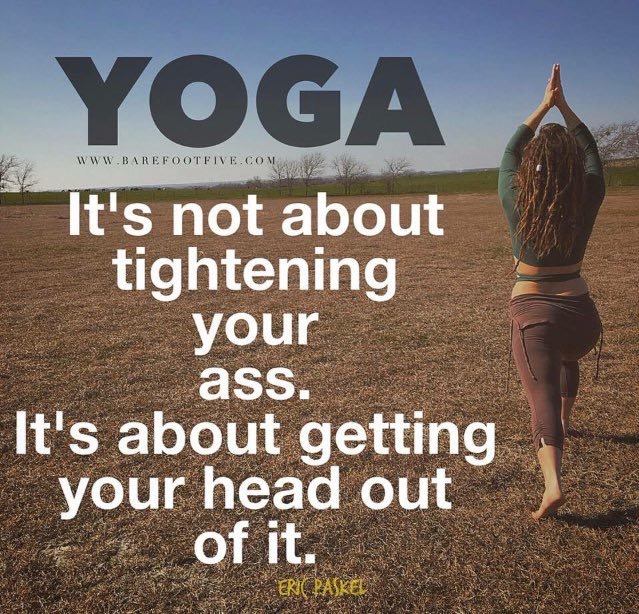
Yoga is not only physical exercise. Yoga is as much in the mind as in the body. In fact, it’s about connecting mind and body. Yes, you get a tight booty but even more importantly, you’ll get a balanced mind.

Yoga is not about wearing the latest tight yoga pants (although you certainly can) or rocking the latest lululemon mat. It’s about connecting breath and movement and as long as your bits are covered, nobody really cares what you’re wearing.

Yoga is not about being trendy. That is IF you find the right studio. Take the time to find the space and the people that fit your needs. Yoga is about connecting with yourself on the mat and experiencing the energy of the group.

Yoga is not one size fits all. You can find everything from super-intense and fast-pasted hot classes to yin classes that often find people falling asleep.

Yoga is not always spiritual. But it can be. Again, look for what meets your needs. Most classes will have some sort of centering and intention-setting at the beginning and some sort of guided meditation/ reading at the end.

Yoga is not necessarily expensive. You can find it taught in churches, community centers and the YMCA. Many communities even offer free classes. And even though it’s not the same as a live class, there are even free videos on YouTube.

Yoga is not just for women. Or skinny people. Or young people. Or [fill in the blank] people.

Do you have a body? Do you have a mind?

Then yoga is for you:)

With me so far? Cool. Now, here’s why yoga is so incredibly powerful for those going through divorce:

Are you feeling sad?

The movement of yoga releases endorphins that help to improve your mood. I recommend a moderate to fast paced movement class (usually called vinyasa) here because it helps to get you out of your head and the pace challenges the body some. If you’re really struggling, try hot yoga, the sweat hides any tears 🙂

Are you feeling anxious or struggling with PTSD-like symptoms?

This was my primary issue and yoga was my biggest ally. I know it seems crazy, but some of the poses cause the mind to panic (especially if it’s a hot class). In life, we’re used to avoiding discomfort. Yoga teaches you to be with it, soften to it and let your breath calm the mind (literally taming the amygdala). Learn those lessons on the mat and you’re better able to handle triggers in the world beyond the studio. Also, it’s worth looking for a teacher who is trained in trauma yoga – they do some incredible work.

Are you angry?

I’m always amazed as the emotions that arise on the mat. And anger is a common one (and not just when the instructor has you doing too much core work!). Good teachers recognize this and even structure classes to elicit certain feelings. And then they carefully guide you to slow your breathing and find your intention again. And that’s a good skill to have.

Are you lonely?

Much of loneliness comes from being disconnected from yourself. And yoga has a way of bringing you home. Apart from that, when you practice in a group, there is an amazing sense of energy that comes from hearing the breath and sensing the movements around you. If you want to chat before or after class, no problem. And if you just want to be left alone, you’ll probably find that people will respect that as well. And if you’re looking for new friends, search out a studio that does day or longer trips (I may go to Costa Rica with my studio this fall!!!).


Are you struggling with comparison?

Is Facebook bringing you down with its endless supply of happy families? Is the news that your ex is getting married hitting you hard? Yoga is a great teacher about the danger of comparing ourselves to others. Just the other day, I nailed crow pose (3 times!!!) for the first time ever. I was stoked. The next day, I started to enter the pose, caught sight of the women next to me doing a harder version, and immediately fell. Yoga is a reminder to keep your mind on your mat and disregard what others think of you and what is going on around you. I love when the teacher says something like, “Don’t worry how xyz pose looks on your neighbor. Your body is unique and the poses will look different for you.” YES!!!

Are you engaging in negative self talk?

Try this little experiment – stand in a one-legged balance pose while you’re focused on your breathing. Now, start engaging in your preferred negative self-banter. Did you fall? That’s the usual response. Yoga teaches you to be loving and accepting of yourself exactly where you are. And when you falter, you often get a physical reminder.

Are you worried about finding your sexual self again?

I just read a study recently that practitioners of yoga have better sex lives. It makes sense. You become more comfortable with your body, more in tune with your physical senses and better able to pay attention to details. And you don’t need a partner to get started.

Are you feeling hopeless?

Yoga does a great job of teaching acceptance in the now and faith in the future. It breaks everything down to the tiniest steps and encourages you to always focus on this breath. And then this one. And before you know it, a full hour has passed. You made it. And you can keep making it!

Are you scared and struggling with fear?

One of the ways I learned to trust again was on the yoga mat. You learn that one leg really is enough to hold you and all that trembling is just noise that can safely ignored. You learn that you can lean back in a twist beyond your self-imposed limits. You learn to let go rather than grasp. And you know what? It’s okay. Strangely enough, the slower classes often trigger this panic (and teach you how to handle it) better than the faster ones. In life, we often keep ourselves busy so that we don’t have to feel. This time to slow down is a gift to yourself.

Are you experiencing a lack of control in your life?

Yoga is more about learning to use the muscles you have than building new ones. When you’re feeling shaky and unstable in a pose, all you need is a simple verbal instruction or well-placed hand to guide you and you activate all those little stabilizing muscles you didn’t know you had. You gain a sense of control (and some soreness the next day!).

Are you having a hard time letting go of expectations?

There is a reason that yoga is always called practice. Because it’s never perfected. Yoga teachers coach you not to worry about where you were last week or even the previous pose. Be where you are in the moment at that moment. You’ll learn that the best practices are those that you approach with an open mind.

Are you feeling overwhelmed?

I folded into a half-moon the other day with my hand to the floor (as I usually do). My balance was off for some reason. Instead of giving up, I reached for the block next me and slid it under my hand before resuming the pose. Yoga is full of modifications and props to use when you become overwhelmed. And learning to ask for and receive help is a valuable life skill at any time.

Are you struggling with confidence?

Yoga is accessible to anyone on their first day. Yet there’s always room to improve. And that feeling of accomplishment and confidence when you finally nail that crow pose? Priceless! (Just don’t look over at your neighbor.)

Are you looking for love again?

Okay, I can’t promise that yoga can do this for you. But it can’t hurt:)

Have you tried yoga? What benefits has it given you? 

Are you thinking about trying it? What questions or concerns do you have?

You know my thoughts – Let’s hear yours!


New Interview on Sivana

I have a new interview up at Sivana, a blog focused on yoga and conscious living. Check it out!

And here’s my personal view on yoga 🙂

img_7599

4 Budget-Friendly Finds That Help Tame Stress

I’m anxiously watching the weather, hoping my county will call off school for Wednesday. Not because I really care about a day off (especially because we just switch to an online platform for classes), but because we had almost the exact same not-too-threatening forecast two years ago. When I ended up being one of the lucky ones who made it home after “only” a three hour drive capped off with a three mile walk when the roads came to an icy standstill.

Luckily, I’ve stumbled across a few things that have helped me cope with stress this school year. They’re all accessible to small budgets, small spaces and small nibbles of time.

Aromatherapy – Smell Good, Feel Good

IMG_4710

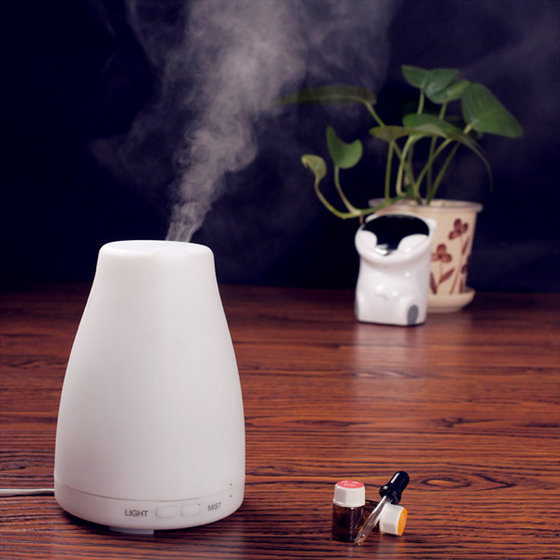
A middle school classroom can develop a certain eau de funk, especially when the kids have PE before my class. And after 14 years of living with it, I decided buy this essential oil diffuser for only $25.99. I did quite a bit of research on the oils. I knew that I wanted lots of variety, which took the more exclusive oils out of my price range. I settled on this set, which has a mix of blends and pure oils.

And I couldn’t be happier with the purchase. In fact, I bought a second diffuser for our bedroom just a couple weeks after the original buy.  I also added a purchase of a Breathe blend from the same company when I felt the first sniffles of the new school year start to move in.

And, I know correlation does not indicate causation, but I have only been sick once this year (and that illness happened when I was out of town and away from the essential oils). I usually play host to at least 3 colds/sinus infections by this point. And even if that’s a happy coincidence, the oils really do help lower my stress (and I even see a difference in my students!).

Coloring Books – Color Me Calm

IMG_4711-1

Yes, this is a trend. But it’s a trend for a reason. I’ve always used coloring in my classroom to soothe the students when they’re especially stressed (like after a day of standardized testing or when a tragedy strikes close to home). And it works for adults too. When you color, there are no rights or wrongs. Nothing is critical. No decision merits too much thought. It takes you out of your thinky space and into a place of intuition and impulse.

You can find the books almost everywhere now – craft stores, book stores and online. They come in all kinds of designs and most come in at around $10. And trust me, with those intricate designs, that $10 will go a long way!

Do Yoga With Me – Tame the Tension

yoga-1033314_1920.jpg

I used to subscribe to YogaGlo, which provided amazing quality searchable yoga classes for $18 a month. And then my card expired and with it, my subscription. Instead of updating my card information, I decided to search other options.

And I’m glad I did. DoYogaWithMe is a similar interface as YogaGlo for the low, low price of free! It doesn’t have quite the quality or selection as the other, but it also feels fairly new and seems to be growing. You can choose a class based on style, difficulty and duration. And if you don’t like a class, you don’t have to stick it out or embarrass yourself by walking out early:)  I’d call that low-stress!

Houseplants – Outdoors In

houseplants-791120_1920.jpg

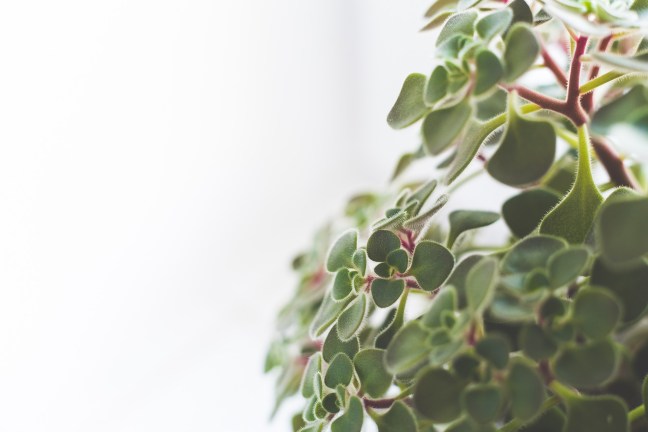
Kind of like the aromatherapy, I have no idea what took me so long to do this. I had to give up on indoor plants when I got my cat, almost 20 years ago. She’s been gone 10 months now, and I just realized that I could bring back the houseplants.

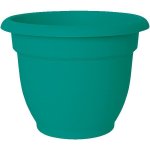
Finding pots that work for the indoors and are also budget-friendly (cheap) and time-friendly (easy to find) is no easy task. I settled on this line of self-watering (and no leaking!) pots from Fiskars. I found mine at Lowe’s and Home Depot for a lower price than Amazon.

IMG_4712

I’ve kept some this cool blue color and I’ve spray painted others white to serve as herb planters on this plant shelf Brock built for me out of a piece of exterior trim board. It’s too cold to buy the herbs right now, so I’m filling the shelf with blooms from our Camellia bush (yes, in stemless plastic wine glasses because I’m just suave like that!).

IMG_4669

In addition to the plants for the shelf, I scattered them around the house. No pictures yet, because I bought the silliest, smallest plants knowing that they will soon grow into their pots. I love coming in to a home filled with green and growth and life.

So what things do you love that help you relax? Please share!

Escape Valves

I couldn’t help it. Giggles burst from my lips like foam spilling out of an over-filled latte.

I had been taking my Yin yoga class seriously up until the point where the instructor, usually calm and serious, mentioned the human nature of moving away from the stretch. I inwardly groaned at the first escape from the discomfort she mentioned – leaning the body over to the right to release some of the tension on the psoas – as I shifted my own weight back to the left to fully face the stretch. But then I had to laugh as she continued to mention two other common ways that practitioners lessen the intensity.

And I was doing both of them.

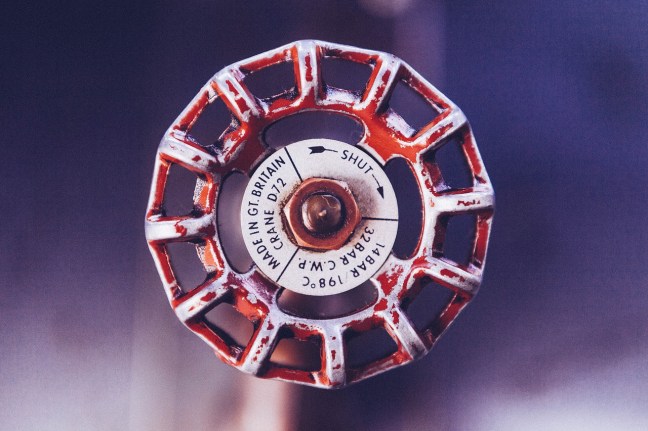
She described this human tendency to avoid discomfort as seeking an escape valve. A way to reduce the pressure and lower the harshness of an experience.

And it really is universal, isn’t it. We try to avoid pain or even unease on the yoga mat. In relationships.

And even in our own minds.

It makes sense. At a basic level, we are programmed to avoid pain in order to protect the body and stay away from dangerous objects and situations. Pain is an important sensation. It tells us to remove our hand from the hot stove or to stay off a broken ankle so as not to cause further damage. Relational pain sometimes informs us that we are in an unhealthy or even dangerous environment and provides the encouragement to leave. Internal pain flares when we neglect our own innate sense of right and wrong and serves as a wake-up call.

Those pains are intense. And the message they send is a critical one – stop what you’re doing now or you will only make it worse.

But often we confuse pain with discomfort. It makes sense to seek to avoid pain.

Yet it frequently it makes sense to embrace discomfort.

On my yoga mat this morning, my breath hitched as I leaned into the stress, shutting off the escape valves. If asked, I would have replied in that moment that I was in pain.

But I really wasn’t. In fact, as I breathed into the psoas and relaxed the surrounding muscles, the position lost its intensity and I was even interested in exploring the pose further. By facing the discomfort, I was able to reduce the discomfort.

Without the instructor’s prompting, I would never have faced the initial discomfort. Unconsciously avoiding even the merest suggestion of pain. And as a result, I would have unwittingly nurtured that area of tightness, allowing it to grow unrestrained.

It doesn’t feel good to feel uncomfortable. But that’s often exactly where we need to be.

———————-

I see the use of escape valves all the time in people facing the end of a relationship –

They decide that they should be over it by now and push it out of their conscious mind. Yet no matter how much you push it down, it always resurfaces until the lessons are released.

They try not to think about their ex or the end because doing so creates pain. Yet trying to avoid the thoughts only makes the thoughts grow more powerful. If they are addressed as they arise, they fail to grow.

They look to distractions to escape the inevitable pain of the end of a relationship. Yet the distractions only work for a time and the pain is patient.

They downplay the impact of the end on their well-being, pretending that it really doesn’t bother them. Only their acting out in other ways belies their assertion.

——————–

The pain at the end of a relationship is more the discomfort from the yoga mat than the agony of a hand on a hot stove. If you face it and work with it, it will begin to release.

Opening an escape valve feels good in the moment. And sometimes, when the pressure is too great to bear, it may be needed. But if you find that you constantly need escape valves, maybe it makes more sense to repair the basic system.

(Note: There is a very important distinction between ruminating and processing. Ruminating would be like taking the yoga pose just to the edge of the pain and then tensing up, holding the breath and staying in pain. Not fun and also not going to get you anywhere. Processing is more like moving through the pain: understanding, exploring, softening, opening and finally releasing.)

Meet Where You Are

This post originally appeared on the site Eat live life, which is dedicated to empowering people with knowledge so that they can maximize their own wellness. Check out the site; there’s some great information for everyone!


Meet Where You Are

When I walked into my first yoga class after my divorce, I had no idea what I was about to encounter. I signed up simply looking for some relief for my tense muscles and maybe some balm for my anxious mind. I had hopes of the class providing structure for my unraveling life and maybe even a dash of eye candy thrown in as a bonus. What I found instead was wisdom that really had nothing to do with yoga.

Upon signing in, I warned the instructor that I was a runner and about as supple as a lead pipe. I didn’t mention the recent divorce, but the fact that my shoulders had taken up permanent residence by my ears hinted to some sort of life stress. The teacher laughed, and said, “You’ll need these then,” as she handed me two dense foam blocks. “In yoga, you meet the body where it is.”

I smiled politely back at her after uttering a “Thanks,” having no idea what she meant by her declaration; it sounded more like new age mumbo jumbo than anything that would actually help. After all, even those this was my first bona fide class, I had been down dogging from DVDs (or even VHS) for years and, as far as I knew, I had never “met” my body.

I was fine through the first few poses; none of them placed any demands on my perpetually shortened hamstrings. As I stood strong in warrior, I started to gain confidence in my body and my strength. That confidence quickly faded as we were instructed to straighten our front leg and fold over towards the floor. I was engaged in a battle of wills with my hamstring and I was determined to win.

I strained my body down as I forced the leg back. Beads of sweat flowed down my face mixed with tears born of frustration. I was accustomed to using my strength to see me through, to lowering my head and fighting through the pain.

Just as I re-intensified my efforts, I felt a gentle hand on my lower back. “In yoga, we meet the body where it is,” the instructor reminded, placing two blocks under my hands. Immediately, my brain stopped sending its panic signals. My hamstrings relaxed and opened as the gripping faded in both mind and body. I started to tease the boundary of discomfort, finding that there was a place where I could push without panic. As my breath flowed back into my body, I realized that I had been holding it.

Not just during the class.

But during the last few months.

I had been approaching my divorce much like I started that yoga class – head strong and patience weak. I hardened in the face of the pain, the situations that caused me to stretch beyond my current abilities. I gripped in both mind and breath and tensed for the next wave of suffering.

In life, we can meet ourselves where we are.
We can accept help.

We can make adjustments.

We can approach change as we’re able, slowly stretching into the discomfort.

We can limit suffering, not by pretending it doesn’t exist, but by letting the breath cushion its impact.

When I walked out of that yoga class that day, my hamstrings were more pliable. But even more importantly, my mind had softened.