Happiness is Divorce in the Rearview Mirror

happiness divorce

There is nothing fun about divorce. I can’t ever imagine anyone – even the most devout fan of Fifty Shades of Gray – choosing to go through a divorce for the entertainment factor. Even in the most clearcut of situations where both parties agree that the marriage is terminal, the process of severing two intertwined lives is awful. And when there are complicating factors? It’s awfuler (yeah, when it comes to divorce, that IS a real word. promise).

But once you’re through?

Once the courtroom and the endless requests for documentation are over.

After the decisions have been made and the consequences determined.

When the divorce is in the rearview mirror.

That’s when the happiness comes.

If you know how to look for it.


The…

Worst is Over

The final decree often brings with it a sense of relief. I personally went from never wanting a divorce to wanting a divorce more than anything else. I just wanted it to over. The months or years sandwiched between the decision to divorce (regardless of who makes the call) and the legal dissolution of marriage are horrible. It’s easy to feel lost and confused and attacked from all sides. The decree doesn’t make everything okay, but it sure helps to alleviate some of the unknown. The worst is over and now…

Healing Can Begin

It’s difficult to heal without resolution. After the legal process is over, you know what you have (and what you don’t). It’s a place – even if it’s rock bottom – where you can start to rebuild. Your focus can shift from the separation to yourself. Healing won’t happen immediately; the decree is no magic salve. But it WILL happen in its own time. One of the keys in healing from divorce is to recognize how far you have come. Celebrate your…

Accomplishments

You made it. It seemed impossible. But you’re through it and still breathing. At least on most days. That’s something to celebrate. Give yourself credit for your successes, both big and small. See yourself as a survivor and strive to be a thriver. Have gratitude for the blessings you have in your life, including your…

True Friends

Divorce has a way of sifting out the true friends from the mere hangers-on. The ones who remain are special. They have now seen you at your most vulnerable and still seek you out. That’s pretty damn cool. Enjoy the security and comfort provided by the stalwart confidantes, but also don’t be afraid to seek out…

New Beginnings

Just like we experience a surge of energy at the beginning of a new year, a new school term or after a birthday, divorce also clears away the old and leaves room for the new. Anything is possible when nothing is certain. Rather than focus on the loss, choose to see the potential. Because when you’re rebuilding your life from the ground up, you have…

Wisdom

Divorce is a helluva teacher. Don’t let those lessons go to waste.


Role Play

This. Is. Life. Changing.

My mom clued me in recently to the Karpman Drama Triangle. It’s a simple and elegant tool that can help you understand and change dysfunctional relationships (not just romantic relationships – familial, friend and work too). This particular description really resonates with me because I think it is possible for everyone to recognize their own inherent behavioral trends and tendencies even if they fall short of the dysfunctional category.

And once you name it, you own it.

And what you own, you can change.


It’s a long read. But so worth it.

So, pour yourself a of beverage of your choice, find a comfortable seat and be ready to have your world rocked.


Timeline of a Divorce

timeline divorce

I hesitated to share this. Not because it’s private. Or controversial. But I’m afraid people will misinterpret it as an absolute.

And if there’s one universal truth about divorce, it’s that there are no absolutes.

I’m sharing this because I see a need. A void. People reaching out and wondering if their feelings are okay for the place they’re in. We all want to know that we’re “normal” and we seek reassurances that we are while silently worrying that we’re not.

But worrying about if your feelings are normal doesn’t help you feel better.

In fact, it makes you feel worse.

Your feelings are what they at this moment.

And that’s okay.

And it’s also okay to want them to be different and then to work towards making them different (notice the intent is paired with action!).


I am sharing the rough outline of my emotions and mindset at different periods throughout and after my divorce. Please do not use this as a ruler to measure your own progress. Just because I reached a certain benchmark at month eight doesn’t mean you should too. In fact, ban the word “should” from your mind as you read this. What I hope you get from this timeline is an idea of how healing comes in slowly, even as you’re living. I want you to find comfort in the fact that it’s okay to still struggle after X amount of time has passed. My wish is that you don’t feel alone and that you have faith that you will be healed one day.

Also, keep in mind that all divorces are different. All of us have different coping skills and support systems. A divorce is not an isolated event; your entire life and genetic make-up come into play as you move on.

My Healing From Divorce Timeline

1 Day : I don’t think I felt anything other than shock and confusion at that point. My body rebelled along with my brain. Thoughts were not coherent or organized.

2 Days: I had two main emotions on the second day. First, I was scared. I came to the understanding that he was gone for good and I learned that my money was gone too. I was worried about my basic physical needs and concerned about what would happen to the dogs. I also started to get angry – disorganized anger, but frighteningly powerful.

3 Days: This is when the tears hit. Although “tears” doesn’t begin to describe it; they were great, wracking sobs that left me weak and drained. The dogs were concerned.

1 Week: I started making plans. I had a divorce attorney. I moved into a friend’s spare bedroom. The hunt for new homes for the dogs had begun. I alternated between paralyzing sadness and savage anger. I still had not slept or eaten more than a few bites. I had lost almost 20 pounds.

2 Weeks: I finally accepted that I could not do this on my own. I got on medication to help with the sleeping and eating. I started journaling at this time; the early entries are difficult to read. By this point, I had just learned of the bigamy and the energy spent with the police and criminal justice system was a welcome diversion.

1 Month: The new school year had started and work was a nice distraction. Plus, it was helpful to have the support of my teammates. At this point I had okay moments within bad days. Some days I wondered if I would make it out alive. I started to be scared that I would never be able to love or trust again. My friends took me out for a birthday dinner with a homemade gluten free cake. I cried tears of joy.

2 Months: My new life had a rhythm by this point. I drove the long way to my new P.O. box so that I could avoid seeing my old neighborhood. I spent my evenings at the gym so that I wouldn’t be alone in my room. The meds held the nights at bay; I passed out cold within minutes of my pills and slept through everything. But I had no help through the days. And they were hard. I still felt zombie-like much of the time and I was very sensitive to triggers from the past.

3 Months: My fingers would still try to text my ex when I saw something he would enjoy. I had to fight to talk about him in the past tense. I wished he had passed. For real. The drama of the bigamy had begun to fade along with its distraction. I found other ways to try to avoid feeling too much. I was afraid to face the pain. I went on my first date. Distraction. When I kissed him, I felt like I was cheating.

4 Months: I attended a three-day personal yoga and mediation retreat. I forced myself to slow down and feel. I didn’t die. I took a full breath for the first time since the text. I didn’t feel better but I started to believe that one day I would feel better. I didn’t yet love or trust but I met someone who gave me hope that one day I could. I felt the need to talk about what happened. With everyone. Sorry, guys. Of course, it helped that the story was entertaining and shocking!

5 Months: I still carried his mug shot in my purse to remind myself that this was real. I was focused on the legal proceedings and convinced that I needed favorable outcomes to be okay. It never clicked that I was placing my well-being in the laps of the law. Not smart. The tears came less frequently but the anger over the unfairness of it all would blind me with rage. I still avoided triggers but I also started to intentionally layer memories, visiting old haunts with new people.

6 Months: I signed up for Match.com, not with the intention of meeting someone but with the hope that I would learn how to date. I think I was motivated by the passing of what was supposed to be our 10 year anniversary. I “celebrated” with a Xanax and a psychiatrist’s appointment. I grew tired and weary of the never-ending legal nightmare and his continued attacks.

8 Months: The divorce was finalized. I didn’t recognize him in the courtroom hallway. Tears streamed silently down my cheeks as I stared at him in the courtroom. I was hopeful that the decree would be followed (after the criminal case turned out to be a joke) and I thought that I would feel significantly more healed after the decree was in hand. I was wrong. I stopped taking the meds (under doctor supervision) over the next several weeks. The mug shot and all the divorce paperwork got thrown into a big plastic tub. I closed the lid.

1 Year: I also had high hopes for this landmark. Too high. I was better than 11 months earlier, but I still had a long way to go. I had many good days, but I still carried that anger closely. Too closely. I moved into my own place after making the decision to stay in Atlanta to be near one of those guys I wasn’t supposed to meet through Match. I threw myself into my new home, my new relationship and my new job. I already spoke of my “former” life, but I still carried dangerous remnants inside.

2 Years: I moved in with the Match guy and brought some triggers with me. Learning to trust again was a challenging job. I no longer shared my story with everyone and I could tell it without tears, although the telltale signs of stress were apparent in my body. I learned to drive by my old neighborhood, although it was still difficult. Little financial time bombs kept landing and each one threw me back to square one. But I was getting better at getting out.

3 Years: I was secure in my new life. I had built much of what I had dreamed of. I wrote the book. There were many tears; I felt sad for the woman I was writing about but I already didn’t feel as though she were me or I was her. My story was making the rounds on TV and online. I was surprised and elated when I found out from Jeff Probst that there was a felony warrant out for my ex. I still wanted him punished. I had to start making payments on a credit card he maxed out. I felt sick every time I made a payment. I softened that with a note of gratitude every month.

4 Years: I was living at the intersection of divorced and engaged. I felt excited for my future and anxious and triggered about an upcoming home purchase (those damn triggers again). I saw my ex. I didn’t die and I didn’t kill him. I drove by my old neighborhood without a thought. I still dreaded anniversaries.

5 Years: I feel good. Damn good. The trauma is still part of my story and I can’t assume that it will never rear its ugly head again. But I feel stronger and more capable of dealing with it now.

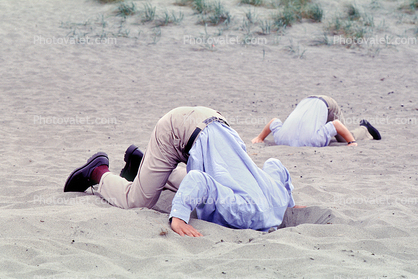
Love Is Only Blind When Your Head Is In the Sand

Do you ever look back at a former relationship and wonder what you saw in your one-time flame?

Or do you ever question a friend or family member’s choice in partners?

It’s easy when you’re outside of a relationship to view the bigger picture, the distance providing perspective while damping emotions.

But when you’re in it?

It’s all too easy to bury your head in the sand.


We stick our heads in the sand in relationships for a variety of reasons:

Avoidance

A wife sees a suggestive text on her husband’s phone from an unknown female. Her heart begins to race and panic floods her system. The hint of an affair is overwhelming to her; she cannot face the thought that her marriage is in trouble and that she may lose her husband. She turns away from the text and tries to pretend that she never saw it. That it didn’t happen.

When we see something that frightens us, we have two choices: approach or hide. In a relationship, the latter can cause problems as the truth is not faced because of the anxiety of losing the partnership. Of course, the fear persists even when the truth is not faced head-on. This state is usually temporary when either the truth becomes too big to avoid or the anxiety becomes too high to tolerate and the evidence is finally challenged. Burying your head out of fear may make you blind but it leaves you even more vulnerable to attack.

Mindlessness

A husband is busy at work, long hours and stressful clients have kept him away from home both physically and emotionally. He prides himself on providing for his family and doesn’t really have the time or energy to consider the status of the marriage as a whole. His wife, meanwhile, appreciates his efforts but feels isolated and lonely as her partner has become a husband in name only.

Heads can end up in the sand even without intentional digging. Stay still long enough and the tides will conspire to bury you. This is a blindness born of inattentiveness and busyness rather than willful evasion. Regardless of the motivation, the outcome is still a relationship in danger due to a lack of clarity and communication.

Willful Ignorance

A wife is pretty sure that her husband has a mistress. She intentionally chooses to turn a blind eye to his affair because he is a good father and stable husband. So she decides not to confront him and, even more, chooses to avoid situations that may reveal evidence of the infidelity. She knows something is there but chooses not to look.

This blindness is born more of pragmatism than fear. The reality is known to an extent and even quietly accepted. It’s a desire to pretend that life isn’t messy and emotions can be subjugated to reason. It’s a carefully edited and narrated form of the relationship. Although often dismissed, there is a sadness in this buried head that comes from lack of vulnerability and associated intimacy.

Bargaining

Prior to the marriage, a husband knows that his wife has problems with anger. He is uncomfortable with her temper and it raises red flags for him. However, he wagers her temperament against her other qualities and decides that the good outweigh the bad. When others bring up her outbursts out of concern, the husband responds by dismissing the concerns and tallying the pros that she brings to the table.

This is a common approach when a partner has issues with violence and/or substance abuse. There may be several very good qualities that are only occasionally accompanied by the bad. It’s a dangerous game; however, as the blinded partner slides into enabling the poor behaviors and choices.


A healthy relationship is one where both partners have their heads tall, looking out for problems on the horizon and addressing them as they approach. Burying your head may make you feel safe for a time but it’s no way to live.

Have the courage to lift your head.

Trust that you can handle whatever you see.

True love isn’t blind.


Self-Reflection in a Funhouse Mirror

There was a fascinating experiment many years ago about attractiveness and pair-bonding. In this study, a number from 1-10 was randomly selected and pasted to each subject’s forehead; the subjects were unaware of their own number. The random number represented the person’s attractiveness as a mate. A couple dozen subjects were then gathered in a room and given the directions to pair with the most attractive (according the number on the forehead) mate they could land.

Even though the subjects never knew their own number, they ended up “mating” with a subject with a similar number. They were calculating their own attractiveness by which numbers rejected them and which were interested.

But that’s not the part that really interested me. When I saw the videos of this study, I observed another, more nuanced behavior. There were some subjects who would be considered fours, threes, or even twos on a real-world attractiveness score who happened to land a high number for the study. These subjects were often more timid in the beginning, their own dating and social experiences bleeding into the laboratory. Even through the “9” on the forehead was attracting many potential suitors, it took time for the internal “3” to fade and for the self-view to shift to match the given reality.

This same discordant event happens out of the lab as well. People often form their own idea of their relative attractiveness to prospective mates when they are in their teens and early twenties and entering the dating scene. It’s more complex than simply looks; attractiveness also encompasses wealth (not just money, but what value you bring to the table), status, character and potential. None of which are static.

So something interesting often happens. You may have a man in his twenties who is still finding his way – no wealth accumulated, car and clothes broadcasting a lesser social status and potential buried under uncertainty. His attractiveness “score” that he internalizes at that point in his life may be a 4, pulling potential mates from the same pool. Ten years later, that same man has a degree, a career and is confident and successful in his professional life. Yet, in dating, he still sees himself as a 4, attracting partners that are no longer suitable. It takes time for the number printed on the brain to match the one projected.

Or, you may have a woman who was overweight and timid through her teens, forming her number from the reactions in the calloused halls of high school. Years later, when pounds are lost and confidence is gained, the perceived attractiveness is often still at the low point set in youth.

Most of us are no longer the person we once were: We change. We adapt. We grow.

Yet we don’t always believe.

The mirror which we use to see ourselves is no normal piece of glass; it is distorted by the messages we received about our value in our childhoods and young adulthoods. We etch that perceived worth inside our minds and often fail to update it when it is no longer relevant.

Step out of the funhouse and see yourself as you truly are without the distortion of the past.

Believe in what you project.

Believe in your value, your worth to others.

Believe in yourself.