
How to Accept the Apology You Never Received

apology never received

In an ideal world, everyone that causes harm to another, either intentionally or unintentionally, would immediately offer up a genuine apology: accepting responsibility, acknowledging the pain, express empathy and remorse, immediately changing behavior and, if appropriate, making amends for the damage caused. But we know that rarely happens. And it never happens as quickly as we would like.

Instead, we receive a “sorry” tossed out with little thought and nothing to back it up. We hear, “I’ll do better” and better never comes. We may find that in place of an apology, we instead receive blame and misplaced anger as defensiveness leads instead of empathy. The apology may be discounted by the excuses that accompany it. We may see an utter lack of comprehension at the pain that was inflicted. Or we may just be listening to radio silence, waiting for an apology that never comes.

An apology that maybe we don’t even need.

fullsizeoutput_1699

Why do we want apologies?

Children are taught almost as soon as they can talk to say “Please” when they want something, “Thank you” when they receive something and “I’m sorry” when they hurt someone. At the most surface level, we view an apology as a basic ritual of societal order that preserves a sense of fairness and responsibility.

Apologizing has become almost a knee-jerk reaction for many. How often have you bumped into somebody or inadvertently cut someone off with your grocery cart and had the word, “Sorry” out of your mouth without thinking? Even in such a minor interaction without much empathy or remorse behind the word, the apology still carries importance. When it is uttered, it acknowledges the infraction and its impact on the other person. When nothing is said, the other person feels invisible and insignificant.

At its most basic, an apology says, “I see you.”

And a lack of an apology is a passive rejection.

CA1038EE-7DC2-4D0E-985E-0C40AA405ED7

What do we expect from apologies?

Pain wants to be heard; the need for our suffering to be acknowledged drives our need for an apology. And the greater the perceived damage, the greater the perceived need for an apology. We all have an inherent sense of fairness, a balance of how things “should” be. When someone harms us, that balance is disrupted and we presume that an apology will make strides towards correcting that imbalance and restoring a sense of fairness.

We often see an acknowledgement of the slight and remorse for the actions as the keystone in the bridge to healing. As though once that apology is received, the remainder of the recovery follows. And so we wait.

Because we want to be heard. Understood. And the pain keeps screaming until it is recognized.

fullsizeoutput_16fb

What are the limitations of apologies?

Apologies can never undo what was done. They are not a magical eraser than removes any harsh words or caustic actions. When we imbue them with these special powers, we increase our expectations to a level that can never be reached.

No apology will ever be good enough to abolish the pain and reverse the damage. Just as you cannot control somebody else’s apology, they cannot mitigate your suffering.

You can’t outsource healing. You have to do it yourself.

m3kdqp1baos21.jpg

Do we need apologies?

An apology or a lack thereof is a reflection of the other person’s character, not your worth.

When somebody causes harm and refuses to accept responsibility, they are telling you who they are, not who you are.

When someone is too cowardly to admit fault, they are showing you their shortcomings, not yours.

And just because somebody displays an utter lack of empathy, it does not mean your pain is not real and valid.

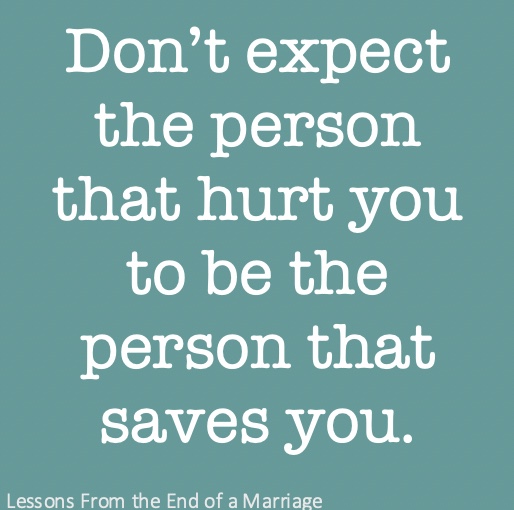
When you wait for an apology, you are allowing the person who harmed you to continue to harm you. You’re letting them decide if you get to be okay again.

And is that really a decision you want to place in the hands of someone who lacks empathy and courage?

If this person is still involved in your life and they are unable or unwilling to authentically apologize, take a good look at your boundaries. Is this someone that you want to remain in your life?

How can you accept the apology you never received?

The most critical component of accepting an apology you never received is to eliminate any magical thinking you have about apologies. They are no holy grail of healing. They do not have the power to erase what has happened. Once you realize that, it becomes easier to let go of the driving need for acknowledgement and amends. An apology is only required if you give it that power.

Your well-being should not hinge on somebody else’s shortcomings.

Their inability to accept responsibility is their problem.

Not yours.

Your healing is your responsibility.

Accept it.

If you’re having trouble accepting an apology you’ve never received, this can help.
fullsizeoutput_16ca

You and Me Against the World

My ex and I had a sense that it was the two of us against the world.

There were several factors that contributed to that mindset: We were teenagers when we started dating and teenagers think everyone is against them. We grew up on opposite sides of town and so from the beginning, our social circles never had too much overlap. We both experienced the death of several friends and mentors towards the end of high school and shortly after, leaving us to lean heavily upon the other. And then, perhaps sealing the deal, we moved halfway across the country to follow his job opportunities, leaving friends and family behind.

After settling in Atlanta, we found new friends. There were singles and couples that we would regularly socialize with. We found families that would “adopt” us for holidays.

But we never found community.

We never had an interconnected group of people to which we both belonged in equal measure.

And to be honest, I didn’t really notice at the time. As an introvert, I tend to prefer to socialize one-on-one or in smaller groups. I frequently would go to Friday “meetings” after work with the other teachers and my husband would often join for at least part of the time. His boss’ family took us in for celebrations and holidays and we blended in with their adult children and grandchildren. Or so I thought before painfully learning otherwise after the abandonment.

But even with this connection, we still ultimately only relied on each other. Opened up to each other.

It was still us vs. the world.

And then he left.

And I realized that I didn’t have to prepare for battle with the world.

I could let it in.

And now in my new marriage, it’s my husband and me in our world.

How to Dilute Your Bitterness

bitterness

The end of a marriage, especially when it comes with infidelity, courtroom drama or excessive vitriol, is like taking a large shot of concentrated bitter. Bitterness comes when we feel a situation was unfair and outside of our control. It is fed by blame, when we feel as though someone else could have prevented the situation.

You come out of the fugue renouncing marriage, blaming the institution for your ills. The thought of starting over again in love and allowing someone unfettered access to your heart brings an acrid taste to your tongue. You look down at affectionate couples like the Grinch looking down at the happy celebrations in Whoville.

You may generalize your rancor, for example painting all men as lying, cheating bastards. Or you may keep the bitter concentrated in a bolus of poison focused on your ex or the affair partner. Sometimes the bitterness lives on the surface, making itself known in most interactions. Other times, it buries itself deeper where it is harder to identify yet it still colors every thought.

Bitterness is anger past its expiration date.

Anger is a sign that something needs to change. It’s a fuel that drives us when we would otherwise crumple in sorrow. Anger sparks when something or someone is testing our boundaries. It tells us to stand up for ourselves and our rights. It’s a neon arrow pointing to what needs to change.

In contrast, bitterness is the residue left once the anger has served its purpose. Bitterness has no purpose. No direction. It may be less intense than the initial anger, but its effects can damage your entire life if you don’t rinse it out.

Since bitterness tends to be more diffuse, permeating every cell, it’s easier to lessen its impact by diluting it rather than trying to simply excise it in one big cut.

First, be truthful with yourself. Be willing to admit any bitterness you carry.

Identify the form your bitterness takes. What words, thoughts or stories carry the acid?

Institute a gag order of your bitterness. Ban the offending words or thoughts.

Eliminate all or none thinking. Life isn’t so black and white.

Bitterness thrives on victimhood. Refuse to be a victim.

Find the lessons within your situation. It doesn’t lessen the pain, but it gives it purpose.

Accept that there are situations you cannot control. And that you can never control other people.

Bitterness feeds upon itself. When you are acrimonious, others will respond in kind.

Take a lesson from cooking. Sweetness cuts bitterness. Find ways to add smiles to your days.

Bitterness holds you back. Letting go allows you to embrace the rest of your life.

Dating After Divorce: Does Their Marital History Matter?

When I first started to contemplate dating after my tsunami divorce, I was taken aback when a friend posed the question, “So, are you looking for guys that have never been married or are you looking for a man that is also divorced?”. Since the last time I was on the dating scene, I was just looking for boys who were old enough to drive, I had never had to consider prior marital status before.

I rolled the imagined pros and cons of each around in my mind for a few moments.

Never married – No ex-wife to deal with, not one to marry impulsively, and has had sufficient time to fully enjoy the bachelor life. On the other hand, perhaps they are not ready for marriage, they don’t know how to “do” marriage and they may struggle to adapt to the lifestyle changes.

Divorced – Knows how to be married, may have friends that are more marriage-oriented, and they are not commitment-shy. Of course, there is always the ex-wife, the newly single man about town energy and they may be dealing with residual triggers and bitterness from the divorce.

I concluded, “I’m fine with either. I figure at my age (32 at the time), I’ll find more that are divorced. Of course, kids are a deal-breaker for me, so that may mean I find more that have never been married.”

And during my period of Match Madness, I did date both. And I found that some of my assumptions were incorrect. I met married men who, based upon discussion, never did learn how to be married. I met lifelong bachelors that had certain traits that made it difficult to imagine anyone wanting to marry them. Ever. And I discovered that difficult and in-the-picture exes were as likely to be of the girlfriend as the wife variety. Divorced doesn’t mean “damaged” any more than never married means “defective.”

In the end, I fell in love with a man (then 37) who had never been married. Not because he had some fatal flaw, but because he knew himself well enough to wait until he was ready. He may not have known how to be married, but that was okay. After all, I didn’t know how to be married to him. And every marriage is different. We gave each other the gifts of time and patience – for me to work on healing and letting go of the residual anger and for him to adapt to a partnered life and learn what it means to be married. And now that never-been-married-before man is a seriously amazing husband.

Just like I wouldn’t want anyone to hold my past against me, someone’s romantic history doesn’t tell the story of their romantic future. Focus more on their character traits than on the characters they dated or married. Pay more attention to their readiness now then their readiness then. And most importantly, look for someone that will learn along with you as you navigate a life together.

Stepping on Toes in the Pursuit of Happiness

happiness

“But I just wanted to be happy,” my couldn’t-be-ex-quickly-enough whined to the police officer in the interview room where he was being questioned for bigamy.

“That doesn’t give you an excuse to commit a felony,” the officer responded. I could hear him shaking his head in disbelief as he related this encounter to me on the phone later that day.

It brings up an interesting question though – when is it okay to cause distress to others on your own path to self fulfillment?

Your first impulse may be, “never.” Yet, we are not responsible for another’s happiness and we are in charge of our own. And there are times when you may have to step on some toes in order to make the changes that you need to make for you.

And it’s actually more harmful to engage in the people-pleasing (or cowardly) dance around the toes than to be honest and upfront from the beginning. When we try to protect people from our truth, we are acting as gatekeepers, something no relationship on common footing should ever have. Additionally, in trying to avoid hurting anyone, you create an environment seeded for deception (if you do want you want and lie about it to protect the other or yourself) or contempt and resentment (if you don’t follow your dreams and you blame your partner for your circumstances).

There are times when you have to step on some toes. Bruise some egos. Utter words that you know will lead to tears. And maybe even make a decision that causes a heart to break.

It’s not your job to ensure that your partner never feels pain. It’s not your role to act as security guard for your partner’s ego. And it’s not your responsibility to protect your partner’s cheeks from tears.

There are times that you may have to step on some toes in order to find your happiness.

But you are responsible for ensuring that you step as gently as possible. (Unlike my ex, who pretty much tap danced in combat boots over everyone in his life.)

If you are feeling unfulfilled in your life and you suspect that the pursuit of your own happiness will end up hurting others, here is what you need to consider if you want to tread as lightly as possible:

Don’t Be Impulsive

We all get irritated at times. We all reach a breaking point where eruptions are inevitable. This is not the time to throw out some news that will hurt your partner. Wait until you are calm and deliberate. Words can never be erased.

Speak Your Truth Clearly

Say it as it is. Provide the basics and only elaborate if asked.

Do Not Spread Blame

Even if you see your partner as responsible, this is not the time to point fingers. Own your part. And make sure you’re not on a snipe hunt for happiness. Not only is that not fair to your partner, you will never find what you’re looking for.

Be Patient

This may be old news to you, but it’s a breaking headline to your partner. Give them the time and space needed to adjust.

Accept That Some Pain is Inevitable

You can’t keep your partner from hurting. Offer comfort if it is welcome and don’t censor or try to minimize the pain.

Strive to Not Respond to Anger

When we are surprised and in pain, we often lash out. Try to not respond to anger; it won’t lessen the impact of your announcement.

Enlist Professional Help If Needed

Whether the news is delivered in a counseling office or a therapist is secured after-the-fact, recognize that help may be needed.

Listen and Keep an Open Mind

You may have reached a conclusion on your own. Be willing to listen to your partner. First, so that they can feel understood and also because you may find an alternative you did not consider.

And I discourage bigamy; you’ll find the police aren’t very sympathetic:)