Three Powerful Lessons About Finding Love From An Unlikely Source

love lessons

Because sometimes the way to learn to do something better is to start with what we already know…

shopping-2411667__480

You know: Never go to the grocery store when hungry.

When you succumb to the grocery store on an empty stomach, you’re possessed by a powerful drive to grab anything in your sight. You have a tendency to zero in on high-calorie items, especially those stocked for maximum visual impact. Your reasoning and planning abilities are sluggish, which may lead to a full cart but an empty pantry as you later realize you forgot the staples.

In contrast, when you navigate the store on a full stomach, you find it easier to stick to your list of needed items and resist those temptations that look good only to leave you feeling bad.

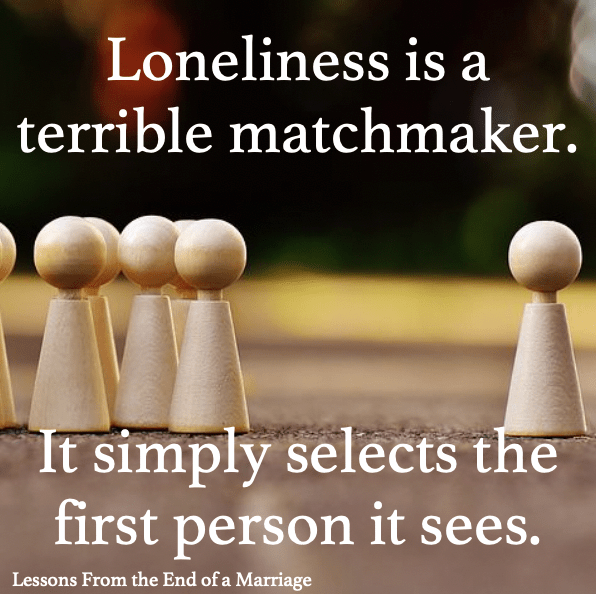
Love lesson: Never date when starving for affection.

When you’re starving for attention and affection, you may enter the dating scene driven by that ravenous and undiscriminating hunger. You’re likely to grab anything that catches your eye with little thought to its long-term impact.

Instead, strive to fill the voids in your life with friends, family, hobbies, passions and purpose before you seek out romantic love. You will make better choices for the long term and be better able to stick to your list of “must haves.” And you’ll also find it easier to pass on those people that make you feel good in the moment only to cause regret in the morning.

You know: Your cart only has so much space.

A grocery cart has finite space and so decisions must be made about what will be chosen to occupy that real estate. Maybe you notice a sale on soda and you’re tempted to fill the basket until the cans pile over the brim. You may justify this decision, claiming that you’re taking advantage of a good deal and that you never know when such a sale may come around again.

But at what expense? Yes, you’ll have soda for months. But you can’t live on pop alone.

Love lesson: Sometimes you have to let go of what makes you feel good in the moment in order to make space for what fulfills you long term.

Once we have allowed someone space in our lives, we tend to justify their place there even when they may not have been the wisest choice. It can be easy to focus on the parts that fit while actively ignoring the reasons why it’s not a good idea.

It’s a version of FOMO (fear of missing out). Because as long as that person is there, you know you have someone. If you let them go, you risk being alone. But there’s only so much space. And sometimes you have to let go of one thing in order to make room for what you need.

You know: Junk food may be quick and easy, but it is detrimental to your health.

So called “food deserts” earned their moniker not from a lack of food, but from a lack of quality food. Processed foods are tempting because they require little investment of time or money. They promise sustenance and indeed provide some feeling of satiety. These “foods” have been carefully engineered to promote maximum consumption and to encourage dependency.

However, in the longer run, these foods can cause starvation even as they widen the waistline since key nutrients have been replaced with fillers and empty calories. Healthy foods take effort, intention and planning as you turn the raw ingredients into something that will both nurture and fortify you.

Love lesson: Healthier relationships take time and energy to prepare.

Quick fixes are tempting in love as well. Those relationships that ignite quickly and fill you with both a surge of temporary well-being and a driving need for more. They can become a drug, leading you to always search for that next spark of interest. Only to leave you empty and lonely once the initial attraction fades.

Healthier relationships are built from the ground up. There is effort. Intention. Sustained energy and shared responsibility. And the pride and ownership that comes from doing something yourself.

The Subterfuge of Scarcity

I listened to an NPR podcast recently that explored the connection between poverty and the mental capacity for problem solving and planning for the future. On the one hand, the results of the research seem evident. After all, we all know that having money gives you the gift of not worrying about money.

On the other hand, the sheer magnitude of the effect was eye-opening. The researchers studied a particular group of sugar cane farmers in India that were “rich” for a few months after they received the annual payout for their efforts and destitute once the money inevitably ran out before the next harvest. The farmer’s impulse control and ability to plan for the long-term was measured and the results were striking. A lack of money literally makes it harder to think.

When the brain perceives scarcity, its focus narrows, much like how blood flow is shut off to the extremities in the case of an emergency situation. Decisions are made for the now, because short-term survival has to supersede any longer-term goals. The more evolved rational brain with its slower and more cautious processing is retired as the more primal and fast-acting limbic system takes center stage. As a result, actions are impulsive and although they may be advantageous in the moment, may cause the current scarcity situation to be lengthened.

A scarcity mindset and its impact on cognition are not limited to finances. When we’re short on time, we often fail to account for the moments we do have, focusing only on the lack of opportunities as the days fly by. When the cupboards are bare before the weekly grocery run, the creative impulse that could help to brainstorm options from the remaining food is dampened. And once the grocery trip is made, the emptiness of the belly may lead to poor choices in the store. The scarcity of words on the page causes writers’ minds to block. A perceived lack of available resources implicit in a short-term sale prompts the brain to jump at the first suggestion.

And after a break up, the scarcity of love and affection can result in an almost obsessive drive to find that intimacy again. Much like how those experiencing poverty may make poor decisions in regards to spending, those feeling a love deficit may make unhealthy choices when it comes to relationships. Anyone who shows attention and kindness is welcomed without regard as to the longer-term suitability and impact. It meets the needs of the moment, filling the void and postponing the sense of loneliness. Yet in the long term, those temporary fill-ins can cause more harm than good.

Since money, time, groceries, ideas, sale prices and love cannot be supplied upon demand, are we simply doomed to experience the cognitive weaknesses prompted by scarcity? In some ways, yes. We have evolved to prioritize the most important needs during times of drought. And when something is lacking, there is only so mental trickery we can do to pretend otherwise.

Yet we are not helpless in times of shortage. We can begin by recognizing what is lacking and also the extent of the impact on our initial reactions. Refrain from exaggerating the situation. Acknowledge what is needed and also be aware of what is still present. Balance the fear for what is missing with gratitude for what is not. Reflect on other times of scarcity and remember when the rains eventually came. Use external methods of providing structure and boundaries to help your reckless brain. If you are driven to make a poor choice, be kind to yourself and also strive to find a way to refrain from repeating the mistake.

Scarcity uses subterfuge to trick us into staying in a place of lack. It deceives us into making decisions that satisfy in the moment and starve us over time. Learn to recognize its pretense and be mindful before listening to its bidding.

Because nurturing new growth comes from watering what you have rather than focusing on the fear that you will never have.


Why Yoga Is the Answer to Your Post-Divorce Woes

yoga

I rarely give the advice that people should do a certain thing. After all, we are all different with unique needs and situations.

But today I’m making an exception.

Because this one thing is really that transformative.

If you give it a chance.

Before I explain all of the reasons why yoga will improve your life, I’m going to first dispel some of the myths I frequently hear:

Yoga is not something you have to be flexible to do. In a purely physical sense, yoga is something you do to become flexible. A good teacher can work with you no matter your body type or limitations.

Yoga is not only physical exercise. Yoga is as much in the mind as in the body. In fact, it’s about connecting mind and body. Yes, you get a tight booty but even more importantly, you’ll get a balanced mind.

Yoga is not about wearing the latest tight yoga pants (although you certainly can) or rocking the latest lululemon mat. It’s about connecting breath and movement and as long as your bits are covered, nobody really cares what you’re wearing.

Yoga is not about being trendy. That is IF you find the right studio. Take the time to find the space and the people that fit your needs. Yoga is about connecting with yourself on the mat and experiencing the energy of the group.

Yoga is not one size fits all. You can find everything from super-intense and fast-pasted hot classes to yin classes that often find people falling asleep.

Yoga is not always spiritual. But it can be. Again, look for what meets your needs. Most classes will have some sort of centering and intention-setting at the beginning and some sort of guided meditation/ reading at the end.

Yoga is not necessarily expensive. You can find it taught in churches, community centers and the YMCA. Many communities even offer free classes. And even though it’s not the same as a live class, there are even free videos on YouTube.

Yoga is not just for women. Or skinny people. Or young people. Or [fill in the blank] people.

Do you have a body? Do you have a mind?

Then yoga is for you:)

With me so far? Cool. Now, here’s why yoga is so incredibly powerful for those going through divorce:

Are you feeling sad?

The movement of yoga releases endorphins that help to improve your mood. I recommend a moderate to fast paced movement class (usually called vinyasa) here because it helps to get you out of your head and the pace challenges the body some. If you’re really struggling, try hot yoga, the sweat hides any tears 🙂

Are you feeling anxious or struggling with PTSD-like symptoms?

This was my primary issue and yoga was my biggest ally. I know it seems crazy, but some of the poses cause the mind to panic (especially if it’s a hot class). In life, we’re used to avoiding discomfort. Yoga teaches you to be with it, soften to it and let your breath calm the mind (literally taming the amygdala). Learn those lessons on the mat and you’re better able to handle triggers in the world beyond the studio. Also, it’s worth looking for a teacher who is trained in trauma yoga – they do some incredible work.

Are you angry?

I’m always amazed as the emotions that arise on the mat. And anger is a common one (and not just when the instructor has you doing too much core work!). Good teachers recognize this and even structure classes to elicit certain feelings. And then they carefully guide you to slow your breathing and find your intention again. And that’s a good skill to have.

Are you lonely?

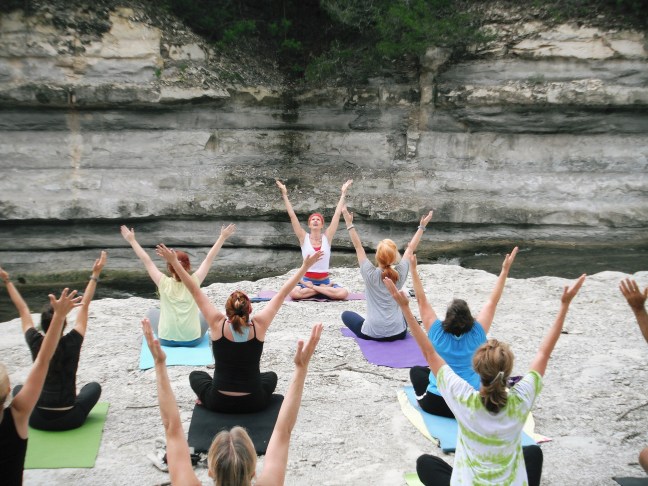
Much of loneliness comes from being disconnected from yourself. And yoga has a way of bringing you home. Apart from that, when you practice in a group, there is an amazing sense of energy that comes from hearing the breath and sensing the movements around you. If you want to chat before or after class, no problem. And if you just want to be left alone, you’ll probably find that people will respect that as well. And if you’re looking for new friends, search out a studio that does day or longer trips (I may go to Costa Rica with my studio this fall!!!).


Are you struggling with comparison?

Is Facebook bringing you down with its endless supply of happy families? Is the news that your ex is getting married hitting you hard? Yoga is a great teacher about the danger of comparing ourselves to others. Just the other day, I nailed crow pose (3 times!!!) for the first time ever. I was stoked. The next day, I started to enter the pose, caught sight of the women next to me doing a harder version, and immediately fell. Yoga is a reminder to keep your mind on your mat and disregard what others think of you and what is going on around you. I love when the teacher says something like, “Don’t worry how xyz pose looks on your neighbor. Your body is unique and the poses will look different for you.” YES!!!

Are you engaging in negative self talk?

Try this little experiment – stand in a one-legged balance pose while you’re focused on your breathing. Now, start engaging in your preferred negative self-banter. Did you fall? That’s the usual response. Yoga teaches you to be loving and accepting of yourself exactly where you are. And when you falter, you often get a physical reminder.

Are you worried about finding your sexual self again?

I just read a study recently that practitioners of yoga have better sex lives. It makes sense. You become more comfortable with your body, more in tune with your physical senses and better able to pay attention to details. And you don’t need a partner to get started.

Are you feeling hopeless?

Yoga does a great job of teaching acceptance in the now and faith in the future. It breaks everything down to the tiniest steps and encourages you to always focus on this breath. And then this one. And before you know it, a full hour has passed. You made it. And you can keep making it!

Are you scared and struggling with fear?

One of the ways I learned to trust again was on the yoga mat. You learn that one leg really is enough to hold you and all that trembling is just noise that can safely ignored. You learn that you can lean back in a twist beyond your self-imposed limits. You learn to let go rather than grasp. And you know what? It’s okay. Strangely enough, the slower classes often trigger this panic (and teach you how to handle it) better than the faster ones. In life, we often keep ourselves busy so that we don’t have to feel. This time to slow down is a gift to yourself.

Are you experiencing a lack of control in your life?

Yoga is more about learning to use the muscles you have than building new ones. When you’re feeling shaky and unstable in a pose, all you need is a simple verbal instruction or well-placed hand to guide you and you activate all those little stabilizing muscles you didn’t know you had. You gain a sense of control (and some soreness the next day!).

Are you having a hard time letting go of expectations?

There is a reason that yoga is always called practice. Because it’s never perfected. Yoga teachers coach you not to worry about where you were last week or even the previous pose. Be where you are in the moment at that moment. You’ll learn that the best practices are those that you approach with an open mind.

Are you feeling overwhelmed?

I folded into a half-moon the other day with my hand to the floor (as I usually do). My balance was off for some reason. Instead of giving up, I reached for the block next me and slid it under my hand before resuming the pose. Yoga is full of modifications and props to use when you become overwhelmed. And learning to ask for and receive help is a valuable life skill at any time.

Are you struggling with confidence?

Yoga is accessible to anyone on their first day. Yet there’s always room to improve. And that feeling of accomplishment and confidence when you finally nail that crow pose? Priceless! (Just don’t look over at your neighbor.)

Are you looking for love again?

Okay, I can’t promise that yoga can do this for you. But it can’t hurt:)

Have you tried yoga? What benefits has it given you? 

Are you thinking about trying it? What questions or concerns do you have?

You know my thoughts – Let’s hear yours!


How Yoga Can Help You Through Divorce

I rarely give the advice that people should do a certain thing. After all, we are all different with unique needs and situations.

But today I’m making an exception.

Because this one thing is really that transformative.

If you give it a chance.

Before I explain all of the reasons why yoga will improve your life, I’m going to first dispel some of the myths I frequently hear:

Yoga is not something you have to be flexible to do. In a purely physical sense, yoga is something you do to become flexible. A good teacher can work with you no matter your body type or limitations.

Yoga is not only physical exercise. Yoga is as much in the mind as in the body. In fact, it’s about connecting mind and body. Yes, you get a tight booty but even more importantly, you’ll get a balanced mind.

Yoga is not about wearing the latest tight yoga pants (although you certainly can) or rocking the latest lululemon mat. It’s about connecting breath and movement and as long as your bits are covered, nobody really cares what you’re wearing.

Yoga is not about being trendy. That is IF you find the right studio. Take the time to find the space and the people that fit your needs. Yoga is about connecting with yourself on the mat and experiencing the energy of the group.

Yoga is not one size fits all. You can find everything from super-intense and fast-pasted hot classes to yin classes that often find people falling asleep.

Yoga is not always spiritual. But it can be. Again, look for what meets your needs. Most classes will have some sort of centering and intention-setting at the beginning and some sort of guided meditation/ reading at the end.

Yoga is not necessarily expensive. You can find it taught in churches, community centers and the YMCA. Many communities even offer free classes. And even though it’s not the same as a live class, there are even free videos on YouTube.

Yoga is not just for women. Or skinny people. Or young people. Or [fill in the blank] people.

Do you have a body? Do you have a mind?

Then yoga is for you:)

With me so far? Cool. Now, here’s why yoga is so incredibly powerful for those going through divorce:

Are you feeling sad?

The movement of yoga releases endorphins that help to improve your mood. I recommend a moderate to fast paced movement class (usually called vinyasa) here because it helps to get you out of your head and the pace challenges the body some. If you’re really struggling, try hot yoga, the sweat hides any tears 🙂

Are you feeling anxious or struggling with PTSD-like symptoms?

This was my primary issue and yoga was my biggest ally. I know it seems crazy, but some of the poses cause the mind to panic (especially if it’s a hot class). In life, we’re used to avoiding discomfort. Yoga teaches you to be with it, soften to it and let your breath calm the mind (literally taming the amygdala). Learn those lessons on the mat and you’re better able to handle triggers in the world beyond the studio. Also, it’s worth looking for a teacher who is trained in trauma yoga – they do some incredible work.

Are you angry?

I’m always amazed as the emotions that arise on the mat. And anger is a common one (and not just when the instructor has you doing too much core work!). Good teachers recognize this and even structure classes to elicit certain feelings. And then they carefully guide you to slow your breathing and find your intention again. And that’s a good skill to have.

Are you lonely?

Much of loneliness comes from being disconnected from yourself. And yoga has a way of bringing you home. Apart from that, when you practice in a group, there is an amazing sense of energy that comes from hearing the breath and sensing the movements around you. If you want to chat before or after class, no problem. And if you just want to be left alone, you’ll probably find that people will respect that as well. And if you’re looking for new friends, search out a studio that does day or longer trips (I may go to Costa Rica with my studio this fall!!!).


Are you struggling with comparison?

Is Facebook bringing you down with its endless supply of happy families? Is the news that your ex is getting married hitting you hard? Yoga is a great teacher about the danger of comparing ourselves to others. Just the other day, I nailed crow pose (3 times!!!) for the first time ever. I was stoked. The next day, I started to enter the pose, caught sight of the women next to me doing a harder version, and immediately fell. Yoga is a reminder to keep your mind on your mat and disregard what others think of you and what is going on around you. I love when the teacher says something like, “Don’t worry how xyz pose looks on your neighbor. Your body is unique and the poses will look different for you.” YES!!!

Are you engaging in negative self talk?

Try this little experiment – stand in a one-legged balance pose while you’re focused on your breathing. Now, start engaging in your preferred negative self-banter. Did you fall? That’s the usual response. Yoga teaches you to be loving and accepting of yourself exactly where you are. And when you falter, you often get a physical reminder.

Are you worried about finding your sexual self again?

I just read a study recently that practitioners of yoga have better sex lives. It makes sense. You become more comfortable with your body, more in tune with your physical senses and better able to pay attention to details. And you don’t need a partner to get started.

Are you feeling hopeless?

Yoga does a great job of teaching acceptance in the now and faith in the future. It breaks everything down to the tiniest steps and encourages you to always focus on this breath. And then this one. And before you know it, a full hour has passed. You made it. And you can keep making it!

Are you scared and struggling with fear?

One of the ways I learned to trust again was on the yoga mat. You learn that one leg really is enough to hold you and all that trembling is just noise that can safely ignored. You learn that you can lean back in a twist beyond your self-imposed limits. You learn to let go rather than grasp. And you know what? It’s okay. Strangely enough, the slower classes often trigger this panic (and teach you how to handle it) better than the faster ones. In life, we often keep ourselves busy so that we don’t have to feel. This time to slow down is a gift to yourself.

Are you experiencing a lack of control in your life?

Yoga is more about learning to use the muscles you have than building new ones. When you’re feeling shaky and unstable in a pose, all you need is a simple verbal instruction or well-placed hand to guide you and you activate all those little stabilizing muscles you didn’t know you had. You gain a sense of control (and some soreness the next day!).

Are you having a hard time letting go of expectations?

There is a reason that yoga is always called practice. Because it’s never perfected. Yoga teachers coach you not to worry about where you were last week or even the previous pose. Be where you are in the moment at that moment. You’ll learn that the best practices are those that you approach with an open mind.

Are you feeling overwhelmed?

I folded into a half-moon the other day with my hand to the floor (as I usually do). My balance was off for some reason. Instead of giving up, I reached for the block next me and slid it under my hand before resuming the pose. Yoga is full of modifications and props to use when you become overwhelmed. And learning to ask for and receive help is a valuable life skill at any time.

Are you struggling with confidence?

Yoga is accessible to anyone on their first day. Yet there’s always room to improve. And that feeling of accomplishment and confidence when you finally nail that crow pose? Priceless! (Just don’t look over at your neighbor.)

Are you looking for love again?

Okay, I can’t promise that yoga can do this for you. But it can’t hurt:)

Have you tried yoga? What benefits has it given you? 

Are you thinking about trying it? What questions or concerns do you have?

You know my thoughts – Let’s hear yours!


When the Divorce Doldrums Collide With the Winter Blues

Divorce is difficult no matter when it occurs. Yet somehow the cold, dark days of winter seem to amplify its effects. A perfect storm forming when the outer world reflects your inner one and when hibernation tends towards isolation.

If you’re having trouble navigating your divorce while dealing with the seasonal blues, check out these survival tips to get you through until winter.

snip20170207_3