If I Had Known This One Thing, I Would Have Divorced Differently

When I first hired my attorney, I was pursuing a divorce through publication (not that I even knew what that was until I was left with a text message and a husband that then disappeared). At that time, mere days after the tsunami, I had no idea what happened and no evidence other than the empty accounts and maxed-out credit. My only option at that juncture was to seek a “no fault” divorce.

And then I found the email. And discovered the affair. And the bigamy.

I learned where he was and contacted the police to report the dual marriage.

Even though that first email, which indicated that band hired for his wedding had not yet been paid, sent me through a dark tortuous path that seemed to birth more questions than answers, I not regret the search for information. The drive for information was too strong. The need for some sort of understanding was too overwhelming to simply walk away.

I contacted my attorney with the updated information.

And that’s when I made my mistake.

In Georgia, you have two options when it comes to divorce – fault or no fault. In order to file a fault divorce, there has to be some concrete evidence that one person’s actions directly led to the divorce.

And with the copy of his second marriage license in hand, I had that proof.

So when my attorney asked me if I wanted to continue with a no fault divorce or if I wanted to alter my approach, I responded immediately that I wanted to change course.

But I didn’t really understand what that meant.

Here’s what I thought at the time –

No fault makes it sound as though we simply grew apart. As though the divorce was a mutual decision made over time and with both party’s well-being in mind.

No fault excuses him of his (criminal and otherwise) actions and makes me (since I was the one filing) look like the one responsible.

No fault made me physically ill. It made me feel like he could spit on me, ground my heart and my finances into dust, abandon his family and responsibilities and that I publicly acknowledging that all of those things just happened.

That they weren’t really his fault.

And at a time when what I wanted more than anything was for him to acknowledge the destruction and pain he caused, a public absolution (as I saw no fault indicating), caused the smouldering anger to flare.

I believed that the word “fault” directed at the defendant on the top of the pages would alert the judge that he or she was dealing with somebody unscrupulous.

I thought that placing him at fault would earn me the favor of the courts and positively influence any rulings in my direction.

And I hoped that having the finger-pointing at him would make my then-husband feel guilty for what he done. And maybe even prompt him to apologize.

And here is what I learned –

The. Courts. Don’t. Care.

About the reasons for the divorce. About infidelity. About blindsiding. About abandonment. About financial betrayal.

They don’t care.

My attorney was more than happy to switch gears to a fault divorce. Because proving fault takes time.

And therefore money.

And I’m not even sure the judge noticed the fact that there wasn’t a “no” before fault on the paperwork submitted to her that day. She proceeded as though my almost-ex was a rational and rule-following man as she divvied up responsibilities.

I didn’t receive any favors for not being the at-fault party and I certainly didn’t receive any empathy.

And I didn’t feel validated in the slightest my the fact that the records showed that my ex was at fault.

Because he never accepted responsibility.

And that was what I really wanted.

Something that the courts could never provide.

In the end, removing those two letters – n o – from my suit for dissolution of marriage cost me added months of stress and thousands of dollars.

And brought me nothing.

A note about the legal process – I am by no means an expert in the legal proceedings of divorce. In my state and in my situation, the difference between fault and no fault was negligible. This is not always the case. Make sure you take the time to fully research the path you’re taking. And don’t make assumptions that legal terms have anything to do with the real world.

It is so incredibly difficult to separate the emotional separation from the legal, especially when you have not been preparing for divorce. And even though from my current standpoint, I say that I wish I had not filed a fault divorce, I can’t promise that I would have listened to that advice at the time.

Make the best decisions that you can. And then forgive yourself for any mistakes.

Divorce is one of things that you don’t really understand until you’ve been through it. And I don’t think anyone wants to practice it enough to get better at it.

The Four Words That Are Holding You Back (And the Four Words to Say Instead)

holding

It’s ingrained in all of us.

Inevitably, when I motion for a student to quiet down, I hear the response,

“It’s not my fault.”

(Or its synonym, “It wasn’t me.”)

people-315908_1280

It is a knee-jerk reaction to any pronouncement of culpability.

And rather than grow out of it as we grow older, we begin to pay others to tell us that it is not our fault.

———-

When I first starting getting into health and fitness in the early 90s, I noticed that the industry advice came in two distinct forms – one voice said that you could transform your life and your body through willpower and hard work while the other side spoke of reassurances that the excess weight or sagging muscle was due to no fault of your own (and often this burden shift would be followed up with a “quick fix” for the low, low price of only $19.95).

And I soon figured out that the second view led to increased sales.

Even as it failed to create the desired body.

Because we all like to hear that it’s not our fault. That someone or something else is responsible for whatever is holding us back.

Yet even though we all have situations and circumstances that make certain goals more challenging, you are ultimately the only thing holding you back.

index-315754_1280

I encounter people that tell me that they cannot lose weight because of PCOS or hypothyroidism. “It’s in my genes,” is offered as a reason for the Type II diabetes or metabolic syndrome. I hear others defend their lack of fitness by claiming that their family or job requires all of their time.

They feel a freedom by stating that it is not their fault.

Yet really they are in chains of their own making.

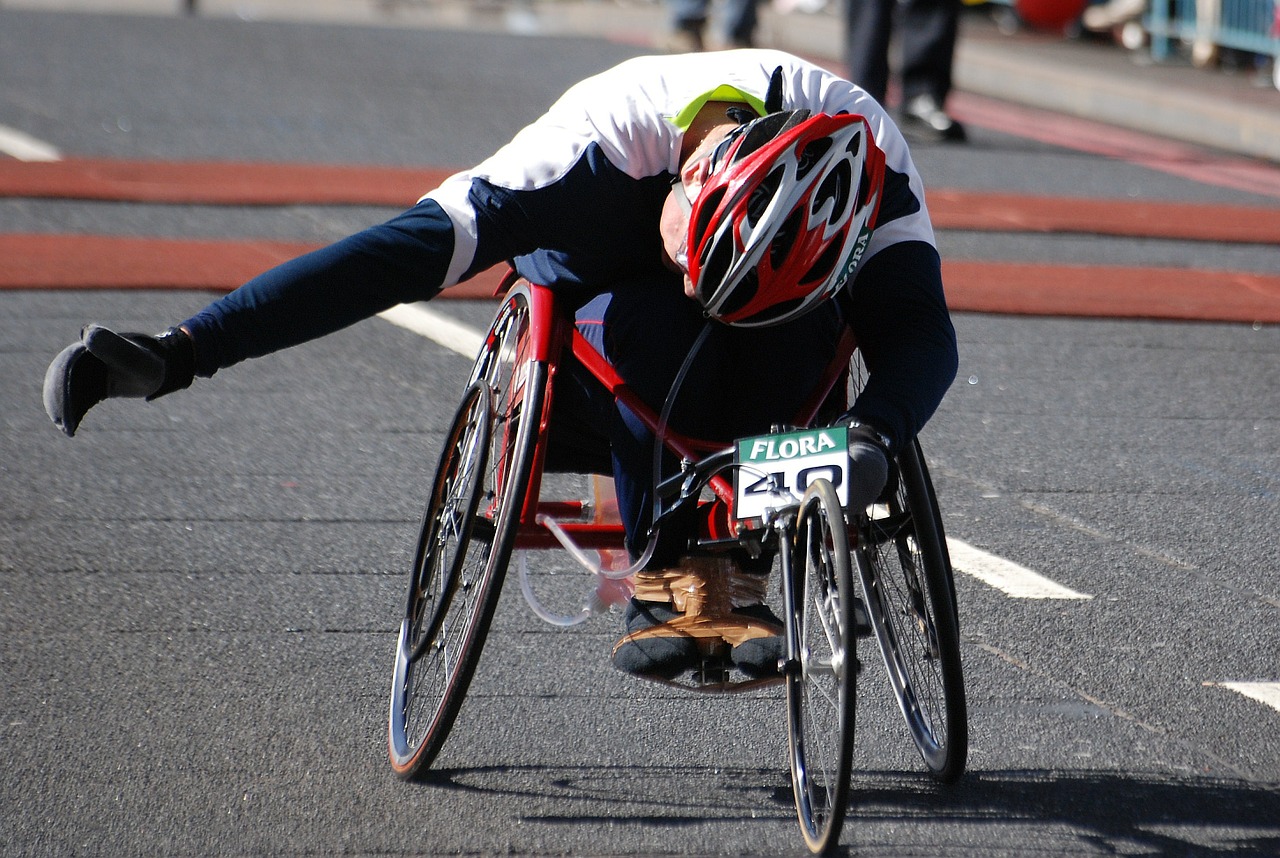
I workout alongside people who use wheelchairs and people with artificial limbs. I have friends who alternate days at the gym with nights at the hospital as they are treated for their autoimmune disorders. I know women with PCOS who accept that weight loss will be harder for them even as they strive to work within the limitations of their disease. I work with single parents who problem-solve creative ways to exercise while the kids are at practice or asleep.

I’ve never once heard any of these people say that the situation is not their fault.

And it’s no accident that they are constantly pushing the boundaries of their situations.

wheelchair-369735_1280

———-

The problem with, “It’s not my fault,” is that it so easily slides into “And therefore there’s nothing I can do about it.”

And the two declarations are vastly different.

It is not your fault if you have been cursed by faulty genes that cause your body to grasp onto every fat cell for dear life.

(And what are you going to do now?)

It is not your fault if you suffered at the hands of abusive or negligent parents who failed to give you the tools to excel in adulthood.

(And what are you going to do now?)

It is not your fault if you have been exposed to trauma, bruising and damaging your very core.

(And what are you going to do now?)

It’s not your fault if your brain struggles with anxiety or depression.

(And what are you going to do now?)

It’s not your fault if your spouse cheated or abandoned you.

(And what are you going to do now?)

In all of these cases (or in any limitations and struggles you have in your life), you can spend your energy on blaming the fault-carrier. Others will help you, either for pay or for free. After all, it’s easy to point fingers at others.

Because then we are absolved of any effort.

Of course, we are also guaranteed not to make any progress.

Because the last time I checked, reps of reciting “It’s my hormones,” had a dramatically lesser effect on fitness than reps on the weight machine.

And assigning liability to a screwed up family of origin is inherently dissatisfying because they’re too entrenched in their own drama to absorb yours.

And calling your cheating ex an ass won’t help you get off yours to build your new life.

So rather than focus on what happened, focus on what you can do now.

Replace “It’s not my fault” with “It is my responsibility.”

Rather than point fingers (or waste your time and money on those that help you pass blame), use those fingers to grab your own bootstraps.

boots-691670_1280

Nobody else is going to do it for you.

———-

Your future is your responsibility.

Your well-being is your responsibility.

Your happiness is your responsibility.

And if you don’t accept that responsibility, that IS your fault.

———-

It is my responsibility to …

Shift my attention from what happened to me to what I am going to make happen.

Focus on what I can do.

See my limitations as my starting point, not as excuses to never start.

Be realistic with my goals.

Set a limit to the amount of energy I expend on placing blame. That energy can be put to better use.

Surround myself with people who believe I can.

Ask for (and accept) help when I need it.

To refuse to allow somebody else to define me.

Communicate my needs clearly and calmly.

Manage my emotions so that they do not control me.

Establish and maintain appropriate boundaries.

Speak and act with kindness. Towards others and also towards myself.

Believe in myself and act in accordance with that belief.

life-863186_1280

And what are you going to do now?

Related:

The Part of the Betrayed

Sprained

I’m Not Strong Enough

The Blame Game

Why is it that some people (those who have never been divorced, or even married, I would suspect) are so quick to lay blame on the end of a marriage.  I mainly hear this when there is abandonment or infidelity involved; the expressed assumption is that the spouse on the receiving end must have somehow invited that behavior.  It is not unlike the victim-shaming often applied to sexual assault victims or the way an abuser lays the blame at the feet of his/her abused.  This mindset can be so damaging for those who are trying to come to terms with what has happened to them.  Those who are trying to ascertain if they are damaged or not worthy.  Those whose world has been torn asunder and who are looking to right themselves again.  We need to reach out in kindness, not lash out in blame.

Women on Top: How Real Life Has Changed Women'...
Image via Wikipedia

In my own marriage, I accept responsibility that my intense nature and my mind prone to worrying helped to create an environment that was supportive of his dishonesty.  Regardless, that did not make it okay for him to lie for years, embezzle money from the marriage, leave with a text message and no discourse, or commit bigamy.  The blamers say he did those things because of me.  In the early months, I felt he did those things to me.  Now, I believe that he did those things despite of me.  He was sick, he was unhappy, he was fighting addictions, and I just happened to be collateral damage.

If you find yourself quick to lay blame, please pause for a moment and think about the appropriateness of the label.  Think about the consequences of the assumption.  Try to examine the situation from multiple viewpoints.

If you find yourself being blamed, especially after your partner has committed adultery or left without notice, please understand that the blamer is lashing out due to their own insecurities and narrow views.  You are not responsible for another’s actions.

Ultimately, blame is a distraction from the core issues in trauma and healing.  It is a winless game; it’s best just not to play.

I wrote more about blame on The Huffington Post.

Fault Lines