A Letter to My Ex On the Eve of My Wedding

This was first published in The Huffington Post almost seven years ago. It soon became one of my more controversial pieces. Some people claimed I obviously wasn’t over my ex while others related to the way that every relationship we experience becomes a part of our story.

It’s strange to read it now, as it was written on a day when I was feeling particularly nostalgic and contemplative, planning my second wedding naturally bringing up memories of the first. In many ways, this was my “good-bye” letter to him, one born more from compassion than the angry ones I actually sent to him in the beginning.

I wouldn’t pen the same letter today. In fact, today I have nothing to say to him because I’m beyond happy where I am. I rarely think of him anymore and I struggle to capture any images and memories from our time together.

Which is why I am sharing this letter again. It captures a moment in time. A woman standing on the bridge between the long road of healing and the gates to a new chapter.


Dear —–,

Fourteen years ago, I was preparing to marry you. I was so excited but, even more, I was so sure. Sure that we were so good together. Sure that we would continue to weather any storm. Sure that we would be together forever.

My belief in our marriage lasted until the day you left. I remember my shock, my disbelief so clearly. I couldn’t understand how you, my beloved husband, could do those things. Even now, four years later, I still don’t understand the choices you made. I suppose I never will.

In an instant, you went from the man I adored to a stranger I feared. In many ways, you have been dead to me since you left. I remember you as you were since I can’t comprehend what you’ve become. It’s almost as though you are two completely separate men to me — the one I was married to and the one who betrayed me. I just can’t understand how you could be both my protector and my persecutor.

I am no longer the same woman you abandoned four years ago; I’m not sure you would even recognize me now. You ripped everything from me — my marriage, my trust, my dogs, my money, my home and even my health. I had to rebuild from nothing except the support of family and friends and my desire to make something good come from all of this. It has not been an easy journey and there have been many moments where I thought I would fail. But then I think of you and I keep going. You have become my motivation to do more, achieve more, trust more, love more. Live more.

I have found a place of forgiveness and acceptance of our past. In fact, I am grateful for you. I’m thankful I had such an amazing and supportive partner for 16 years. You were my best friend. I smile when I think of our teamwork while working on the house or other projects. I’m grateful for your patience teaching me how to slow down and enjoy touch; I still treasure the memory of the hours spent lying astride you with my head on your chest listening to the calming beat of your heart. I’m appreciative of all that you introduced me to — from the comedy of Opie and Anthony to the details of carpentry. I’m thankful that you always made me feel listened to and respected and that you were a husband that I never had reason to complain about. We had a good run.

And, strangely enough, I’m even grateful that this happened. It has been the most difficult and painful experience of my life, one that I’m still paying for literally and emotionally. But it has also opened up a whole new world for me that I would not have realized otherwise. I faced my biggest fears and survived; I’m no longer bound by uncertainty. I’m happier now than I’ve ever been and I’ve experienced enough to be more grateful for that than I would have been before.

I still wish sometimes that things could have been different. That you would have been truthful with yourself and with me at whatever point you started to go down that dark path. That you could have received the help you needed before it was too late and that the collateral damage could have been reduced. But that’s not how it happened and we have both been left with the consequences of your choices, although you have yet to take responsibility for yours.

It’s strange, although you have been out of my life for a full 48 months, you have been very much on my mind. At first, I spent my time cursing you, assuming you were some sociopath bent on destroying me. Then, I started to pity you when I realized how lost and broken you were. I’ve written a book about you (thanks by the way for leaving me with the story that the officer who arrested you still calls “the top story I share after 21 years on the force”) and untold numbers of blog posts. Your spectacular fall from grace has shocked, entertained and enlightened thousands as they learn about the dangers of marital fraud and the reality of bigamy. The story has given hope to the betrayed and comforted others who have been through atypical divorces. It’s what I wanted — some good to come out of the tragedy.

In the typed letter you left me on the kitchen island, you stated that you knew I would move on to live a “happier and more honest life than (you) could ever give me.” You were right, although it has taken me time to see that. I was so afraid that your multiple betrayals had damaged me permanently, that I would never learn to trust or to love again. Luckily, that has not been the case and I have found love again with a man I am to marry soon.

I’m not sure what you would think of him. He is quite different from you — hard where you were soft, decisive where you were contemplative and most importantly, forthcoming where you were secretive. He challenges me in a way you never did; he encourages me to leave my comfort zone and fully live in a way I didn’t before. He has been so patient and so understanding as I have to worked to purge myself of you. I am excited about my upcoming wedding. Even more so than before, as this one is truly a celebration of love arising from the ashes.

You are not invited to the wedding, although in some ways you’ll be there. You will exist as the memory of the husband I loved and lost, without whom I would not be marrying the man in front of me now. Your name will not be mentioned nor your story told, but your influence will be felt by all as we celebrate the enduring power of love.

Thankful to be your ex,
Lisa

Cheaters Are…

Cheaters are…


What’s the first word that comes to your mind?

Selfish?

Liar?

$%&*$?

You wouldn’t be wrong.


Goodness knows I have felt – and said – those words along with much worse in regards to my cheating ex and others that have betrayed their partners. I’ve even felt physically ill when in the presence of strangers that seem to be involved in illicit activity.

In the beginning, I was all-rage. It was black and white in my eyes and he was the monster that swallowed all the light.

Then some things shifted. The anger softened. I started to think a little more and feel a little less.

Cheating is wrong. That is clear. It is never acceptable to betray someone (especially the one you promised to love and care for) in order to have your own wants (because let’s be honest, these are not needs) met. It is a selfish choice. The lies and manipulations that the cheater uses to hide their activities are often cruel. It’s a decision that has horrific and lasting effects on the one betrayed as they struggle to regain their confidence and ability to trust.

Yet as I gained a little more distance from my own experience being betrayed, I came to some startling – and difficult – realizations. I struggle with these still. On some days, I want to shuttle all of the cheaters to Greenland and leave them stranded with nothing but a pair of shorts. And then on other days, I respond more compassionately, seeing them as emotionally stunted, immature and blatantly self-unaware.


Difficult Realization #1

You Know – and Probably Like – People That Have Cheated

After my ordeal, I had several people in my life open up to me. And I learned that there were people that I liked, cared for and even respected that had been unfaithful at some point in their past. Since I wasn’t the one betrayed in these cases, my response didn’t have the same emotional intensity as it did with my ex.

I considered these people. The entirety of them. Learning that one fact about them was upsetting and unsettling, but it also didn’t erase the rest of the person that I had known for some time. Also, and this is key, all of them had taken responsibility for their actions and had made significant changes since the time they were unfaithful.

They hide in plain sight. It’s not like most people go around and brag about their infidelity and many people that have been betrayed choose to stay quiet. Simply based on probability, you have family members that have cheated and some of your friends and coworkers have betrayed their spouses.

People are complicated. You can have great people that do shitty things and shitty people that do a great job at pretending to be great. Betrayal is certainly a shitty action, but does automatically flush away the entire person?


Difficult Realization #2

Cheating is Common

I get frustrated sometimes with the assumption that cheater = narcissist. Considering that the prevalence of Narcissistic Personality Disorder is around 1% of the population and it’s estimated that somewhere between 25-50% of people have cheated at some point, there are far more people cheating without that diagnosis (or there’s a handful of narcissists that have been VERY busy).

To me, the fact that it is common is evidence that it’s not only monsters that make this decision. Instead, it’s evidence that humans can do dumb things, act without consideration for others and engage in extreme cover-ups to avoid getting caught or having to face the truth themselves.

Part of accepting its prevalence is coming to terms with the fact that there is no such thing as an affair-proof relationship. You can choose wisely, pay attention to your partner and the marriage, and still end up finding that awful text message on their phone. And, especially after going through betrayal, that’s a tough pill to swallow.


Difficult Realization #3

Cheaters Are Not All Alike

Some cheaters are just plain terrible people. They continually act without regard for others, endanger their partner with their actions and refuse to accept any responsibility for their choices (often gaslighting and projecting in an attempt to blame their spouse for their wandering genitalia). These people suck and I would love to crowdfund a one-way ticket to Greenland for the lot of them.

But that’s not all of them. Some (often dubbed “unicorns” in affair-recovery circles) do everything right once the affair is revealed. They own up and do the work. Others may get there eventually, but it takes them more time. And then some are just plain clueless.

The motivation for the affair is also important. Some are truly in loveless marriages (although they all claim that, don’t they?) while others betray a loving spouse in the most brutal ways. There are cheaters who battle addiction – sexual or otherwise – that complicates their decision-making. And as difficult as it is to accept, sometimes they do fall in love with somebody else (although the way they handled it is far-from-okay).

Cheaters form a very diverse group. It doesn’t do anyone any favors to lump them all in together.


Difficult Realization #4

“I Would Never…” is a Dangerous Road

I have never cheated. I have never come close to cheating. I cannot imagine cheating. Yet at the same time, I’m careful to not say that I would never cheat.

Because that cocky certainty can easily lead to making some bad choices that would send me to a slippery slope. In fact, that assuredness is one of the common ways that emotional affairs begin.

I don’t believe we all have the capacity to act like terrible people described above. That takes a special kind of suckitude. Yet we all can do some pretty crappy things. We all can make choices that hurt our partners. And we all can struggle with facing hard truths.

When we say, “I would never…,” we’re opening the door.

Personally, I choose to say, “I never want to cheat” and then I make sure that my choices and actions are in alignment with that statement.


These Realizations Don’t Dictate Your Response

No matter how many people you like that have cheated in their pasts, no matter how common infidelity is and no matter what degree of suckitude your cheating partner reached, you can set your own boundaries for what you will tolerate.

The pain from betrayal is brutal. Learning that the person who vowed to protect you has instead been eating cake while slipping you poison is earth-shattering. The aftershocks last for years and the loss of blind trust lasts a lifetime. Infidelity is theft. And you have a right to all of the emotions that it brings up in you.


When it comes down to it, the collective nature of cheaters doesn’t matter.

Only your situation does.


And if you do decide to send them on that one-way trip to Greenland, don’t forget the polar bear bait:)


For those of you hurting, maybe this can help.

5 Reasons You’re Still Thinking About Your Ex (and What You Can Do About It)

lever-3090764__480-2

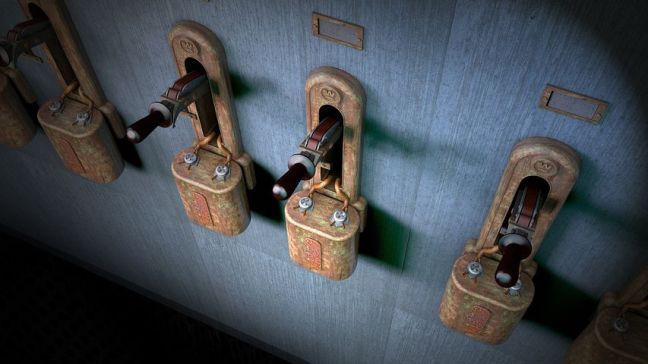
I have this image of the brain after a breakup. It’s laid out like the room that manages all of the electricity for a large building. Huge levers line the walls where the power can be controlled to each section of the building. One by one, you shut down each breaker that sends energy to any thoughts about your ex until your mind is dark and peaceful.

Of course, it’s not really that simple.

No matter how much we try, thoughts of our exes find their way in, both through brute force and devious sneakery. The thoughts can range from disturbing to amusing, but no matter their particular flavor, they are often unwanted, displacing more welcome thoughts and dreams.

So why is it that even though they are out of our lives, they refuse to vacate our minds?


You’re Wanting Things to Be Different

Maybe you’re berating yourself for mistakes you made that led to the demise of the marriage. Thinking that if you only did or said something differently, that you would still be together. Or maybe you’re holding onto the idea that you can still become the person your ex wants and you’re entertaining the illusion that somehow you can still be together.

This desire keeps your ex in the forefront of your mind because you’re turning your thoughts around like puzzle pieces, trying to get them just so in the hopes of bringing everything together. And just like a puzzle, it’s hard to walk away when it feels unfinished.

What you can do…

This is a time for some tough self-love. What you’re doing is a type of magical thinking. Wanting something to be true is not enough to make it true. You cannot change the past no matter how much you allow it to occupy your present. Pay attention to when your thoughts venture into this territory and repeatedly remind yourself, “That is past. I cannot change it.”

These thoughts are often at their most intrusive when we are dissatisfied with our present lives. Are there areas in your life that need filling? Turn your attentions that way.

fullsizeoutput_1747.jpeg


You Miss Them (or You Miss the Idea of Them)

Obviously, at some point, you were attracted to your ex. You liked them as a person and found them interesting and desirable. And then as the relationship grew, their presence in your life grew as well until they occupied one of the more prominent positions. So it’s no wonder that you miss them. That the bed feels empty and you find yourself seeking out their smell or the particular sound their footsteps made on the stairs when they came home.

And of course, when you miss them, you’re thinking about them. And probably with rose-colored glasses too. You’re remembering the person you fell in love with, not the person you divorced.

What you can do…

This can be a time to counteract each of those positive memories with a negative fact. Although this isn’t a great strategy for the long term, it can help when you’re struggling to let go. If you need more ideas, read about how to fall out of love.


You’re Feeling Lonely

I equate a breakup with the cold void felt by the remaining person in a bathtub when the other person steps out. There seems to be too much time and too much emptiness, and that’s a difficult combination. It’s natural to want to fill that void with thoughts of the last person to occupy it. You equate their absence with your loneliness and so you fill your loneliness with their imagined presence.

The problem is that believing what loneliness tells you is a bit like trusting yourself to make wise decisions when you show up to the grocery store starving. Until you address the loneliness, your brain will be feeding you nonsense.

fullsizeoutput_117b.jpeg

What you can do…

Keep busy. Nurture connections with other people. Engage in meaningful work. Give back. Need more ideas? Read 52 Things to Do When You’re Feeling Lonely.


It Hurts to Think of Them Moving On

There’s a reason that the most common search that leads to my site is some version of, “My ex is getting married and it hurts.”

Because it does.

No matter how much we like to deny it, it can be painful to see them moving on, especially when we still feel flattened by the divorce. We wonder if they’re happy. Happier, even. We compare ourselves to their new partner and we judge our life by their curated one.

What you can do…

Block them on all social media. You do not need to see the pictures of them with their new partner. You crave the information, yet at the same time, you feel worse whenever you consume. So go cold turkey. Need more? This video offers more support and points to think about.


You’re Curious

You used to know almost everything about them. And now they’re almost a stranger. It starts innocuously enough, “I wonder if…” But then it spirals as you keep wondering.

Even though this reason doesn’t carry the weight of the others, taken too far, it can still interfere with your ability to move on.

What you can do…

The brain abhors a vacuum. If you don’t know something, the mind will fixate until it has answers. So give it answers. Not by social media stalking or constantly asking your kids, but by telling yourself some version of, “Their life is no longer part of mine. I don’t need to know what they are doing because it does not impact me.” If you have no contact, it’s okay to tell yourself a story (ideally a boring one) about what they have going on. And then go get your drama elsewhere.


Snip20190907_12


Riding the Rollercoaster of On Again, Off Again Relationships

One day, you’re madly in love and you can’t imagine your life without this person. And then the next day, you’re storming out of the house and blocking their number on your phone. Only to find yourself back in their arms a few weeks later.

Your relationship feels like a rollercoaster. When it’s good, it’s great. But it never seems to stay great for long. Every high is followed by a corresponding low. And even though you promise yourself that things are going to be different this time, you can’t seem to get off the endless ride of on again, off again.


Why Does the On Again, Off Again Relationship Pattern Occur?


Strong Chemistry

In relationships that follow this rollercoaster pattern, there is often an intense physical connection. This primal response is powerful and can easily overwhelm the more rational side of the brain that is cognizant of the areas where there is frequent discord.


A Focus on the Potential

It’s easy to fall for someone’s potential. You see what they can be and think that if you give it enough time, that is what they will be. You’re pulled back in time and time again because you’re hoping that this time they’ve become what you want them to be.


Never Allowing for Detox

There is a dopamine rush that accompanies the start (or restart) of a relationship. It’s a heady – and addictive – feeling. The end of a relationship comes with a corresponding withdrawal. Without time to fully detox from this cycle, it can be easy to keep looking for that next hit.


Exaggeration of Both the Good and Bad

When you’re apart, you find yourself fixating on what made the relationship good and so you’re pulled back in. But once there, the negative aspects of the relationship begin to wake from dormancy and again overwhelm what works.


Responding to Loneliness

Sometimes we respond to the inevitable loneliness that follows a break up by reaching out for the person that last filled that void. Only to realize – again – that it is possible to be lonelier with somebody that doesn’t see than to be on your own.


Return to the Familiar

We do what we know. And this relationship, even with its problems, is a known entity. As comfortable and familiar as an old sweatshirt. We put it on not because it fits, but because we’re used it.


Believing the Promises

Sometimes your ex is the one who is reaching out in an attempt to reestablish the relationship. That make promises that things will change. And you believe their words because you want so badly for them to be true. But the actions never follow.


Wanting Things to Be Different

You believe that maybe you just didn’t try hard enough the last time. And that if you just tried a little harder, you can make it work this time around. You believe that if you want it to be true, you can make it true.


Falling For the Sunk Cost Fallacy

You have a history with this person. Shared memories and all of the effort that goes into building a relationship. You don’t want to throw all of that away and so you become determined to try again.


Fear of Starting Over

The thought of dating someone new is scary or overwhelming. You wonder if there is anyone else who is any better than this one. After all, doesn’t every relationship have its problems?


Lack of Self-Esteem

You secretly worry that nobody else is going to want you. Perhaps you’re internalizing harsh words that your on again, off again partner has uttered in the downswings of the relationship or you’ve always struggled with not feeling good enough.


Pattern Becomes Normal

You’ve been on this ride for so long that the extreme swings from up to down to up again just feel normal. Whenever you’re in a relationship that is more steady, you become anxious or bored as you crave the stimulation you’ve become accustomed to.


How Can the On Again, Off Again Relationship Hurt You?


For most people, this relationship pattern is agonizing. A sense of safety in the relationship and secure attachment is all-but-impossible when the bottom seems to fall out on a regular basis.

Additionally, this pattern can occur when one or both partners are running from or hiding their issues instead of addressing them in an attempt to heal past traumas. As a result, personal growth doesn’t happen.

And finally, when you’re stuck in this cycle, all of your energy is funneled either into the intoxicating highs or into the all-consuming lows. There is nothing left over to do any real work.

You deserve a real relationship. One that is there on the good days. And the bad. You deserve someone that loves you and is committed to you. And that may be this person. Or, it may be time to let them go to create space for someone new.


Signs That it May Be Worth Another Ride


Enough Time Has Passed

If the time since you were together can still be measured in weeks, nothing has changed. That is simply too short of a window for any significant reflection and growth to occur. Additionally, you are both still operating from a place of scarcity, wanting to fill that void left from the breakup and you may still be susceptible to that chemical urge.

If, however, significant time has passed without significant contact and you still find yourself drawn to this person, it may be worth a try.


Each Person Has Taken Responsibility and Taken Action Towards Their Own Stuff

Both partners share responsibility for the on again, off again relationship pattern. In order for it to transition into a more mature and lasting relationship, both people have to own their own stuff AND take action to address it. This also takes time and if you rush back into things, the changes may only be superficial and temporary.


You Are Ready to Build Again From the Beginning Instead of Picking Up Where You Left Off

The foundation that your relationship was built on had some malformed parts. If you try to keep building from that point, it will always be shaky. In order to have a different relationship, you have to build a new relationship, starting from the beginning and using what you’ve learned to do it differently this time.


Signs That It’s Time to Get Off the Ride


You Replay the Same Pattern Repeatedly

If your relationship has begun to feel like the movie Groundhog Day, where every cycle through feels exactly the previous, it may be time to call it quits. Those patterns have become well-worn grooves and trying to change them with the same person will be very difficult if not impossible.


Words Are Not Supported With Actions

The right words are said. Promises are made. And then they are followed with the same old actions. Words alone are not enough to bind a relationships. If the good is all talk and the actions are all bad, it’s a relationship made of smoke and mirrors.


Your Happiness is Tied to the State of the Relationship

If you find that your well-being is on the same up and down cycle of the relationship, it’s time to step away. You can’t build a happy relationship when you’re depending on that relationship to make you happy. Figure out your happiness first and only then find someone to share it with.


What to Say (and NOT to Say) to Someone Going Through Divorce

You have just learned that someone in your life is going through divorce and you want to know what you should say to them. Or, you’re facing divorce and you’re wondering why your friends and family seem intent on saying things that only make you feel worse.

With divorce, as in any major loss and transition, it’s difficult to know what to say. For those on the outside, they often want to offer support and comfort, yet surprise and a lack of awareness may lead to the proverbial foot in the mouth. And for those on the other side, heightened emotions and a life in flux may result in taking even the most innocuous statement as an intentional barb.

So this is a primer for both sides – for those going through divorce and for those in their lives.

What to Say, What NOT to Say and How to Respond

Don’t Say – “I know just how you feel.”

This is such a common response whenever somebody is dealing with something difficult. It almost always comes from a good place, a place of empathy and wanting to let the person know that they’re not alone. Yet we never understand exactly how somebody else is feeling. Even if the circumstances are identical, their own past and reactions will greatly impact how they respond.

Maybe Say This Instead – “I’ve been through similar. If you ever want to hear about what helped me, please let me know. “

This phrase lets them know that they’re not alone, both in the experience and in dealing with it. It communicates that there is common ground, but stops short of making assumptions.

If You’re On the Receiving End –

Accept this phrase in the spirit in which it was intended. They are wanting to reach out and they are putting themselves back in the place when something similar happened to them.

Don’t Say – “I get it. My partner never puts the dishes in the dishwasher and it drives me crazy.”

I seriously doubt that a messy kitchen is the reason for the divorce. Yes, those small domestic squabbles can be really annoying and you may have woken up to socks hanging off the cabinets and so you’re feeling especially irrupted with your spouse right now. But still comparing those daily struggles with divorce is minimizing and dismissive. Please complain to someone else right now.

Maybe Say This Instead – “This must be hard for you. I am sorry that this is something that you’re facing.”

If you can’t relate to the magnitude of a divorce, it’s okay. You don’t have to have been there in order to acknowledge that this is something difficult.

If You’re On the Receiving End –

Set boundaries. If you have people in your life that are using you to complain about their minor relationship issues, it’s okay to tell them that you cannot be the recipient of that right now. If they continue, limit your exposure until you’re in a better place.

Don’t Say – “I feel like a single parent because my spouse travels so much.”

I get it. Being a parent when your partner is always on the road, or at work or just absent in general is HARD. Hell, parenting no matter what is hard. But here’s the thing, you and your children are still a cohesive unit, even if it’s one whose operation is largely commanded by you. After divorce, there is grieving for the impact on the children and fear as to how everything will work out.

Maybe Say This Instead – “Being a single parent is hard. Let me know if you need help with transportation or just need somehow to bounce a decision off of.”

You’re acknowledging the challenge without participating in the comparison olympics. And even better, you’re suggesting some possible solutions to some of the difficulty.

If You’re On the Receiving End –

I know that these two situations are not the same thing, but try to see some of the similarities (because there are some). This person may be a good resource for you to help you navigate this new way of parenting and they may be a good companion on spouseless kid-friendly outings.

Don’t Say – “I would never divorce; I believe in working things out.”

That’s awesome. I admire that you’re not a quitter and that you’re not afraid of hard work. However, the reality is that many – if not most – of us that got divorced felt that same way at some point. Yet either we were given no choice or that became the best choice out of a sea of less-than-ideal options.

Maybe Say This Instead – “I know that this had to be a difficult decision.”

Trust that they are making the best choice for themselves and that they are not acting impulsively. If you’re not sure who initiated the divorce, a simple, “This sounds hard,” may be better.

If You’re On the Receiving End –

Divorce is often a major fear for anyone who is married, so your split may be a trigger for those around you. “I would never” is often code for, “That is my biggest fear and so I need to pretend that I have control over it.” Remember that what they are saying is more a reflection on them than a criticism of you.

Don’t Say – “Divorce is a sin”

This may be a core belief for you and so you’re truly concerned about their well-being and relationship with God. Yet you’re also not their spiritual advisor. There are basically two possibilities here – either they do not see divorce as a sin or it is against their beliefs and so this decision (which may indeed have been a life-or-death one) was made after many prayers and much reflection.

Maybe Say This Instead – “Do you have somebody to talk to? A counselor? A pastor?”

Questions and support will always be received better than judgment.

If You’re On the Receiving End –

Take a deep breath. Remember that your relationship with God is your business and have faith that you are doing the right thing for you.

Don’t Say – “You’re destroying your kids.”

Trust me, they are already feeling immense guilt for what this is doing to the kids. They don’t need your voice amplifying that. And it’s also not that simple. If there was abuse, divorce is clearly the preferable option for the kids. Even without abuse, kids often do better with two happy-yet-separate parents than two that are always fighting under the same roof.

Maybe Say This Instead – “How are the kids doing?”

This communicates that you’re thinking about the kids and also gives you a chance to see if any help is needed to ease the transition. Instead of shaming the parent for the divorce, maybe try to be another trusted adult that can help support the kids through this.

If You’re On the Receiving End –

They care about your kids. That’s pretty awesome. However, you also don’t have to listen to shaming and judgmental comments like that. It’s okay to say, “I’d appreciate it if you refrained from commenting on my parenting choices. I’ll reach out to you if I’m looking for ideas or advice.”

Don’t Say – “I never liked your spouse anyway.”

That may be true. Their ex may have been as awful as a Marvel villain from day one. But that’s not your conversation to initiate. Because even if they were awful, the person in front of you was in love with them at one time. Be considerate of that.

Maybe Say This Instead – “How are you doing with your ex right now?

This gives them to chance to let you know if they’re still in love, researching revenge fantasies or navigating a serviceable coparenting relationship.

If You’re On the Receiving End –

The more you communicate your needs, the more you’ll help those who want to support you and yourself. If you want companionship on the ex-bashing bus, say so. If you’re working hard to paint your ex in the best light possible, speak up. You can’t get mad at people for saying the wrong thing if you haven’t let them know what’s right.

Don’t Say – “What happened? Did they cheat? Did you cheat?”

I know you’re curious. Yet let the person dealing with the divorce decide how much they divulge and when they release that information. They may be trying to preserve their ex’s image for the sake of the kids or they may be ashamed of something that happened (or didn’t happen) behind closed doors.

Maybe Say This Instead – “I’m here for you when/if you want to talk.”

This is perhaps the best thing we can say to somebody who is dealing with any kind of thought situation. Be there and be willing to listen.

If You’re On the Receiving End –

You get to control the story. You decide what you’re comfortable sharing – and with whom. You don’t have to answer the questions that you’re asked.

Don’t Say – “Oh, you’ll bounce back in no time”

I know that you WANT them to be okay. You believe in their spirit and tenacity and you have faith that they will get through this. But right now, they feel like their world is ending. Hold space for that.

Maybe Say This Instead – “You’re strong. You WILL make it through this. And I’ll be here for you.”

You’re reminding them that this is the end of a chapter, not the end of their life. And you’re also not implying that this will be easy. Finally, you’re reminding them that they’re not alone as they navigate the divorce.

If You’re On the Receiving End –

You WILL make it through. Maybe not bouncing – at least not yet. But you WILL cross that finish line after divorce. Even if you’re crawling.