We are all familiar with the honeymoon period of a new relationship – those weeks or months where the relationship is everything and seems to exist in a world all of its own. The end of a marriage can also have its own honeymoon period while the divorce remains the primary focus. It’s not uncommon for people who seem to be coping okay during the legal process to suddenly appear to fall apart once its all over. Here is what to expect after your divorce is final and some ways to cope with the end of the divorce honeymoon.
The Letdown of a Goal Attained
Once you have accepted that the end of your marriage is imminent, the divorce decree becomes a goal to reach. Hours may be spent procuring information, signing documents and making decisions towards that singular objective. If you’re like me, you assign the decree some magical power; it is the document that ends one life and symbolizes the beginning of another. I was disappointed when it turned out to be just a stapled stack of (very expensive) papers.
When something takes an immense amount of our time and energy, we have a tendency to feel disappointment when it is over. Even if it’s something we desperately wanted to be over. If you feel this way once your decree is in hand, replace the divorce goal with a new one. Do something with a finish line. Start a new degree or certification program. Make a commitment to learning a new skill. A goal will serve two purposes: it will give you something to focus on and, once you reach the benchmark, it will help to rebuild your sense of confidence.
The Support Fades
In the early days of a split, friends and family often step up and step in. Your inbox is filled with messages of concern and condolences. Texts arrive with offers of dinner or drinks. You may have people offer to watch the kids or take care of your lawn. I was very fortunate to have my dad with me the first week after my ex disappeared and my mom to take his place for the next two weeks. I had a friend take me in and many others take me out. There was always a shoulder to cry on and a hand to help.
But eventually that fades as new crises come up and yours fades into the backdrop of life. It can be an isolating feeling when you realize that the support has faded. The solution? Be proactive. Meet new people. Make new friends. Ones who don’t know you as “the divorcing one.” Be careful not to turn to romantic interests to meet your emotional needs; that’s a recipe for additional heartbreak.
Sympathy Turns to Frustration
In the beginning, you will likely find that people are sympathetic to your pain. But after hearing you talk about your impossible ex for the umpteenth time, they will grow frustrated. Some may disclose this to your face. Others may be more subtle and just pull away from your company. It can be difficult – often healing takes longer than other’s patience.
If you find that your sobs and stories are wearing thin, it’s time to find a new place to share them. Find a therapist. Start a journal. Join a support group or online community. Also be willing to recognize if there’s a message in your friend’s withdrawal – are you complaining without changing?
Delayed Pain
During divorce, you have to be strong. You have to be ready to talk to lawyers without tears obscuring your words. You have to be able to make major decisions that will impact your life for the forseeable future. You may have to keep it together for the sake of your children.
I remember using the tasks of the divorce as a way to keep me from feeling the divorce. And when the divorce was done, those feelings came. With interest.
Be ready for these delayed emotions to hit. It doesn’t mean that you’re sliding backward; it just means that you’re slowing down. Feel them. Face them. And then show them the door.
Reality Sets In
There’s something about the divorce being final that makes it all real. Permanent. Even though I had not talked to my ex in eight months by the time of the legal finale, he was still tied to me in so many ways. But once I had that paper in my hand, I felt the weight of the reality that my old life was gone and nothing would ever be the same again.
When someone leaves our lives, they leave a void. It takes time to not try to call them when you have a smile to share or need someone to hold you up. It’s difficult to accept that they are gone.
This is a time to focus on the good. Create your gratitude list. Celebrate your new possibilities. Yes, you have lost the future you had imagined. So dream a new one.
Burden of Responsibility
I remember the shock I felt the first winter after he left. For the first time, I was solely responsible for my own taxes. It was scary. Unfamiliar. But that’s nothing. For those who are single parents who carry the weight of primary custody, the burden of responsibility is huge. You may now be the sole caretaker and decision maker for dependent children. That’s an enormous responsibility.
You may be afraid to tackle these once-shared tasks and decisions on your own. Yet, each time you do, you will find that your confidence and ability improves. The more you carry, the stronger you become.
Boredom
I can hear you laughing from here. “I’d love some boredom,” you say. I’m sure. Yet it can also be a difficult adjustment. If your divorce was drama-filled, you have adapted to that level of stimulation. And when it’s over, it can be a challenge to acclimate.
Be aware of your need for stimulation. If it remains high once your life gears down, you may seek excitement in unhealthy ways. Stick to roller coasters and horror movies.
Fear of Beginning
While you’re divorcing, you have a legitimate reason for not making steps towards beginning your new life. Once the divorce is final, the excuse is gone. And starting over is scary.
But so worth it.


 Boundaries are rational and deliberate lines that define what is and is not allowed to be done to you. They are communicated and consistent and are less about keeping others out than keeping yourself intact.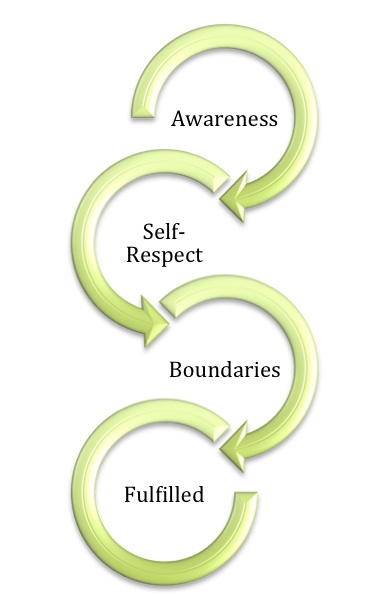
 Emotional walls are bricks of self-protection mortared with fear. They are erected as a result of being wounded. They are rarely acknowledged and their existence is often only discovered when somebody runs head-first into one. Unlike boundaries, which only keep out those who misbehave, walls do not discriminate – they hold everyone back.
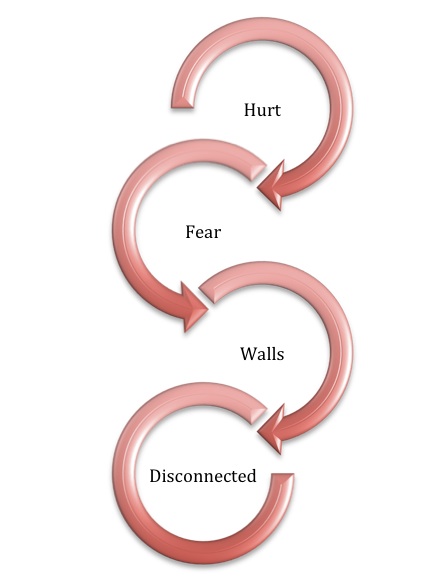 Which are you building? Walls? Or boundaries?


 Lessons From the End of a Marriage