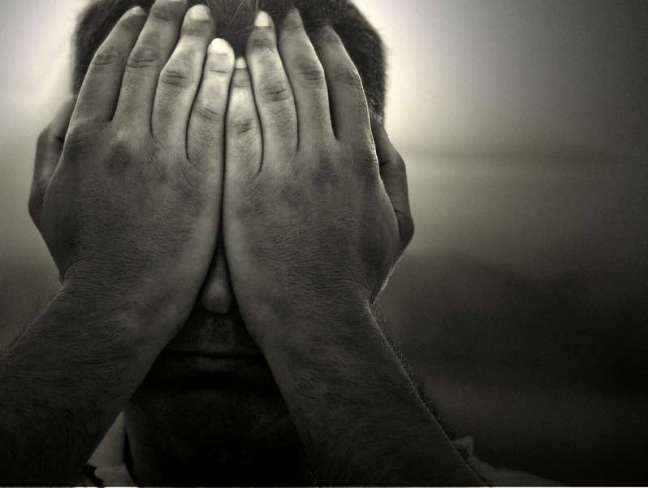
What I Like About Love

Love is one of the first concepts a child understands yet it also is an idea that takes us a lifetime to master. As we have more experiences with love in all forms, we expand our definition to encompass its many forms. We realize that it has no limits, no file storage maximum. We discover that there is no better feeling than new love and nothing as painful as love lost. We learn that gripping onto love with jealousy or fear only dampens it and that love grows in a medium of acceptance. We find that giving love is the same as receiving, just like you cannot give a hug without also getting one. Our definition of love changes and grows with each passing season. The word that prompts a concise definition from a child now takes pages of discourse and dissection.

Love refuses to be pinned down.

To be distilled into the least common denominator.

Love is messy and grand.

We seek it yet we also hide from it, fearing its loss.

We idealize it.

And yet we often fail to recognize it.

We want it.

And yet we act in opposition to it.

When it comes to love, we are still students.

Exploring. Wondering. Seeking. Learning.

And that’s what I like about love.

Elizabeth Gilbert, of Eat Pray Love fame, wrote about how love has changed for her since her divorce and second marriage. I related. You may too.

Lullaby

I noticed the sound first.

A sort of whoosing noise that was obvious along the empty and carpeted hallway.

Curious as to its source, I looked around, only confirming that I was alone.

And then I looked down.

The noise was coming from me.

Or, more accurately, from my left foot as it dragged along the floor.

I couldn’t feel my altered gait; I had no sensation that alerted me to the change.

Yet I couldn’t lift and replace my foot with each step.

There was no pain. At least not yet. It was just an observation. A, “Hmmm…that’s weird. I should keep an eye on that.”

I continued down the hall, my dropped foot leaving a trail in the carpet behind me like the morning slugs on my front walkway. As I settled into my seat and opened my binder to prepare for the upcoming class, I forgot all about the incident.

A week went by. My gait returned to normal and I gave my leg’s lazy morning no more thought.

And then a new visitor arrived.

I again was in that same carpeted hallway, although this time the classroom doors were still locked, so I sat on the floor with my back against the wall.

Without warning, a hot poker of pain pierced through my leg and into my gut. I released a gasp, as I curled into a ball, startling the other students in the hall. The stab stole my breath and then is disappeared, leaving only a strange tingling behind as a reminder.

That tingle, a sensation of the nerves whispering to each other, became a frequent companion. It often felt as though the leg was asleep and couldn’t quite fully wake up.

That was my introduction to shingles, at the ripe old age of 22. The blisters came a week or so later, bringing a visible indicator of the disease that, up until then, had been entirely subterranean. I finally connected the dots, understanding that each of the strange symptoms was part of a larger story.

I have never know such physical pain. The location of my outbreak meant that I didn’t have to worry about visible scarring, but it also meant that I could not sit down (or easily wear pants). I took my final exams that semester from a prone position on the floor, ice packs carefully placed around my hip and thigh.

The blisters eventually popped and healed over. The deep pain and strange skin sensations took longer. I kept a pillow in my car so that I would not have to sit on the affected side. My weird limp would still appear out of nowhere. For months, random lightening bolts would shoot through my leg, stealing my ability to talk or even think.

It’s been 13 years now and I rarely even think about those miserable months.

But the body still sends reminders.

Like ghosts of shingles past traveling along the neural pathways. Bringing pain or numbness out of the blue.

I’m healed, but the virus is still there, living at the base of the nerve bundle that travels to my leg. Most of the time it is dormant, unnoticed and inconsequential. But sometimes, it senses weakness, either from illness or injury, and it wakes up. And says hello.

It’s alert this weekend, more than it has been in years. My leg feels wooden, distant. But now I know how to rock the virus back into slumber with gentle stretches and patience. It will be okay.

As I was healing from the divorce, my mind kept thinking about my experience with shingles. There were so many parallels.

The cause that was anchored in the distant past.

The distant and underground signs that were not clear until the disease was visible to the eye.

The sharp pain that was too much to bear at the onset.

The slow improvement over time.

The fact that healing was not linear or predictable and pain could pounce at any time.

The strange distance I felt from my leg matched the separation I felt from my life.

And then there’s the fact that, like the virus along my spine, the memory of the pain from the divorce will always be there.

Dormant.

But there.

Looking for moments of weakness to wake up again.

But now I know its lullaby.

To keep it safely asleep.


How to Surf a Tsunami

Many of us will face a personal tsunami at some point in our lives. We will be felled by a great wave bringing with it sudden change and loss. Perhaps your tsunami is in the form of the death of a loved one, maybe it is the loss of a job or a way of life or possibly you have lost the health you took for granted. My own tsunami was in the form of an unexpected divorce after being abandoned via a text message.

Regardless of the nature of your abrupt trauma, tsunamis have some common characteristics. By their nature, tsunamis are difficult to predict and even harder to prepare for. You have to face the realization that you cannot control your surroundings. The world that you knew is gone, swept away in a single move. You feel disoriented as you try to navigate this new realm.

Soon after the trauma, it feels like it will be impossible to rebuild. The odds seem insurmountable. The shock and grief permeate everything and make every move a struggle. Restoration after a sudden trauma is not easy, but it is possible. In fact, you can even learn how to surf your tsunami, moving through it with skill and grace.

The following are my healing tips for anyone who has been flattened by a tsunami.

Breathe

The blow of sudden trauma is physical. The body tenses as if anticipating another blow. The breath is the first to suffer; it becomes shallow and rapid behind a breast wrapped tight in a straightjacket of sorrow. Release it. It won’t be easy and it won’t be automatic, at least in the beginning. Set a reminder on your phone or computer to take several deep breaths at least once an hour. As long as the body is anticipating another blow, the mind will be as well. Sometimes it’s easier to train the body and allow the mind to follow.

Read the rest here.

The Second Time Around

I am as familiar with the statistics as anyone – two thirds of second marriages are expected to end in divorce. There are many factors often cited for this depressing outcome. The family unit is more diverse and less cohesive. The children tend to be older and more independent, thus staying together for the sake of the kids is less of an issue. The ghosts of spouses past can continue to haunt the new marriage. Perhaps one or both partners moved too quickly into a new relationship rather than allowing sufficient time to heal from the divorce or to address underlying issues. Or, maybe they spent so much time single that partnered life with its compromises and complexities is no longer a fit. And, of course, there is the fact that once you have been divorced and survived, it may be easier to tread that path again.

Regardless of the reasons, the numbers are clear. Second marriages are more likely to fail than first unions. But, when it comes to relationships, I don’t care about statistics. I care about individual marriages, including my own. And, rather than focus on the added challenges that can impact subsequent marriages, I choose to acknowledge the ways that a marriage can be better the second time around.

Value

I took my first marriage and my first husband for granted. He was always there and I assumed he would always be there. It wasn’t that I treated him poorly or neglected the marriage, I just didn’t understand the fragility of it and that it could disappear so easily. Read the rest on The Huffington Post.

Dishonorable Mention

“What’s your biggest fear?” I asked my teenage boyfriend as we lay side by side on the top of a picnic table, looking up at the night sky ablaze with unmolested stars.

His body, once subtle and molded to mine, became firm, rigid even with anger and intent, as he replied,

“Turning into my father.”

His father was a man who was once successful but squandered it away. His father was a man feared by many but respected by few. His father was an alcoholic who courted drink at night rather than his wife. His father was a man who went from top billing in his career to collecting unemployment. His father was a man who was unreachable to his son, there but not there.

I looked over at my boyfriend, recalling his openness, his resolve, his capacity for intimacy and couldn’t imagine him turning into his father.They were polar opposites in my view and I assured him as such.

I should have listened.

Fast forward a few years and that boy became my husband. He worked hard and found success. He created a life he could be proud of, a life worlds apart from his father.

And then something happened.

I’ve had to make educated guesses about this part, since this is where the lies began. It may not be entirely accurate, but it certainly feels right.

His company closed. He lost his job. He couldn’t find another. This happened when those around him were finding success. He probably saw echoes of his father’s fall from grace when he plummeted from the tops of the working ranks.

He let his job tell him what he was worth. So when he had no job, he had no value.

He felt ashamed. And scared.

As before, he worked doggedly to carve out a path different than his father. Only this time he was desperate. Blinded by fear and shame.

And his desperation led him along a path parallel to that of his old man.

He lied about employment, using credit to create “income” where there was none.

And the shame grew.

He began to drink, turning to alcohol to try to hide from the truth.

And the shame grew.

He created an alternate persona and introduced him to people that didn’t know his past. That persona never faced failure. Never felt fear. Never experienced shame.

But the real man was buried deeper. Each action making it harder for him to ever come out of the hole in which he found himself.

Shame told him he was broken. Worthless. Unworthy as he truly was.

And he listened.

And his greatest fear came true.

Because he was too ashamed to look vulnerable.

Too ashamed to ask for help.

Too ashamed to face his choices.

He gave up the fight.

He gave up himself.

A dishonorable dischange from his own life.

When he left, some of that shame latched on to me. I felt a fool for being blind. I felt like I failed by not stopping the descent. I felt stupid for trusting.

These mantras wrapped through my mind like the stock updates in Times Square.

That was bad enough.

But it was private shame. Bearable.

But when I had to face others with financial reality of it all?

It still stops me in my tracks.

Every time I have to act on a bill from him or face the reality of my piss poor credit, I cower. I tremble. I feel sick, my insides churning.

I feel unworthy.

I feel dirty, broken.

I feel ashamed.

I allow the numbers on the accounts to dictate my value and I feel judged for their balances.

It should be improving. I have a house (even though it’s not in my name) and the debt from him that I’m still paying is down to an amount that feels doable. By 2015, I should be free.

It should be improving.

But it’s not.

I still let money, or the lack thereof, tell me what I’m worth.

I’m listening to shame.

And she lies.

She tells me to hide rather than face.

Conceal rather than reveal.

Which is precisely why I share.

Shame is like a vampire, exposure to the sun can weaken or even kill it.

I know her tricks. The fear she uses to try to bury her victims.

And I won’t be one of them.