Progress and Room to Grow

Because of the nature of my first marriage (conflict-less because of a deadly combination of his tendency to lie about everything and my inclination to avoid anything too anxiety-provoking) and the way that it ended (suddenly and without warning), I have struggled at times with my now-husband.

In the beginning, I alternated between being totally flooded and in a panic about being abandoned again at the slightest sense of conflict or withdrawal to an “I’m out of here” conclusion as my traumatized brain assumed the worst about a situation. Additionally, my f’ed up brain decided that if I wasn’t the “perfect wife,” I would again be dropped. Of course, that doesn’t lead to good things because I could never do enough to calm the anxiety and none of this was stuff my husband asked for (or expected) anyways. And then for the cherry on top, I had a hard time bringing up the difficult conversations, my years of avoiding anything anxiety-producing had trained me well.

It’s been years of work learning how to change these patterns. I can now initiate the difficult conversations and I’m more able to stay present during them instead of disappearing into an emotional whirlpool. I trust that my now-husband is in it for the long haul and that he is not a quitter or a coward. As I process a disagreement or issue, I’m finding less and less that it directly has more to do with my past than my present.

Which is good.

But of course, the past is still imprinted on my being. I still have a tendency to take everything too personally and respond at a level ten to something that should be counted on one hand’s worth of fingers. I get in my head too much, thinking when I should be being. And it’s a vicious cycle. Because when I get this way, I become more convinced that I’ll be left again. Which then leads me right back to where I started.

There’s obviously room to grow.

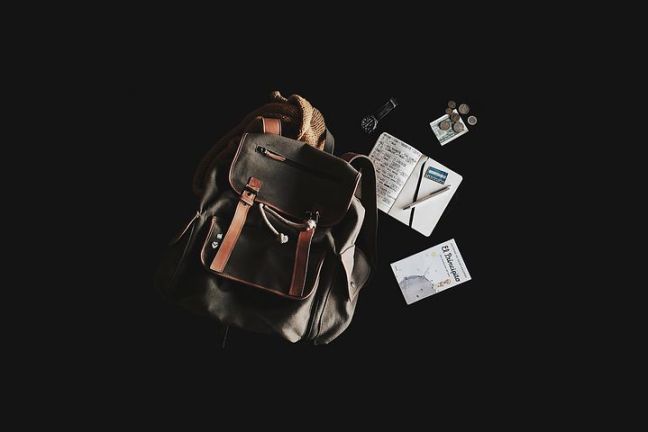
I think part of my recent anxiety is tied to my upcoming trip (I leave in the morning!!!). It’s been almost ten years to the day since I left to go visit my father in Seattle. On that trip, like with any trip, I expected to return to Atlanta and my life at its conclusion.

But that life disintegrated while I was gone.

I returned to an empty home. A missing husband. A depleted bank account. A gutted heart and a shredded soul.

There is nothing in my life now that suggests that scene will ever be repeated. But I think it’s there in my subconscious mind, softly whispering, “what if?” and making me more needy, more sensitive and yes, more anxious.

I’ve come a long way in the last ten years. But I still have a ways to go.

A Complete Guide to Coping Strategies During Divorce

Divorce is a time when you need to have every possible coping strategy at the ready because it seems that every day brings with it a new challenge.

It also seems like everyone is ready with advice – do this, don’t do that. Usually offered with compassion even when it’s off-base.

And the combination can often feel overwhelming as you’re trying to navigate your new reality and filter out the advice that works for you.

So here’s your guide –


The Three Ground Rules of Coping Strategies During Divorce


1. Do what works for you; not what someone tells you to do.

Breaking news – we are not all the same. What worked miracles for one person might be a total dud for you. When you receive advice, consider the source. Do they have your best interests at heart? Do they know you? Even if the answer to those is “yes,” you have permission to ignore the suggestion if it does not resonate with you. Remember – you are the expert on you.


2. Try many things. Keep what works.

Finding coping strategies that work is a bit like trying to locate a pair of jeans that fit after you’ve experienced a significant change in body type. If you only try on a couple, it’s easy to declare that “it’s impossible.” Gather many options with the understanding that most will be discarded.


3. What works today may not work tomorrow.

As you progress, your needs – and what works to address them – will change. Don’t be afraid to retire coping strategies that have lost their effectiveness. That is not a sign of giving up or an indication of failure. Your strategies need to adapt as you do.


Your Coping Strategy Toolkit


Strategies to Survive Financially

  • Start by assessing where you stand. It’s all-too-easy to catastrophize the situation when you don’t yet have all the facts. Figure out exactly what is coming in, going out and what type of credit you have available.
  • Consider low-cost attorneys or mediation for divorce. Before allocating money to the courts, make sure you research what you’re getting for that expense.
  • Be ruthless in designating your financial priorities. A setback in lifestyle now is worth it for financial security later.
  • Utilize these psychological hacks to help you save money.
  • Find a way to keep track of your progress towards your goals. Make it visual and tangible.
  • Tie a dreaded financial task with something pleasant or positive. For example, every month when I made a payment towards the debt my ex incurred, I wrote something that I was thankful for in my new life. I pretended like the payment was going towards these positive changes.
  • Remember that your bank account does not determine your worth and that improving finances takes time.


Strategies For Sleep

  • Make your bedroom a sanctuary as much as possible. If this was your shared space with your ex, do whatever you can to reclaim it. Move the furniture. Buy new bedding. Surround yourself with things that make you feel secure and loved and remove anything with too much emotional attachment. Refrain from using the space to look at old pictures, prepare documents for the divorce, etc.
  • If you’re feeling anxious, wait to try to go to bed. If you wake up and can’t fall back asleep within a few minutes, get out of bed. Have an activity designated for those nights that’s always at the ready so that you don’t spend your time doing something that will ultimately make you feel worse (social media, looking through old pictures, etc.). Some ideas to consider – a puzzle, a book, baking, walking, journaling, etc.
  • Have a routine where you prime your mind for positive thoughts and/or purge negative ones before sleep. Journaling and gratitude journals are good for this.
  • Try podcasts and/or sleep stories (available through apps or YouTube) to help distract your mind as you fall asleep.
  • If your bed feels empty, try a weighted blanket or large heavy pillow to help to fill the space and provide a sense of physical comfort.


Strategies to Reconnect Mind and Body

  • Yoga can be a phenomenal tool to help bring you back to your body and breath during times of stress. Here’s a discussion of the benefits it can bring and what to look for in finding the right practice for you.
  • Try mindfulness apps or reminders on your devices. If meditation takes your mind to bad spaces right now, try something more active – walking, baking, playing an instrument.
  • Get a massage. Non-sexual and no-expectations touch can be very healing. It’s amazing how much of our emotional pain becomes stored in the body. Massage helps to release it and, perhaps more importantly, increases our awareness of this physical manifestation.
  • Try a breathing strategy. There are many of these (box breathing, alternate nostril breathing, 4 7 8 breathing, etc.). They all help to calm the nervous system and interpret the “fight or flight” response.
  • Play with temperature extremes. Sometimes when we’re stressed, our bodies become almost numb. Saunas, steam rooms, and alternate hot and cold pools can help to release tension and also wake the body back up.


Strategies to Maintain Energy and Motivation

  • Exercise. Inertia is real. When you’ve been at rest too long, you stay at rest. So get – and stay – moving. Find the type of exercise that works for you (solo or group, indoors or outdoors, morning or evening, cardio or strength, skill-based or mindless) and do it.
  • Give yourself quality fuel. You may be drawn to “comfort” foods, but those tend to drain us instead of feed us. Think of this as healing from an illness or injury. Quality nutrition matters just as much when we’re healing from emotional wounds.
  • Set goals for yourself. They can be small and they don’t have to even have anything to do with healing from divorce. Make them achievable, measurable and tangible. Write them down and put them where you’ll see them. Track them and celebrate your progress.
  • Build in structure and accountability. It’s normal to feel a lack of motivation during the overwhelm of divorce. When the internal is flailing, put in the external supports (here are 5 ideas).
  • Allow yourself permission to rest. Build in breaks. Schedule them ahead of time and take them guilt-free. I like to see them as refueling stations on a run.
  • Create two lists – “Things I can control” and “Things I can’t control.” Make sure your energy (which is a limited resource) is going to those things you can control.


Strategies to Process Emotion


Strategies for Parenting

  • Generate a list of what is most important to you for your children (values, experiences, feelings, etc.). Seek to ensure that those get priority and give yourself permission to relax on the rest. For example, if it’s important to you that your kids know that they are loved, expressing and showing that on a regular basis is important. Having the perfect birthday party is not.
  • Outsource some of the duties. If you can, hire help with housework or transportation. Trade with another parent so that you have more flexibility.
  • Have your own outlets for emotional outbursts and difficult conversations. You can’t keep it together all of the time. You have to keep it together for the kids and so you also need opportunities to let yourself fall apart.
  • If you have shared physical custody, plan ahead for those times when your home is empty. Don’t let yourself wallow.
  • If coparenting is a struggle, research different approaches and strategies. Consider hiring a mediator if needed.
  • Focus on the positive. Here are 7 things that divorce actually teaches children. Divorce is hard, but it’s not all-bad.


Strategies for Work

  • Work can be both a respite and an impedance during divorce. Here is a collection of strategies you can try if you’re struggling to keep your mind on the tasks at hand and the emotion out of the office.


Strategies to Fill the Void

  • Think back to interests that you had during childhood that have been neglected. Are there any of those you want to pick up again?
  • Consider what you’re really missing when you say you miss your ex – the companionship, the adult helping with the kids, the shared history? Do you have other people or things in your life that can meet that need?
  • Looking for more ideas? Here are other ways that you can fill the void left after divorce. And if you’re feeling lonely, here are 52 different things you can try.


Strategies for Nurturing Self

  • Try cooking for yourself. In the most literal sense, you’re nurturing yourself and saying that you are worth the time and attention.
  • Set aside time to take care of yourself. If you don’t make it a priority, it won’t happen. So schedule it and set reminders.
  • Here are some other tips that you can try when you’re feeling overwhelmed.


Strategies for Escape

  • Be mindful about the digital content you consume. Instead of mindlessly Netflixing, find a series or movies that you truly enjoy and given them your attention.
  • Make a note of how you feel after time on social media. Consider blocking people, deleting apps or altering your feeds to create a more positive and uplifting environment.
  • Set a time limit for yourself on how many minutes or hours you will escape each day. Escape has its place, but it’s no place to live for the long run.
  • If you’re finding that you’re spending too much time escaping, confide in a friend and ask them to help by calling you out on your excessive behaviors. Often just being aware of them can help.


Strategies For Dealing With Others

  • Develop an “elevator speech” about what you’re dealing with that you can use when people inquire and you don’t want to go into detail. Keep it brief and practice it until you can deliver it without emotion.
  • Tell your support system what you need – and don’t need – from them. They want to help and will actually feel relieved it you can give them specific things they can do or say. (Or what NOT to say!)
  • Give yourself permission to take as many time outs as you need to. It’s okay to limit time with certain people.


The more coping strategies you try, the more likely you are to find some that will work. You CAN make it through this, but it won’t happen automatically. Healing is a process that requires that you be an active participant. So keep trying and keep taking those baby steps:)

Four Types of Marital Abandonment You Need to Know About

When I filed for a “fault” divorce (which, in retrospect, was a mistake), one of the reasons cited was “marital abandonment.” It was a clear call – he walked out of the house and out of my life, leaving everything behind in order to start a new life in a new state. It’s the textbook form of abandonment we’re all familiar with, a sudden and complete severing of the marital ties.

But it’s not the only way that a spouse can desert their marriage. These other forms of abandonment may be more subtle, but their impact is no less excruciating.

It’s important for us to be aware of the ways that we may be rejecting our spouses and if we’re on the receiving end, it’s helpful to understand what is happening.


Physical Abandonment

Physical abandoment can occur even when the body remains in the shared home. It can take the form of reduced affection, touching less and less as the years progress. Sometimes it’s a literal turning away when one partner bids for attention, leaving the request for physical contact unfullfilled. Other times, physical abandonment occurs in a more subtle way, a slow decline over time.

This type of abandonment can also be sexual, where one parter desires sexual connection and the other continually rejects their advances. Even when this rejection originates from valid concerns (such as illness that makes sexual contact difficult or painful), the partner who desires the physical contact tends to feel abandoned.

For many of us, touch is an important part of feeling loved. Feeling desired. And so when that touch is removed from a relationship, we feel discarded and worthless.


Attentional Abandonment

We all want to be seen, especially by the person that we love. Attentional abandonment occurs when we feel invisible within our own home as our spouse’s focus is directed elsewhere for extended periods of time. This can often be seen after the birth of a child, when the infant becomes the sole focus and the spouse is moved to the periphery. It also happens when one – or both – partners are focused on work, ailing family members, other people or hobbies.

Every marriage goes through patches of attentional abandonment with outside responsibilities have to take priority for a time. The problem arises when it becomes habitual and energy is continually funneled outside the marriage.

Without attention, a marriage, like a lawn, will whither. Whatever you nurture, grows.


Emotional Abandonment

When one person shares their emotional state with the other, it is a time of vulnerability. And when the response is dismissive or lacking, it leaves the vulnerable person feeling stranded without support or validation. When this is a continual pattern, it often leads to withdrawal and a lack of trust.

A lack of emotional connection weakens a marriage and can lead to a situation here two people are living alongside each other instead of living with each other. Ideally, each person can feel like the other has their back – both physically AND emotionally.


Spiritual Abandonment

This type of desertion can be as clear as one partner renouncing the faith that was a cornerstone of the relationship from the beginning. But it can also be beneath the surface of the marriage. All relationships have certain key values and goals and that center – family, personal growth, financial success, etc. And when one person in the marriage no longer holds those same guiding values, it leaves the other feeling discarded.

Of course, each person has the right and the freedom to shift their values and driving principles over time. Regardless of how it is handled, one partner may feel abandoned by the other. However, when there is open communication, the feeling of personal rejection will be lessened.

No matter what the intentions of our partners, we all can feel rejected sometimes. But there are ways that we can limit this reaction. Overall, feelings of abandonment are increased when the changes are abrupt and there is no discussion of the situation. When we feel like we understand why the withdrawal is occurring, we are less likely to take it personally and less likely to view it as a desertion of the marriage.

Loneliness After Divorce

Guest Post: The Best Relationship You’ll Ever Have

By Adriana Verdad


You Should Date Yourself

After failed attempts at dating, and developing feelings for someone who had none for me, I decided I really should try dating myself. Yes, I’d read about it, multiple times, on the internet, in your typical articles geared towards single women. Honestly, at first I thought it sounded super cheesy, and I even had a friend tell me that it was really cheesy, and maybe calling it “dating yourself” is. I’m not going to feed you some crap about how it’s not cheesy at all. It’s wonderfully cheesy. It’s as cheesy as The Notebook, the notion that someday some man will show up to take me on a surprise picnic, or the fact that after all I have been through, I still truly believe in true love. I embrace the cheesy, and I make zero apologies for it.

So, when I first decided to date myself, I thought of what it would look like. I thought of what types of dates I would go on with someone I was dating in the traditional sense: movies, dinners, drinks, coffees, picnics, festivals around town, the art museum, etc. I decided these types of things would work, but I also thought maybe I should see what other ideas were out there, and so yes, I turned to Google and Pinterest. I thought why not think outside the box, so I let others think outside the box for me, at first. I created a whole list on my phone of different types of date ideas, and I will share some of them with you in future posts.

I was more organized about this dating time I carved out for myself at first, clearly marking it down in my daily to do lists as a date with me. I protected this time, and rarely went outside of it, unless of course, a better opportunity came along, like an outing with my girlfriends, or a an actual (very rare) date popped up, or if I had a chance to hookup with someone, but in general these times were sacred to me, and I like that I was so protective of that time at first. It’s when the kids are at their father’s house of course, but I don’t really refer to it as dating myself , although it is. It’s akin to when you’re dating another person, and you settle into such a comfortable routine, that you don’t think so much about it anymore. Like at first, you are so worried about you wear, look like, or what you are going to plan at first, but you slide into a routine, a comfortable routine, with one another. I started to make it less organized, but I still definitely date myself. Now, it’s a Friday night of Netflix, or a Saturday full of reading on my sofa under a big cozy blanket. It might be a Sunday afternoon where I get cute, and take myself to the Art Museum to check out an exhibit I’ve been eyeing, or even my Tuesday night running club, that’s a date with me. I’ve spent a couple hours listening to my favorite music and coloring mandalas. I rarely cancel with myself if I don’t have to. Sometimes, I will go out to a bar, and people watch as I enjoy a couple new beers, or I will stay home and give myself a spa night. The point is, I make it a part of my regular routine. Let’s call it what it really is, self-care.

Just like you would devote time to a relationship that’s important to you, this is how I approach dating myself. The truth is, the relationship we have with ourselves, is far more important than any other. While, I’ll quickly tell you that my children are the most important people in my world, and they are, the reality is that if I don’t take good care of myself, then I’m not at my best to be there for them. This goes for your friendships, your romantic relationships, and even your career too. Dating myself will be something that I will never stop doing until I’m dead.

As I discussed in my last post about how being single has ensured that I will be a better future partner, time and space for yourself, and your partner, are essential to being at your best for one another. So yes, my future partner will have to realize that I need regular time to me. I am more than understanding that they will need time to themselves as well, and I not only highly encourage it, I think that they need it to be at their personal best. I know that when I’m in a relationship, I won’t be able to take a date by myself three times a week, but yes, I will most definitely be taking time out for myself to do things that excite my soul. I think once a week, or every couple weeks, is a good goal if you’re in a relationship, but I am saying that you should make it a priority. It’s called self-care, and it’s so important to helping you be the best lover and friend you can possibly be.

As I’ve said previously, I lost myself in my relationship/marriage, and I forgot who I was. I forgot about the things that brought me joy, put me into a state of flow, like reading and writing. I think that this was incredibly unhealthy for myself, my children, and my marriage. Here’s the deal- your relationship with your kids is significant, and your relationship with your partner will be there, and need to be whole, once the kids have grown up, and moved out, but in the end, you are what you really need. Let’s face it, kids will grow up, and won’t visit as much, spouses pass away, or move on sometimes, but you will always have you as long as you’re alive. While we certainly must give, nourish, and support our children, partners, family, and friends, even our colleagues, we cannot give to everyone else if we are not at our best.

Dating yourself, or if that phrase bothers you, self-care, or just calling it taking time for yourself, is important to keep your cup from overflowing with stress. So, please tell me in the comments below about how you’ve taken time for yourself this past week, or if you didn’t, how you plan to do it this upcoming week. I hope you will take literally one minute to fill in your email address and name below, and follow my blog so you can continue to learn to love the other side of life- whether that’s as a single person, or just loving the other side of your life, as in, the second half of it. Please share this with someone who could use a little encouragement, or validation, in the area of self-care. Thank you!


About Adriana Verdad:

I spent over two decades with a narcissistic sociopath, but after leaving him, I have found myself. I’m learning to love life on the other side of marriage, love, and life. I write so that I can help others learn to love the other side as well.

Check out Adriana’a blog, Love the Other Side!