You Don’t Need to Understand To Be Able to Move On

understand divorce

“I just don’t understand how he could do that to his wife and kids…”

“Her words and actions are so cold. I just don’t get it…”

“How can someone have so little regard for others?”


I’ve been seeing questions like this with ever-increasing frequency, their authors pleading for answers. For some sort of sudden and maybe-even-magical insight that brings clarity to the situation.

It’s natural that we want to understand. From the time we were first learning which sounds out of our mother’s mouth meant that we were being attended to, we have placed an inordinate amount of importance on understanding the world around us. And when the words and actions originate from our chosen life-partner, finding understanding becomes a given, an assumption.

Until suddenly it isn’t.

When one day, that person that you thought you knew so well suddenly seems to act out of character and without consideration for others. The shock reverberates through your body as you stumble through your memories, trying to make sense of this new information. You’re disoriented. Confused.

And consumed with an overwhelming need to understand both why and how this is happening.


Searching for the “lightbulb” moment…

As a teacher, I live for the “lightbulb” moments, those times when the math that was a struggle suddenly becomes clear and comprehensible to a student. Those moments are magical, where confusion and frustration are instantly transformed into mastery and appreciation.

When my first husband disappeared, I expected, that with enough effort and practice, I would experience my own “lightbulb” moment, where my shock and bewilderment would be replaced with understanding and I would be able to see and comprehend how he could have made the choices he did.

I believed that reaching this understanding was crucial for me to move on, much like my students have to demonstrate mastery in order to advance to the next level. I expected this understanding to place the event within a larger context, to provide meaning for the pain and motivation for the cause of it.

But no matter how hard I tried, understanding remained elusive. I knew much of the “what,” but little of the “why,” much like a student that simply memories material for the exam without fully comprehending any of it. I finally reached two realizations:

1 – I was attempting to apply rational thought to irrational actions. I simply wouldn’t be able to understand because there wasn’t a logical motivation or explanation for what had occurred. It is simply not possible to make sense of the senseless.

2 – Part of my struggle to understand originated from the fact that I couldn’t fathom, no matter the circumstances, making the same decisions he did. My brain couldn’t go there, even as a purely cognitive exercise. You cannot understand what you cannot even imagine and sometimes an inability to comprehend is a reflection of your character.


There is the person and there is the perspective…

“Who was I married to?” I questioned myself endlessly after his double life was revealed. Suddenly I felt violated, like I had been assaulted by this stranger masquerading as a loving husband. I wondered if he had always been this way or if he had undergone some dark metamorphosis. Obsessed, I turned the options over and over again in my mind until the edges of him grew soft like a stone polished in a tumbler.

I simply couldn’t reconcile the view I had of him with the person he now appeared to be. And without a doubt, he held much of the responsibility for that disconnect. He deliberately and consistently hid behind the persona he had constructed for himself.

But I also had manufactured an image of him and allowed cognitive bias to filter out information that didn’t match my viewpoint. Part of my drive for understanding arose from the dissonance between my construct of him and the reality that had burst through the projection. Yet what was needed was less comprehension and more assimilation between the person and the outside perspective.

Strangely, it became more about understanding my motivations and choices than about wrapping my brain around his. After all, your own mind is the only one that you can observe from within. You may as well take the time to get to know it.


Assimilating the new information into your story…

It felt like walking into the movie theater as the film reached its climactic scene. I saw the explosions, felt the vibrations of the aftermath, but had no knowledge of what had advanced the story to that point. Even worse, I thought I had signed up for a romance flick only to discover that it was actually a crime drama.

At first, my energy went into trying to piece together the parts of the narrative that I had missed. What caused the conflict? What incited the destruction? The action without the background felt meaningless, a sucker punch out of nowhere.

Part of the need for understanding was driven by a desire to have the story make sense, to have defined antecedents for each behavior and to have clear consequences for every wrongdoing. I wanted the “bad guy” to pay and the “good guy” to come out ahead.

Eventually, I realized that my ex was a particularly crappy script writer, since he elected to leave his character’s motivations unclear. I decided to take the matter into my own hands and, picking up where he left off, create meaning from the wreckage. Reaching a conclusion that I may not be able to reach an understanding about his choices, but I could make sure that my decisions were guided by a larger purpose.

I never found understanding; I created understanding. Even though you cannot change what happens to you, you can always adjust your view of it. You may never be able to assemble all of the pieces of your past, but that doesn’t stop you from building your future.


52 Things to Do When You’re Feeling Lonely

lonely

Feeling lonely sucks. The sense of being disconnected and unseen can pull us down as certainly as a lead weight affixed to our ankles. Loneliness isn’t always apparent to others. The person who lives and works alone may feel perfectly fulfilled while the married mother of three may be struggling with feelings of isolation.

That’s because loneliness is often more about what is happening in your head than what is happening in your life. And it’s SO easy to fall into decisions and actions (or often inactions) that feed the loneliness. If you’re feeling lonely, what you’re doing isn’t working. So, why not try one (or more!) of these ideas instead?

Some are big, some are small. Some can be done with no planning and no money, others take a larger investment. Some are geared towards extroverts, whereas others will appeal to the more introverted among us. Some appeal to the athletic and others will speak to the artistic. Regardless of the specifics, these are all designed to encourage out of your comfort zone (which is really more about habit than comfort, isn’t it?) and help you create a sense of connection and belonging.

Look through and pick what you think may work for you. And then put it into action. After all, you never know unless you try.

1 – Snuggle with a pet. Their unconditional love and unending acceptance is always a wonderful reminder of the connection you have with other living creatures. Furthermore, if your confidence is currently low, you can find comfort in the lack of judgment of animals. If you don’t have a pet, consider volunteering (or even just visiting) a shelter. I just learned about this unbelievable amazing one near me.

2 – Get into nature. It’s strange, sitting alone on your small sofa can feel more isolating than being alone on an extensive trail. Something about the magnitude and ever-changing beauty of nature makes us feel small and yet makes that diminutive stature matter less. Additionally, loneliness is compounded within our own heads. When we get outside, our minds often follow.

tit-2991507__480

3 – Go somewhere where there are other people. Make a connection, even if it’s just a shared smile or a “good evening.” Build a small collection of places – coffee shops, bookstores, arcades, salons, batting cages, etc. – where you enjoy the atmosphere and the activity. When you’re feeling alone, let those become your “Cheers.”

4 – Engage your creativity. Part of loneliness is feeling like you don’t matter. When you create something, you are tapping into and releasing your inner self, bringing something new into the world. If you don’t already have a preferred creative medium, experiment. We may not all be accomplished painters, but we all can find a way to express ourselves.


(function (v,i) {
var scp = v.createElement(“script”),
config = {
ChannelID: ’59c4d02d28a06117d405b228′,
AdUnitType: ‘2’,
PublisherID: ‘254863889856617’,
PlacementID: ‘pltcqFJsrTEyaQkNyOJ’,
DivID: ”,
IAB_Category: ‘IAB7-18’,
Keywords: ”,
Language: ‘en-us’,
BG_Color: ”,
Text_Color: ”,
Font: ”,
FontSize: ”,
};
scp.src=’https://s.vi-serve.com/tagLoader.js’;
scp.type = “text/javascript”;
scp.onload = function() {
i[btoa(‘video intelligence start’)].init(config);
};
(v.getElementsByTagName(‘head’)[0] || v.documentElement.appendChild(v.createElement(‘head’))).appendChild(scp);
})(document, window);


5 – Limit your social media time. It’s easy to get sucked in, thinking that you’re nurturing with connections with others, yet studies show that watching the highlight reel of other’s lives from afar actually leaves you feeling more isolated and left out. Also pay attention to what platforms make you feel worse and which ones leave you feeling lifted. Each app has its own flavor and it’s important to find the ones that work best for you.

6 – Break a sweat. When you’re idle, you are providing plenty of space for loneliness to climb up on your lap and settle in. So brush it off and get moving. Go for a walk around the block. Sign up for a yoga class or finally commit to trying that new kick-boxing gym down the street. Even something as simple as a few push ups and body weight squats in the privacy of your own home will shake off the weight of lethargy.

cycling-655565__480

7 – Call or write your grandmother or a grandmother-like figure in your life. Their world-wisdom and low tolerance for inane platitudes can be refreshing and they may even contour up some feel-good memories from childhood. If your grandmother is no longer living, consider visiting a senior living facility nearby and spending time with the residents that don’t have visiting family.

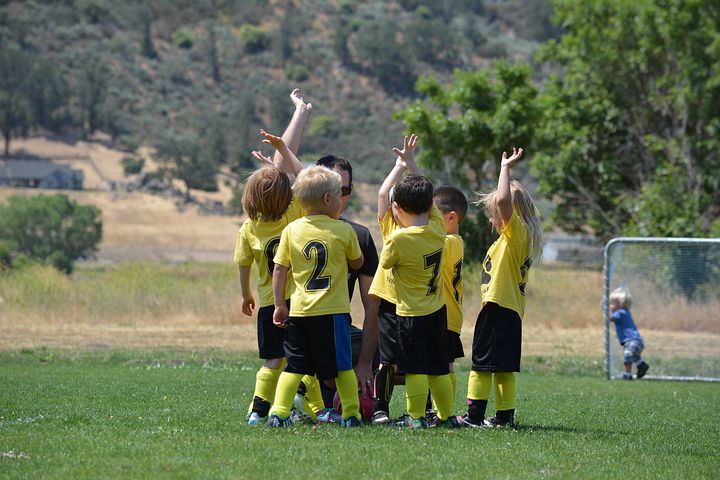
8 – Join something with a shared goal. It doesn’t matter if its the local chapter of your Toastmaster’s club, supporting somebody running for office, or the local running group. Sign up (and commit!) to an activity where everybody in the group is working towards a similar objective. Even if you never reach friendship status with any of the others, you will gain a sense of belonging.
team-2444978__480

9 – Pick up a work of fiction. When you’re struggling in your current world, sometimes a temporary escape to a fictional one can be just the respite you need. Find a book (or even better, a series of books) that excite you and envelope you. In addition to the brief evasion of reality, studies have demonstrated that reading fiction helps to develop emotional intelligence. And that may just give you the tools you need to address your loneliness in long term.

10 – Change your labels. If you consistently tell yourself that you’re lonely or isolated or unloved, you’ll start to believe it. Instead of those negative labels, try assigning more positive versions: independent, solo, autonomous, self-reliant. It’s amazing how much the perspective about a situation can change with a turn of phrase and it’s amazing how much the emotion associated with a situation changes with perspective. Go get ’em, maverick!

11 – Go to church. Churches are ready-made communities that are usually ready to welcome newcomers with open arms. It may take a little trial and error to find the congregation that resonates you and you may get a better feel for the culture from a smaller group gathering rather than the primary service. If you’re not particularly religious, consider a non-denominational congregation, a Unitarian church or even some of the more secular-focused groups of a traditional place of worship.

12 – Join Nextdoor. This app is limited to people in your immediate area. It is a paired-down social media site that tends towards the wayward dogs and the garage sales. Despite its limited content, in an era when we often don’t know our next door neighbor’s name, this app gives you a way to get to know and communicate with your local neighbors. You can also use it to see if anyone in your area is interested in starting a walking group, a gardening club or a beautification committee.

13 – Invite an acquaintance for coffee. It’s challenging to initiate and grow new friendships in adulthood. In childhood, friendships simply seem to happen simply through proximity. As we grow, building relationships takes a more concerted effort. So take that first step and invite someone in the periphery of your life out for a cup of coffee. At the least, you have a companion for an hour. At most, you have the beginning of a new friendship.

people-2559723__480

14 – Volunteer. This is one of those activities that gives amazing dividends on the energy invested. When you offer your services to help others, you often benefit as much as the recipients. Not only does it feel good to help, but it also helps to provide perspective, cultivate gratitude and assists in getting you out of your own head and current situation. With the myriad options available, you can find an opportunity that finds your time and temperament.

15 – Start a blog. Unlike the rapid-scroll and click bate realm of many social media sites, blogging communities have a greater tendency to be, well…communities. Especially if you blog about some niche interest or experience, you very well might find yourself some online companionship. One caveat with blogging – you will encounter some jerks. Remember that what they write says more about them than you. Don’t take it personally, block them from further commentary, and enjoy those that know how to play nicely.

16 – Spend time in your front yard every evening. It’s so easy to go to work, pull into your garage and spend the remainder of the evening in your home. And if you live alone (or live with others who make you feel as though you’re alone), you are literally walling yourself off from human contact. Instead, commit to spending a set amount of time on your front porch (or apartment balcony) each evening when others in the community are active. Bring something to keep you occupied, but make sure that it is something that is interruptible. When neighbors walk by, smile and say “hello.” In time, conversations may happen and relationships may form. Yet even if they don’t, the fresh air and the brief connection with others can go a long way.

lemur-2861922__480

17 – Go to a restaurant and eat at the bar. It can feel strange and awkward for some people to dine solo (or with someone that makes you feel alone), especially when the establishment is full of seemingly engaged couples and groups. Consider sitting at the bar. It’s less uncomfortable than occupying one chair at a table and you will often have other solo diners around you. Furthermore, the layout makes it relatively easy to join in on banter between other customers or with the staff.

18 – Be honest with people. Be careful about uttering the knee-jerk response of, “I’m fine.” Because people will often take you at your word and if you’re not fine, you’ll end up suffering in silence. Most people want to be helpful, but they can’t help if they don’t know. Asking for help isn’t weakness; it’s a sign of immense courage.

19 – Check out MeetUp.comDo you want to learn how to make homemade pasta? Are you looking for a rollerblade group in town? Do you want to find a book club that only discusses dystopian fiction? You’ve come to the right place. If you’re in a decent-sized city, MeetUp has every possible activity and every potential type of group. It’s a great option when you want to meet people but you’re not interested in dating or the trepidation of making the first move of a new potential friendship. If you’re nervous, take heart that many of the participants are also in your shoes.

20 – Go shopping. But not for you. On it’s own, shopping can actually increase feelings of depression and loneliness. However, if you are engaged in the hunt of finding treasures for somebody else, it actually improves your well-being beyond the time in the store. If you’re at a loss of who to shop for, contact a local women’s shelter, school, or community center and ask them for ideas.

dog-2617516__480

21 – Get a part-time job. If your day job doesn’t provide you with much contact with others (or if your day job involves running around after toddlers), evaluate the idea of taking on a part-time job. This one is less about the money than about the connections, so think about what would give you the contact you want. If you prefer to see the same people at regular intervals, consider a front desk position at a small gym or salon. If you’re more fast-paced and into one-and-done connections, think about a shift at a restaurant or as a checker. When you look into your options, also pay attention to your potential coworkers and strive to find a culture that you can integrate within.

22 – Throw a party. I know, it’s scary when you’re feeling alone. After all, what if nobody shows up? But what if they do? Keep it low-key, focused on some theme or event or activity (or even another person) and don’t allow your exceptions to ascend too high or plummet too low. If you’re uncomfortable with people in your home, consider hosting in some other location. Ask, and you’ll soon be receiving guests.

23 – Sign up for a group travel adventure. These groups are like ready-made sister-and/or-brotherhoods on a quest for adventure. You may all start out as strangers, but as you commiserate over the paltry breakfast one day and exclaim over the views the next, bonds will begin to form over the shared experiences. And even once you’re back at home, you’ll maintain the memories, if not the relationships.

adventure-1839147__480

24 – Start a home improvement project. Fixing up your space serves two purposes – it gives you a project to throw yourself into and it helps to create an environment that you find welcoming and supportive. And I promise you, if nothing else, you’ll get to know the employees at your local hardware store.

25 – Join a cause or participate in a social movement. There is no shortage of groups that promote, support and organize around some sort of cause or mission. Take a moment and brainstorm what beliefs you’re passionate about and then investigate local or virtual groups that are working towards that end. Smaller groups or smaller niches within larger organizations will provide more opportunities for regular and consistent connection with the same people.

26 – Smile and make eye contact with the people you encounter throughout the day. Most people want to make connections yet we often go through our public lives with our heads lowered, our faces lowered into our phones or our minds elsewhere. Make a conscious effort to make eye contact and acknowledge others through a quick nod or a smile. It will feel strange at first and some people may be surprised to have a stranger concede their existence. It’s okay. It gets easier and those smiles you receive in return will be proof that you’re establishing a fleeting link with another.

lion-cub-2818957__480


Continue to read 26 MORE things to do when you’re feeling lonely.


6 Unique Ways to Use Journaling For Divorce Recovery

recovery

The need for me was primal.

My mind was overfull of questioning and virulent thoughts. At first, I tried to hold them in, but their toxic and tenacious nature burned further holes into my heart. They weren’t meant for public consumption, yet I knew I had to find some way to purge them from my  mind and from my body.

The first journal entry was ugly. The hateful and hurting words screamed so loudly through the pen that they pierced several pages and imprinted through a dozen more. The pages were further marred by the endless tears that smeared the ink as soon as it was laid down. The resulting effect was as brutish and incomprehensible as the end of my marriage.

Finally spent, I allowed the pen to drop to the floor as I reassumed the familiar fetal position in the corner of my bed. In some ways, I felt a little better. It reminded me of the hole drilled into my childhood fingernail, crushed by a falling piece of lumber, to allow the pressure from the trapped fluid to release.

But much like that passage through the nail was only one part of the healing process, simply unleashing the ugly thoughts onto the paper was only part of the divorce recovery exercise.

If I was going to make it through, I was going to have to try something different. Here are six unique and innovative ways that you can use journaling as part of your divorce recovery process. I promise none of them require a drill.


And if you’re still unsure about journaling, here are twelve reasons that it’s awesome post-divorce.

And…here’s a peek into my post-divorce journal. It’s raw. And it’s real.

How You Can Expect Your Attitude Towards Your Ex to Change Over Time

ex

Because everything changes…

In the Immediate Aftermath of the Break-Up

In the early months, my blood pressure would rise whenever I thought about my ex. I would feel an irrational fury begin to roil within me whenever I spotted someone when his particular style of facial hair. I couldn’t speak his name without feeling it in my gut and I couldn’t read his words without my body trembling with the overwhelming emotions that flooded me at the slightest trigger.

Depending upon your circumstances, your predominant emotion towards your ex can vary significantly. If your former partner was unfaithful, you are likely experiencing intense anger and perhaps even an all-consuming need for revenge (or at the very least, an apology and an admission of guilt). If you were left abruptly, you may be awash in shock and confusion, wondering you exactly you had been married to. If the end of the marriage was anticipated and mutual, you may be feeling a sense of sadness and regret towards your ex.

You may find that you’re demonizing your ex at this point, painting them as some malignant and one-sided character. If the end of your relationship was complicated and due to a variety of factors, you may be distilling all of those reasons into a single bullet fired by your former partner because it’s easier than trying to come to terms with the complex reality.

Along with these emotions, you may also be struggling to fall out of love. The intense feelings during and after divorce are often not mutually exclusive; it’s possible to hate someone and miss them at the same time. As your heart, mind and body work to release the hold that the relationship had over you, you can expect to have bittersweet dreams involving your former spouse, thoughts of, “We should try again,” and even an overwhelming sense of affection.

No matter the situation and your predominant feelings, you can expect your feelings towards your ex to be intense and variable in the beginning. Your mind may be consumed with thoughts of them and you may have an extreme emotional response to any contact or reminders.

Right now, their imprint on you is still distinct. Over time, the pressed edges will begin to soften and new memories will begin to fill in the depression in your heart. This is a time for patience.


When You’re No Longer Together But Still Bound

Even though I had long since resolved the majority of the emotions directed towards my ex, I retained a certain amount of anger for the five years it took for me to finish paying off the debt he saddled me with. Even with my liberal application of gratitude, I still found myself muttering, “This isn’t fair.” with every payment.

Either because of children or financial obligations, many of us are still bound to exes long after the end of the relationship. Often, the intense early emotions are replaced with a sense of frustration (“Why are they making this so difficult?”) and resentment (“I shouldn’t have to deal with this.”). The ex may take on the guise of a nuisance or a necessary evil.

There may also be a sense of bitterness that your life or your children’s lives are in some way continuing to feel the impact of the split. As in the beginning, you may be placing undo responsibility for your circumstances at the feet of your ex. It’s often easier to blame than to take stock and make decisions.

It is also possible for this period to relatively smooth as the former couple finds that they make satisfactory business partners once the emotion has been dialed down. In these cases, the ex may even begin to be viewed as an ally.

Unlike the extreme emotions of the early response, these are far more subtle. Yet they can still be damaging. This is a time for creative strategies and mental gymnastics in order to separate your feelings for your ex from your dealings with them.


Upon Learning About Them Moving On

“Who is she?” I wondered, when learning about my then-husband’s new wife. “What does she have that I didn’t?” “How can be be happy when he’s left me so devastated?”

I wasn’t alone in these feelings. The most common search string that leads people to my blog is some form of, “My ex is getting married and it hurts.” And boy does it, especially when it follows soon after the demise of the marriage. The news often brings up feelings that you thought you had purged for good. It may spark the anger again or may reignite feelings of attachment.

Here is my response to those just learning about their ex’s new vows. It’s not particularly compassionate towards the ex because people are rarely ready for empathy when they’re still in the midst of shock and pain.

When you first discover that your ex has moved on, you find yourself suddenly and surprisingly jealous (especially if you perceive their life with the new partner as the one you were “supposed” to have). You may be angry all over again that seem to be having an easier time of it than you are. And you may even find yourself attracted to them now that they are no longer available.

As the shock of the announcement fades, so too will the intensity of your reaction. This is a time to remind yourself that your happiness is not dependent upon them.


On Important Milestones and Anniversaries

I had to fight the urge to text my ex with the news of a mutual friend’s upcoming wedding. This was a relationship that we had watched, supported and hoped would develop. It felt strange not to have my ex by my side at the wedding.

When birthdays, anniversaries and other milestones pass, the feelings towards the ex are often bittersweet. There’s a nostalgia for what was, a memory of the pain and also the awareness of what what is missing. There may also be a renewed sense of anger, especially if your former partner is absent during a milestone that involves the children.

Overall, feelings towards your ex may intensify on those special days that can be a stark reminder about the changes in your life. This is a time to try to recall the good times while also creating new rituals and memories in your present life.


After the Pain Has Faded and You’ve Found Acceptance

And then one day, I no longer hated him. I no longer loved him. My fantasies of karma paying her dues were replaced by a desire for him to be…okay. Happy, even.

Hopefully, in time you can find some peace with your feelings for your ex. Time and perspective may have helped you see them as a flawed and complex person instead of a one-dimensional entity. Anger may slowly be replaced with empathy and fond memories may take the place of the pain of loss. The ending and the suffering may be remembered less and the good times remembered more.

As your lives diverge, they will become more of a stranger to you and you to them. As your years extend, the percent of your time spent with them will drop and maybe even its significance. You may find that you can speak of or to them without emotion, look upon them with only a brief flicker of lament and think of them with detached compassion.  Your initial desire to see them suffer (at least a little bit) has been exchanged (after much soul-searching) with an honest desire to see them happy (even if you never actually want to see them again).

This is a time for accepting that every person comes into our lives for a reason and extending kindness to all those along our path.


Learning to Trust Again: How to Deal With the Triggers

triggers

In my experience, the most persistent side effect of being cheated on is the unrelenting and underlying uncertainty if you’re responding to your intuition or over-reacting to something from your past. I have often had internal internal arguments where one side, afraid of being caught unaware again, is pulling all of the alarms, screaming that the sky is, indeed, falling and the other side is calmly dismissing these fears, reassuring me that the danger is only an echo from the past. This can manifest as an inability to trust others, but really it comes down to learning to trust myself again.

There are times when the triggers are activated because of a legitimate and present concern. At those times, it’s important to listen to your gut and pay attention to its warnings. And there are other times when the alarms were pulled too soon, acting more from perceived danger than from a true emergency.

The problem lies in knowing which voice to listen in which situation. Dismiss all warnings, and you open yourself up to betrayal again. Listen to every advisory and you’re preventing trust from ever building (and also making yourself crazy in the process).

Here are five questions that I’ve learned to ask myself over the years to determine if I am being triggered by a true threat or merely the fear of one.  And, as with everything, practice makes better.