7 Subtle Signs You Have a Backseat Driver in Your Life

For a long time (okay, even now), when my now-husband would vocalize his opinion about something that he thought would be good for me, I recoiled. It felt almost invasive.

Smothering.

Controlling.

Not because of what he was saying, but because of what I have been through.

My now-husband is direct, expressing his thoughts and feelings overtly and directly (a trait I very consciously looked for the second time around). Sometime I chafe, but I love the fact that it’s all on the table. And even though it’s not always comfortable, I love that he challenges me to defend my decisions and actions because it serves to help make me better.

My former husband was covert, passive aggressive and manipulative in his approach. Unflinchingly supportive on the surface of any thought or action I undertook, while silently steering me in the direction he wanted. He never questioned me, never told me what to do (except to relax while he tackled some chore on his own). His control was subtle, which is exactly why it was so powerful. My defenses were never triggered until it was too late.

The following strategies are commonly used by people who are passively controlling. Those who, rather than overtly take over the wheel of your life, cunningly influence how you turn the wheel. All of these signs can have multiple meanings; on their own they do not indicate control. But when more than one show up along with a sense that boundaries are being crossed, it warrants a closer look.

The tears may be real, but the emotion is not. This trick is learned in infancy, as babies realize how tears can halt punishment and bring attention. Some never abandon this trick and persist in using tears to manipulate those around them. Look out for waterworks that only come when something is desired and seem to halt as soon as the goal is obtained.

Affection and attention are doled out as a distraction and a pacifier. This was my ex’s favored ploy. It sounds crazy to complain about an attentive husband, but when I look back, the affection was increasingly used whenever I came dangerously close to the truth. His great big bear hugs felt protective at the time, now they seem more like a martial arts-style submission.

Decisions are held back. Waiting to make and/or communicate a choice is a particularly crazy-making form of covert control. Everybody else is held in limbo, their own lives and decisions delayed. Doing nothing can carry with a great deal of power when others are depending upon you.

Money is used as a mode of communication. Sometimes finances are used in overt control, such as when one spouse makes all of the financial decisions and doles out an allowance to the other. But it can also be more indirect, such as when purchases are kept hidden or the partner with the higher income feels entitled to make decisions for everyone.

Judgement is passed. This can be direct, “You look like you’re trying too hard when you wear that skirt,” or indirect, pronouncing something unacceptable in someone else. My ex took it a step further and frequently renounced choices and behaviors in others that he was guilty of himself.

The favors and gifts are given with some sort of reciprocity in mind. The stereotypical idea of a wife using sex to get her husband to do things comes to mind here, but it’s by no means the only modality used. Handouts can be used with great efficacy to shape behaviors. After all, there’s a reason we train animals that way.

They accuse you of being controlling. Projection and gaslighting at its finest.


In a healthy relationship, each partner challenges the other and accepts influence from the other. It flows both ways, balanced.

When there is controlling behavior present, the interchange is not equal. One holds more power than the other.

And when there is a backseat driver, a more passive controller, this imbalance can be difficult to pinpoint.

Control thrives when you’re too close to it, too afraid to see it and unwilling to erect and maintain boundaries.

Take a step back, trust in yourself and practice making decisions by yourself and for yourself.


Related:

I Hate Mums

I Reject Your Reality and Substitute My Own

Subtle Signs You’re Being Manipulated By a Covert Abuser

The Misuse Of Affection

Why Do We Fall in Love With People That Are Bad For Us?

Have you ever fallen for someone that turned out to be bad for you? Who left you worse off than you were before? Who perhaps used you or abused you?

My hand is sure is sure raised.

And I know I’m not alone in this.

So why is it that we fall so easily for those who treat us badly? And what can we do to keep it from happening again? Learn more here.

10 Reasons Being Gaslighted Is the Worst

gaslighted is the worst

Ten reasons being gaslighted is the worst –

There’s a reason governments utilize psychological torture techniques on suspected terrorists.

It works.

It’s a way of controlling somebody discretely. Without obvious threats or harm. Simply by controlling their reality and steering their perceptions. Planting seeds of doubt and carefully nurturing them until a dependence upon the manipulator is created.

And you don’t have to be a prisoner suspected of treason to face this torture.

It can happen in your own home.

In your own marriage.

Only there, it’s not called torture (although maybe it should be).

It’s called gaslighting.

And here are the top ten reasons why it’s the worst-

10 Your Protector Becomes Your Persecutor

It’s horrifying when you realize that the person you love, you trust, has been slowly and intentionally lying and manipulating you. It’s like that nightmare you had when you were 5 where Santa Claus suddenly turned into a monster. Only this monster is real and you shared a bed with them.

9 It’s Invisible While It’s Happening

The whole point of gaslighting is to control somebody and distract them from what is really going on. As a result, it’s very difficult to identify when you’re in it. Generally, all you recognize is a sense that something is off and perhaps a sense of generalized anxiety. In some ways I’m glad I never spent time in a “bad” marriage. But then again, it’s scary to only realize after the fact that I was in one.

8 Your Memories Are Tarnished

I have 16 years of good memories with my first husband. And at least part of that history is false. But I have no idea what parts. So it’s all damaged. Ugly water stains on beautiful wedding photos. Was any of it real? I’ll never know.

7 It Doesn’t End When the Relationship Does

Some of this is by design. Often the abuser defames your character to others, leaving you in the position of either trying to convince them of a new truth or cut them out. But even without the character assassination, gaslighting persists. It’s in you, an unwanted tattoo imprinted upon your doubting brain.

6 Impact Is Hard to Recognize Until It Builds

The flood of feelings that led to my emotional hangover the other day was building for some time. But I couldn’t see it. It becomes very difficult to separate the implanted thoughts from your own. And sometimes the false ones take the lead for a time.

5 It’s Difficult to Explain to Others

Because until you’ve been there, you don’t believe that somebody can really have that much influence over your thoughts. Like much abuse, gaslighting starts slowly, ramping up the distortions until your reality is altered. And when you try to explain it, you either get judged or dismissed.


Continue to read the rest.

Subtle Signs You’re Being Manipulated By a Covert Abuser

Covert abuse is sneaky.

It doesn’t leave a bruise on your cheek.

Or cut you down with scathing words.

Or even obviously isolate you from others.

Instead, it wisps in slowly through tiny cracks. Velvet-trimmed lies whispered into trusting ears. The smoke builds until you no longer remember what it is like to see clearly and your head is filled more with the thoughts of your abuser than with your own.

It’s often only possible to identify covert abuse once you have escaped its clutches (and even then, it usually takes a period of months or years to fully grasp what happened). It’s like a domestic form of Stockholm Syndrome, the persecutor masquerading as a protector.

The following are the subtle signs that were present in my ex husband. Small dots of data that when connected, paint a crimson flag of warning. If you see a preponderance of similar signs in your relationship, it warrants further investigation. If you recognize these traits in your former relationship, it can give you some information that can aid in the healing process.

These signs are subtle and can have many causes and manifestations. Just because someone fits these descriptors, it does not mean they are covert abusers or narcissists. But it does mean that you should look twice. Especially before you leap into marriage with them.

Continue to read the rest.

The Four Words That Are Holding You Back (And the Four Words to Say Instead)

holding

It’s ingrained in all of us.

Inevitably, when I motion for a student to quiet down, I hear the response,

“It’s not my fault.”

(Or its synonym, “It wasn’t me.”)

people-315908_1280

It is a knee-jerk reaction to any pronouncement of culpability.

And rather than grow out of it as we grow older, we begin to pay others to tell us that it is not our fault.

———-

When I first starting getting into health and fitness in the early 90s, I noticed that the industry advice came in two distinct forms – one voice said that you could transform your life and your body through willpower and hard work while the other side spoke of reassurances that the excess weight or sagging muscle was due to no fault of your own (and often this burden shift would be followed up with a “quick fix” for the low, low price of only $19.95).

And I soon figured out that the second view led to increased sales.

Even as it failed to create the desired body.

Because we all like to hear that it’s not our fault. That someone or something else is responsible for whatever is holding us back.

Yet even though we all have situations and circumstances that make certain goals more challenging, you are ultimately the only thing holding you back.

index-315754_1280

I encounter people that tell me that they cannot lose weight because of PCOS or hypothyroidism. “It’s in my genes,” is offered as a reason for the Type II diabetes or metabolic syndrome. I hear others defend their lack of fitness by claiming that their family or job requires all of their time.

They feel a freedom by stating that it is not their fault.

Yet really they are in chains of their own making.

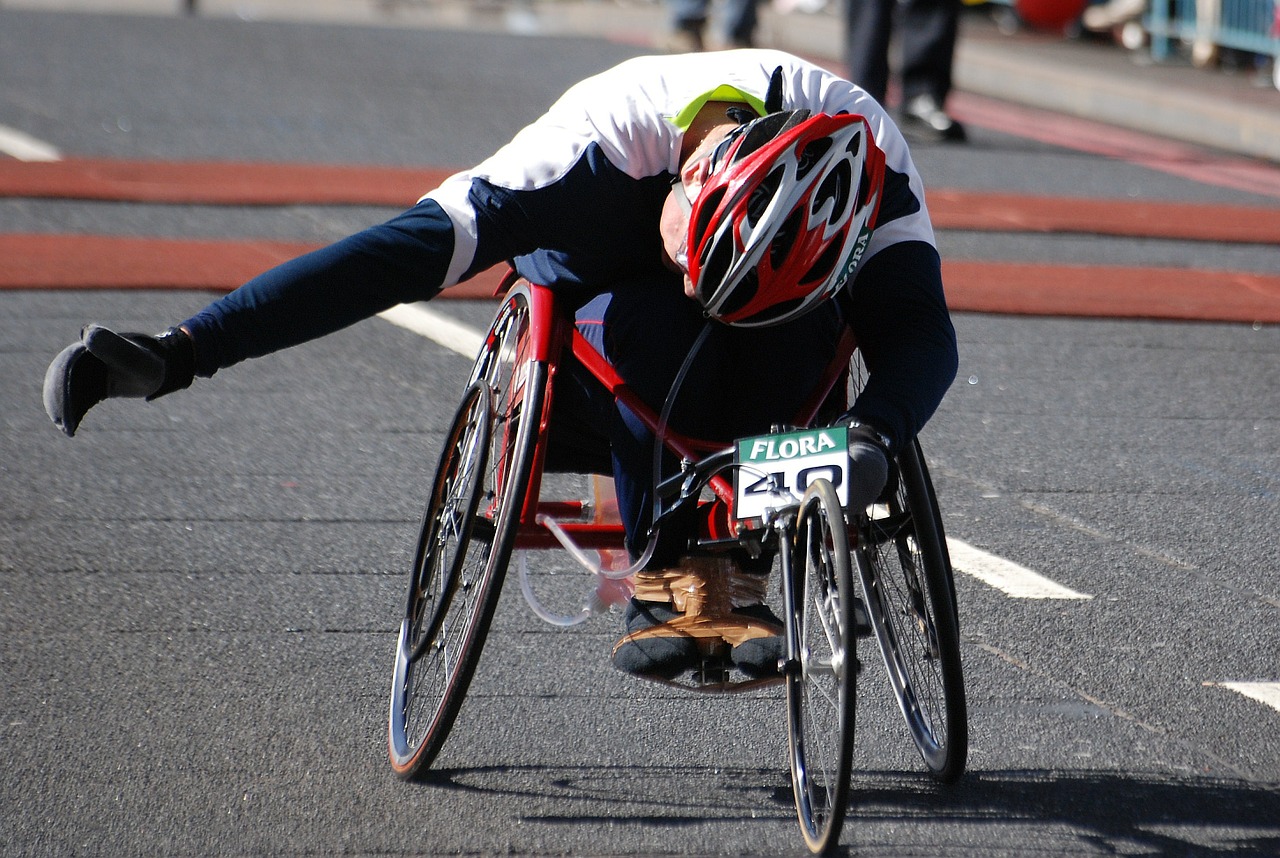
I workout alongside people who use wheelchairs and people with artificial limbs. I have friends who alternate days at the gym with nights at the hospital as they are treated for their autoimmune disorders. I know women with PCOS who accept that weight loss will be harder for them even as they strive to work within the limitations of their disease. I work with single parents who problem-solve creative ways to exercise while the kids are at practice or asleep.

I’ve never once heard any of these people say that the situation is not their fault.

And it’s no accident that they are constantly pushing the boundaries of their situations.

wheelchair-369735_1280

———-

The problem with, “It’s not my fault,” is that it so easily slides into “And therefore there’s nothing I can do about it.”

And the two declarations are vastly different.

It is not your fault if you have been cursed by faulty genes that cause your body to grasp onto every fat cell for dear life.

(And what are you going to do now?)

It is not your fault if you suffered at the hands of abusive or negligent parents who failed to give you the tools to excel in adulthood.

(And what are you going to do now?)

It is not your fault if you have been exposed to trauma, bruising and damaging your very core.

(And what are you going to do now?)

It’s not your fault if your brain struggles with anxiety or depression.

(And what are you going to do now?)

It’s not your fault if your spouse cheated or abandoned you.

(And what are you going to do now?)

In all of these cases (or in any limitations and struggles you have in your life), you can spend your energy on blaming the fault-carrier. Others will help you, either for pay or for free. After all, it’s easy to point fingers at others.

Because then we are absolved of any effort.

Of course, we are also guaranteed not to make any progress.

Because the last time I checked, reps of reciting “It’s my hormones,” had a dramatically lesser effect on fitness than reps on the weight machine.

And assigning liability to a screwed up family of origin is inherently dissatisfying because they’re too entrenched in their own drama to absorb yours.

And calling your cheating ex an ass won’t help you get off yours to build your new life.

So rather than focus on what happened, focus on what you can do now.

Replace “It’s not my fault” with “It is my responsibility.”

Rather than point fingers (or waste your time and money on those that help you pass blame), use those fingers to grab your own bootstraps.

boots-691670_1280

Nobody else is going to do it for you.

———-

Your future is your responsibility.

Your well-being is your responsibility.

Your happiness is your responsibility.

And if you don’t accept that responsibility, that IS your fault.

———-

It is my responsibility to …

Shift my attention from what happened to me to what I am going to make happen.

Focus on what I can do.

See my limitations as my starting point, not as excuses to never start.

Be realistic with my goals.

Set a limit to the amount of energy I expend on placing blame. That energy can be put to better use.

Surround myself with people who believe I can.

Ask for (and accept) help when I need it.

To refuse to allow somebody else to define me.

Communicate my needs clearly and calmly.

Manage my emotions so that they do not control me.

Establish and maintain appropriate boundaries.

Speak and act with kindness. Towards others and also towards myself.

Believe in myself and act in accordance with that belief.

life-863186_1280

And what are you going to do now?

Related:

The Part of the Betrayed

Sprained

I’m Not Strong Enough